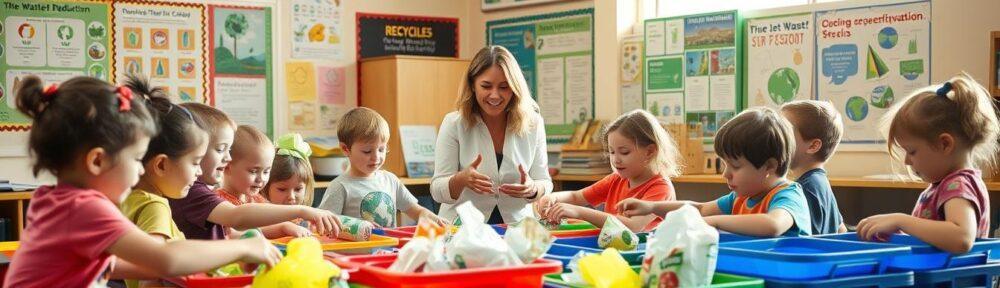
We’re losing the battle against trash. In 2018, Americans threw away 292.4 million tons of waste. That’s about 5 pounds per person every day. But only 32.1% of it was recycled or composted.
In the UK, schools dump 250,000 tonnes of waste each year. Primary students throw away 45kg each. Secondary students dump 22kg. These numbers show schools need a change.
Education is our key to victory. UN-Habitat’s Waste Wise Education turns schools into places of change. Their 5Rs – Rethink, Refuse, Reduce, Reuse, Recycle – change culture far beyond school.
With waste expected to jump 70% by 2050, we can’t wait to start educational programs.
Successful Initiatives
Think sustainability education is just about recycling and guilt trips? Think again. The world is full of educational initiatives that are anything but boring.
In India, the Waste Warriors program turned waste management into a fun event. It had games and competitions, making recycling exciting.
Kenya’s PET bottle recycling program made it cool. Their Eco-Schools program linked waste reduction to national values. It turns out, reducing waste can make you happier.
Japan’s Environment Picture Diary is a genius idea. Kids create art about environmental issues, then show it at big conferences. It’s creativity meets science.
The START program brings science to sustainability in schools. It shows real changes happen when programs are done right.
Here are some global successes:
- Future leaders Engagés in Benin create young environmental leaders.
- Project Shule-PET Take Back Program makes recycling pay off.
- Nepal’s Zero Waste at Schools program cuts waste in half.
These efforts show that making sustainability in schools fun works. It leads to real change. The numbers prove it: good educational initiatives really make a difference.
Creating Engaging Programs
Getting people excited about waste reduction can be tough. It’s like trying to make tax law fun. But, the best educational programs turn trash into treasure with creativity.
The secret is to avoid boring lectures. Imagine Neo’s choice in The Matrix. That’s what educational initiatives should feel like – a change in how we see the world.
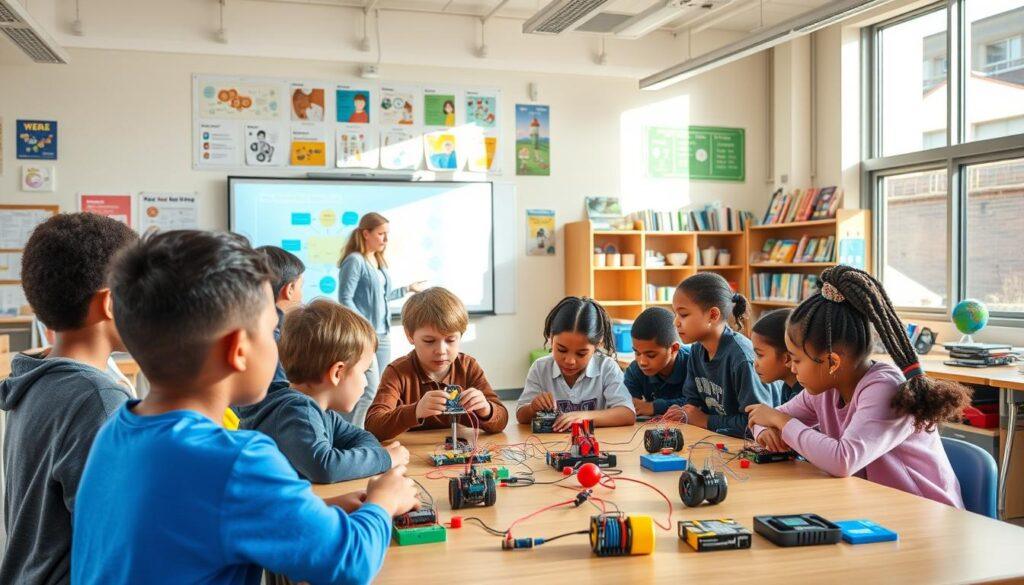
Schools are turning cafeterias into learning spaces. Students do waste audits to learn about what we throw away. They become detectives, tracking where waste goes.
The best programs use Bolivia’s RANAS method. It’s about understanding people before changing their behavior. It’s not about telling them what to do, but why it’s important.
Technology is a key tool. Digital platforms make learning about waste fun. Recycling becomes an interactive game. Tracking food waste turns into cool data projects.
What makes a program great?
| Traditional Approach | Engaging Alternative | Impact Difference |
|---|---|---|
| Theoretical lectures | Hands-on waste audits | 47% higher retention |
| Paper handouts | Digital interactive platforms | 63% less paper waste |
| Generic recycling tips | Personalized consumption data | 3x behavior change |
| One-time assembly | Ongoing participatory projects | Sustained engagement |
Students become active learners, not just listeners. They live waste reduction through composting. They turn lunch scraps into garden gold.
These educational programs speak to digital natives. They meet our need to touch and experience. The best educational initiatives know change comes from experience, not just information.
So, ditch the boring talks. Create experiences that make waste reduction exciting. Make it a game they’ll love playing.
Measuring Success
Sustainability in schools without measurement is like dieting without a scale. You might feel better, but you’ll never know if you’re actually making progress.
The START program’s approach changed how we track educational initiatives. They didn’t just ask “are we greener?” They set up baseline assessments that would impress a scientist. Waste diversion metrics became their report card, and the numbers show the truth.
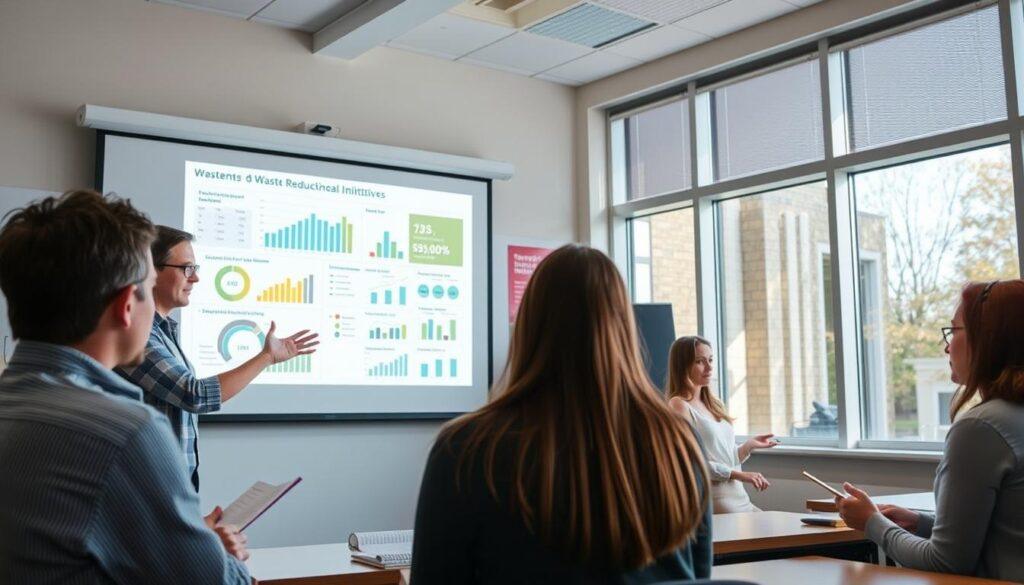
Kenya’s PET program is a great example: 1,625 kilograms of plastics collected by March 2020. That’s not just a win for the environment – it’s hard evidence of success. That’s how you build momentum.
But the smartest programs know success isn’t just about numbers. It’s about changing school culture. How many students use reusable bottles instead of single-use ones? How many teachers teach sustainability all year, not just on Earth Day?
These measurements show if changes are lasting or just temporary. The best tracking systems now watch:
- Waste diversion rates compared to baseline assessments
- Student participation in sustainability programs
- Behavioral changes that extend to home environments
- Curriculum integration across subject areas
Long-term versus short-term measurements show interesting patterns. Quick wins boost morale, but lasting change shows real impact. When parents say their kids changed at home? That’s when you know your initiative has really worked.
The data doesn’t just measure success – it creates it. In the world of sustainability in schools, what we celebrate gets repeated. And what we measure? That gets managed into something amazing.
Expansion Opportunities
Successful educational programs have a built-in growth plan. Japan’s Environment Picture Diary is a great example. It didn’t just stay in Japan; it went to 14 African countries. This shows that adapting to local cultures is key, not imposing your own.
What makes programs truly special is when they blend in, not just add to the mix. Imagine teaching about waste in a way that ties into bigger sustainability goals. This way, school programs can inspire action in the community.
Digital tools open up new possibilities. Think of apps that track recycling or platforms that link schools worldwide. Technology lets programs share successes and learn from mistakes.
Working with local waste services is a game-changer. When students learn about waste, it can change their families’ habits. This, in turn, can change how the whole community views waste.
The goal isn’t just to grow bigger. It’s about becoming smarter and more connected. When educational programs are part of a larger network of innovation, they can change how communities deal with waste.