
Remember when corporate responsibility was just about writing a charity check? Those days are over. Now, your company’s environmental impact is more important than any mission statement.
I’ve seen companies change from being big polluters to leaders in sustainability. This change isn’t just good for the planet. It also saves money, as the EPA’s new rules show.
Proper waste disposal is now key to being a good corporate citizen. It’s not just about following rules. It’s about building a respected brand.
It’s like finding out that eating veggies is actually tasty. Doing the right thing can be incredibly rewarding.
Strategies for Waste Reduction
Let’s get real about waste strategies that really work. I’ve seen companies treat sustainability like a PR stunt, not a real change. True Corporate Waste Strategies need more than just switching from plastic to paper. They need a complete change in how things work.
First, create a Green Team, like a superhero squad. These teams find waste reduction chances that single departments miss. They’re the ones who’ll question why you’re printing meeting agendas in 2024.
Then, do a waste audit, like a crime scene investigation. You’ll find out which departments are hoarding old printers or which break room makes a lot of coffee grounds. This shows what you’re really throwing away versus what you think you are.

The waste hierarchy is your new guide. Prevention is key – cancel unwanted catalogs, buy used furniture, and go digital. Reuse comes next, then recycling as a last resort before landfill.
Where you put recycling bins is often a big mistake. I’ve seen bins hidden like secrets. Proper signs and placement can boost recycling by 300%. And yes, those signs are free from your local government. Sustainability can be affordable.
Choosing a waste management partner is as important as picking a CFO. The right company does more than just take away trash. They give you data, help you reduce waste, and might even help you make money from your waste. It’s like finding a therapist who also helps you start a side hustle.
Now, let’s talk about the power of segregation. When you sort waste right, you turn trash into something valuable:
- Recycling: Clean, sorted materials become raw materials for making new things
- Composting: Food waste turns into soil that’s good for plants
- Waste-to-energy: Non-recyclables can power homes instead of filling up landfills
Here’s how top companies do better than usual methods:
| Strategy Component | Traditional Approach | Modern Waste Strategies | Impact Difference |
|---|---|---|---|
| Team Structure | Single sustainability officer | Cross-functional green teams | 47% higher implementation rate |
| Waste Audits | Annual weight measurements | Monthly composition analysis | Identifies 3x more opportunities |
| Container Placement | Hidden recycling stations | Strategic visible placement | 300% higher participation |
| Partner Selection | Lowest bidder selection | Value-added partnership | 27% cost reduction over 3 years |
The best Corporate Waste Strategies see waste as a sign of failure, not an end product. Every item you throw away means you wasted resources, time, and money. Preventing waste saves the planet and your profits.
Remember, sustainability is about getting better each day. Start small, with one department or one Green Team meeting. The companies that win see waste reduction as a long-term effort, not a quick fix.
Success Stories
Ever wonder what happens when companies focus on the environment? Miller Environmental’s stories are like a dream come true for those who love numbers. They show how Corporate Waste Strategies can change waste into something valuable.
Their hazardous waste team does magic. They turn bad industrial waste into fuel. It’s like turning lead into gold, but it’s good for the planet.
They also mix alkaline waste with acidic waste. It’s like a chemical marriage that makes both sides better. This balance cancels out the bad stuff.
They handle 200,000 tonnes of recyclables every year. That’s like recycling 100 blue whales. It’s huge and very inspiring.
Their organics team is amazing. They turn waste into soil, compost, fertilizer, and energy. It’s not just recycling; it’s a real transformation.
Miller shows that corporate sustainability is real. It’s possible with the right skills and dedication. Their success can guide other companies to make a difference.
The EPA also shares success stories in waste reduction. These stories show that creative thinking can solve environmental problems.
| Waste Type | Transformation Process | End Product | Annual Volume |
|---|---|---|---|
| Hazardous solvents | Blending and purification | Alternative fuel | Various industrial quantities |
| Alkaline waste | Chemical neutralization | Stable compounds | Thousands of tonnes |
| Recyclables | Material recovery | Raw materials | 200,000 tonnes |
| Organic waste | Composting/digestion | Soil/energy/fertilizer | Significant agricultural quantities |
What makes these Corporate Waste Strategies work so well? They see waste as resources, not problems. This way of thinking shows real commitment to the environment.
Companies also save money by managing waste wisely. It’s not a cost; it’s an investment that pays off.
These stories prove that caring for the environment and doing well in business can go hand in hand. It’s all about creativity and dedication to corporate sustainability.
Tools and Resources
You wouldn’t perform brain surgery with a butter knife, so why approach waste reduction with half-baked tools? The right equipment makes your waste strategies real and measurable.
First, we have waste audit services. They’re like corporate MRIs, showing what’s in your trash. Companies like Miller Waste do detailed audits, revealing more than just yesterday’s lunch.
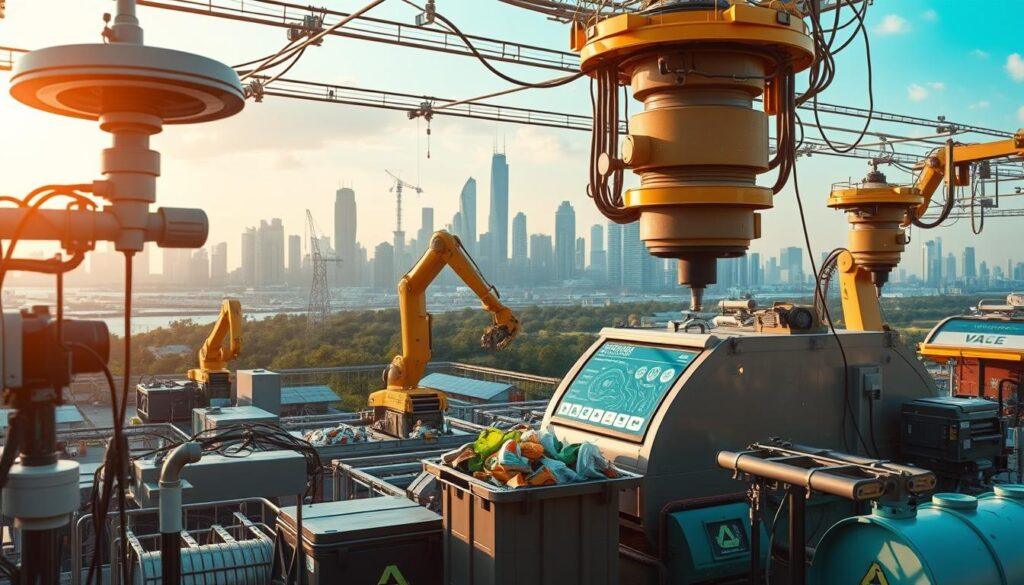
Then, there’s the hardware. Compactors shrink volume, and balers package materials like Amazon ships packages. But the real game-changers are smart waste management solutions.
IoT-enabled bins track fill levels in real-time. They optimize collection routes and cut down on unnecessary pickups. These devices collect data better than most polls, helping your corporate sustainability efforts.
But tools need training to be effective. Education programs turn employees into environmental heroes. And don’t forget municipal signage programs, often free for the taking.
| Tool Category | Primary Function | Impact Level | Implementation Time |
|---|---|---|---|
| Waste Audit Services | Diagnostic Analysis | High | 2-4 weeks |
| Compaction Equipment | Volume Reduction | Medium-High | 4-6 weeks |
| Smart Bin Technology | Data Collection | High | 6-8 weeks |
| Employee Training | Behavior Change | Critical | Ongoing |
Container design is key. Proper bins and labels can boost recycling by 50%. It’s about making the right choice easy.
Municipal partnerships offer free resources. From signage to apps, these tools are often overlooked.
The future of waste management is about smart solutions. They provide data for better decisions, lower costs, and real environmental progress. The smartest trash is the trash we never create.
Aligning with Sustainability Goals
Your waste strategies should match your company’s values. It’s like finding your environmental soulmate. Writing a plan turns dreams into real actions, like going to the gym.
Creating a communication strategy is like making a viral TikTok for green causes. Get your team involved or your plans will fail. Tracking progress shows how far you’ve come, like fitness photos.
Zero waste goals are the highest aim, and sustainable recycling creates closed loops. But, following rules is just the start, not the finish.
Future trends, like Amazon’s AI for sorting waste, show this field is always changing. Aligning waste with sustainability goals makes your business last, even when new leaders come.