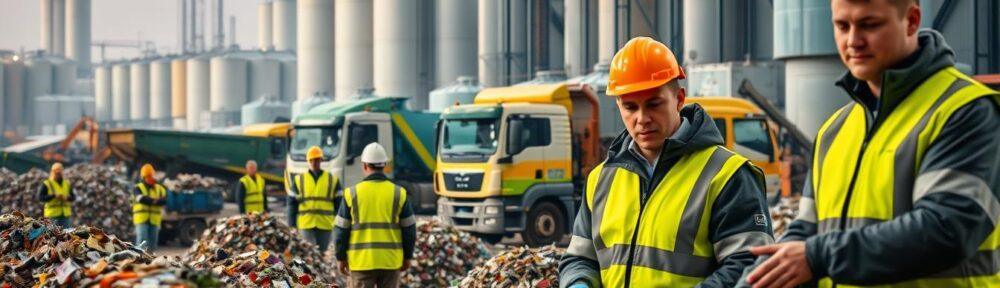
When most people think of waste management, they imagine garbage trucks and bad smells. But, this industry is actually a key player in sustainability.
Waste management has grown from just picking up trash to a complex system. Today, nearly 50,000 workers at companies like WM are driving sustainability. They turn waste into valuable resources, while we focus on our eco-friendly straws.
This field covers everything from picking up trash to handling dangerous waste. It’s like the Avengers, but with more trucks and less capes. With more waste being made, jobs in this field are growing fast. Check out these career opportunities.
Waste management is vital for keeping communities healthy. It also offers many roles for those who want to help the environment. It’s not just about cleaning up. It’s about making our future greener.
Key Roles and Responsibilities
Forget what you’ve seen in movies about garbage collectors. Today’s waste management pros are like environmental superheroes. They have evolved into sophisticated careers that even Tony Stark might consider.
Waste collection drivers are not just truck operators. They are logistics experts navigating urban jungles. They manage complex routing software and educate homeowners on proper disposal.
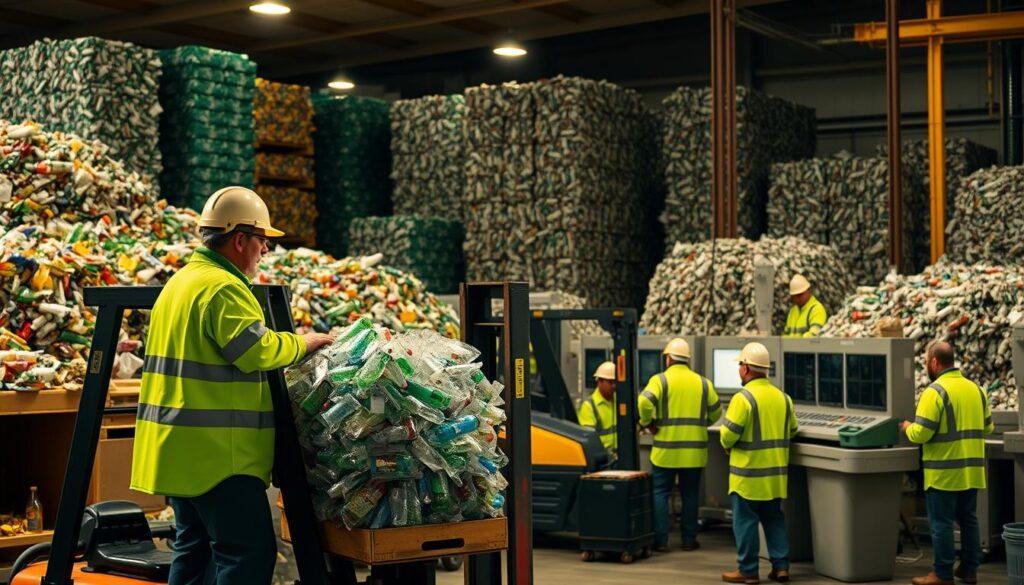
Technicians and mechanics keep the environmental machinery running smoothly. When a $500,000 baler breaks down, they perform emergency repairs. Their work prevents waste backups that could harm communities.
Waste management specialists and engineers are the analytical heavyweights. They conduct waste audits with the precision of forensic accountants. They track material flows and develop systems that turn waste into revenue.
Sustainability roles show the industry’s shift from disposal to circular economy management. These specialists work on life cycle assessments and carbon footprint calculations. They develop closed-loop systems where waste becomes new products.
| Role Category | Primary Responsibilities | Impact Level |
|---|---|---|
| Field Operations | Collection, transportation, facility operations | Direct environmental protection |
| Technical Specialists | Equipment maintenance, process optimization | System efficiency and reliability |
| Analytical Roles | Waste auditing, data analysis, compliance | Strategic decision-making |
| Innovation Positions | Circular economy development, new technologies | Future sustainability planning |
Regulatory compliance officers are the industry’s legal conscience. They navigate complex environmental regulations. They train staff on proper handling procedures to avoid fines.
Technology roles have grown in waste management. From route optimization software to AI-powered sorting systems, these professionals digitize the industry. They create smart systems that rival Amazon’s logistics.
The diversity of green jobs shows how waste management has evolved. Each role helps build sustainable communities and creates economic value from waste.
Skills and Qualifications
Think you can handle waste management with just a strong back and weak sense of smell? Think again. This field needs a mix of book smarts and real-world know-how. It’s like MacGyver’s playground.
First off, you’ll need some education. While you might start with a high school diploma, the big players have degrees like Environmental Engineering or Waste Management. These degrees are your superpower for dealing with dangerous chemicals.
Back in high school, you should have loved Chemistry, Biology, Math, and English. Yes, English too. You’ll need it to explain things to upset homeowners about their “compostable” plastics.
The skills needed are as varied as a United Nations team. You’ll need:
- Communication chops to explain complex stuff simply
- Safety awareness to avoid big problems
- Cultural adaptability for working with different waste systems
- Mathematical precision for figuring out waste amounts
Certifications are nice but not necessary. Groups like APEGGA and the International Solid Waste Management Association offer great networking chances. Your LinkedIn could become a who’s who of environmental leaders.
This field is open to everyone, from PhDs to high school graduates. The key is a real passion for sustainability. It’s about changing how we use resources, not just managing waste.
The real test isn’t on your resume. It’s in your ability to see chance in trash and explain complex ideas to others. That’s the true waste management degree, one no school can teach.
This isn’t just a job; it’s a way to change society. You’re not just moving trash; you’re helping us become more sustainable. And that takes more than just gloves; it takes a sharp mind.
How to Enter the Field
Ever wonder how people turn garbage into gold? The waste management field offers more career opportunities than a landfill has discarded treasures. Your entry path depends on whether you prefer getting your hands dirty or your mind stimulated.
Let’s start with the blue-collar route. Many professionals begin as waste collection drivers or recycling technicians. These positions require minimal formal education but maximum dedication. You’ll learn the industry from the ground up – literally handling society’s discards.
Then there’s the white-collar path. Take Laura Thomas’s journey: engineering degree, international work term in Thailand, followed by a master’s degree. She landed at the World Bank faster than you can say “sustainable development.” Her secret? Combining technical skills with global perspective.
The beauty of this field? Your starting point doesn’t define your destination. I’ve seen recycling technicians become sustainability managers. Waste truck drivers evolve into operations supervisors. The ladder has more rungs than a compost heap has layers.
Here’s the reality: waste management needs both thinkers and doers. The table below shows how different entry points lead to diverse career opportunities:
| Entry Level Position | Education Required | Potential Career Path | Time to Advancement |
|---|---|---|---|
| Recycling Technician | High School Diploma | Recycling Center Manager | 3-5 years |
| Waste Collection Driver | Commercial License | Fleet Operations Supervisor | 4-6 years |
| Wastewater Operator | Associate’s Degree | Treatment Plant Manager | 5-7 years |
| Environmental Engineer | Bachelor’s Degree | Systems Design Director | 2-4 years |
The most successful professionals follow one key principle: do what captivates you. If mechanical systems excite you, start with equipment maintenance. If environmental policy gets your pulse racing, pursue that master’s degree.
Remember: every empty garbage can represents someone’s job security. In an era of climate consciousness, waste management isn’t just a career – it’s a front-row seat to environmental revolution. The career opportunities here aren’t just plentiful; they’re planet-saving.
Future Job Market Trends
Waste management is no longer just about picking up trash. It’s becoming a top green career path. The field is changing fast, thanks to sustainability, which is creating a huge need for skilled workers.
Companies that used to ignore waste now look for experts like tech firms do for AI engineers. Your ESG score can greatly affect a company’s reputation. This makes green jobs more valuable than ever. The need for people with both technical skills and business sense will grow faster than most other industries.
Niche areas are seeing huge growth. Medical waste management is growing with healthcare costs. Hazardous materials specialists are becoming key players in environmental protection. Leadership roles will focus on finding new, innovative solutions.
The best part? In waste management, you see results right away and build a lasting career. Cleaning up waste today means a cleaner environment tomorrow. That’s what I call a future-proof green job.