
When someone mentions “building science,” what comes to mind? It’s time to change that image.
The real excitement today is in a different area. It’s about figuring out what “green” means in our worried world. We’ve moved past the LEED certification, which was once the top goal.
Now, we aim for carbon-neutral buildings and net-zero energy use. We want to build for a circular economy. But, we’re facing a problem. There are many confusing definitions for these terms.
I love the idea of making buildings like cars. We could have rules for their environmental impact. It’s a smart way to regulate.
The research today is more than just about insulation or windows. It’s about creating a complete science for our buildings. We want to track everything from the start to the end. The goal is to build smarter and more responsibly.
Lab to Field: Real-World Applications
For sustainability research, the real test isn’t in journals. It’s when the first concrete truck shows up. Here, theories face harsh realities like deadlines and budgets.
The early 2000s were exciting. Green building was for the few who believed. But then, a Canadian report changed everything. It showed the market was ready for sustainable building.
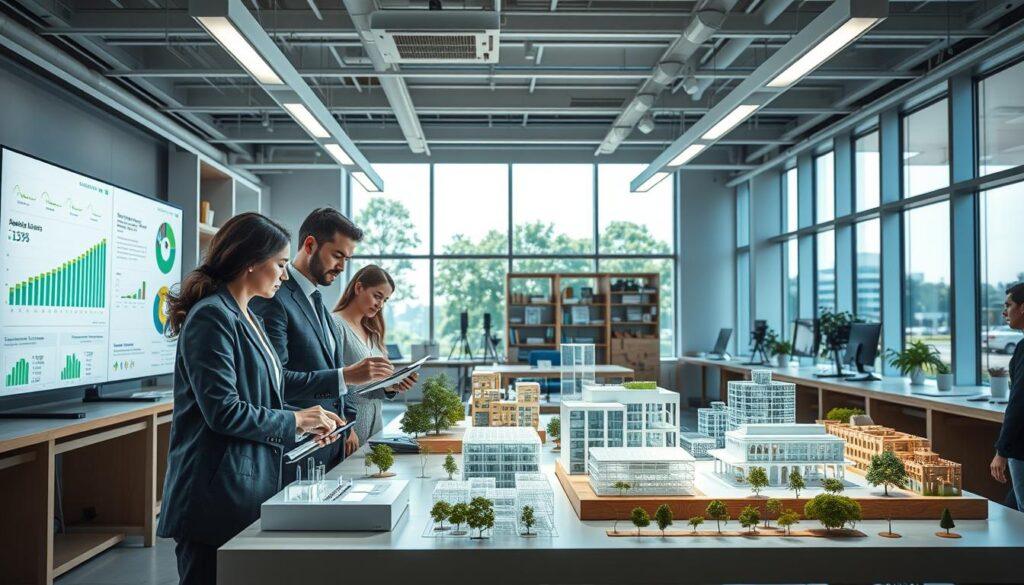
That report talked about integrated design. It’s simple yet groundbreaking. It means the architect, engineer, and contractor work together from the start.
This approach saves money. It avoids costly changes later on. It’s like building efficiency into a project from the beginning.
Conferences like SB07Toronto were key. They brought lab ideas to real-world projects. People shared stories and successes, showing high-performance is possible.
The Manitoba Hydro Building in Winnipeg is a great example. It shows integrated design works in real life, even with a budget.
This change reflects a bigger shift. We’re moving from a “take-make-waste” model to a circular economy. We’re focusing on sustainability from the start, not just adding it later.
The field is now the lab for sustainability research. Every construction site and finished building is a study. They show us how to do it better.
Industry Collaboration
Forget the myth of the solitary genius; our skylines are shaped by teamwork. In building science, progress is a team effort. It’s a mix of Academia, Government, and Industry working together.
This team effort is not just a theory. Look at the Canadian Green Building Council (CaGBC). It started small but grew big, thanks to over 1,000 corporate members. They made sustainable design a key part of the market.
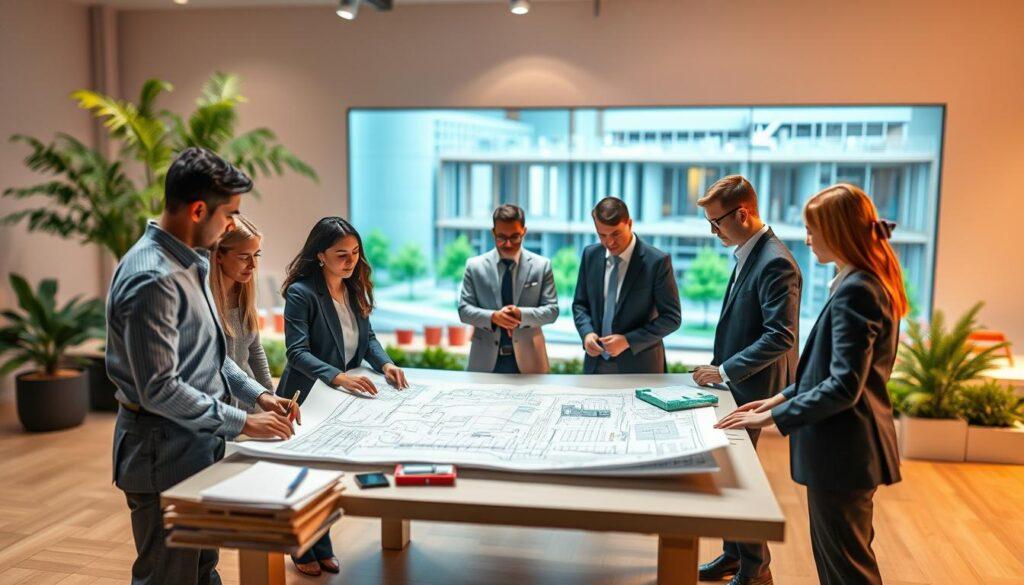
In Toronto, the Green Building Alliance brings together different groups. They include policy experts, conservationists, and developers. It’s a unique mix that leads to real change.
This collaboration works through a three-part framework. It turns ideas into real-world solutions.
Government sets the floor. They make sure buildings are safe and meet basic standards. This is the starting point.
Academia explores the ceiling. Researchers push the limits of materials and designs. They create new ideas, but they need a way to be used.
Industry builds the staircase. They find a way to make new ideas work and profitable. This is the hard part.
This team effort has driven progress for decades. They set standards and build trust in new ideas. It’s a lot of work, but it pays off.
When it works, it changes everything. Brilliant ideas become the new standard. It’s all about working together for a better future.
Future Trends
Forget flying cars; the real future shock is finding a carbon price tag on your building’s energy bill. The future of building science isn’t about one magic gadget. It’s about setting higher standards.
The era of feel-good, voluntary green is ending. A new era of mandatory, measurable performance is starting. This change is big.
First, the sheriffs are changing. Voluntary sustainability standards are being replaced by strict rules like the International Green Construction Code (IgCC). These rules are not suggestions but laws. Sustainability is now a legal requirement, not just a marketing point.
Second, carbon will soon cost you money. Carbon pricing is becoming a reality, affecting your building’s costs. This makes sustainability a financial necessity, not just a virtue.
This change makes building green cheaper. It creates a powerful drive for innovation.
The most exciting trend? The shift from “prescriptive” to “performance” codes. Old rules told you what to do. New rules focus on results. This encourages creativity and rewards achievement.
This evolution is detailed in analyses of key trends to watch. They show a move towards performance-based accountability.
Lastly, sustainability research is moving beyond damage control. We’re aiming for regenerative and restorative design. Imagine buildings that clean air, harvest water, and generate energy. This is net-positive architecture.
So, what’s the future? It’s not just one thing. It’s a tougher, smarter, and more exciting world. Codes will demand green, carbon will have a cost, innovation will be unleashed, and buildings will heal. The future of building is about more than shelter. It’s about making our buildings part of the solution.
Resources for Continued Learning
So, you’ve learned the acronyms. You know LEED, BREEAM, Energy Star, and Cradle to Cradle. But your journey in building science and sustainability research is just starting. It’s a lifelong quest for knowledge.
Start with the big names. The Canada Green Building Council and the U.S. Green Building Council are your go-to places. They offer a wealth of information. For the latest on sustainability research and job trends, check out SGTT’s market overview.
But don’t stop at reading. Look for sustainable design programs to join, and don’t miss out on conferences. The coffee might be bad, but the networking is worth it. It’s where you learn about the latest in building science — from energy-efficient materials to everyday innovations like sustainable reusable water bottles, which reflect how sustainability principles extend beyond buildings into daily life choices.
This field changes fast. Your dedication to learning is key. It’s not just for your career. It’s about being part of a sustainable future. If you don’t keep up, you’ll be designing for a world that’s gone.