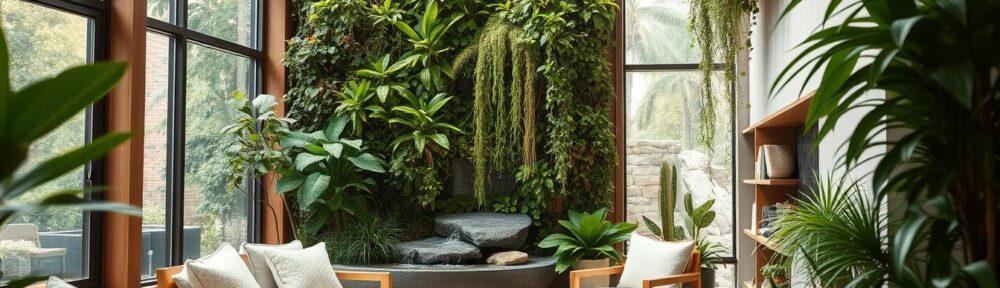
We often pretend our concrete homes and bright lights are progress. But, we’re really missing out on nature. This is called nature deficit disorder.
The word “biophilia” was first used by psychologist Erich Fromm in the 1960s. Biologist E.O. Wilson later made it famous. It means we have a natural love for living things.
Biophilic design brings nature into our buildings. It’s not just about adding plants. It’s about making our spaces feel like nature.
There are two ways to experience biophilic design. Direct experiences include sunlight, green walls, and water sounds. Indirect experiences use wood, stone, and organic shapes.
Is it just fancy decorating? No, it’s much more. It’s about making our spaces better for us. It asks if our homes can help us live better.
Health & Environmental Benefits
We spend over 90% of our lives inside, away from nature. This makes us sick, stressed, and less creative. Our bodies and brains didn’t evolve for the artificial world we live in.
Studies show natural elements can lower stress hormones more than deep breathing. They also boost mood-regulating neurotransmitters. It’s like a natural antidepressant without side effects.
Being around nature improves our focus, memory, and creativity. One study found biophilic design can increase creativity by 15%. This can turn a good idea into something groundbreaking.
A well-designed indoor environment is like a health supplement. Plants clean the air, and natural light helps us sleep better. Even the sound of water can lower blood pressure. Without these, we lose our energy.
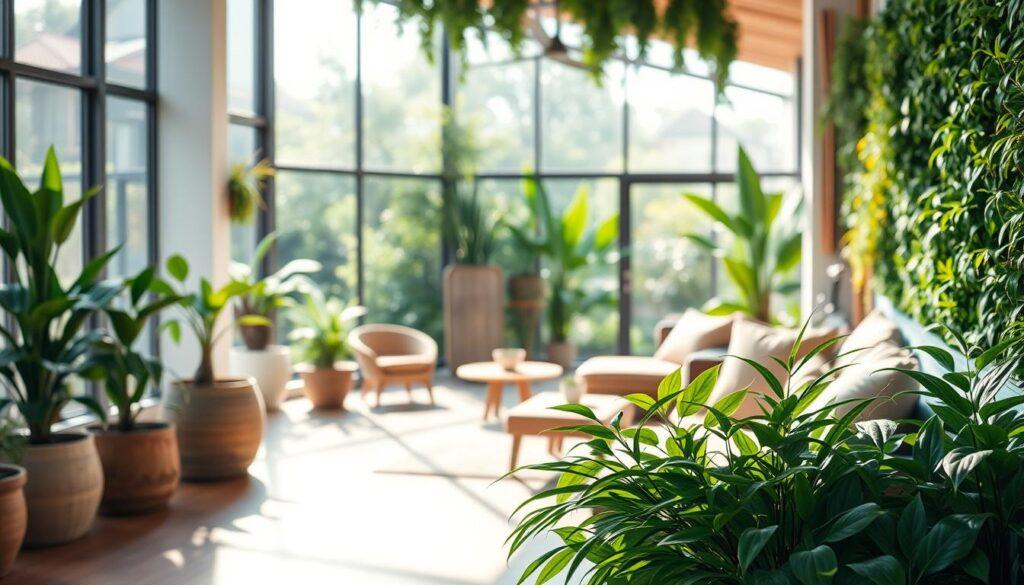
Work stress costs the European Union €20 billion a year. The U.S. figure is even higher. Biophilic design boosts productivity by 6% and well-being by 15%. That’s a big return on investment.
This isn’t just for corporate wellness. It’s a public health need. By 2050, most of us will live in cities. Our connection to nature will depend on our indoor spaces. We need to make our indoor environment work for us, not against us.
| Performance Metric | Sterile Indoor Environment | Biophilic Indoor Environment | Key Impact |
|---|---|---|---|
| Stress & Anxiety | Elevated cortisol levels, sustained fight-or-flight response. | Measurable reduction in cortisol; promotes physiological calm. | Lower healthcare costs, reduced burnout. |
| Cognitive Function & Creativity | Mental fatigue, diminished focus, lower innovation rates. | Up to 15% increase in creative output; improved memory and focus. | Directly boosts productivity and problem-solving. |
| Physical Health Markers | Poor indoor air quality (VOCs), erratic circadian rhythms, higher blood pressure. | Natural air filtration, regulated sleep/wake cycles, lower blood pressure. | Reduces sick days, improves long-term wellness. |
| Economic & Productivity Output | High stress-related absenteeism, stagnant productivity. | 6% productivity gain, 15% higher well-being score among employees. | Positive ROI through talent retention and output. |
The data is clear. Making our indoor environment more natural is a smart move. It’s not just about looks. It’s about our health, minds, and money. Our walls should have plants, not just ears.
Best Practices
Moving beyond just looking good, the best practices in biophilic design aim to improve human wellness. It’s not about making your office look like Jurassic Park. It’s about creating a space that speaks to our human nature, not just our work.
Your guide is Terrapin Bright Green’s “14 Patterns of Biophilic Design.” Think of it as a score for architects. The patterns are divided into three parts: Nature in the Space (plants, light, water), Natural Analogues (materials that remind us of nature), and Nature of the Space (how the space feels).
So, why do these patterns work? It’s all about science. Circadian Rhythm regulation is key. Natural light helps keep our internal clocks in sync, avoiding the zombie-like state of jet lag.
The Prospect-Refuge Theory is also important. Does your space offer a safe spot with a view? It’s like a safe cave with a lookout, meeting our primal needs for safety and opportunity.
Attention Restoration Theory shows why nature can refresh our minds. Nature’s patterns, like those in a carpet or living wall, can calm a stressed brain.
The ‘Blue Space‘ theory is another key concept. The sound of water isn’t just for looks. It can actually lower stress hormones, making us more productive.
So, how do you make these ideas work without feeling forced? First, maximize natural light in your space. Use light shelves, reflective surfaces, and open layouts. Let the sun be your main light source during the day.
Second, add living greenery thoughtfully. It’s not just about one plant. Create vertical gardens and choose plants for their air-purifying and calming effects. The right green can soothe us; the wrong one might make us feel sick.
Third, use organic materials genuinely. Choose real wood, natural stone, and woven textiles. Studies show that seeing wood can lower blood pressure. Pick materials that tell a story.
Fourth, include water features when you can. A small fountain, a courtyard pond, or even a sound track of water can bring that ‘Blue Space’ wellness benefit.
Lastly, create sensory connections. A good biophilic space engages all our senses. What does it sound like? Smell like? Feel like? It’s about creating a space that feels complete.
This approach designs for the whole human. It’s about using nature’s patterns in your design. It’s about creating a space that sparks curiosity and innovation.
The goal is to create a space that promotes wellness. When done right, it’s not just decorating. It’s creating an environment that reduces stress, improves focus, and makes us feel at home. It’s building a space where wellness can flourish.
Top Projects
Let’s explore the buildings where biophilic design is more than a concept. We’ll see the real deal, separating the good from the fake.
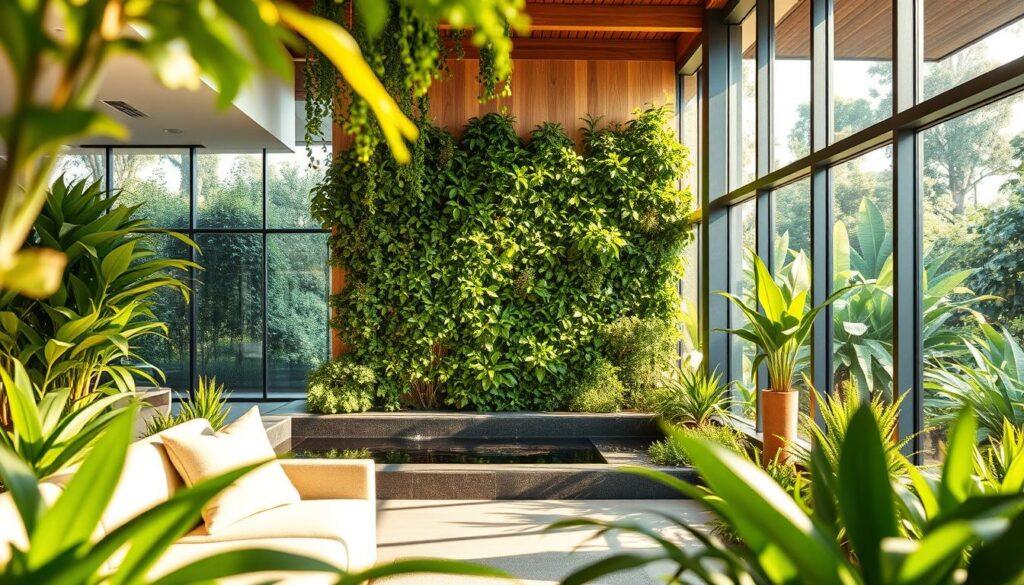
The WWF Living Planet Centre in the UK is a unique office. It has an open atrium with plants and water, making it feel like a habitat. This shows that the indoor environment should reflect the organization’s mission.
ByggVesta offices in Stockholm are a different story. They show you can have a great space without spending a lot. They use greenery, natural light, and organic materials to create a calm, productive space.
Restaurant Vakst in Copenhagen is a lesson in immersive dining. It’s like dining in a greenhouse, where plants surround you. This shows how a simple idea can transform a space and an experience.
The Naman Retreat in Vietnam is a luxury escape. It blends villa and jungle, making you forget where you are. It’s biophilic design at its finest, proving nature can be the ultimate luxury.
In homes, we see philosophy in action. Homes use big windows to show off the outdoors. Reclaimed wood and living walls turn apartments into treehouses, connecting us to nature.
So, what can you do on a budget? A lot.
- Borrow the view: Use natural light and views to any greenery, no matter how small.
- Use organic textures: A reclaimed wood wall or a jute rug can add warmth.
- Think vertical: DIY living walls or hanging planters bring life without taking up space.
- Incorporate water: A small fountain provides soothing sounds, a key biophilic design element.
The real lesson from these projects isn’t their budget. It’s their intent. They all ask: how should being here feel? The answer is to strengthen our connection with nature, creating a space that nurtures well-being.
Integrating into Workspaces
The standard office often feels like it was made by someone who dislikes happiness. It has harsh lights, recycled air, and walls that look like they’ve given up. This is where biophilic design comes in, turning theory into a real advantage.
Studies show that adding greenery can cut down on absences by 15%. It also makes call processing 6-12% faster. Plus, it boosts cognitive test scores by 10-25%. It’s not just a trend; it’s a way to improve performance.
Integrating greenery into offices is all about designing for humans. Replace a blank wall with a moss installation from Quiet Earth Moss. Choose bamboo partitions over plastic ones. Use plants to block out noise.
Make sure every desk has a view of nature or natural light. This creates a sensory environment. The sound of water features can calm stressful office noise. Natural wood under your feet feels grounding.
True wellness in the workplace is about the environment. It’s about creating a space where people thrive, not just survive. The future of work is about how our surroundings affect our thoughts and feelings.