
Our current economy is like a bad B-movie. We use resources, make things, and then throw them away. The movie ends with a shot of a landfill.
Imagine a new twist in the story. What if we could change how we think? That’s what the circular economy offers.
This isn’t just about recycling. It’s a systems-level framework with three main principles. First, we aim to eliminate waste and pollution early on. Second, we keep products and materials in use for as long as possible. Third, we work to restore natural systems.
It’s like moving from using disposable cups to a world where everything keeps moving. From a skyscraper’s steel to your office carpet, nothing goes to waste.
This approach is good for the planet and makes sense financially. It’s time to rewrite the script of our economy.
Construction Waste Challenges
The construction sector is like a black hole, using up resources and creating over 4 million tonnes of waste in Canada each year. This waste is one-third of the country’s solid waste. It’s like the top player in the landfill league.
This isn’t just a problem; it’s the main feature of our “take-make-waste” model. The built environment uses the most virgin materials and produces the most waste. We’re building our world but also burying it.
There’s no economic sense in this. It’s a huge loss of value. Good materials like steel, concrete, and lumber are seen as disposable. The default is to throw them away.
This isn’t just bad for the environment; it’s also a huge financial mistake. We’ve created a system where value is lost at the end of a building’s life.
Current efforts to manage construction waste focus on sorting the mess after it’s made. Recycling and waste-to-energy plants are better than landfills but are end-of-pipe solutions. They don’t solve the root problem.
The real solution is upstream prevention: designing buildings to avoid waste. This is the core idea of a successful introduction to circular economy.
So, why isn’t everyone doing it? The barriers are not just technical. They’re cultural, economic, and part of the industry’s structure. It’s cheaper to demolish a building than to deconstruct it carefully.
Let’s look at the main barriers.
| Barrier | Description | Impact |
|---|---|---|
| Cost Challenges | Virgin materials are often cheaper than recycled ones. Deconstruction is more labor-intensive than demolition. | Makes the linear “business as usual” the default choice, killing circular projects. |
| Lack of Awareness & Standards | No common definition for “circular construction.” Confusion over material health, recycled content, and durability claims. | Creates uncertainty. Developers can’t specify what they want, and suppliers can’t guarantee what they’re selling. |
| Industry Fragmentation | The supply chain is a patchwork of architects, engineers, contractors, and demolition crews with misaligned goals. | No one owns the full lifecycle. Responsibility for construction waste gets passed down the line. |
| Misaligned Policies | Building codes, zoning laws, and tax structures often favor new construction and penalize material reuse. | Puts circular innovators at a legal and financial disadvantage before they even start. |
| Infrastructure Gaps | Missing networks for material tracking, salvage yards, and reprocessing facilities for complex building materials. | Even if you want to reuse materials, the system to get them from a demolition site to a new project doesn’t exist. |
These barriers create a strong resistance to change. The industry is fragmented, so the pain of construction waste isn’t felt by any single player. It’s a collective tragedy of the commons.
This is the messy reality of our current situation. We have a brilliant circular idea, but we’re following a linear script. The mountain of solid waste is a symptom. The disease is a system designed for disposal.
To solve this, we need to confront these truths head-on. The first step is understanding the scale of the construction waste challenge. The next is to dismantle the barriers, one by one.
Circular Design Principles
We’ve spent centuries learning to build structures. The circular economy asks us to learn how to take them apart. This is a big change. It turns architecture from making permanent buildings to managing materials in a flow.
Imagine planning for a building’s next three lives on its first day. Bad design traps materials in concrete and glue. Good circular design sees every part as temporary, like a tenant with a lease.
The key is Design for Disassembly and Adaptability (DfD/A). It’s like using Lego, not building with concrete. We use bolts instead of welds and clips instead of glue. A wall should come apart as easily as it was built.
Every building needs a “medical record”: the material passport. This digital file lists every part, its source, and chemical makeup. It helps future generations understand the building, turning it into a library of parts.
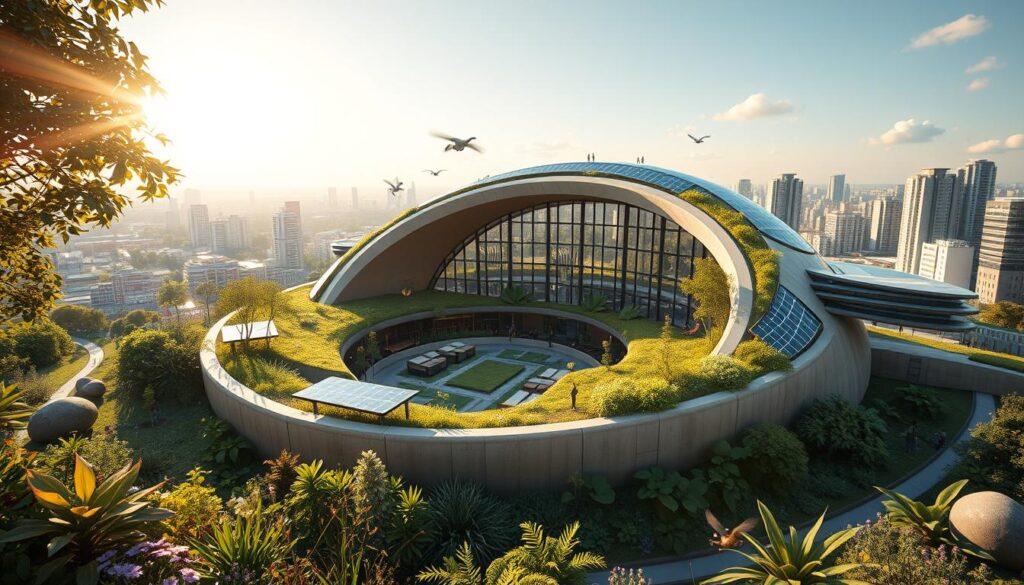
Tools like Building Information Modelling (BIM) make this possible. BIM creates a virtual twin of the building, tracking every element. It plans for adaptation, repair, and disassembly before construction starts.
What you use matters as much as how you use it. Circular inputs are essential. This means using renewable energy and recycled materials. The goal is to design without waste and harmful chemicals from the start.
This approach leads to a strategic hierarchy. It’s a filter for every decision, ranked by impact:
- Build Nothing: The most sustainable building is the one you don’t build. Can you adapt an existing space instead?
- Build Less: Optimize the program. Do you really need that much square footage? Every unused corner is wasted material.
- Build Clever: This is where DfD/A, material passports, and flexible building cores live. Design for change.
- Build Efficiently: Only after the first three steps do you focus on using the least energy and virgin material possible in construction.
This isn’t just a technical checklist. It’s a new philosophy for the built environment. It aligns perfectly with the broader principles of a circular economy, which seeks to eliminate waste and circulate resources. The architect’s role evolves from sole creator to savvy systems manager, managing materials for decades, not just for opening day.
Industry Examples
If you think recycling is just about separating plastics, you haven’t seen the Dutch turn a city hall into a ‘nutrient bank’ for future architecture. Enough theory. Let’s meet the pioneers treating our built environment less like a graveyard and more like a library of parts waiting for their next chapter.
Take Venlo City Hall in the Netherlands. This isn’t just a government building; it’s a Cradle-to-Cradle masterpiece conceived as a material depot. Every beam, pane, and panel is documented for future recycling and reuse. It’s architecture as a living, breathing resource loop. Think of it as a sophisticated savings account, but instead of cash, you’re depositing high-quality building materials.
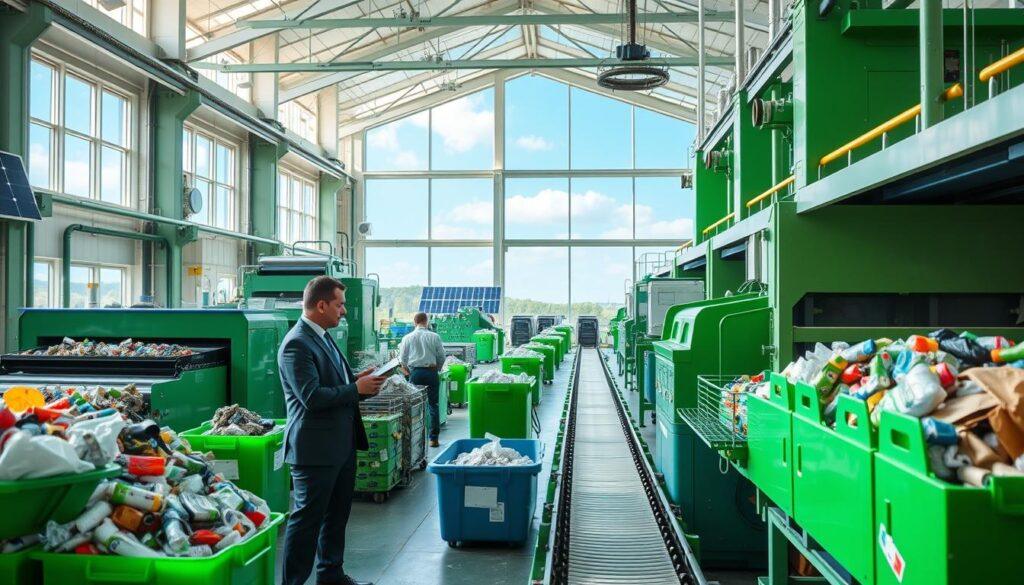
The philosophy echoes beyond construction. Consider Apeel’s plant-based coating for produce. It eliminates food waste and its packaging. The lesson? True innovation attacks waste from multiple angles. It’s a mindset now migrating from the grocery aisle to the construction site.
Here in North America, Canadian firms are leading a quiet revolution. Their playbook is practical and diverse:
- Mass Timber: Using renewable wood for skyscrapers, locking carbon away and creating structures that are beautiful, strong, and designed for disassembly.
- High-Content Mixes: Innovating with asphalt, concrete, and steel that contain significant recycled content, turning yesterday’s rubble into tomorrow’s foundation.
- Modular Construction: Building components off-site in controlled factories. This slashes waste by up to 90% compared to traditional, messy on-site work.
The most profound shift, though, is in the art of unbuilding. Deconstruction is slowly replacing demolition. We’re not talking about sledgehammers. We’re talking about surgical precision. Specialized firms carefully recover century-old timbers, pristine fixtures, and valuable metals. Why pulverize a heritage oak beam when you can salvage it for a high-end renovation? This is recycling with respect for history and value.
But the circular economy isn’t just about physical stuff. It’s about rethinking ownership. Why buy lighting when you can lease lumens? Product-as-a-service models are creeping into real estate. Companies provide lighting, HVAC, or even entire flooring systems as a service. They maintain it, upgrade it, and ultimately take it back for refurbishment. The building owner gets performance, not products. The manufacturer gets a returned asset, not trash.
This new flow of materials needs a marketplace. Enter digital platforms creating liquid markets for salvaged bricks, windows, and steel. These online hubs connect demolition crews with designers, turning waste into a commodity. It’s eBay for the built environment.
So, is the circular economy a utopian fantasy? Hardly. It’s a practical, profitable reality taking shape from Dutch city halls to Canadian timber frames. The future of recycling isn’t just in blue bins on the curb. It’s built into the very bones of our buildings, the contracts we sign, and the digital networks that give old materials a new life. The vanguard isn’t waiting. They’re already closing the loop.
Implementation Steps
Changing the game isn’t about finding a secret recipe. It’s about making small, yet significant, updates to our systems. Architects must envision the future, thinking about how buildings will be taken apart. Every choice of material is a decision for reuse or less construction waste.
Teaching everyone is key. From investors to site managers, they must see buildings as material banks, not disposable items. This shift encourages teamwork and new ways to make money by keeping value — much like broader sustainability efforts focused on reducing plastic water bottle waste, where long-term thinking replaces single-use habits.