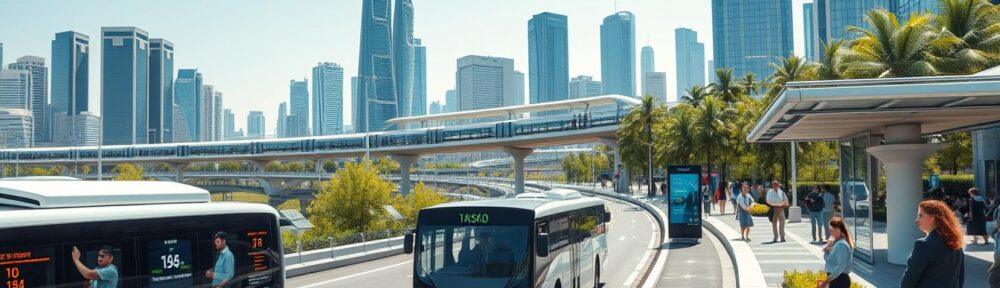
Our daily commute often feels like a mix of comedy and tragedy. It’s filled with honking horns and the frustration of a delayed train. But what if our commute could be intelligent?
This isn’t just about adding Wi-Fi to buses. We’re seeing a digital revolution in how we move around cities. The aim is to move from chaotic to smart, data-driven travel.
Imagine your phone guiding you through the city, avoiding delays. It might suggest a scooter and then a train, all perfectly timed. This is what smart public transit offers. It uses the Internet of Things (IoT) to make city travel smooth and efficient.
This vision is part of a bigger plan for smart cities. It combines digital and physical systems for better travel. We’re leaving behind old, chaotic ways for something more like a ballet. Even with modern touches like contactless payments.
These public transit innovations focus on connection. They use sensors and real-time data for a smarter commute. It’s about moving smoothly with the city’s new rhythm, not just waiting.
Digital Integration Revolution: Mobile Apps, Real-Time Data, and Contactless Payment Systems
Imagine a city’s transportation network with a central nervous system—that’s the reality being built by the digital integration revolution. It’s the silent, witty concierge in your pocket, having mercifully retired the era of fumbling for exact change and deciphering crumpled paper schedules. This isn’t just an upgrade; it’s a fundamental rewiring of how we interact with getting from A to B.
The mobile app is your primary interface. But today’s apps are leagues beyond simple bus trackers. They act as data synthesizers, pulling live feeds from a city’s sensory grid. We’re talking about pavement sensors, traffic signals, and vehicle telematics all whispering their status updates into a central brain. The result? Your app predicts congestion and delays with the confidence of a weather forecaster in a drought.
This predictive power is the heart of modern transit technology innovations. It transforms your commute from a game of chance into a strategic puzzle you can actually win. The Internet of Things (IoT) provides the backbone. Sensor networks gather real-time intel on everything from traffic flow to a bus’s engine health.
This creates an “always connected” mobility ecosystem. Fleet management software and integrated platforms use this constant data stream to optimize routes on the fly. They deliver instant updates and reroute vehicles around trouble before you even know it exists. Your wait time drops. Your blood pressure follows.
The slick, user-facing finale of this revolution is contactless payment. Tapping a phone or card at a turnstile is the frictionless exchange that feels like a subtle power move. You’re through before the person behind you finishes excavating their wallet from the depths of a bag. It’s not just convenient; it’s the definitive break from the analog past.
Let’s break down how these components work in concert:
| Digital Transit Tool | Core Function | Direct User Impact |
|---|---|---|
| Real-Time Transit Apps | Synthesize live data from multiple city systems (GPS, sensors, schedules) to provide accurate arrival times, service alerts, and multi-modal journey plans. | Eliminates uncertainty. Turns waiting from passive to proactive, allowing for better personal schedule management. |
| IoT Sensor Networks | Monitor traffic conditions, vehicle locations, passenger load, and infrastructure health continuously. | Enables more efficient, safer, and reliable service. Problems are identified and often solved before they disrupt your trip. |
| Contactless Payment Systems | Enable fare payment via NFC (Near Field Communication) technology from cards, phones, or wearables. | Dramatically speeds up boarding, reduces transaction friction, and simplifies fare structures (often with automatic capping). |
Together, these digital transit innovations form an intelligent layer over the physical infrastructure. They don’t just tell you where the bus is; they help the entire system run smarter. For the educated commuter, it’s less about riding a bus and more about commanding a seamless, data-driven journey. The revolution isn’t coming. It’s already in your hand.
Bus Rapid Transit Evolution: Dedicated Lanes, Electric Buses, and High-Frequency Networks
Imagine a world where buses are the stars of urban mobility, not flying cars. The Bus Rapid Transit (BRT) system has changed dramatically. It’s now a key part of sustainable public transport.
This isn’t your old bus service. Modern BRT is like urban surgery—quick, efficient, and green. It’s built on three main parts that urban planners love.
First, there are dedicated lanes. These aren’t just lines on the road; they’re special paths. They let buses move fast, without getting stuck in traffic.
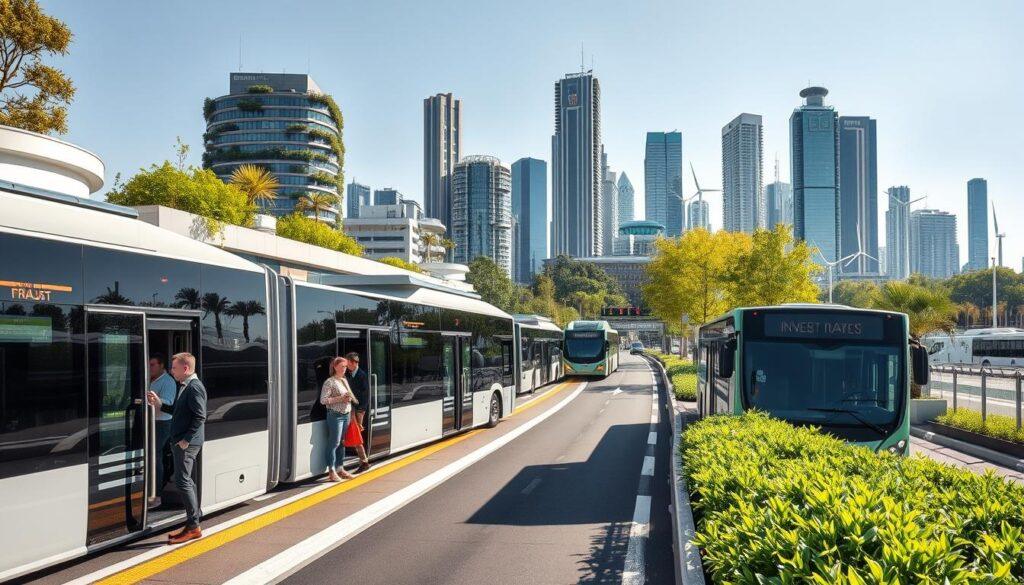
Second, electric buses are taking over. They’re quieter and better for the planet. Cities like Los Angeles and New York are choosing electric buses for their smart mobility plans.
Electric buses are a big win for the environment. They cut down on CO2 emissions by a lot. This means cleaner air and less pollution.
Third, BRT systems run often. This makes people trust the buses more. They start to use them all the time, making the system even better.
Let’s compare old buses to BRT:
| Feature | Traditional Bus System | Modern BRT System |
|---|---|---|
| Infrastructure | Mixed traffic, frequent delays | Dedicated lanes, signal priority |
| Propulsion | Diesel engines, higher emissions | Electric buses, zero tailpipe emissions |
| Frequency | 30-60 minute intervals | 5-10 minute headways |
| Environmental Impact | Contributes to urban air pollution | Core component of sustainable public transport |
| Passenger Experience | Unpredictable, often crowded | Reliable, with real-time information |
The change is huge, not just in tech. Cities now focus on moving people, not cars. BRT shows that mass transit can be fast and respectful.
But, there are challenges. Cities need to be brave about dedicated lanes and invest in electric buses. Yet, the benefits are clear. As electric bus costs drop, the case for them gets stronger.
So, when you see an electric bus moving smoothly, remember. It’s not just a bus. It’s a sign of a city’s smart move toward a better future. The bus has truly arrived.
Rail System Modernization: Maglev Technology, Hyperloop Development, and High-Speed Rail Projects
Forget the old sound of trains on tracks. The future of rail is silent and fast, almost magical. It’s not just an update; it’s a new way of thinking about trains, showing the bold side of transit technology innovations.
Modern rail is like a speedy, futuristic bus. We’re moving from old-school trains to new, high-tech ones. This change shows our big dreams and our desire to make a statement with our infrastructure.
Let’s talk about maglev technology, straight from a sci-fi movie. These trains float, not roll, thanks to magnets. They go super fast, up to 375 mph, like the Shanghai Maglev.
The ride is smooth and quiet. It’s like driving on air, not rough roads. This tech means less wear and tear, lower costs, and better efficiency. It’s a big step forward, but it’s expensive to build.
Then, there’s the Hyperloop, a wild idea from Elon Musk. Imagine a pod in a tube going super fast. It could go over 700 mph, cutting travel time to almost nothing.
It’s a bold idea, but it’s not proven yet. Is it a dream or a real plan? Companies are testing it, showing our desire to make travel faster.
While maglev and Hyperloop get all the attention, high-speed rail (HSR) is working hard today. Systems like Japan’s Shinkansen and France’s TGV go fast, up to 220 mph.
They make travel faster, turning long trips into short ones. HSR uses smart tech to run smoothly and safely. It’s all about making travel better.
The following table breaks down how these three pillars of rail modernization stack up:
| Technology | Top Speed (Approx.) | Propulsion Method | Current Status | Iconic Example |
|---|---|---|---|---|
| Maglev | 375 mph | Magnetic Levitation & Propulsion | Operational (Limited Lines) | Shanghai Maglev, China |
| Hyperloop | 700+ mph (Theoretical) | Electric Propulsion in Low-Pressure Tube | Concept & Prototype Testing | Various Proposed Routes (e.g., Chicago-Columbus-Pittsburgh) |
| High-Speed Rail | 220 mph | Electric Motors on Steel Wheels | Widely Operational & Expanding | Shinkansen (Japan), TGV (France) |
These different approaches share a common goal: to make travel faster and better. They show that traveling can be exciting and efficient, not just a hassle.
Mobility as a Service (MaaS): Integrated Transportation Platforms and Multi-Modal Journey Planning
Think of your smartphone as a universal remote control for the city—Mobility as a Service (MaaS) is the app that puts every transit option on one screen. It’s like Netflix for getting around. Why stick to one thing (car ownership) when you can have it all?
This model changes travel by combining public buses, ride-shares, e-scooters, bike shares, and subways into one experience. Owning a car in a dense city is like owning a private elevator. It’s a fixed cost for a world that values flexibility. MaaS platforms challenge this old way of thinking.
The magic is in the app’s intelligence. It doesn’t just show options; it gives you the best choice. The app acts as your transit brain, solving the puzzle of getting home. It turns a multi-modal headache into a curated journey.
This shift empowers consumers. It’s about choice and flexibility, paid through subscription. Below is a breakdown of the typical MaaS menu, a smorgasbord for the modern urbanite.
| Plan Type | Core Features | Ideal User | Key Benefit |
|---|---|---|---|
| Pay-As-You-Go | Unified payment across all modes; real-time planning & pricing. | The occasional multi-modal traveler; visitor. | Maximum flexibility with zero commitment. |
| Monthly Mobility Bundle | Fixed monthly fee covering a set value of trips across public transit and partnered services. | The daily commuter seeking cost predictability. | Budget control and possible savings over separate fares. |
| Corporate / Campus Plan | Bulk subscriptions for employees or students; integrated with HR systems. | Large organizations reducing parking demand. | Simplified commuting benefits and sustainability reporting. |
| On-Demand Premium | Priority access to rideshares and e-vehicles; guaranteed last-mile connections. | The time-sensitive professional. | Reliability and time-saving during peak hours. |
The ultimate promise? Optimization of your life, not just your trip. It’s urban consumerism for the pragmatic mind. You’re not buying a product (a car); you’re subscribing to an outcome (effortless mobility). Of course, the concept is evolving. For a sharper look at what MaaS is and isn’t, the boundaries are worth defining. This isn’t just a better app. It’s a rewrite of the urban mobility contract.
Autonomous Public Transit: Self-Driving Buses, Automated Trains, and Safety Technology Integration
Forget the steering wheel; the future of public transportation is in the hands of sensors, AI, and a relentless focus on safety. This isn’t a dystopian takeover. It’s a logical upgrade. The biggest risk in transit has always been the wonderfully flawed human behind the wheel—prone to distraction, fatigue, and the occasional bout of road rage. Transit automation is here to politely, and algorithmically, relieve us of that duty.
Picture a self-driving bus. Its suite of sensors acts as a 360-degree conscience, gliding with preternatural calm through the chaos of rush hour. Guided by sophisticated AI, these vehicles don’t just follow a map. They read the road, predict pedestrian movements, and maintain optimal spacing. The result? A significant reduction in human error, which translates directly to safer streets for everyone.
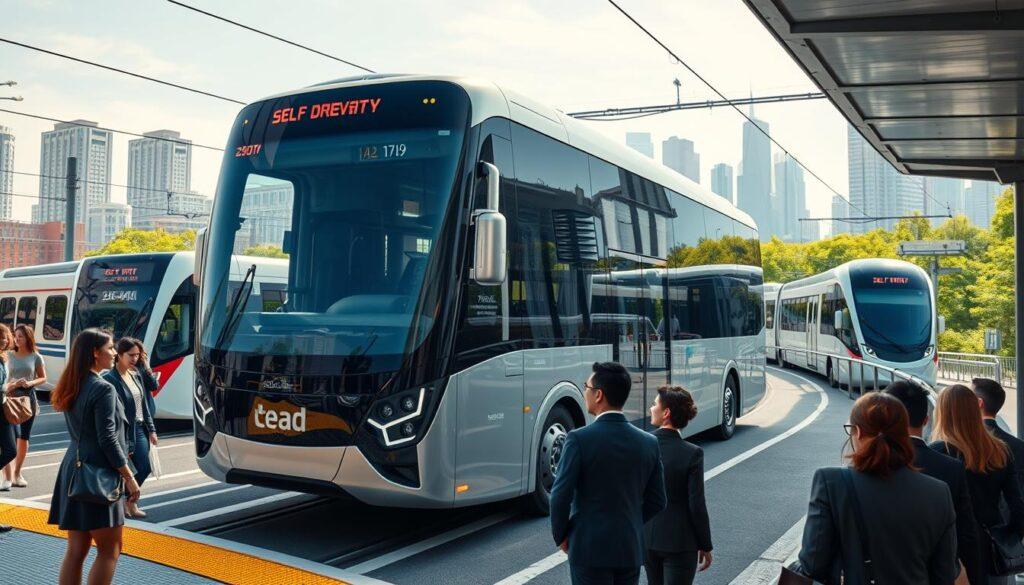
Automated trains have been the silent professionals of the rail world for years. On many metro lines worldwide, they operate with clockwork precision, unburdened by shifts, breaks, or human reaction times. This existing success story proves the core principle: when you remove volatile human variables, you gain efficiency and reliability by default.
The magic isn’t just in removing the driver. It’s in layering a safety net so robust it makes traditional methods look like a quaint, dangerous relic. This integration combines LiDAR, cameras, and radar into a sensory shield. The AI doesn’t just see a stopped car; it understands the possible chain reaction and adjusts speed milliseconds before a human would even process the threat.
So, is this about eliminating jobs? Hardly. It’s about eliminating fender benders, signal violations, and the tragic accidents that stem from a momentary lapse. The data is clear: autonomous vehicles, guided by complex algorithms, pave the way for a more efficient and fully automated urban transport future. It’s the cold, precise logic of machines applied to the chaotic poetry of city streets.
The path forward for autonomous public transit is one of cautious integration and relentless testing. The goal isn’t a driverless world for its own sake. It’s a safer, smoother, and more predictable mobility experience for all. The steering wheel had a good run, but the algorithm’s turn has come.
Electrification of Transit Fleets: Battery Buses, Electric Trains, and Renewable Energy Integration
Imagine a transit system with no emissions, just a sigh of relief from city planners. Welcome to the era of electrified fleets. This isn’t just a fuel swap; it’s a full-scale reinvention of urban mobility. The old diesel clatter is being archived, replaced by the serene hum of electrons at work.
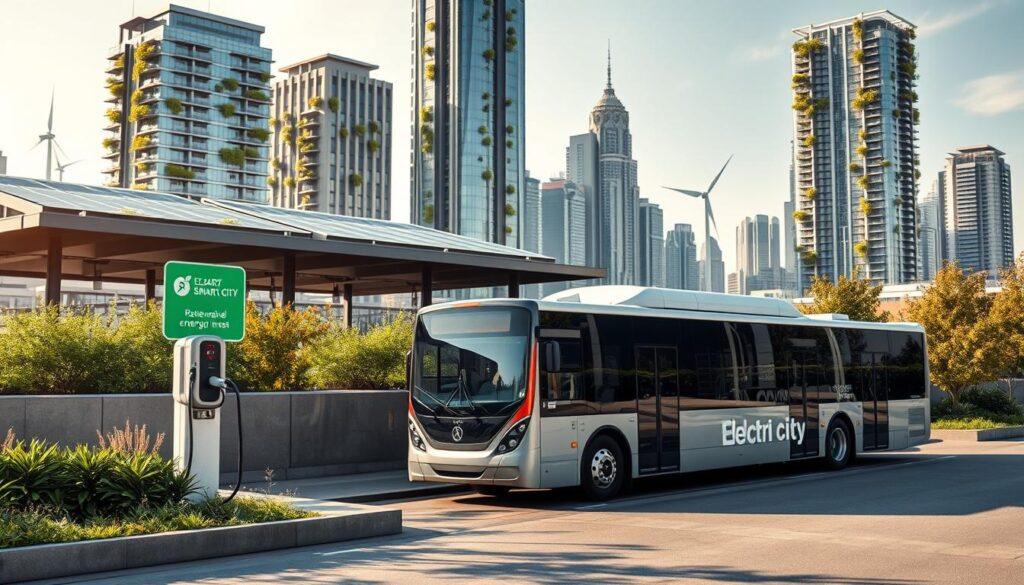
Battery-electric buses are the obvious poster children. They ditch the fossil-fuel rattle for a silent, emission-free glide through city streets. But their magic isn’t just in the quiet. It’s in the math. No tailpipe means cleaner air right where people live and breathe. Cities from New York to Los Angeles are rapidly deploying them, backed by an ever-expanding network of charging stations. This infrastructure is fast becoming the backbone of smart city mobility.
Then we have the workhorses: electric trains. They’ve been around, but now they’re getting a green upgrade. The goal is to power them with grids fed by solar and wind. Think about that. Your morning commute could be literally powered by yesterday’s sunshine. This transforms the entire concept of sustainable public transport into a holistic loop. The vehicle is clean because its energy source is, too.
This integration is the real game. Smart mobility aims to slash energy use and environmental impact. We’re not just putting electric vehicles on the road. We’re creating a system where renewable energy generation, storage, and consumption are in sync. It’s a closed-loop of environmental responsibility. The result? Cities that breathe easier, both metaphorically and literally.
Let’s break down the shift. The table below contrasts the old guard with the new electric vanguard.
| Aspect | Traditional Transit | Electric Transit | Key Impact |
|---|---|---|---|
| Power Source | Diesel, gasoline, or coal-powered grid | On-board batteries & renewable-grid electricity | Decouples transport from fossil fuels |
| Local Emissions | High (CO2, NOx, particulate matter) | Zero at point of use | Immediate air quality improvement |
| Noise Pollution | Significant engine and mechanical noise | Near-silent operation | Quieter, more livable urban streets |
| Operational Efficiency | Lower; energy lost as heat and noise | Higher; electric motors are over 90% efficient | Reduces overall energy demand per passenger |
So, what does this mean for your city? It means “zero-emission” is evolving from a slogan on a bus side to a measurable reality. This wave of electrification turns transit from a carbon culprit into a green guardian. It’s a tangible step toward a truly sustainable public transport network.
The vision is clear. A future where every bus and train is a moving testament to cleaner technology. This isn’t just about getting from A to B. It’s about ensuring the journey leaves the lightest possible footprint. That’s the promise of a smart, electrified transit system.
Data Analytics in Transit: Predictive Maintenance, Route Optimization, and Passenger Flow Analysis
If data is the new oil, then transit agencies are becoming the world’s most sophisticated refineries. This isn’t about dusty spreadsheets. It’s about turning raw information into the high-octane intelligence that makes smart public transit feel like magic. We’re talking about a silent, digital nervous system that anticipates problems, reroutes flows, and understands the city’s heartbeat.
Let’s start with the unsung hero: predictive maintenance. Imagine a train axle bearing that hasn’t even begun to grumble. Machine learning models, fed with vibration and temperature data, can sense its impending failure weeks in advance. This is the ultimate “whisper before the scream” technology. It prevents the minor hiccup that cascades into a system-wide meltdown, saving millions in emergency repairs and lost rider hours.
Next up is route optimization, where the map gets rewritten in real-time. AI-driven smart tech doesn’t just follow a pre-set bus path. It analyzes live congestion, accidents, and even weather patterns. The system then bends bus routes like light around obstacles, managing traffic flow to reduce gridlock before it even forms. Your bus isn’t stuck in traffic; traffic is being actively managed around your bus.
Lastly, there’s passenger flow analysis. This is the art of understanding the tidal rhythms of a city—where crowds pool at 5 p.m., how a stadium event will ripple through the subway. By analyzing turnstile data, Wi-Fi pings, and ticket scans, agencies can gently guide these human currents. They add extra cars to a train line or adjust bus frequencies, creating a smoother experience for everyone.
These three pillars form the brainstem of modern transit technology innovations:
- Predictive Maintenance: Listens to the machines to stop breakdowns before they start.
- Route Optimization: Uses AI to dynamically clear paths and slash commute times.
- Passenger Flow Analysis: Maps the human tide to prevent overcrowding and streamline journeys.
Together, they transform data from a record of the past into a blueprint for the future. The result? A city that doesn’t just react to chaos, but anticipates and elegantly sidesteps it. That’s the quiet power of data analytics—the ultimate co-pilot for urban life.
Accessibility Innovations: Universal Design, Assistive Technologies, and Inclusive Transportation
A ‘smart’ city that ignores its most vulnerable citizens isn’t smart. It’s just a high-tech gated community. A transit system that isn’t accessible to everyone is a failed system, full stop. True innovation means making every vehicle, platform, and digital interface accessible from the start.
Imagine a transit app that guides visually impaired users to the bus door. Or an on-demand paratransit service as easy as a rideshare app. This is smart mobility being affordable and accessible for everyone.
Sustainable public transport is about more than just being green. It’s about being fair and inclusive. A system is only sustainable if it works for everyone, not just the able-bodied. It’s about dignity by design. Supporting vulnerable populations is key to a civilized society.
The shift from basic compliance to human-centered design is huge. The table below shows how we’ve moved from old ways to new, inclusive approaches.
| Aspect | Traditional Approach (Compliance-Focused) | Innovative, Inclusive Approach (Design-Focused) |
|---|---|---|
| Physical Access | Retrofitted wheelchair ramps, basic priority seating. | Vehicles designed with low-floor entry, automatic ramps, and flexible interior spaces from the ground up. |
| Information Access | Static audio announcements, printed schedules in standard font. | Real-time app integrations with screen readers, adjustable text/contrast, and personalized journey alerts via multiple channels. |
| Service Model | Fixed-route, fixed-schedule paratransit requiring lengthy advance booking. | Dynamic, on-demand micro-transit networks that integrate with mainline services, allowing real-time booking and payment. |
| Outcome | Basic mobility for some, with significant barriers to spontaneity and independence. | Equitable access fostering independence, social inclusion, and full participation in city life for all. |
Building with this mindset strengthens our social fabric. A city that moves everyone efficiently and respectfully is truly intelligent. The goal of sustainable public transport is a network where innovation serves humanity. It proves that the most civilized transit solution is the one that leaves no one behind.
Public-Private Partnerships: Funding Models, Technology Collaboration, and Innovation Acceleration
The partnership between city governments and tech giants might seem like science fiction. But it’s the key to making public transit smarter. It’s a meeting of two worlds: slow-moving government and fast-paced tech.
These partnerships bring together money and ideas. Cities have tight budgets, while tech companies have plenty of cash. Together, they fund new ways to move people around cities.
This partnership is a mix of public and private. The government makes sure everyone has access and safety. Tech companies bring speed and creativity. It’s a team effort that leads to new ideas in transit.
For this partnership to work, everyone needs to speak the same language. City planners know the streets, tech experts understand code, and policymakers handle rules. They all need to work together.
International standards, like ISO, help them communicate. They make sure different systems can work together. This way, a city’s systems can talk to each other smoothly.
This leads to fast progress in making cities smarter. Cities don’t have to start their own tech companies. Companies get to test their ideas in real life. This is how new ideas in mobility as a service become a reality.
These partnerships are complex and sometimes hard to manage. But they are vital. They help cities become smarter and more efficient. In the quest for smarter cities, these partnerships are the key to success.
Career Opportunities: Urban Planning, Transportation Engineering, and Smart City Technology Roles
Where do you fit in this new world of technology and urban planning? The future needs architects, not just of buildings, but of systems.
Career paths are booming where data, hardware, and human experience meet. Urban planners now use data science to create digital models of cities. They aim to improve smart public transit.
Transportation engineers must understand both the physical and digital sides of their work. New roles are popping up, like AI ethicists for transit and MaaS platform managers. These are the jobs for those who love to learn and solve complex problems.
Building smart public transit is more than just a technical challenge. It’s a mix of social and technical skills. The future of work might be at the bus stop, designing the next big thing in transit.