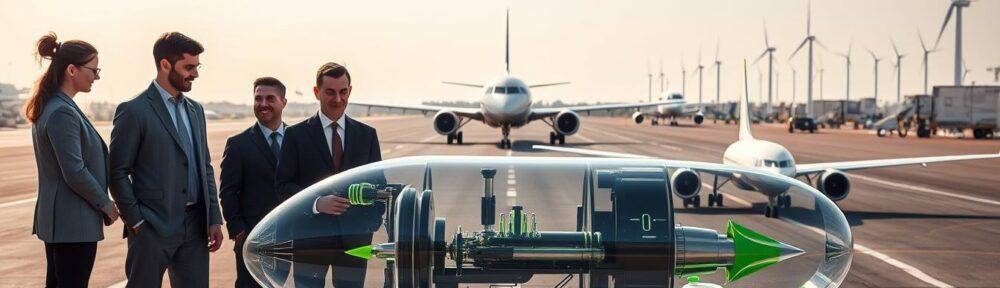
Booking a flight in 2024 might feel a bit guilty. It’s like ordering a double cheeseburger after learning about heart health.
But, what if you could enjoy flying without the guilt? Meet sustainable aviation fuel (SAF). It’s not your old-school jet fuel. This new fuel cuts down on emissions a lot.
Delta Airlines says each gallon of SAF can cut emissions by up to 80% compared to regular jet fuel. That’s a huge difference.
But, there’s a catch. We need more of it. The U.S. government wants to make 3 billion gallons of SAF by 2030. It’s a big goal, showing this isn’t just green talk.
This article is your ticket to the latest in eco-friendly flying. We’ll look at how to make fuel from waste and if electric planes are ready to fly. Get ready for takeoff.
Electric Aircraft Development: Short-Range Flights, Battery Technology, and Hybrid-Electric Systems
Imagine a regional airliner with an electric motor instead of jet engines. This idea is close but held back by a big problem. It’s about the weight of batteries versus energy needs.
The future of flying is in short trips with electric planes. But, we’re not ready for long-distance flights yet. The focus is on trips under 500 miles.
The Weight Watchers Program for Planes
The main issue is the battery. Current batteries are heavy and not very efficient. Technical analysis shows they are 50 times heavier than jet fuel for the same energy. They also take up a lot of space.
For a quiet flight for 50 passengers, the battery pack is as heavy as a small elephant. The goal is to make batteries lighter and more efficient.
This is a big problem. It stops electric planes from flying long distances. They are only good for short trips and small planes.
The Hybrid Hedge: A Pragmatic Crutch
Hybrid-electric systems are a solution. They mix batteries with a fuel-burning generator. It’s like a plug-in hybrid SUV for planes.
This system is smart. It uses batteries for takeoff and climb, then the generator for cruising. It’s a way to cut emissions now without waiting for better batteries.
For airlines, it’s a smart choice. It lets them try out electric systems and get ready for the future. Hybrid systems are likely to be the first to be used in commercial flying.
The future of flying is a two-part journey. One part is improving battery technology. The other is making hybrid systems better. Both are needed to make flying cleaner and more efficient.
Hydrogen Aviation: Fuel Cell Aircraft, Liquid Hydrogen Storage, and Long-Distance Flight Applications
Modern aviation is all about fitting the lightest element, hydrogen, into big planes. Hydrogen has been called the “fuel of the future” for years. Now, with a push for aviation decarbonization, it’s getting a big investment.
Hydrogen is promising. It burns clean, leaving only water vapor behind. This makes it a top choice for long flights. But, there’s a big challenge ahead.
There are two main ways to use hydrogen. One is fuel cells, which make electricity for planes. The other is modifying engines to burn hydrogen. But, storing hydrogen is hard.
Hydrogen is very dense by weight but takes up a lot of space. Compressed hydrogen gas is about six times bigger than jet fuel for the same energy.
To make hydrogen work, we need to freeze it. This makes it smaller but requires special tanks. These tanks are like giant, insulated thermoses. It’s like carrying a frozen dragon in the plane.
| Feature | Hydrogen Fuel Cell Aircraft | Hydrogen Combustion Aircraft |
|---|---|---|
| Primary Process | Electrochemically converts H₂ to electricity, powering motors. | Burns H₂ directly in modified gas turbine engines. |
| Key Emission | Water vapor and heat. | Water vapor, heat, and some nitrogen oxides (NOx). |
| Efficiency | Higher overall energy efficiency. | Lower efficiency than fuel cells, but higher power output. |
| Range | Best for short-to-medium haul (under ~1,500 miles). | Theoretically capable of medium-to-long haul flights. |
| Core Challenge | Integrating fuel cell stacks and electric motors; LH2 storage. | Engine combustion stability; extreme LH2 storage and handling. |
Storing hydrogen is a big problem. It needs a whole new design for planes. Companies like Airbus are working on special tanks. The plane becomes a giant, flying fridge.
Is hydrogen the answer for long flights? It has great energy density. But, there are big challenges. We need to solve insulation and safety issues. We also need a lot of green hydrogen.
Switching to Sustainable Aviation Fuel (SAF) helps now. But, hydrogen and electric planes are key for the future. Hydrogen is not for tomorrow. It’s for long flights. It’s a big bet on science and technology. The future of flying might depend on mastering cold temperatures.
Carbon Reduction Strategies: Operational Efficiency, Flight Path Optimization, and Weight Reduction
Imagine your airline pilot as a hyper-miler, obsessed with every gram and every mile—that’s the reality of modern carbon reduction strategies in aviation. While headlines chase the shiny objects of electric flight and hydrogen jets, a quieter, more meticulous revolution is happening right now. It’s the unsung hero of green aviation technology: a relentless, multi-front campaign to wring every drop of efficiency from the act of flying itself.
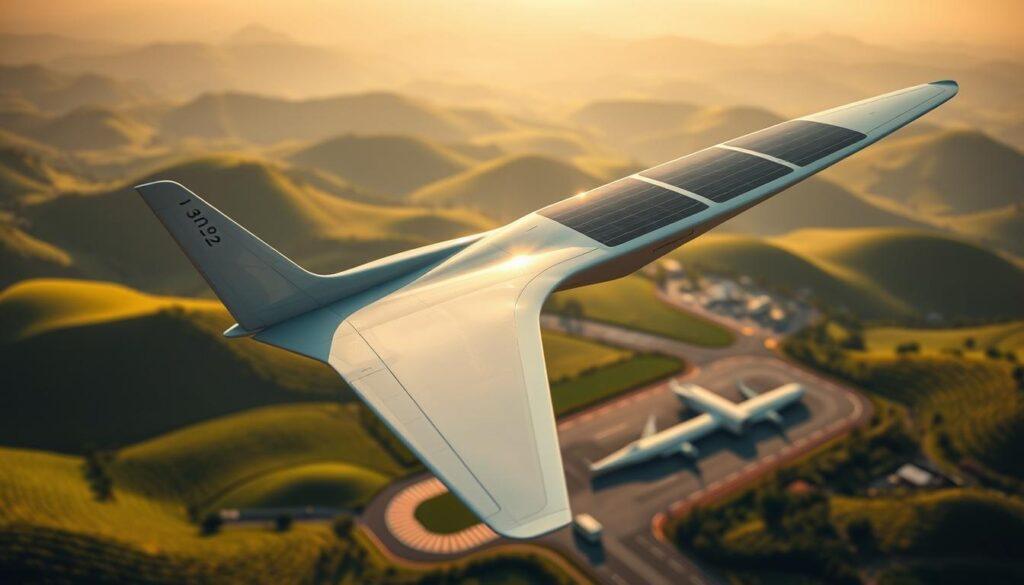
Let’s start with the tarmac. Operational efficiency isn’t just a buzzword; it’s a symphony of small, smart changes. Airlines now practice single-engine taxiing, use electric ground vehicles, and have perfected the “continuous descent approach.” This lets a plane glide down from cruise altitude with engines near idle, like a silent, fuel-sipping eagle. It’s the aviation equivalent of coasting your car to a stoplight to save gas—but on a scale that saves thousands of gallons per flight.
Then there’s the skyway. Flight path optimization is basically “Waze for the clouds.” Using real-time weather data and artificial intelligence, dispatchers plot routes that minimize headwinds, ride favorable jet streams, and avoid turbulence. The goal? The straightest, smoothest, most fuel-efficient line between two points. Some systems even look for ways to avoid creating contrails, those icy clouds that can trap heat. It’s a high-stakes game of digital chess played across continents.
Lastly, we have the gram game. Weight reduction is where engineering meets obsession. Every extra pound requires more fuel to lift and carry. So, airlines are swapping out heavy seats for carbon-fiber models, using lighter catering carts, and even removing redundant manuals and tools. They’re painting planes with special, ultra-smooth coatings to reduce aerodynamic drag. It’s a process so detailed it would make a Swiss watchmaker blush. When you’re burning 5,000 gallons of fuel per hour, shaving off a few hundred pounds adds up to a lot of saved carbon.
This isn’t a solo mission. As noted, major carriers blend Sustainable Aviation Fuel (SAF) into their operations, and airports collaborate with manufacturers to clean up everything from ground power to flight training. It’s the aviation industry cleaning its room before the company—aka the planet—comes for inspection. It may lack the glamour of a new aircraft reveal, but in the race to decarbonize, these operational tweaks are the low-hanging fruit we can harvest today. They prove that the most practical green aviation technology isn’t always the flashiest; sometimes, it’s the smartest use of what we already have.
Industry Partnerships: Airlines, Manufacturers, and Technology Companies Collaboration
The aviation industry’s push for sustainability is like a superhero movie. It’s a team effort with big names like Boeing and Airbus teaming up. They’re all working together because no one can do it alone.
These partnerships are about sharing the risk of new technology. It’s a smart move to stay in business. Look at the joint ventures popping up everywhere. Airbus and Renault are working on battery technology together. Boeing and Alaska Airlines are testing sustainable fuels.
It’s not just about making planes cleaner. Airports and manufacturers are also working together. They’re using electric tugs and hydrogen-powered equipment. This makes the whole process greener.
Let’s look at who’s in these partnerships:
- The Airline-Manufacturer Pact: Airlines like United or Delta help with data and money. Manufacturers like Embraer or Textron Aviation provide the tech. Together, they make new tech safer for flights.
- The Tech-Infusion Alliance: This is where aircraft electrification gets exciting. Aerospace firms team up with tech startups. They bring in new ideas and skills.
- The Energy Consortium: This is the odd couple of the partnerships. Oil majors like Shell and BP are working on green fuels. They use their big resources to help.
But is this all just greenwashing? Some people think so. A press release about being green is easy. But actually making it happen is hard.
We can tell if it’s real by looking at results. Are there new patents? Are there orders for the tech? When a big airline pre-orders 100 electric aircraft, that’s a big deal. But when two companies just talk about working together, it might not mean much.
This network of partnerships is key for innovation. It lets different teams try different things. Maybe one will figure out hydrogen storage, and another will improve aircraft electrification. The goal is to make flying cleaner, one partnership at a time.
Regulatory Framework: FAA Certification, International Standards, and Environmental Compliance
Getting sustainable aviation tech off the ground is a big challenge. It’s like navigating a maze with lots of rules. Before new tech can fly, it must pass many tests and meet international standards. This ensures it’s safe for everyone.
The system has three main parts:
- FAA Certification: In the U.S., getting approval from the Federal Aviation Administration is tough. It involves lots of engineering checks and safety tests. It’s a big hurdle, but it’s necessary to fly in U.S. skies.
- International Standards (ICAO): Planes travel all over the world, so rules must be global. The International Civil Aviation Organization (ICAO) sets these standards. It’s important for the U.S. to follow these rules so planes can fly everywhere.
- Environmental Compliance: This part focuses on being green and following the law. It includes local and global rules, like CORSIA. New sustainable aviation fuel policies must fit into these rules. The 2021 U.S. SAF Grand Challenge is working to make this happen.
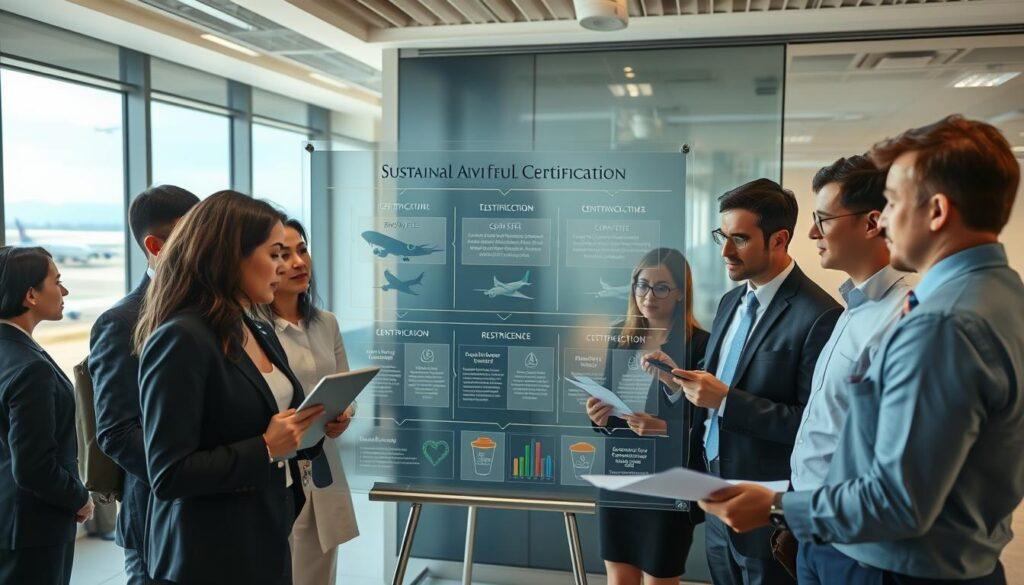
Is this process slow compared to tech startups? Yes, it often is. But in aviation, safety comes first. This careful balance between new ideas and rules makes flying safe. Knowing this complex system helps us understand the future of flying.
Economic Analysis: Cost Competitiveness, Investment Requirements, and Market Transformation
Sustainable Aviation Fuel (SAF) aims for a cleaner future but comes with a high price. This price is as shocking as a sudden drop in cabin pressure. The economics of green flight are currently in turmoil. We face a huge puzzle with technology, policy, and money not fitting together yet.
The main problem is the “green premium.” SAF is two to five times pricier than regular Jet A. Airlines are already on thin margins. Passengers want green options, but will they pay more for a ticket? This premium is a big hurdle.

The investment needed is enormous. Changing the global fleet will cost trillions, not billions. This includes new fuel refineries, electric aircraft development, hydrogen infrastructure, and factory updates. Venture capital is flowing, but governments, pension funds, and oil majors need to step up. It’s a high-stakes gamble.
To push for change, we have two main tools: carbon taxes and fuel mandates. My analysis shows a sobering fact. One study says reducing emissions costs about $470 per ton of CO2. This is more than double the current cost of carbon. It’s a heavy burden for early adopters.
The numbers are clear. SAF is more expensive than fossil jet fuel and biofuels for cars. Without policy push or subsidy, market adoption is impossible. We must decide which policy is most effective.
| Strategy | Estimated Cost per Ton CO2 Reduced | Key Economic Challenge | Potential Scale (Near-Term) |
|---|---|---|---|
| Sustainable Aviation Fuel (SAF) | $300 – $1,000+ | Feedstock cost & limited refinery capacity | Medium (Blending) |
| Electric Aircraft (Short-Haul) | High Initial Cost, Lower OpEx | Battery price & energy density | Low (Regional) |
| Hydrogen Aircraft | Extremely High (R&D & Infrastructure) | Liquid hydrogen storage & distribution | Very Low (Demonstration) |
| Operational Efficiency | $50 – $150 | Diminishing returns on optimization | High (Existing Fleet) |
| Carbon Offsets | $10 – $50 | Questionable permanence & additionality | High (But not a tech solution) |
The table shows a harsh truth. The most scalable tech (SAF) is very expensive. The revolutionary tech (electric aircraft development and hydrogen) needs huge upfront investment. The cheap options (offsets) are just accounting tricks, not real innovation.
Will the green premium last forever? Probably not, but it will stick around. Costs will drop with scale, learning, and cheaper renewables. But the transition will be tough. Airlines will pay more for fuel, manufacturers will need subsidies, and your wallet will feel the impact.
To make sustainable flying affordable, we need smart policies. This includes carbon pricing, R&D funding, and maybe some disruption for old flying methods. The balance sheet is the final challenge.
Research Institutions: University Programs, Government Labs, and Private R&D Investments
In university labs, the real work on aviation decarbonization happens. It’s a place where ideas grow into reality. Here, three key things come together: curiosity, a public mission, and private drive.
At places like MIT, Stanford, and Georgia Tech, students work hard. They test new biofuels and battery tech. Their work is the foundation for future planes.
Government labs like NASA and the National Renewable Energy Lab (NREL) focus on big challenges. They work on things that might not make money right away. Their goal is to help the country, not just make profits.
Private companies also play a big role. Boeing and Airbus have their own labs. They take ideas from universities and government labs and try to make them work. They ask if it can be made profitable.
The best ideas come when these groups work together. For example, the Great Lakes region is seeing progress. Here, universities, government, and private companies are working together on new feedstocks. This teamwork is key to making flying cleaner.
Pilot Programs: Commercial Demonstrations, Route Testing, and Real-World Performance Validation
Forget wind tunnels and computer models; the ultimate test for any new plane is the brutal honesty of a revenue flight. This is where the conceptual rubber meets the actual runway. Pilot programs are the aviation industry’s unglamorous, essential tech sprint—a Broadway preview where the audience pays for tickets and isn’t afraid to boo.
Commercial demonstrations are the first major leap. It’s one thing for an airline to issue a press release about sustainable ambition; it’s another to blend Sustainable Aviation Fuel (SAF) into the tanks of a plane full of passengers. Take Singapore Airlines, which operates some of the world’s longest commercial flights. On such a marathon route, a single passenger’s journey can account for about 2.7 tons of CO2. Their experiments with adding SAF to the fuel supply on specific flights aren’t just for corporate sustainability brochures. They’re a live, high-stakes beta test for supply chains, engine performance, and real-world economics.
Route testing takes this further, strategically selecting corridors that stress the technology. Is a new hybrid-electric system efficient on short, frequent hops? Does a novel lightweight material hold up under the constant pressurization cycles of a transcontinental route? You don’t find out in a lab. You find out by flying the same challenging path day after day, gathering data that is messy, unpredictable, and infinitely more valuable than any simulation.
This leads to the core mission: real-world performance validation. The data harvested here is gold. It’s not just about whether the plane flies, but how it flies. Engineers monitor everything from minute vibrations and thermal management to passenger feedback on cabin noise. This phase is brutally pragmatic. Does the new tech require twice the maintenance? Does it save 15% on fuel but add 30 minutes to turnaround time? The hype from the hangar meets the hard numbers from the logbook.
These pilot programs are the critical filter for green aviation technology. They validate promising concepts and, just as importantly, expose elegant failures before billions are spent on full-scale production. It’s a process devoid of glamour, filled with iterative tweaks and occasional setbacks. But it’s the only path from a promising prototype to a certified aircraft that can genuinely change the skies.
Career Pathways: Aerospace Engineering, Sustainable Fuel Development, and Aviation Technology Careers
Do you want to save the planet and work with cool airplanes? The green aviation revolution is more than just new machines. It’s about creating a new workforce.
The push for aircraft electrification needs aerospace engineers who think outside the box. They design wings, but also integrate battery packs and electric motors. Companies like Joby Aviation and Airbus are leading this charge.
Sustainable fuel development is another exciting area. Chemical engineers and bio-process scientists turn plant waste and captured carbon into jet fuel. Startups like LanzaJet are making today’s planes greener, paving the way for tomorrow’s.
Software wizards and data analysts are also key players. They write code for flight path optimization and manage energy systems of hybrid-electric planes. Their work is essential for making aircraft electrification work on a large scale.
Your mission, should you choose to accept it, is to make my next flight guilt-free. The industry, from Boeing to ZeroAvia, is looking for you. The stakes for our climate have never been higher. This is a call to action for the next generation of problem-solvers.