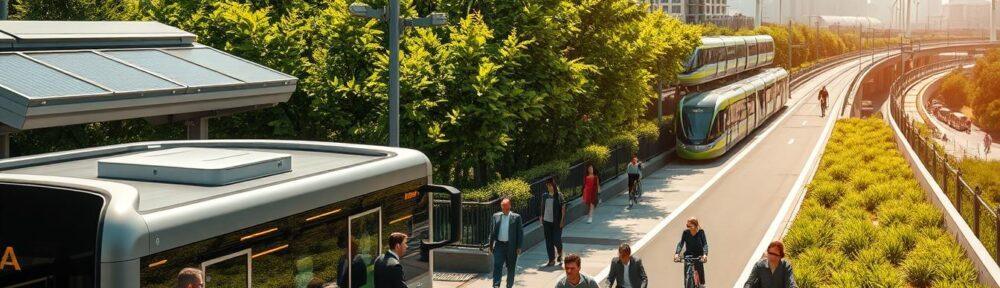
Let’s be honest. The phrase “green transportation infrastructure” often brings a simple image to mind. Imagine a lonely bike lane next to a busy, ten-lane highway. It feels like a small step, not a big change.
The real story is much more exciting. We’re not just laying down concrete anymore. We’re building the main roads for our future cities. This is where technology meets infrastructure, creating a better way to move around without harming the planet.
This change is from just building to strategic foresight. Looking at plans from around the world, we see innovation is about making systems smarter and stronger.
Think of this as your update from infrastructure’s quiet but elegant change.
Smart Grid Integration: Vehicle-to-Grid Technology, Renewable Energy, and Load Management Systems
Imagine your electric car not just taking power from the grid but also giving it back. This isn’t just a dream. It’s the heart of smart grid integration, where electric vehicle charging works both ways.
Enter Vehicle-to-Grid (V2G) technology. Your EV turns into a mobile battery pack. It can send energy back to the grid when it’s needed most. It’s like your car has a side job for the utility company.
But for this to work, the grid needs to get smarter. Renewable energy and load management systems play a key role. Solar panels and wind turbines produce power, but a dumb grid wastes it. A smart grid uses your car’s battery to store it.
Your EV charges when the sun shines and electricity is cheap. Then, it sends power back during the expensive evening peak. This balances the load, stabilizes the grid, and makes green infrastructure development work financially. It turns parking lots into virtual power plants.
The rail sector is a model of efficiency. It moves a lot of freight and people using only 3% of the transport sector’s energy. It does this through integrated design, like regenerative braking and solar canopies at stations.
The lesson for our roads is clear. The future isn’t just about clean power. It’s about making a smart dialogue between mobility and energy. Every charging station must be a responsive node in a vast network.
So, what does this intelligent system look like in practice? Let’s break down the shift from a traditional grid to a modern, interactive smart grid.
| Feature | Traditional Grid | Smart Integrated Grid | Primary Benefit |
|---|---|---|---|
| Energy Flow | One-way (power plant to consumer) | Two-way (bi-directional with EVs, solar homes) | Enables V2G, stabilizes supply |
| Load Management | Reactive, often manual | Proactive, automated, real-time | Prevents blackouts, optimizes electric vehicle charging |
| Renewable Integration | Difficult, causes intermittency | Seamless, uses storage (like EV batteries) | Maximizes solar/wind, reduces fossil fuels |
| Infrastructure Mindset | Centralized generation | Distributed, networked resources | Builds resilience, enables green infrastructure development |
This table isn’t just for academics. It’s the guide to reduce our fossil fuel use. The goal is a system that communicates. Your car, your home battery, and wind farms all talk to a central controller.
The real innovation is not bigger power plants. It’s smarter connections. This smart layer is the ultimate green infrastructure development. It uses our millions of car batteries to solve the grid’s biggest problem: balancing supply and demand.
The rail sector showed us efficiency is possible. Now, with smart grids, we can apply that lesson everywhere. The infrastructure isn’t just concrete and steel anymore. It’s code, communication protocols, and a bit of cleverness.
EV Charging Networks: Fast-Charging Corridors, Workplace Charging, and Residential Infrastructure
Imagine charging your car as easy as plugging in your laptop. That’s the future we’re working towards. For years, we’ve worried about range anxiety. But the real solution is building a network of charging stations that makes finding a charge easy.
The old gas stations are a thing of the past. Now, we have three main types of charging: long-distance corridors, daily charging spots, and home charging. It’s not just about putting up charging stations. It’s about creating a digital ecosystem for energy that makes EVs as easy to use as gas cars.
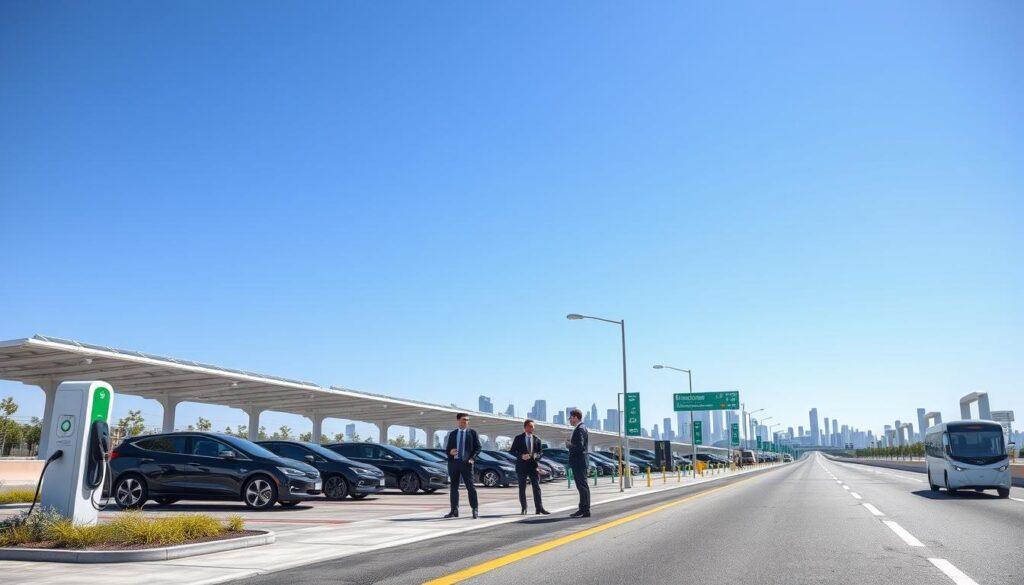
Fast-charging corridors are the heroes of the EV world. They run along highways, making long trips predictable. The goal is to charge your car as fast as you can grab a coffee. This layer is the ultimate solution to range anxiety. It tells drivers, “Go ahead, explore. The infrastructure has your back.” For the national smart transport system to work, these corridors are key.
Workplace charging is where the daily magic happens. Imagine charging your car at work and gaining 30-50 miles by lunch. It turns idle time into charging time. For companies, it’s a low-cost perk. For fleet operators, it’s the key to going electric.
The final layer is residential infrastructure. Home is where most charging happens. It’s the “plug-in overnight” model. For single-family homes, it’s easy. But for apartments and condos, it’s a bigger challenge. We need updated building codes and shared charging solutions in parking garages.
Together, these layers form a smart network. A true smart transport system doesn’t just give out electrons. It manages demand to avoid overloading the grid. It can even turn parked EVs into a distributed battery for the neighborhood.
The following table shows how these three layers work together:
| Charging Layer | Primary User Need | Key Infrastructure Challenge | Integration with Smart Grid |
|---|---|---|---|
| Fast-Charging Corridors | Long-distance travel & rapid refueling | High-power grid connections & strategic placement along highways | Demand management during peak travel times; possible solar/battery buffering |
| Workplace Charging | Daily range replenishment & fleet operations | Providing enough capacity in parking lots; managing corporate energy costs | Ideal for scheduled, daytime charging that can use surplus solar power |
| Residential Infrastructure | Convenient overnight charging & primary refueling point | Retrofitting multi-unit dwellings; ensuring equitable access for all residents | Core enabler for V2G; uses off-peak, low-cost electricity for grid stability |
The plan for electric vehicle charging isn’t just one big solution. It’s a layered approach. Build corridors for road trips, install workplace plugs for daily commutes, and wire homes for simple charging. This makes EVs the obvious choice. The infrastructure, quietly working in the background, makes the switch inevitable.
Sustainable Materials: Green Concrete, Recycled Materials, and Carbon-Neutral Construction Methods
The old way of building was like a strong boxer. Now, we’re like a careful surgeon, choosing materials that help the planet. We’re not just building strong anymore. Today, we focus on using less and doing more with what we have.
Green concrete is a big deal. It’s a new way to make concrete that doesn’t pollute as much. It uses special mixes that can even help take carbon dioxide out of the air. It’s like a building that breathes clean.
Recycled materials are another big step forward. We’re using old plastics, glass, and rocks to build new things. It’s like recycling for buildings. This way, we use less energy and make less waste.
When we mix these materials with green building methods, we get even better results. We use electric tools and plan our sites carefully. This way, we can build things that can be taken apart and used again. Tools like SYSTRA’s CarbonTracker help us see how our choices affect the planet.
The Chennai Metro project shows how this works. They made a station that uses less space and materials. This means it uses less energy to run and maintain. It’s smart building at its best.
Choosing the right materials is key. The table below shows the main options for green transportation infrastructure.
| Material Category | Key Components | Primary Benefit | Example Application |
|---|---|---|---|
| Green Concrete | Fly ash, Slag, Silica fume, Carbon capture aggregates | Reduces embodied carbon by up to 40%; can sequester CO2 | Bridge decks, building foundations, pavement |
| Recycled Aggregates | Crushed concrete, Reclaimed asphalt, Post-consumer glass | Diverts waste from landfills; cuts virgin material use | Road base layers, drainage fill, structural concrete |
| Recycled Polymers | Plastic waste, Composite materials | Lightweight, durable, and reduces plastic pollution | Noise barriers, railroad ties, pedestrian walkways |
| Engineered Timber | Cross-laminated timber (CLT), Glulam | Renewable resource; acts as a carbon sink | Bus station roofs, pedestrian bridges, building frames |
This change is not just about technology; it’s about how we think. We need to be careful with our materials and how they affect the planet. We’re building for the future with less harm to the environment. It’s a big challenge, but we’re up for it.
Using these materials is the heart of green infrastructure development. It shows that we can move forward without being heavy. In fact, the best structures might be the lightest ones.
Digital Infrastructure: 5G Networks, IoT Sensors, and Real-Time Traffic Management Systems
Forget the old traffic lights from the 90s. Today, we have 5G and IoT leading the way. This digital layer is like the brain of our transport network. It’s fast and smart, unlike our old setup.
We need a network that’s smart, not just a Wi-Fi router on a lamppost. It should be strong and able to think and react quickly. We aim to make our streets flow smoothly for sustainable mobility networks.
The magic comes from three main parts. First, 5G networks offer fast communication. Second, IoT sensors feel every change. Third, real-time traffic management systems make quick decisions.
5G is a game-changer. It’s like having a live video call with every vehicle and signal. This speed lets data from many sources sync up. It makes things like autonomous vehicles and hazard alerts possible.
IoT sensors are everywhere, like the network’s sense of touch and sight. They’re in pavement, streetlights, and bridges. They send data that helps our smart transport systems work better.
The real genius is how it all comes together. Systems like the Nevada Department of Transportation’s use this data. They don’t just report on accidents; they change traffic flow before anyone even sees brake lights. They adjust signals based on real-time conditions, not a fixed schedule.

This makes our transport network almost psychic. It knows when to ease congestion and warns of dangers quickly. This digital smarts is key to modern sustainable mobility networks.
To see how these parts work together, check the table below:
| Digital Component | Primary Role | Key Impact on Mobility |
|---|---|---|
| 5G Networks | High-speed, low-latency data pipeline | Enables vehicle-to-everything (V2X) communication, essential for autonomous coordination and real-time map updates. |
| IoT Sensors | Data collection from the physical environment | Provides granular, real-time data on traffic flow, road conditions, parking, and infrastructure health for informed management. |
| Real-Time Management Systems | AI-driven analysis and automated decision-making | Dynamically optimizes traffic signals, manages incidents, and provides predictive traveler information, reducing delays and emissions. |
This isn’t just about speeding up traffic. It’s about unlocking new functions. It lets us manage traffic better and even helps emergency vehicles. It’s like having a series of green lights because the system knows you’re coming.
In essence, we’re making roads smarter. We’re moving from infrastructure you drive on to infrastructure you drive with. It’s the unseen layer that makes our streets intelligent, efficient, and safe. Without it, our dreams of sustainable mobility are stuck in traffic.
Multimodal Integration: Seamless Connections Between Transit Modes and Sustainable Design Principles
We’ve built the pieces of the puzzle: gleaming metros, electric buses, bike lanes. Now comes the hard part: making them fit together without forcing commuters to become contortionists. The grand orchestration of urban mobility isn’t about the vehicles themselves. It’s about the spaces in between.
Think of it as civic jazz. When a metro line and a bus route compete for the same passengers on parallel streets, it’s not harmony—it’s a cacophony. SYSTRA’s analysis hits a raw nerve: this isn’t just inefficient; it’s a civic own-goal. We’re subsidizing two services to fight each other while the single-occupant car, smirking from the congestion, wins by default.
The sustainable design principle here is brutally simple: minimize friction, maximize convenience. A successful sustainable mobility network makes the combined journey faster, cheaper, and more pleasant than sitting in traffic. It turns public transport into the path of least resistance.
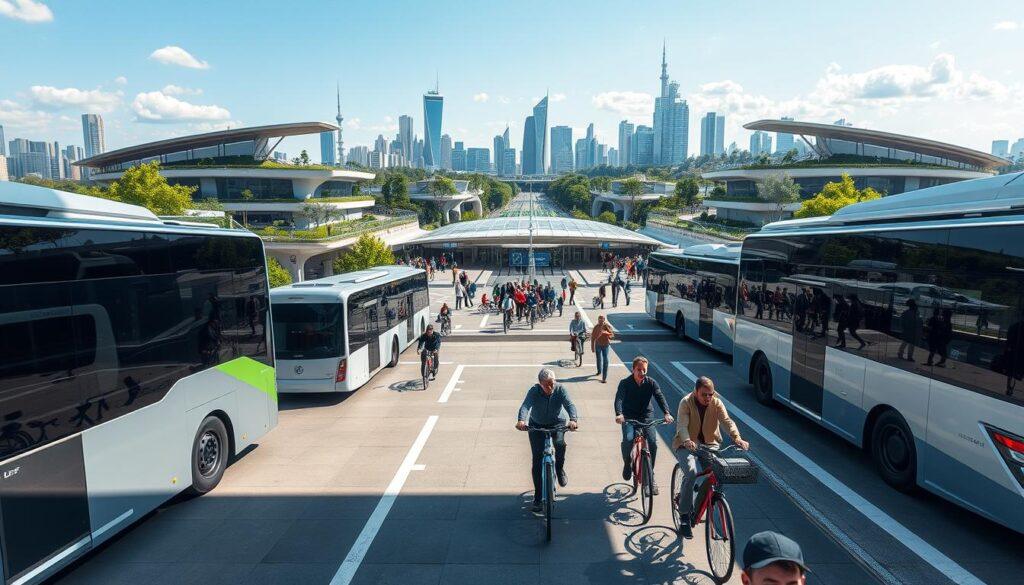
So, what does “designing the spaces in between” actually look like? It’s the covered walkway from the train platform to the bus bay. It’s secure bike parking and scooter docks at the station entrance. It’s real-time signage that tells you the bus is waiting, not that it left 30 seconds ago. It’s the art of making switching modes a logical choice, not a logistical nightmare.
This is where the concept of Mobility-as-a-Service (MaaS) enters the chat. Imagine one app. One payment. One plan that bundles your train ride, e-scooter rental, and bus trip into a single, predictable monthly cost. MaaS is the universal remote for your city’s smart transport systems, making it easy to switch between modes.
But technology alone can’t fix a fractured physical landscape. The transit hub itself needs a rethink. It shouldn’t be a cavernous monument you get lost in. It must be an intuitive, human-scaled interchange. The goal? Make the connection feel like a natural progression, not a Himalayan trek between corporate fiefdoms.
The table below sketches the stark contrast between our current fragmented reality and the integrated future we should be building.
| Aspect | Fragmented System | Integrated System | Key Sustainable Benefit |
|---|---|---|---|
| Payment & Ticketing | Multiple apps, cards, and cash fares. No transfers. | Single account, capped daily/monthly spending. Seamless transfers. | Reduces “fare friction,” encouraging mode switching over car use. |
| Real-Time Information | Disparate, often conflicting schedules. No live updates. | Unified app with live locations, crowding data, and disruption alerts. | Enables efficient trip planning, reducing wait times and frustration. |
| Physical Connectivity | Long, exposed walks between modes. Poor signage. | Weather-protected, direct pathways with clear wayfinding. | Makes active travel (walking, cycling) a safe, pleasant part of the journey. |
| Governance & Planning | Separate agencies competing for riders and funding. | Unified mobility authority coordinating routes and schedules. | Eliminates wasteful service overlap, optimizing public investment. |
| User Experience | A stressful puzzle of connections. “I’ll just drive.” | A predictable, door-to-door service chain. “This is easier.” | Shifts perception, making sustainable mobility networks the default choice. |
The lesson is clear. We can’t just build more stuff. We have to build better connections. It requires a unified mobility authority with the power to orchestrate the entire network, not just its individual instruments. It’s a shift from managing vehicles to managing journeys.
In the end, the most sustainable infrastructure isn’t made of concrete or fiber-optic cable. It’s made of convenience. It’s the five minutes you save, the stress you avoid, and the simple realization that getting across town doesn’t require owning a car. That’s the quiet revolution of true multimodal integration.
Urban Planning Revolution: Complete Streets, Transit-Oriented Development, and Walkable Communities
Imagine the most advanced green transportation infrastructure isn’t a hyperloop. It’s a well-shaded sidewalk. We’ve focused on metal boxes for years. Now, we’re shifting to designing for humans.
Complete Streets are at the heart of this change. They’re not just painted roads. They have wide bike lanes, bulb-outs, and trees. The goal is to serve everyone, not just cars.
Zooming out, we see the power of Transit-Oriented Development (TOD). TOD clusters homes, offices, and shops near transit. This makes cars optional, not necessary.
Paris is a great example. It spread its hubs to regional centers. This strategy eases traffic and supports Tier II cities in America. For more on TOD, check out this article.
The ultimate goal is the Walkable Community. It rejects sprawl and long commutes. Walkable cities are key for our economy and environment.
We’re not just moving people. We’re designing the space between points. When this space is nice, walking or biking becomes the obvious choice. This builds strong, sustainable mobility networks.
This approach adds soul to urban planning. We’re designing cities for community, not just cars. The goal is to make alternatives so good, people won’t need cars. The future of mobility might be right outside your door.
Financing Mechanisms: Green Bonds, Public-Private Partnerships, and Infrastructure Investment Strategies
Money is the big issue here. Without it, all the smart ideas and green materials are just dreams. We need trillions to make these dreams come true.
The U.S. has over $1 trillion set aside for infrastructure. The European Union has more than €6 billion in grants. The Asia Development Bank says we need $1.7 trillion per year in Asia. These numbers show we’re serious about going green.
So, how do we pay for this green future? We can’t just rely on public money anymore. Now, we use a mix of money and purpose.
Green Bonds are a key part of this. They let investors fund projects that help the environment. It’s like donating money, but you get your money back.
Think of a city using a bond for electric buses or solar chargers. This way, investors know their money is going to green projects. It attracts funds from those who care about the planet.
Public-Private Partnerships (PPPs) are another important tool. They mix public vision with private money and know-how. A city might not have enough cash for a smart grid, but a company does.
Together, they share the costs and benefits. This means projects get done faster and better, because someone’s making money from it.
The last piece is the Infrastructure Investment Strategy. It looks at projects as long-term investments, not just costs. It asks about the total cost and return over time, not just the initial price.
| Mechanism | Capital Source | Best For | Key Consideration |
|---|---|---|---|
| Green Bonds | Capital Markets (Institutional Investors) | Discrete, verifiable green projects (e.g., charging networks) | Requires rigorous impact reporting and certification |
| Public-Private Partnerships (PPPs) | Blended (Public & Private Equity) | Large, complex systems with operational components (e.g., transit hubs) | Complex contracts; requires clear risk-sharing agreements |
| Infrastructure Funds | Private Equity, Pension Funds | Portfolios of sustainable assets (e.g., multiple renewable energy sites) | Long lock-up periods; focused on stable, long-term yields |
Sustainable infrastructure is a smart business move. It saves money right away and protects against future costs. It’s a wise investment for the future.
Financing is the key to making green dreams real. It connects our idealism with the real world of money. We’re not just talking about if we can afford to go green. We’re talking about if we can afford not to.
Professional Roles: Infrastructure Engineering, Sustainable Design, and Smart City Development Careers
Who builds the smart highways and green transit hubs we dream of? It’s a mix of experts from different fields. Civil engineers are key, but they’re not alone anymore. Today, they work with others who know about code, data, and green practices.
Job titles are changing fast, like software updates. We need a new team to build the smart transport systems of the future. It’s not just about building strong structures; it’s about making them smart.
Let’s explore three important career paths. These jobs blend the physical and digital worlds in amazing ways.
The Infrastructure Engineer is a master of two worlds. They know about building bridges and roads, and also about networks and data. They use AI and simulation software to design and test projects. They make sure a charging station is safe and works well with the power grid.
The Sustainable Design Specialist is a mix of architect, ecologist, and scientist. They choose materials wisely and model a project’s carbon footprint. They ask big questions like how a bus depot affects the local water and if a station can make more energy than it uses. Their goal is to make green solutions a part of the design.
The Smart City Development Professional is a strategic leader. They plan like an urban planner but manage like a tech product manager. They understand how people move and what makes them use new transit options. They make sure all the parts of a smart transport system work together seamlessly.
The future leaders are on the construction site, using technology to guide their work. They need to be skilled in many areas.
| Career Path | Core Hybrid Skills | Typical Projects | Tools of the Trade |
|---|---|---|---|
| Infrastructure Engineer | Structural engineering, data analytics, network architecture | EV fast-charging corridors, intelligent bridge monitoring systems | BIM software, IoT platform APIs, generative design algorithms |
| Sustainable Design Specialist | Lifecycle assessment, ecology, material science, regulatory policy | Net-zero transit stations, greenway networks using permeable pavements | Digital twin platforms, carbon accounting software, environmental impact simulators |
| Smart City Development Pro | Urban planning, behavioral economics, software development lifecycle | Integrated mobility-as-a-service (MaaS) apps, city-wide traffic management centers | Stakeholder engagement platforms, real-time data dashboards, prototyping tools |
Look at the table. The tools needed for these jobs are just as important as the skills. The difference between a calculator and a computer is gone.
Where do we find these experts? We often have to create them. Universities are starting new programs. Companies are teaching old engineers new tricks. The demand for these skills is growing fast.
The future of our cities needs this new workforce. They can work on traffic algorithms in the morning and site inspections in the afternoon. If you want a job that shapes tomorrow, start here. The work is digital, the materials are green, and the impact is real.
Implementation Roadmaps: Project Planning, Stakeholder Engagement, and Phased Deployment Strategies
So you’ve got the blueprint for a carbon-neutral city. Now what? The leap from PowerPoint to pavement requires a ruthless implementation roadmap. It starts with project planning that treats data as gospel. Platforms like SYSTRA’s e-PMC create a single source of truth, cutting through the chaos that causes delays and budget blowouts. This digital backbone is key for building strong sustainable mobility networks.
Next is stakeholder engagement. You cannot plow a new light rail line through a neighborhood without its input. Real buy-in turns NIMBYs into allies. This dialogue is the social cement for any green transportation infrastructure project. Ignore it, and your brilliant plan gathers dust.
The final piece is a phased deployment strategy. Embrace the agile mindset. Don’t try to boil the ocean. As IBM’s research suggests, start with a realistic first step. Convert one bus depot to electric. Pilot a micro-mobility hub in one district. Learn, adapt, and then scale. This iterative loop, informed by data, is how visions become streets we actually use.
The roadmap isn’t a straight line. It’s the gritty, pragmatic process of turning witty analysis into the world we live in. It’s how we build tomorrow.