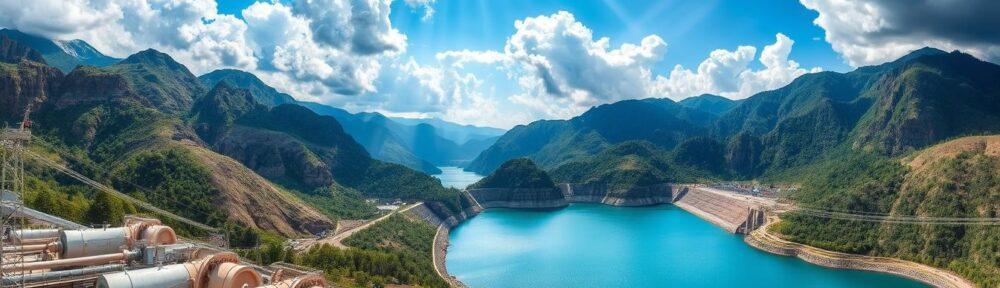
Imagine a world where energy flows smoothly, like a jazz melody. Pumped storage is the unsung hero of our power grid. It ensures the lights stay on when demand peaks.
It’s like the backup singer you didn’t know you needed. It harmonizes with renewable sources like wind and solar. Together, they create a symphony of stability.
But what is this energy wizardry? Simply put, it stores excess energy by moving water to an upper reservoir. When demand surges, that water is released to generate electricity.
Think of it as charging your phone overnight for the busy day ahead. And let’s not forget its scale. Globally, it’s the largest battery technology, making up over 94% of long-duration energy storage capacity.
As we dive into the mechanics and benefits of this system, we’ll see why it’s key to a sustainable energy future. Curious about how it works? Let’s explore its role in balancing our grid. For more details, check out this informative resource.
How it works head height reservoirs pumps turbines and RTE numbers
Imagine a giant water battery: that’s pumped hydro storage in action, and it’s simpler than you think. This technology, often overshadowed by flashier alternatives, plays a key role in our energy landscape. It accounts for about 90% of utility-scale energy storage in the United States. How does it work? Let’s break it down.
At its core, pumped hydro storage relies on two reservoirs at different elevations. When there’s extra energy on the grid—like during quiet hours—water is pumped from the lower reservoir to the upper one. This uses gravity to store energy as potentiel energy.
When demand spikes, and your air conditioner turns on, that water flows back down through turbines. This generates electricity. The vertical distance between the reservoirs, known as head height, is key. More head means more energy per gallon, allowing for smaller reservoirs to store the same amount of energy.
Now, let’s talk numbers. The round trip efficiency (RTE) of pumped hydro systems is between 70% and 80%. It’s not perfect, but it’s reliable. China’s deepest pumped storage shaft, buried 637 meters underground, generates a staggering 1.4 billion kilowatt-hours annually. That’s billion with a B!
Here’s a quick comparison of key elements in pumped hydro systems:
| Aspect | Typical Value | Significance |
|---|---|---|
| Head Height | 100-800 meters | Higher head = more energy |
| Round Trip Efficiency | 70-80% | Indicates system reliability |
| Annual Generation | 1.4 billion kWh (China) | Example of scale |
So, before we chase the next shiny object in energy storage, let’s not forget about the reliable giant already in our toolbox. Pumped hydro storage is not just a relic of the past; it’s a vital part of our energy future.
Why closed loop off river minimizes aquatic impacts and licensing speed
Closed-loop pumped hydro is changing the energy game. It’s a system that stores energy without harming our rivers. It uses two reservoirs and a pipeline to keep water in a loop, reducing harm to the environment.
Traditional energy storage methods often damage rivers and disrupt habitats. But closed-loop pumped hydro is different. It gets permits faster, cutting years off the development time. This means we can use renewable energy sooner.
Rye Development is at the forefront of this technology. Their projects in the U.S. improve energy reliability and offer economic and environmental benefits. The closed-loop system minimizes water loss, using groundwater or city water when needed.
This technology is like moving from a gas-guzzler to an electric car. It’s a cleaner way to do the same job. For utilities, it’s a quick fix to long environmental reviews. The future of energy storage is cleaner and faster than ever.
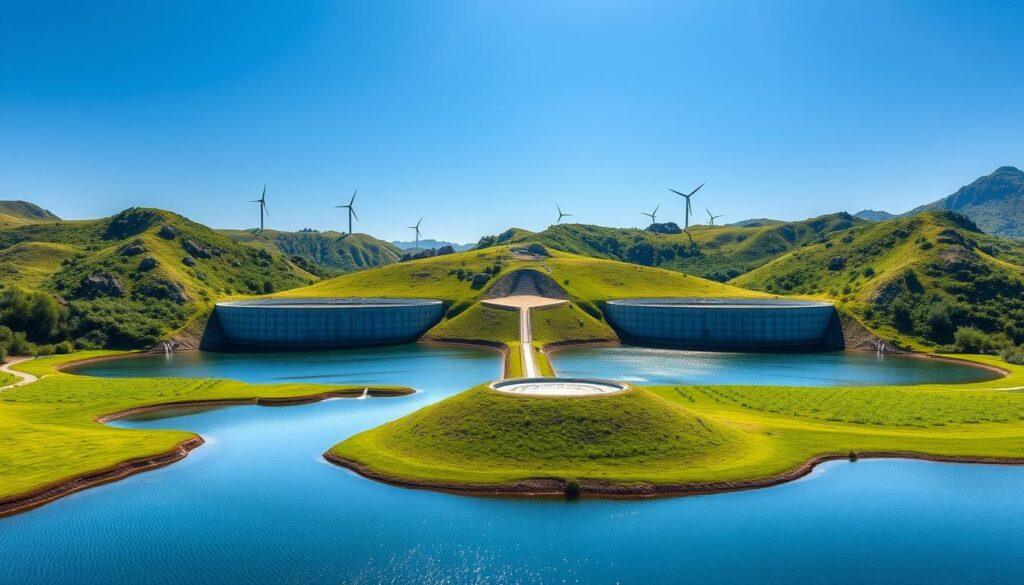
Site screening topo GIS geology land ownership and cultural checks
Finding the right site for pumped hydro is a complex task. It’s not just about the location. The screening process involves many steps that can be both exciting and challenging for GIS analysts.
First, we look at the topography. We need two flat areas with a big drop between them. They should be close enough to save on costs but not so close that it’s just an expensive water slide.
Next, we use digital elevation models to find the perfect pair. We look for a vertical drop of at least 500 meters. Anything less, and it’s a no-go.
Then, we check the geology. We can’t pump water onto unstable rock. That would be a disaster.
Land ownership adds another layer of complexity. Public land means dealing with the federal government. Private land means negotiating with owners who have been there for decades. And tribal lands require cultural checks that show respect.
GIS layers pile up: slope stability, seismic hazard, and more. Only a few sites make it through. But there’s a catch: the U.S. has thousands of sites that could work, but nobody’s looked at them yet. The pumped hydro renaissance is like a treasure hunt with a 1985 map.
Capital stack EPC duration interconnect transmission upgrades
Financing is key for pumped hydro projects. It’s like a wedding cake with different layers. Each layer is a funding source: equity from developers, debt from banks, and federal loan guarantees. The Department of Energy now supports big energy projects, adding more financial backing.
The EPC contract is at the heart of any project. It usually lasts from four to seven years. This depends on smooth permitting and no surprises in geotechnical surveys. Without a solid EPC, the project might not happen.
Then, there’s the interconnection puzzle. Imagine finding the perfect site but realizing the nearest 345 kV line is far away and busy. Transmission upgrades can turn a simple plan into a nightmare. The queue for interconnection can add years, and new substations and lines can cost as much as the civil works.
But, when you compare the cost of pumped hydro to lithium-ion batteries, pumped hydro is a strong contender. It might not have the same efficiency as batteries, but think about the cost over 50 years. That’s a conversation worth having.
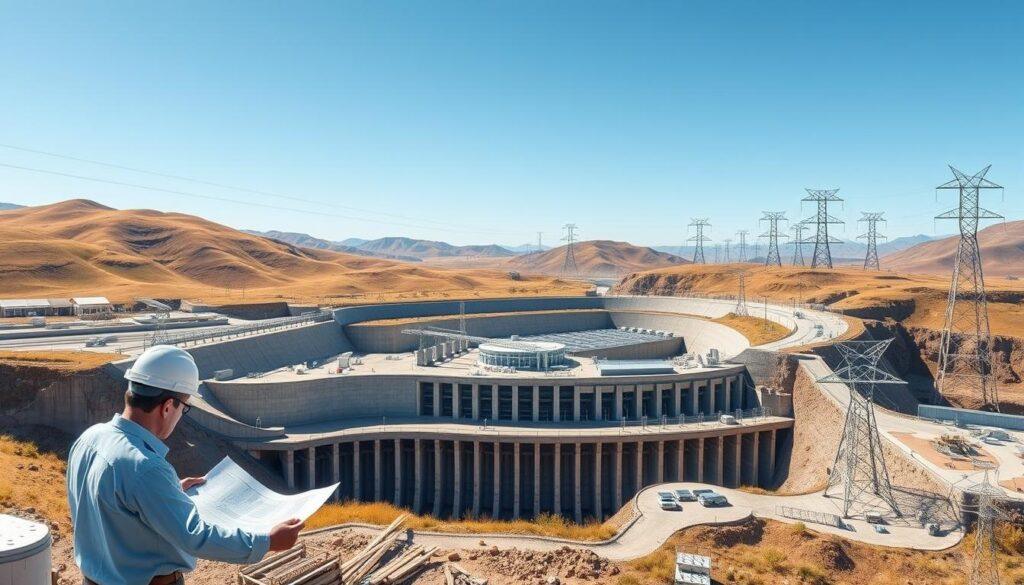
Revenue models capacity PPA tolling market participation
Understanding the money side of pumped hydro storage is like playing chess on a rollercoaster. It’s not just about building the place; it’s about making money. The ways to make money are complex and need smart thinking and flexibility.
The capacity contract is at the heart of this plan. It lets utilities or grid operators pay you just for being ready. It’s like having a big, wet lawyer always ready to help when needed.
The power purchase agreement (PPA) is another key part. It promises a set price for your energy, giving you a steady income. It’s like having a regular job in a world of freelance work.
Merchant market participation is more exciting but riskier. You buy low and sell high, hoping your plans are better than others’. Here, round trip efficiency is key. A small loss can mean big money lost.
Tolling agreements offer a middle ground. Someone else gives you electricity, and you charge for storing and returning it. It’s like a coat check for electrons.
Smart operators mix these models. They start with contracts, add some PPAs, and carefully play the merchant game. This way, they get the best of both worlds. It’s not flashy, but it works well in today’s grid world.
| Revenue Model | Description | Benefits |
|---|---|---|
| Capacity Contract | Payment for being available to dispatch energy | Stable income stream |
| Power Purchase Agreement (PPA) | Fixed price for energy delivered | Predictable cash flow |
| Merchant Market Participation | Buying low, selling high | Potential for high returns |
| Tolling Agreement | Charging a fee for storing electricity | Lower risk with steady income |
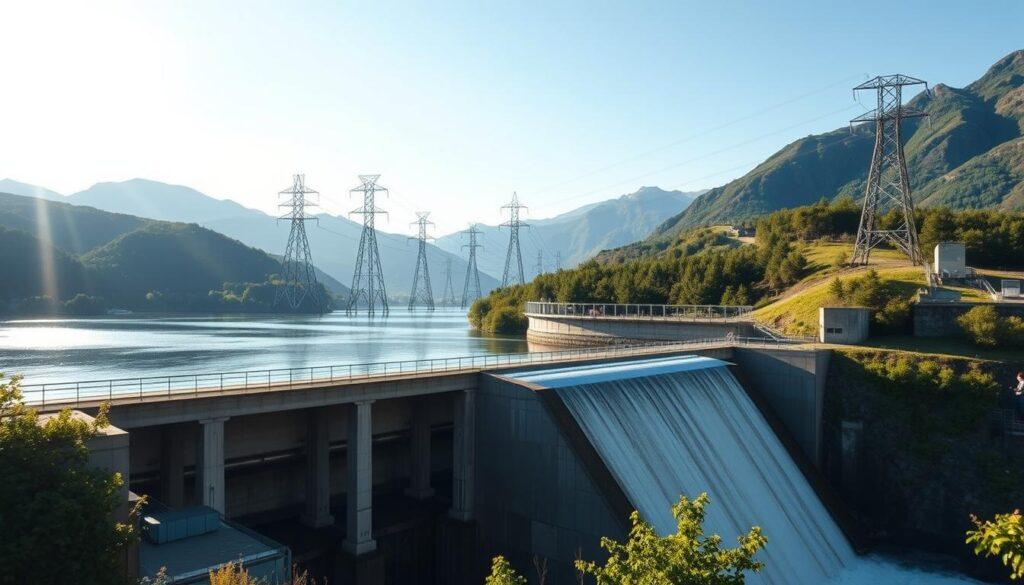
Case files Australia US Appalachia Europe under development
Let’s take a quick tour of pumped hydro projects popping up worldwide. It’s not just happening in one place; it’s a global effort. Imagine a Renaissance fair, but with more people.
Australia is leading the charge with big plans. The Snowy 2.0 project is expanding the famous Snowy Mountains Scheme. It will add 2,000 megawatts of power and 350,000 megawatt-hours of storage. That’s enough to power three million homes for a week!
The United States is seeing a comeback in Appalachia. The area’s hills and old mines are perfect for closed loop pumped hydro. Rye Development is working on projects like the Swan Lake facility in Oregon and the Goldendale project in Washington. These are smart designs that avoid old river conflicts.
Europe is also getting in on the action, building in the Alps, Scandinavia, and the Iberian Peninsula. Switzerland’s Nant de Drance is a 900-megawatt powerhouse, hidden in a mountain. It started working in 2022 after 14 years of building.
What ties all these projects together? They’re all off river projects. The days of damming rivers are over. Now, we’re finding two flat spots and a big hill to store energy in a green way.
Innovations variable speed machines ternary sets underground options
Pumped hydro is changing fast, with new ideas popping up everywhere. Old turbines are being replaced by variable speed machines. These new machines can change speed to fit the water flow and height better. This makes them more efficient, helping to get more energy out of them.
Imagine controlling the frequency while pumping water. That’s what variable speed technology does. It uses advanced electronics to keep the turbine and grid frequency in sync.
Then there are the ternary sets. They have a pump and turbine on the same shaft, with a special clutch. This lets them switch between pumping and generating water quickly. It’s like a fast switch for the grid, helping with quick energy needs.
There’s also the underground option. It might sound like a secret hideout, but it’s a real solution. China has a 637-meter-deep shaft that makes 1.4 billion kWh a year. It’s hidden from view, showing how effective it can be.
Using mine shafts or natural caverns as reservoirs makes projects smaller. This is great for areas with lots of people. Even though starting costs are high, pumped hydro is a strong choice. It lasts a long time, unlike some other energy storage options.
Environmental and community frameworks wildlife recreation and local jobs
Energy infrastructure is often seen as a big problem. It’s thought to harm the environment and upset local communities. But, pumped hydro storage is changing this view. With closed loop designs, we can reduce harm. No harm to rivers, fish, or water quality.
Building these projects can disturb land and affect views. We also need water for filling and to replace lost water. But, with careful planning, we can make it work for everyone.
Local jobs are a big plus of these projects. They can create thousands of jobs during construction and dozens of permanent jobs. This is a big deal in areas where jobs are scarce.
Recreation is another benefit. Reservoirs can be great for fishing and trails can open up. This lets locals enjoy nature and boosts the local economy.
The permitting process can start these positive changes early. It can turn a difficult process into a chance for everyone to work together. This way, projects can be welcomed by the community.
| Benefit | Description | Impact on Community |
|---|---|---|
| Job Creation | Employment opportunities during construction and operation | Boosts local economy and reduces unemployment |
| Recreational Opportunities | Reservoirs for fishing, boating, and hiking | Enhances quality of life and community engagement |
| Environmental Protection | Closed loop systems reduce ecological disruption | Promotes biodiversity and habitat preservation |
Workforce civil mechanical electrical safety and operations
Every megawatt of pumped hydro power needs a dedicated team. They know how to work complex machinery. It’s not just a job; it’s a commitment to precision and safety.
The civil construction phase is where the heavy lifting happens. Excavation crews move millions of cubic yards of earth. Tunnel boring machines chew through bedrock. These workers build the dams and infrastructure that last long.
Mechanical specialists focus on the turbines, pumps, and penstocks. They need to install these massive steel components with great precision. It’s like threading a needle while riding a roller coaster! They ensure every component operates at peak efficiency, impacting the round trip efficiency of the plant.
On the electrical side, the team manages generators, switchgear, and advanced power electronics. This sophistication is key for adapting to grid demands and maintaining stability. Safety is non-negotiable with high-voltage electricity and large machinery. Lockout-tagout procedures and confined space training are essential.
Once a plant is commissioned, operations and maintenance (O&M) take center stage. This phase focuses on predictive analytics and preventative care. The round trip efficiency can degrade due to factors like cavitation or biofilm. A well-run O&M program can keep efficiency high for decades.
The workforce is aging, and the pumped hydro renaissance needs to address this. Aggressive apprenticeship programs and knowledge transfer from seasoned veterans are essential. Investing in our workforce is necessary for the continued success of pumped hydro storage.
For more insights into the evolving landscape of water power, check out Water Power Magazine.
Decision rubric for utilities vs batteries vs hydrogen for multi day storage
Utility planners have a big decision to make for multi-day storage. With renewable energy on the rise, reliable storage is key. We have three main options: lithium-ion batteries, green hydrogen, and closed loop pumped hydro.
Batteries are popular in 2024 because they’re easy to set up. But, they get expensive as they last longer. A battery that lasts four hours is okay, but 24 hours is too pricey.
Closed loop pumped hydro is better for long storage. It’s more affordable and efficient, with a 70% to 80% round trip efficiency. This makes it a great choice for long-term needs.
Green hydrogen is interesting but has its downsides. It’s less efficient, losing 30% to 40% of energy. Also, it needs a lot of infrastructure for storage and transport. Pumped hydro, on the other hand, is sustainable and can last 50 to 80 years.
Choosing the right technology is not just about picking one. Smart utilities use a mix of technologies. For long-term storage, pumped hydro is the top choice. It keeps the grid stable and reliable when it counts.