
The EPA’s May 11, 2026 proposal on data center energy infrastructure did not approve new emissions by itself, but it changed a key permitting question: what project work can begin before a major air-emissions permit is secured. The agency proposed redefining “Begin Actual Construction” under the Clean Air Act so that data centers, gas plants, and factories could build non-emitting components such as wiring, cement pads, and piping before receiving major air permits, according to the EPA proposal.
That timing change matters because data centers are large electricity users, and their growth can shape the pace of grid upgrades, clean generation additions, backup power decisions, and local water planning. The policy question is not whether computing demand exists. It does. The narrower question is whether permitting flexibility reduces unnecessary delay without allowing fossil backup, onsite generation, or grid stress to grow faster than clean energy infrastructure can respond.
As a renewable energy specialist, I see this issue partly as a workforce signal. The next phase of clean infrastructure will need electricians, interconnection engineers, environmental permit analysts, transmission planners, water specialists, control technicians, and energy procurement staff who can connect digital-load growth with measurable emissions and reliability outcomes.
What The EPA Proposal Changed
Permitting Timing Versus Emissions Limits
The May 11, 2026 EPA proposal focused on the definition of beginning actual construction. Under the proposal, certain construction activities that do not themselves emit air pollutants could proceed before a major air-emissions permit is obtained. The examples in the research record include wiring, cement pads, and piping. That is different from authorizing a data center, gas plant, or factory to operate emissions-producing equipment without a permit.
The distinction is important for analysis. If the rule is finalized in that form, developers may be able to spend capital and advance site preparation earlier in the process. That could reduce schedule risk for projects that already expect to receive permits. It could also increase pressure on permitting agencies and communities because projects may appear physically committed before all air-quality questions are settled.
On July 27, 2026, the EPA also issued guidance stating that islanded power generation for data centers, meaning generation not connected to the public grid, would no longer be covered by the Clean Air Act’s Acid Rain Program. The research record describes this as a reduction in regulatory burden for those configurations. The practical clean-energy concern is that onsite power choices could become more attractive for some projects if grid interconnection remains slow or transmission capacity is constrained.
Minor Source Oversight Concerns
The research record also states that the EPA proposed removing federal public-notice and comment requirements for minor air-pollution sources, defined as sources emitting under 100 tons per year. If applied to data centers or related onsite generation, that could reduce formal opportunities for nearby residents to review permit details. Community review does not guarantee a cleaner project, but it can reveal local air, water, noise, or cumulative-impact concerns that a purely technical review may miss.
For clean infrastructure advocates, the issue is not to slow all construction. The concern is sequencing. Permitting reform can support needed infrastructure if clean generation, storage, transmission, water efficiency, and public accountability advance together. If one part moves faster than the others, the result may be higher near-term emissions or reliability stress.
Why Data Center Energy Demand Matters
Data Center Energy Scale In 2023 And 2030
U.S. data centers consumed about 176 terawatt-hours of electricity in 2023, equal to roughly 4.4% of total U.S. electricity use, according to the research record. Estimates cited in that record project U.S. data-center electricity demand could rise to between 380 and 790 terawatt-hours by 2030, representing about 9% to 17% of U.S. electricity consumption by then.
That data center energy range is wide, and it should be treated as a planning scenario rather than a precise forecast. The high end depends on computing demand, efficiency gains, server utilization, cooling design, regional siting, and how quickly new facilities are built. The low end still represents a major load increase for utilities that already face interconnection queues, transformer delays, and transmission constraints.
Hyperscale Evidence And Its Limits
A study covering 403 hyperscale U.S. data centers operating from May 2024 through April 2025 found electricity use of about 68 to 99 terawatt-hours, associated with 37 to 54 million metric tons of carbon dioxide. Under the study’s central scenario, that equaled about 1.8% of U.S. electricity consumption, with more than 50% of the power supplied from fossil fuels. The paper is an arXiv preprint, so its findings should be read as early research rather than settled consensus; the underlying claim is available in the hyperscale data center study.
Even with that caution, the scale is relevant. If new load is served mainly by marginal fossil generation, clean-energy procurement claims can diverge from physical grid outcomes. Hourly matching, regional grid mix, transmission availability, and firm clean resources matter more than annual certificate accounting alone. That creates a career opening for analysts who understand both carbon accounting and power-system operation.
Effects On Clean Energy Infrastructure
Transmission And Firm Capacity Pressure
The research record states that the DOE’s 2026 Draft National Transmission Needs Study, published on July 9, 2026, identified a pressing need for expanded transmission infrastructure because load growth from data centers, manufacturing, and industry is straining existing capacity. It also states that the United States is projected to lose around 104 gigawatts of firm power generation capacity by 2030 due to retirements, while only about 22 gigawatts of new firm dispatchable generation are expected to be added.
If data center energy demand grows while firm capacity shrinks, grid planners face a difficult reliability problem. Solar and wind can provide large volumes of low-carbon electricity, but system adequacy also depends on transmission, storage duration, demand flexibility, weather risk, and dispatchable resources. Long-duration storage may help in some regions, but cost, duration, and deployment gaps remain material, as discussed in this long-duration storage analysis.
Permitting flexibility for data centers may shorten development schedules for buildings and onsite infrastructure. It does not automatically shorten interconnection timelines, expand transmission corridors, or create firm clean capacity. Those are separate investment and siting problems.
Onsite Power And Clean Procurement Choices
Islanded generation can reduce a project’s reliance on the public grid, but the emissions outcome depends on the technology used, operating hours, fuel, pollution controls, and whether the facility also invests in clean generation or storage. Gas-fired onsite generation may improve local control over reliability, yet it can lock in combustion emissions if used heavily. Battery storage can reduce peak draw, but it needs charging energy and sufficient duration to match the risk being managed.
For developers, the lower-risk path is transparent planning: disclose expected load, identify power sources, evaluate water requirements, and show how clean-energy purchases correspond with physical grid needs. For workers entering renewable energy, this creates demand for skills in power-purchase agreements, interconnection studies, microgrid controls, emissions measurement, and environmental review.
Oversight, Water, And Siting Risks
Water Use Is Part Of The Infrastructure Question
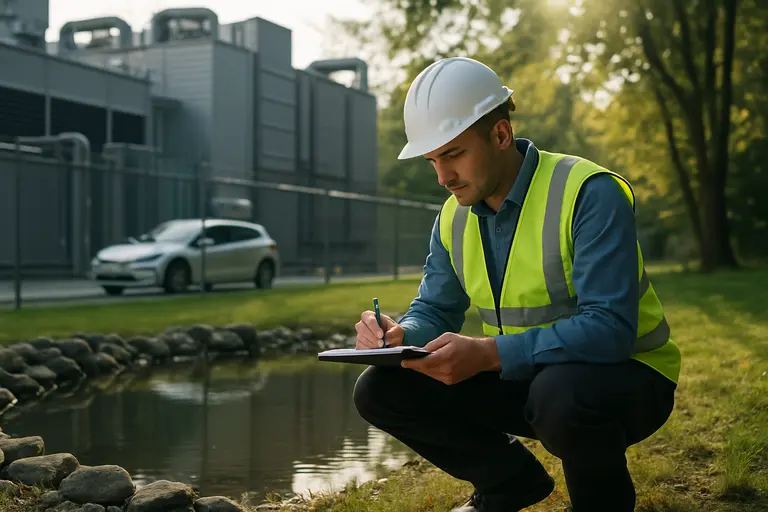
The research record states that in 2023, U.S. data centers directly used about 17 billion gallons of water, with about 84% consumed by hyperscale and colocation facilities. It also states that hyperscale facilities alone are projected to use between 16 and 33 billion gallons annually by 2028. Those figures do not mean every facility creates the same local water risk. Cooling technology, climate, reuse options, and watershed conditions can change the impact substantially.
Still, water demand should be assessed before construction momentum makes site changes difficult. A clean-energy strategy that ignores water stress is incomplete, especially in regions where new industrial load competes with municipal, agricultural, or ecological needs. Regional energy and infrastructure reporting, including insights from the Illinois energy network, can help readers track how these decisions differ by state and utility territory.
Public Review Can Improve Project Design
Public participation can slow poor projects, but it can also improve viable ones. Community comments may identify traffic, water, backup-generator, or cumulative-air issues that do not appear in a narrow emissions model. For data center developers, early disclosure can reduce conflict by showing what is being built, how much electricity is required, what backup systems are planned, and how environmental impacts will be measured.
If minor-source permitting receives less public notice, local governments and utilities may need stronger alternative processes. Those could include public load forecasts, water-use reporting, voluntary emissions disclosures, and clear emergency-generator operating limits. The evidence available here does not prove that relaxed rules will raise emissions in every case. It does show that oversight becomes more important when load growth is fast and infrastructure margins are tight.
Data Center Energy And Clean Infrastructure Careers
Where Green Skills Fit
For people planning green careers, data center energy growth is not only a risk category. It is also a signal that clean infrastructure work is becoming more interdisciplinary. The sector needs professionals who can read a permit, understand a substation constraint, compare cooling options, model carbon impacts, and communicate tradeoffs without overstating certainty.
The EPA’s 2026 actions may make parts of project development faster, but clean outcomes will depend on evidence: measured electricity use, actual generation mix, firm capacity additions, water withdrawals, and public review records. Workers who can connect those data points will be valuable in utilities, renewable developers, consulting firms, local agencies, and corporate energy teams.
The practical standard should be clear. A data center should not be described as aligned with clean energy goals simply because construction moved faster or because annual renewable purchases were signed. The better test is whether the project supports a grid that is cleaner, reliable, water-aware, and transparent enough for communities to evaluate.