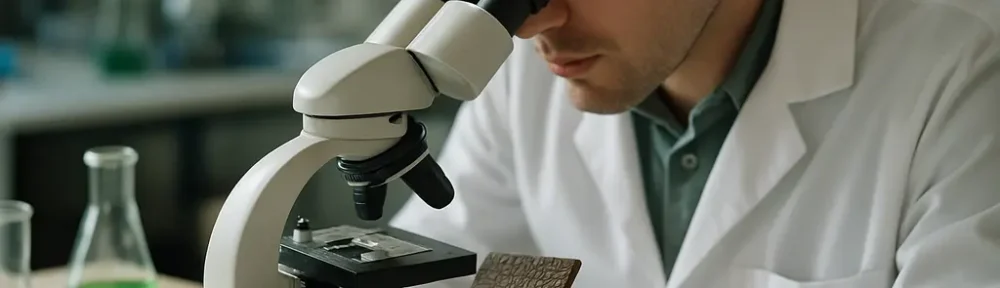
Elephant-Skin Tiles are drawing attention in green building research because their wrinkled, cracked, or textured surfaces can hold and distribute water in ways that support evaporative cooling. The evidence is promising, but it is still mostly lab-based. The strongest current findings come from prototype cementitious and mycelium-bound tiles tested under controlled heating, humidity, and simulated rain conditions.
For building teams, the question is not whether an elephant-inspired surface is visually interesting. The useful question is narrower: can a textured façade or roof tile reduce surface temperatures with predictable water use, acceptable durability, and manageable maintenance? Current research gives early evidence for cooling performance, while leaving major uncertainties around outdoor service life, clogging, scaling, installation cost, and real building performance.
Why Elephant-Skin Tiles Are Being Studied
Elephant skin has folds and cracks that can trap water and slow drainage. Researchers have used that physical idea as a model for passive cooling surfaces. In buildings, the potential benefit is simple in principle: hold water near a hot surface long enough for evaporation to remove heat. The hard part is designing a surface that wets quickly, drains slowly enough to be useful, and avoids wasting water through runoff.
What Makes Elephant-Skin Tiles Different
Elephant-Skin Tiles differ from flat cladding because their texture is designed to change how water moves across and into the surface. A study published in Advanced Materials on April 20, 2026 developed porous cementitious tiles using programmable crack networks in a diatomaceous-earth cement composite. The study reported that the micro- and nanoporosity of the diatomaceous earth enabled water imbibition in less than 50 milliseconds and reduced droplet rebound, supporting rapid initial wetting for evaporative cooling Advanced Materials study.
That wetting behavior matters because evaporative cooling is constrained by where water remains available. If water runs off too quickly, the cooling window is short. If water is stored too deeply or distributed poorly, evaporation may not occur where it is most useful. The 2026 cementitious work addressed this by comparing designed crack networks with stucco controls that lacked designed crack patterns.
Measured Cooling In Laboratory Tests
In the 2026 lab tests, the diatomaceous-earth cement tiles with an intermediate-density hexagonal crack network maintained a surface temperature of about 32 °C under heat loading. Cracked stucco was about 42 °C, and non-cracked stucco was about 52 °C under the reported test conditions. The comparison used the same amount of water and repeated wet-dry irrigation over three hours at about 23 °C ambient temperature and 25% relative humidity.
The same research reported that dense hexagonal networks could keep surfaces below ambient temperature for up to about 20 hours under lab conditions. That result is important, but it should not be read as a building-scale guarantee. A real roof or façade would face changing wind, solar exposure, rain chemistry, airborne particles, mineral content in water, freeze-thaw cycles in some climates, and maintenance intervals that were outside the narrow scope of these tests.
What The Mycelium Tile Research Adds
A separate English-Singapore collaboration involving NTU Singapore examined mycelium-bound composite tiles with an elephant-skin-inspired textured surface. According to NTU Singapore’s February 1, 2025 release, the textured tiles achieved a 25% faster cooling rate in the upward-facing orientation than flat tiles. Under simulated rain conditions, cooling improved by 70% compared with dry conditions NTU Singapore release.
The same NTU-reported work found that the textured surface heated more slowly during a hot-plate test. Over 15 minutes on a 100 °C hot plate, the texture-facing side rose at 5.01 °C per minute, compared with 5.85 °C per minute for the flat side. That difference supports the view that surface geometry can affect heating and cooling rates, although the test is still a controlled experiment rather than a full building trial.
Different Materials, Similar Thermal Logic
The cementitious and mycelium-bound studies used different base materials, yet both focused on the same broad mechanism: texture changes water retention and heat exchange. In the cementitious tiles, designed cracks and porosity shaped water capture, routing, and evaporation. In the mycelium-bound tiles, the textured surface changed heating and cooling behavior under controlled test conditions.
These findings are relevant for green building materials, but they do not yet settle which material system is preferable. Cement-based systems may align more closely with familiar exterior construction products, but the research still leaves questions about long-term cracking behavior, water chemistry, and repair. Mycelium-bound materials may interest designers seeking lower-impact composites, but the provided research does not establish outdoor service life, installed cost, or code acceptance for façade use.
Water Use, Drainage, And Maintenance Risks
Passive cooling by evaporation is not water-free. The best evidence for these surfaces comes from tests where water was deliberately supplied. In the 2026 study, smaller prototype tiles measured 100 mm by 100 mm by 3 mm for evaporation-rate comparisons. Roofing mock-ups used larger tiles, about 150 mm by 100 mm by 3 mm, on a model roof with a 60° slope and repeated water dosing over three hours.
That scale matters. A roof or façade on an occupied building would require a reliable way to provide water, distribute it evenly, avoid waste, and prevent staining or mineral buildup. If local water contains dissolved minerals, repeated wetting could create deposits in pores or cracks. If airborne dust accumulates, the designed surface could behave differently from the clean prototype. The research notes the need for further field testing, so claims about long-term maintenance should remain cautious.
- Outdoor durability under repeated wet-dry weather cycles remains uncertain.
- Water distribution must reduce runoff without creating unmanaged moisture problems.
- Crack density must be balanced because overly dense networks can reduce the evaporation gradient.
- Cost, replacement intervals, and installation methods were not established at commercial building scale in the cited research.
These limits do not make the concept weak. They define the next evidence needed before architects, engineers, and facilities teams can treat the technology as a dependable building product rather than a research prototype.
Where The Building Sector Should Be Careful

Green building products often gain attention before their performance is known across climates and operating conditions. Elephant-inspired surfaces should be evaluated with the same discipline used for other envelope technologies: thermal performance, moisture behavior, durability, fire and code requirements, maintainability, and life-cycle impacts.
Evidence Needed Before Specification
Before a project team specifies Elephant-Skin Tiles, it would need field data from roofs or façades exposed to real sun, rain, wind, and dirt. The evidence should compare textured tiles with relevant alternatives, not only with idealized controls. Surface temperature reduction is useful, but it is only one metric. Building teams would also need to know whether the tiles reduce indoor cooling loads, how much water is required, and whether the cooling benefit persists after months or years of exposure.
There is also a reporting issue. A lower surface temperature on a tile does not automatically equal a proportional reduction in building energy use. Roof assembly, insulation, ventilation, thermal mass, orientation, shading, and local climate all influence whether exterior cooling reaches the occupied interior. Readers comparing thermal management methods may also find related building-energy analysis in data-center waste heat reuse, where the same caution applies: a technical mechanism needs site-specific measurement before it supports a sustainability claim.
For suppliers, facilities teams, and students tracking material pathways, chemistry and surface treatment knowledge remain relevant to this field. An informative resource on material performance and surface behavior can be found at Kilburn Chemicals, which offers insights into this area.
What Elephant-Skin Tiles Can Support Now
Elephant-Skin Tiles should be viewed as an early-stage passive cooling approach with credible laboratory evidence, not as a proven commercial answer for hot buildings. The 2026 cementitious study showed that designed crack networks can improve water capture and extend evaporative cooling under controlled conditions. The 2025 mycelium tile work showed that elephant-skin-inspired texture can change heating and cooling behavior, including improved cooling under simulated rain.
The practical value now is in targeted research, pilot testing, and careful comparison against existing roofing and façade options. The strongest next step would be monitored outdoor trials that measure surface temperature, interior heat transfer, water demand, fouling, structural durability, and maintenance effort over time. If those results remain favorable, the concept could become part of a broader passive cooling toolkit. Until then, its role is best described as promising but unproven at building scale.