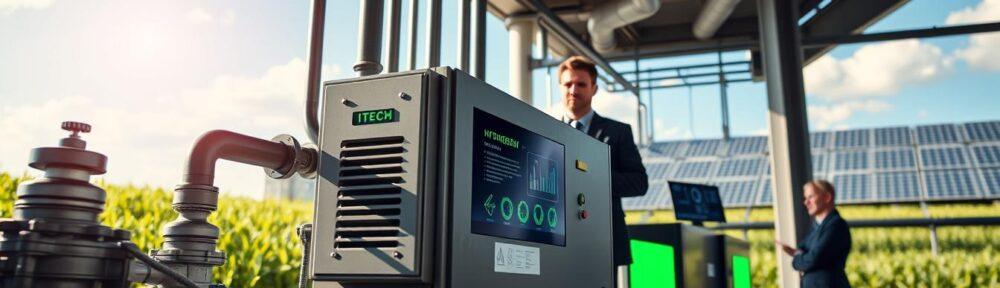
A big change is happening in industry, driven by the need to reduce carbon emissions. The old ways of making hydrogen, like for ammonia and refining, release a lot of CO2. Hitachi Energy’s data shows this “grey” production is a big part of the issue.
This situation calls for quick action to clean up. The world needs new, green ways to make hydrogen. This is creating a whole new market.
This isn’t just about new tech. It’s about building a new energy system from scratch.
The chance to join this shift is real. Big projects like NEOM in Saudi Arabia and the Western Green Energy Hub in Australia are starting. They’re moving from plans to action.
These projects will create jobs in many areas. They’ll need people to build electrolyzers and make e-methanol and other eFuels. This is the real job market taking shape today.
Electrolyzer Basics and Site Requirements
At the heart of every green hydrogen project is the electrolyzer. This machine splits water into hydrogen gas and oxygen using electricity. If the electricity comes from wind or solar, the hydrogen is green hydrogen, free from carbon.
There are different types of electrolyzers. The main ones are Proton Exchange Membrane (PEM), Anion Exchange Membrane (AEM), and Solid Oxide Electrolyzer Cell (SOEC) systems.
Here’s a quick, accessible comparison of these core electrolyzer technologies:
- PEM (Proton Exchange Membrane): Fast and powerful. Works well at low temperatures and uses a solid polymer electrolyte. It’s great for projects needing to adjust to changing power.
- AEM (Anion Exchange Membrane): New and aims to be cheaper than PEM. It uses different chemistry and might not need expensive metals.
- SOEC (Solid Oxide Electrolyzer Cell): Works at high temperatures. This makes it very efficient but it starts up slowly and is more complex.
Real engineers like Dr. Philipp Bickendorf at thyssenkrupp nucera are making SOEC technology bigger. They’re working to make high-temperature electrolysis work for big, ongoing hydrogen production.
Setting up an electrolyzer is more than just the machine. A good site needs a few key things:
First, it needs a strong and steady connection to renewable power. A big electrolyzer farm needs as much power as a small city. Keeping the grid stable is key for it to work well.
Second, it needs clean water. Dirty water can harm the machine. So, plants usually have systems to clean the water.
Lastly, it needs a lot of space for extra stuff. This includes power gear, gas storage, cooling, and control rooms. Planning the site well is very important.
Knowing about the machines and what a site needs helps us understand how these projects work.
Roles: field techs, commissioning eng, controls, safety, EPC, product mgmt, trading
People from the automotive and aerospace fields are now working in hydrogen. They use their skills in commissioning, controls, and safety. A green hydrogen project needs a team with different skills.
This part talks about the key roles in making a project real. It goes from doing hands-on work to managing business.
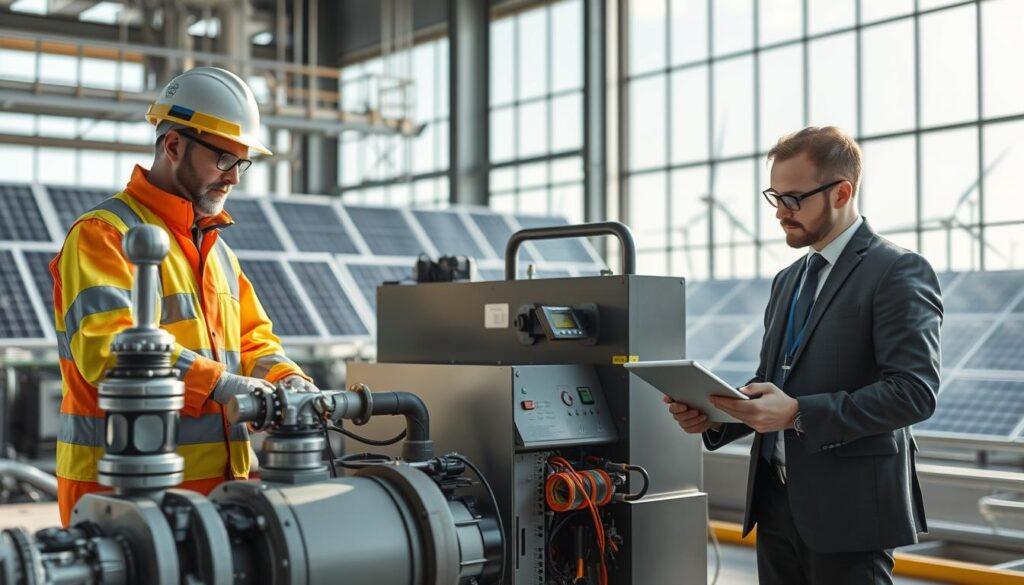
The hydrogen technicians are at the start. They keep the equipment running. They check the electrolyzers and pumps and do maintenance. You need mechanical or electrical skills to do this job.
Commissioning engineers are very important during the start-up. They make sure everything works right before it’s fully used. They need to be very careful and know a lot about the process.
Automation is key in a modern plant. Controls engineers make this work. They set up the PLC systems that control everything. Their job is to make sure the plant runs well and safely.
The crucial safety officer keeps everyone safe. They make sure the plant follows all safety rules. They do risk checks and make sure everything is safe.
The EPC firms manage the whole project. They plan the schedule, budget, and who does the work. They turn the client’s idea into a real plant.
In the equipment makers, product managers are very important. They decide what new products to make. Dr. Philipp Bickendorf moved from making cars to making hydrogen products. His skills in systems and quality helped a lot.
Now, there are new jobs in trading. People buy, sell, and move green hydrogen and its products. This connects the production to the world market.
| Role Category | Primary Function | Key Skills & Background |
|---|---|---|
| Field Operations | Hands-on operation, maintenance, and troubleshooting of physical plant equipment. | Mechanical/Electrical aptitude, experience with industrial systems, safety training. |
| Engineering & Commissioning | System design, integration, and ensuring correct startup (commissioning) of all processes. | Process engineering, PLC/controls knowledge, attention to detail, project management. |
| Safety & Compliance | Developing and enforcing safety protocols, risk management, regulatory adherence. | Knowledge of HAZOP, NFPA codes, industrial safety standards, auditing. |
| Project & Product Management | Coordinating EPC projects or guiding OEM product development and strategy. | Cross-functional leadership, budgeting, market analysis, systems thinking. |
| Commercial & Trading | Market analysis, buying/selling green hydrogen/ammonia, managing supply chains. | Commodities trading, logistics, contract negotiation, understanding of energy markets. |
This field is open to many skills. People from oil & gas, chemical plants, and even cars can fit in. Knowing how to manage systems helps a lot in hydrogen technician or controls jobs.
Every role is important. From the field to trading, people are working together to build the green hydrogen economy.
H2 Safety Culture & Certifications (HAZOP, NFPA 2)
Hydrogen is different from other fuels because of its unique properties. It’s not more dangerous, but it needs special care. Creating a strong H2 safety culture is key for the industry.
Hydrogen can ignite easily and can weaken some metals. This doesn’t mean it’s unsafe, but it needs careful handling. A dedicated safety culture is essential.
A good safety culture goes beyond just following rules. It’s about anticipating and preventing risks. This culture helps companies stand out and gain trust.
The Hazard and Operability Study, or HAZOP, is a key part of this culture. It’s a detailed check of a process or design. A team looks for possible problems before a plant is built.
Doing a HAZOP is a big step in a project. It’s not just a check-up but a part of the design process. It ensures safety is built into the system from the start.
The NFPA 2: Hydrogen Technologies Code is the main rulebook in the US. It covers how to safely use hydrogen. It includes rules for distances, ventilation, and emergency shutdowns.
Knowing NFPA 2 is important for designers and those in charge of safety. It’s what systems are checked against. For more on safety, check out safety management strategies for hydrogen projects.
For those starting in the field, learning about H2 safety is a big plus. It shows you’re serious about the industry’s future. This knowledge is not just a job skill—it’s essential for a green hydrogen economy.
Power-to-X Pathways: ammonia/eFuels plants and logistics jobs
Green hydrogen’s journey doesn’t stop at the electrolyzer. It becomes the foundation for new industries. Most green hydrogen isn’t used for heat or in fuel cells. Instead, it’s a key feedstock in Power-to-X.
This process turns green hydrogen into sustainable chemicals and fuels. It opens up many technical and operational careers, far from the production site.

One major pathway is green ammonia, or eAmmonia. Green hydrogen is mixed with air nitrogen using the Haber-Bosch process. Hitachi Energy data shows its big role in making two huge sectors carbon-free.
First, it creates carbon-free fertilizer, changing agriculture. Second, ammonia is becoming a top zero-carbon fuel for ships. This creates a new job market.
Careers are growing in designing, operating, and maintaining ammonia synthesis plants. New roles are also emerging in logistics and port operations. Ports will need experts to handle, store, and bunker this new fuel safely.
The second major pathway is making electro-fuels, or eFuels. Green hydrogen is mixed with captured carbon dioxide to create liquids like e-methanol and e-kerosene.
These “drop-in” fuels can power existing airplanes and cargo ships without engine changes. This pathway uses existing refining and chemical industry skills. It creates jobs in eFuel plant management, process engineering, and fuel blending.
Both pathways need to manage hydrogen before synthesis. This is where compression and storage become entire career sub-sectors.
Hydrogen must be compressed to high pressures for efficient transport or fed into synthesis reactors. This requires mechanical engineers, compressor technicians, and systems designers.
Safe storage, whether in large tanks or underground caverns, needs civil and materials engineers. It also requires inspectors and monitoring specialists.
The decarbonization chance is huge. Hitachi Energy says using green hydrogen for ammonia production and refining can cut gigatons of CO2. This scale means more jobs.
Think of roles in pipeline network control, shipping coordination, and quality assurance for green products. The job site expands from a single plant to a global supply chain.
For professionals, this means opportunities beyond the factory fence. You could be optimizing an eFuel production line, certifying ammonia for marine use, or designing the next-generation hydrogen storage facility. The energy transition is building not just new fuels, but new careers.
Sample Projects: sizing stacks, water needs, renewables coupling
To grasp the demands of green hydrogen jobs, let’s look at three key projects. These examples turn abstract ideas into real job settings. They focus on important technical aspects like how big electrolyzers should be, water needs, and using renewable energy.
The Sinopec Kuqa plant in China is massive. It has a 260 MW solar-powered electrolyzer. This project shows the big challenge of renewables coupling at a huge scale. Solar power’s ups and downs need smart control systems and grid management.
Jobs here are about balancing energy input with hydrogen output. Workers and engineers must adjust the sizing stacks to boost production. They also deal with the big water needs for electrolysis in a dry area. This job requires experts in water treatment and resource management.
In India, the L&T-IOCL Panipat project is different. It aims to make 10,000 tonnes per year of green hydrogen for a refinery. This shows how to cut carbon emissions in industry.
Jobs here are about mixing green hydrogen with existing refinery streams safely. Workers need to know about pipeline systems, pressure management, and chemical process controls. The project highlights the need for field techs who know both new hydrogen tech and old industrial operations.
Europe’s Green Wilhelmshaven project in Germany is a glimpse into the future. It’s set up as a terminal for green ammonia. The goal is to crack ammonia back into hydrogen for distribution.
This project creates unique jobs. Careers involve ammonia storage, handling, and cracking plant operations. It also needs people for pipeline and shipping logistics. For a deeper executive overview of such strategic energy infrastructures, industry reports are key.
Each project shows a different part of the value chain. Kuqa teaches us about big production challenges. Panipat shows direct industrial use. Wilhelmshaven shows global trade and distribution.
For job seekers, these sample projects directly relate to needed skills. They highlight why knowing renewables coupling is as important as process safety. The real-world size of these ventures makes career opportunities clear and ready.
Skills Stack: P&IDs, PLCs, process simulation, permitting
The green hydrogen sector needs a mix of technical skills and knowledge of regulations. You need to know how to build and get approvals. This skill set is key to standing out.
Piping and Instrumentation Diagrams (P&IDs) are essential for any plant. They show how everything connects. Knowing P&IDs helps with setup, fixing issues, and keeping everyone safe.
Programmable Logic Controllers (PLCs) make things run smoothly. You need to know more than just how to program them. Troubleshooting and making sure they work with renewable energy is important.
Before building, projects are tested digitally. Process simulation software lets engineers try out designs. It helps find problems and improve efficiency before construction starts.
Even the best design needs approval. Permitting is a big challenge. It involves getting environmental permits and connecting to the grid. Engineers must make sure the plant meets all the rules.
Understanding local and national rules is key. You also need to know how to manage projects. This includes everything from the first site visit to the final operation.
Here’s how to build your skills:
- Technical Foundation: Learn to read P&IDs and basic PLC logic.
- Design & Optimization: Get good at using process simulation software.
- Project Execution: Understand how to set up and document a plant.
- Regulatory Mastery: Know the environmental and grid rules for your area.
Having these skills makes you very valuable. You can turn ideas into real, working plants. This is how we build the future of energy.
Where to Find Jobs: OEMs, EPCs, developers, ports
Looking for a job in hydrogen? Start by knowing the four main places to find work. Each area has different jobs and needs. Finding the right company can really help you get hired.
The first place to check is Electrolyzer OEMs (Original Equipment Manufacturers). Big names like thyssenkrupp nucera, Cummins, and Nel Hydrogen are leading the way. They’re looking for people in research, engineering, and making products. If you love creating new things, this is for you.
Then, there are EPC firms (Engineering, Procurement, and Construction). Companies like Fluor or McDermott build entire plants. They need people for managing projects, fixing things, and keeping things safe. It’s all about turning plans into real places.
Renewable energy developers are also hiring a lot. As more solar and wind farms come up, they’re adding hydrogen production. They need experts in making systems work better, managing the grid, and running sites.
Don’t forget about ports and industrial clusters. Places like the Gulf Coast or the Port of Los Angeles are becoming hydrogen centers. They need people for handling fuel, storing it, and managing terminals. This field is growing fast, as shown in our sustainable reusable water bottles analysis.
To make your job search easier, here’s a simple guide:
- OEMs: Good for R&D, product management, and making things.
- EPC Firms: Ideal for those who like hands-on work and building things.
- Developers: Best for those who know about renewable energy and systems.
- Ports/Hubs: Great for jobs in logistics, safety, and running facilities.
First, figure out which area fits your skills. Then, look up the top companies in that field. Your next job in green hydrogen is probably waiting for you.
Career Ladder & Pay Bands
Career growth in the hydrogen economy is not straightforward. It’s a complex web of opportunities based on specialization, project experience, and location. Understanding your path is essential to make a big impact and earn well in this growing field.
There are typical career progression paths, but you can also move sideways into new areas. Here are two common paths:
- The Technical Track: A Hydrogen Technician starts with installation and maintenance. They can advance to Lead Technician, overseeing a team. Then, they might become a Plant Supervisor, managing daily operations. The top role could be Commissioning Management, leading the start-up of new facilities.
- The Engineering & Management Track: A Process Engineer starts in design or simulation. They then move to Project Engineering, handling specific tasks. Advancement leads to Project Management, overseeing budgets and timelines. Senior roles include Technical Consultancy or Director-level positions.
Your pay grows as you progress and is influenced by several factors. Salaries vary by region, but knowing these factors helps you understand pay bands.
- Specialization: Being an expert in specific technologies, like Solid Oxide Electrolyzer Cells (SOEC) or Proton Exchange Membrane (PEM) systems, is highly valued. Skills in safety, controls, or integration are also in demand.
- Project Scale: Working on a 10 MW pilot plant is different from a gigawatt-scale export project. Larger projects usually offer higher pay due to more responsibility and technical challenges.
- Geographic Location: Salaries in the United States vary by region. Major hydrogen hubs like the Gulf Coast, California, and the Midwest often pay more to attract talent. Local costs and incentives also affect salaries.
- The Experience Premium: There’s a big shortage of people with hands-on hydrogen project experience. Those with experience from design to commissioning get a big pay premium. This is a great chance for newcomers to the field.
The outlook is positive. As the industry grows, new roles in trading, analytics, and lifecycle management will appear. By developing a strong skill set and focusing on valuable specializations, you can confidently climb this dynamic career ladder. Your expertise will be a key investment in a greener future.
Resources & Communities
Getting a job in green hydrogen is just the beginning. To build a lasting career, you need to stay connected to the industry. The right resources and communities offer knowledge, contacts, and chances to grow.
Join big industry groups like the global Hydrogen Council or local ones like the California Fuel Cell Partnership. Keep up with Hydrogen Insight and Recharge News. They share important news on electrolyzers, ammonia, and eFuels projects.
Be part of online forums and LinkedIn groups focused on hydrogen tech. Don’t miss out on events like the Hydrogen Americas Summit or the World Hydrogen Summit. These are great places to meet key players in the field.
Your success in this field depends on always learning and being active. Use these tools to stay updated and expand your network. This way, you’ll be at the forefront of the energy shift.