
The push to reach net-zero is speeding up, and a key technology is getting more attention. Carbon Capture, Utilization, and Storage (CCUS) is moving from small tests to big infrastructure. But, there’s a big gap between our climate goals and the number of big projects.
This gap is a big chance. CCUS uses two main ways. One grabs emissions right from factories. The other, Direct Air Capture (DAC), pulls CO₂ from the air. Both are growing fast to deal with tough emissions from things like factories and big trucks.
This fast growth means we need more skilled people. Jobs range from doing hands-on work to making big policy plans. For a closer look at this growing market and talent need, there’s a lot of room for growth. This guide will show you the jobs you can find in this important field.
Project Lifecycle & Where Roles Fit
CCUS projects span from initial studies to long-term monitoring, creating diverse job opportunities. Understanding the journey from concept to operation is key. This helps you find the right career path.
Those moving from traditional industries like oil and gas need to adapt. They become technical translators, using their skills in new ways. This transition is vital. A mismatch in skills can affect project success and lead to higher staff turnover.
A systems-thinking approach is more valuable than focusing on individual parts. Success comes from combining geology, engineering, policy, and commerce. This holistic view is what defines CCUS careers today.
The CCUS project lifecycle has distinct phases, each needing different teams and skills:
- Feasibility & Conceptual Design: This phase includes desk studies and site screening. Geologists and engineers assess storage. Policy analysts check regulations.
- Front-End Engineering Design (FEED): Here, plans become detailed. Process engineers design systems. Owner’s engineering teams ensure plans meet goals.
- Engineering, Procurement, and Construction (EPC): The project is built. EPC managers, civil engineers, and HSE specialists lead. This phase turns plans into reality.
- Commissioning & Startup: Systems are tested and handed over. Commissioning engineers and technicians ensure everything works. This phase is in high demand.
- Long-Term Operations & Monitoring: This is the long-term phase. Operations managers, maintenance, and monitoring specialists keep things running smoothly. MRV is ongoing.
Roles change a lot over time. A process engineer might start in FEED, move to construction, and then support operations. Knowing this helps you find the right job for your skills.
New career paths emerge within this structure. Whether in an owner’s engineering team, an EPC contractor, or a commissioning crew, your role defines your work. By understanding this map, you can find where your skills are most valuable in the CCUS field.
MRV and Regulation 101 (EPA Class VI, ISO standards)
Carbon capture and storage rely on strong MRV protocols and clear rules like the EPA’s Class VI well permit.
Knowing these rules well is non-negotiable. Today, engineers and project managers are judged on their rule understanding. They must design systems that meet these rules from the start.
What is MRV?
MRV stands for Monitoring, Reporting, and Verification. It proves CO₂ is safely stored underground.
This isn’t just about paperwork. A good MRV plan protects the environment and builds public trust. It’s also a legal must for projects to operate and earn credits.
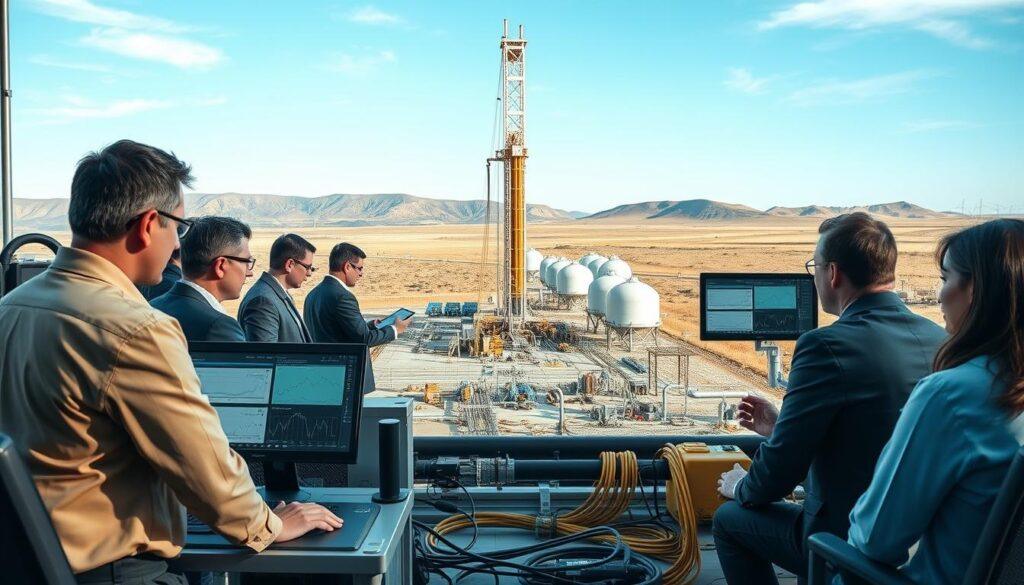
Think of MRV as the project’s health check. It’s active from the start to the end of storage.
| MRV Component | Primary Purpose | Key Activities | Final Outcome |
|---|---|---|---|
| Monitoring | Track the CO₂ plume and ensure containment. | Seismic surveys, pressure gauges, groundwater sampling. | Real-time data on storage integrity. |
| Reporting | Document all data for regulators and the public. | Submitting annual compliance reports, leak detection logs. | Transparent record of project performance. |
| Verification | Independently confirm the reported storage. | Third-party audits, data reconciliation, model validation. | Certified proof that CO₂ is sequestered. |
The Cornerstone: EPA Class VI Wells
In the United States, CO₂ injection for sequestration needs a Class VI well permit from the EPA. This permit is key for project approval.
Class VI wells have strict design and monitoring rules. The permit application is a big task that needs deep technical and regulatory knowledge.
Key requirements for Class VI wells include:
- A detailed Area of Review analysis to map all nearby wells.
- Financial responsibility demonstrations to cover future closure costs.
- A complete MRV plan that meets EPA standards.
- Post-injection site care and monitoring plans lasting decades.
Understanding this framework is key for predicting when projects will start. Permit review can take years, so planning ahead is essential.
The International Lens: ISO Standards
International standards, like ISO 27914 and ISO 27916, offer a common language for quality and safety in CCUS.
These standards help make best practices global. They cover risk management and how carbon storage is measured and credited. Projects following ISO standards often get more credibility with investors and partners.
Knowing MRV, Class VI wells, and related standards is vital. It lets technical professionals build compliance into their designs and guide projects through the complex permitting process.
Field Roles: geologists, reservoir eng, HSE, measurement techs
The real work of CCUS happens in the field, not just in labs or offices. A team of experts works hard to keep CO₂ underground. Their efforts are key to making projects work and earning public trust.
Geologists and reservoir engineers start every project. They find the best places to store CO₂, like deep underground rocks. They use their knowledge to predict how CO₂ will move and interact with the rock over time.
They need to know a lot about underground geology and storage risk modeling. This helps prevent leaks and keeps projects in line with rules.
HSE experts handle the dangers of working with CO₂. They make plans for emergencies and keep workers safe. Knowing the whole CCUS process is essential for them.
Measurement technicians watch over the storage site. They use sensors to check if CO₂ is being stored safely. Their work is critical for proving that CO₂ is being stored correctly.
These jobs need a deep understanding of the whole carbon process. Knowing about sorbents helps teams prepare for the CO₂ they’ll work with. This connection between capture and storage is key to success.
| Field Role | Primary Duty | Key Skill from Industry Reports |
|---|---|---|
| Geologist / Reservoir Engineer | Subsurface characterization & plume modeling | Storage risk modeling, subsurface geology fluency |
| HSE Professional | Risk management & safety protocol enforcement | Understanding of full CCUS processes and hazards |
| Measurement Technician | Operation of monitoring sensors & data collection | Technical proficiency in sequestration monitoring systems |
Working in these roles means being hands-on and working together. A reservoir engineer might look at seismic data in the morning. Then, they might talk to an HSE officer about safety in the afternoon. The work of measurement techs helps geologists make accurate models. This teamwork makes sure CO₂ is stored safely.
For those with engineering or science backgrounds, these jobs offer a chance to make a real difference. They combine traditional skills with new technology. The goal is to keep carbon underground.
Plant Roles: process eng, chemists, operations, maintenance
Careers in the carbon capture plant are key to its success. They need a mix of chemical knowledge, engineering skills, and management. Here, CO2 is separated, purified, and ready for storage or use.

Process Engineers are the plant’s designers. They make sure the capture process is safe, efficient, and affordable. Their work includes designing and fine-tuning the plant.
Understanding thermodynamics and mass transfer is essential. Engineers study how CO2 interacts with capture mediums. They choose the right equipment and design the control systems.
Their main tasks are:
- Process Simulation & Design: They use software to model the capture cycle and optimize energy use.
- Equipment Specification: They pick out the right absorbers, strippers, pumps, and heat exchangers.
- Control Strategy: They develop systems to keep the plant running smoothly, even with changing gas inputs.
- Performance Optimization: They analyze data to improve capture rate and cut costs.
The Chemist: Innovator in Capture Materials
Chemists create the materials that make the plant work. Their work is vital for improving technology and reducing costs. This role is mostly lab-based but has a big impact on success.
Chemists work on new solvents, sorbents, and membranes. For amine-based systems, they aim to capture more CO2, degrade slower, and need less energy to regenerate. They study corrosion rates, solvent stability, and environmental impact.
This career is perfect for those who love environmental science. It connects molecular innovation to global climate solutions.
Operations and Maintenance: The Engine of Reliability
A plant’s success depends on its daily performance. The Operations and Maintenance (O&M) team keeps the plant running safely and reliably. Their work is practical, hands-on, and essential for the project’s success.
Plant operators watch control systems, manage solvent circulation rates, and oversee the amine regeneration cycle. They fix problems and keep product quality high.
Maintenance technicians and specialists focus on keeping the plant mechanical. They do preventative maintenance, check for corrosion, and manage spare parts. In an amine plant, they pay special attention to heat exchangers and filtration systems to prevent problems.
These roles together make continuous carbon capture a practical challenge. They turn engineering designs into lasting environmental assets.
Policy & Commercial: credits, offtake, LCFS, 45Q strategy
CCUS success depends on policy and carbon markets. These frameworks shape project economics. Policy and commercial experts turn engineering into a business.
Carbon credits are key. One ton of CO2 can earn a credit sold for money. There are voluntary and compliance markets.
Offtake agreements provide revenue certainty. A CCUS project signs a contract with a buyer. This agreement sets a price for future credits, securing funds.
In the U.S., two policies drive the market. California’s Low Carbon Fuel Standard (LCFS) creates a market for cleaner fuels. The federal 45Q tax credit incentivizes carbon sequestration.
| Mechanism | Type | Key Feature | Primary Driver |
|---|---|---|---|
| Low Carbon Fuel Standard (LCFS) | State Compliance Market | Generates tradeable credits for low-carbon fuels; price set by market. | California Air Resources Board (CARB) regulation. |
| 45Q Tax Credit | Federal Tax Incentive | Direct payment per metric ton of CO2 stored; value escalates over time. | U.S. Internal Revenue Code. |
| Voluntary Carbon Markets | Corporate Offsets | Companies purchase credits voluntarily to offset emissions; no legal mandate. | Corporate net-zero pledges and ESG goals. |
Policy and advocacy experts are vital. They draft papers and track laws. They ensure projects align with policy.
Commercial strategists use this knowledge. They build financial models and negotiate deals. They bridge the technical and business sides.
Understanding this landscape is key. It ensures projects are not just built but are financially viable.
Sample Skill Roadmaps and Training
Starting a career in carbon capture jobs means learning to use your current skills in new ways. Your skills are valuable, but they need to be seen in a new light. This section offers practical steps to build your path in CCUS.
The first step is to show how your past experience fits CCUS needs. It’s like learning a new language for your job story.
Here are examples of how to make your skills fit CCUS jobs:
- Chemical Engineer: Use your knowledge of reactors and process optimization for amine scrubbing or new sorbents.
- Mechanical Designer/Pipeline Engineer: Show how your skills in fluid dynamics and materials are useful for CO₂ transport networks.
- Geologist/Geophysicist: Use your skills in subsurface mapping and seismic interpretation for finding good storage sites.
- Policy or Finance Analyst: Explain how your skills in regulations or finance help with carbon credits and project funding.
This isn’t just for your resume. It guides your learning. For example, if you’re a mechanical engineer, you should learn about CO₂ pipeline corrosion.
Digital Skills Are Non-Negotiable
CCUS jobs need both old-school engineering and new digital skills. Process simulation software is used daily for modeling. Data analytics and Python are key for smarter monitoring.
These digital skills make you a better team player. They should be part of your training plan.
The Training Bridge: Certificates and Courses
Learning the basics is good, but practical skills are what employers want. This is where industry training is key.
For example, a CCUS Professional Certificate Course is a great way to upskill. These programs give you skills that employers value.
They cover everything from capture to utilization, with a focus on real-world issues. Getting a respected certificate shows you’re serious and skilled.
Building Your Personal Roadmap
Start by translating your current skills into CCUS terms. Then, add the technical and digital skills needed for your role. End with a recognized credential.
Many find it helpful to look at an industry roadmap to see future skill needs.
- Audit: List your current skills and map them to CCUS value points.
- Gap Analysis: Find the 2-3 key skills you need to learn.
- Source Training: Use online courses, certificates, and webinars to learn these skills.
- Apply & Showcase: Work on a case study or join a project to show off your new skills.
The CCUS field is always changing. A proactive, structured learning approach is your best asset. Your roadmap turns dreams into reality.
Day-in-the-Life + Safety Considerations
For a CCUS field measurement technician, the day starts with a safety briefing, not coffee. They handle compressed CO₂, a high-risk task. They travel to wells or sensor arrays to collect data on CO₂ levels and pressure. Every task is done with strict safety protocols in mind.
They work closely with geologists and reservoir engineers, sharing data in real-time. They might spend the afternoon calibrating equipment. A big achievement is designing a more efficient pipeline network for monitoring stations, reducing site visits and risks.
A process engineer at a capture plant works amidst machinery sounds and chemical processes. They check absorber columns and compressor performance in the morning. They analyze data to improve capture rates and lower the energy penalty.
They collaborate with chemists to adjust solvents and meet with operations staff for maintenance planning. Safety is a key part of their decisions. Engineers do risk assessments before any changes and always wear proper PPE.
Policy analysts in a trade association face a different kind of challenge. They navigate the regulatory world. A typical day might include researching EPA Class VI well updates or drafting briefs on LCFS credit markets.
This role often has a flexible schedule. Many organizations value collaborative, mission-driven work. Analysts join virtual meetings with various stakeholders to advance climate policy.
Safety is a top priority across all roles. It’s not just about following rules. It’s a mindset. Regular drills, hazard reporting, and open communication prevent accidents. Understanding this daily reality is key for anyone in the field.
The table below contrasts the daily focus and safety priorities for these three common CCUS roles:
| Role | Key Daily Tasks | Primary Safety Focus | Typical Collaboration |
|---|---|---|---|
| Field Measurement Technician | Sensor deployment, data logging, equipment maintenance | Personal protective equipment (PPE) for high-pressure CO₂, remote site hazards | Geologists, reservoir engineers, HSE officers |
| Process Engineer | Process optimization, data analysis, troubleshooting plant systems | Chemical handling, high-pressure equipment, confined space entry protocols | Plant operators, chemists, maintenance teams |
| Policy Analyst | Regulatory research, drafting reports, stakeholder meetings | Ergonomics, data security, and managing project deadlines (stress-related risks) | Legal teams, industry members, government agencies |
Success in CCUS requires technical skill and a strong commitment to safety. This focus defines the day-in-the-life experience and protects people and the planet.
Job Boards, Companies, and Salaries
Looking for a CCUS job? Start by finding the right job boards, employers, and salary info. This guide helps you find your way.
It’s important to know where to look. General job sites might not have the CCUS jobs you want. Look for specialized platforms instead.
Specialized Job Boards and Networks
Start your job search on job boards for the CCUS industry. These sites list jobs from tech companies to big energy players.
- LinkedIn Groups: Join groups like “Carbon Capture, Utilization & Storage (CCUS) Professionals.” Members often share job openings not listed online.
- Industry Associations: The Carbon Capture Coalition and the Global CCS Institute have job pages. They list jobs in policy, research, and tech.
- Niche Energy Sites: Sites focused on clean tech and energy jobs are great. They list jobs from all over the industry.
- Company Career Pages: Bookmark the careers pages of leading companies. Set up job alerts to get notified when new jobs come up.
Networking at conferences is also key. Many jobs are filled through referrals before they’re even advertised.
Key Players in the CCUS Ecosystem
The CCUS field has big companies and new startups. Choose your employer based on your career goals.
Energy Majors: Giants like ExxonMobil, Chevron, and Shell are investing big in CCUS. They hire engineers, geologists, and project managers.
Dedicated Technology Providers: Companies like Aker Solutions, Carbon Engineering, and Climeworks focus on tech solutions. They look for process engineers and research scientists.
Engineering & Construction Firms: Bechtel, Fluor, and Worley handle design and build. They need civil, mechanical, and process engineers.
Consultancies & Advisory Groups: McKinsey, ERM, and the Carbon Capture and Storage Association (CCSA) offer strategy and advice. These roles mix technical and business skills.
For more job chances, check out CCUS recruitment sites. They know this sector well.
Salaries vary by job, experience, and location. Here’s a look at U.S. salaries based on recent surveys.
CCUS jobs pay well, often with bonuses for meeting project goals or selling carbon credits.
| Role | Experience Level | Salary Range (USD) | Typical Employers |
|---|---|---|---|
| Process Engineer | Mid-Level (3-7 years) | $95,000 – $130,000 | Technology Providers, Engineering Firms |
| Subsurface Geologist | Senior (8+ years) | $120,000 – $160,000 | Energy Majors, Consultancies |
| Policy Analyst | Entry to Mid-Level | $65,000 – $90,000 | Advocacy Groups, Government Contractors |
| Measurement Technician | Field Operator (1-5 years) | $60,000 – $85,000 | Monitoring Contractors, Utilities |
| Project Manager | Senior (10+ years) | $140,000 – $200,000+ | E&C Firms, Energy Majors |
Policy jobs at non-profits or associations might have lower salaries. But they offer mission-driven work and benefits.
Technical advisors and senior engineers with storage expertise get paid more. Their skills are rare.
The Strategic Importance of Location
Where you are affects your salary and job chances. Projects cluster where there’s support and infrastructure.
In the U.S., the Gulf Coast and the Permian Basin are hotspots. They have good geology and infrastructure.
California and the Midwest are also active. They have clean fuel standards and bioenergy projects. Targeting these areas can shorten your job search.
Europe has similar hubs in Norway and the Netherlands. For U.S. professionals, knowing these areas helps with remote work or moving.
Companies in these hubs need workers fast. This can lead to quicker interviews and better pay.
Use this guide to your advantage. Update your profiles on job boards. Research companies working on projects you’re interested in. With clear salary info and a focused location strategy, you can confidently navigate the CCUS job market.
Ethical Considerations & Community Engagement
A career in carbon capture is not just about tech. It deeply affects people and communities. This means we must act ethically and connect well with others.
Projects need a social okay to start. This comes from being open and tackling worries about safety and storage. The process of getting pipeline permits is a key example. It’s not just a formality — it’s about building trust and engaging with the community, especially as carbon management initiatives increasingly connect with broader clean-energy infrastructure such as Illinois sustainable energy grids, where transparency and collaboration are essential
People from all sides must work together. This includes project teams, governments, NGOs, and locals. They aim to make sure projects are good for everyone. This approach supports a fair transition to a greener world..