For decades, trash collection was as dull as watching paint dry. Now, your garbage can might be smarter than your phone.
I’m looking into how waste technology has changed trash collection. We’ve moved from simple landfills to advanced systems. These systems would impress even Tony Stark.
Today, we have smart bins that text when they’re full. We also have plants that turn pizza boxes into electricity. It’s like magic, but better for the planet.
Companies like Gradeall and Evreka are at the forefront of this change. They use IoT and digital platforms to improve recycling and composting. Their work is changing how we deal with waste.
This change is truly amazing. We’ve moved from boring collections to smart systems that manage resources better than ever.
Emerging Technologies
The waste management sector has changed a lot. It’s now all about using data instead of just throwing things away. This change is truly revolutionary.
AI-powered sorting systems can now sort materials with amazing accuracy. They use advanced imaging and learning to separate plastics, metals, and paper fast. It’s like having a recycling ninja working all the time.
Waste-to-energy facilities have become advanced power plants. They turn trash into electricity. It’s like they’re reborn from our waste to create something useful.
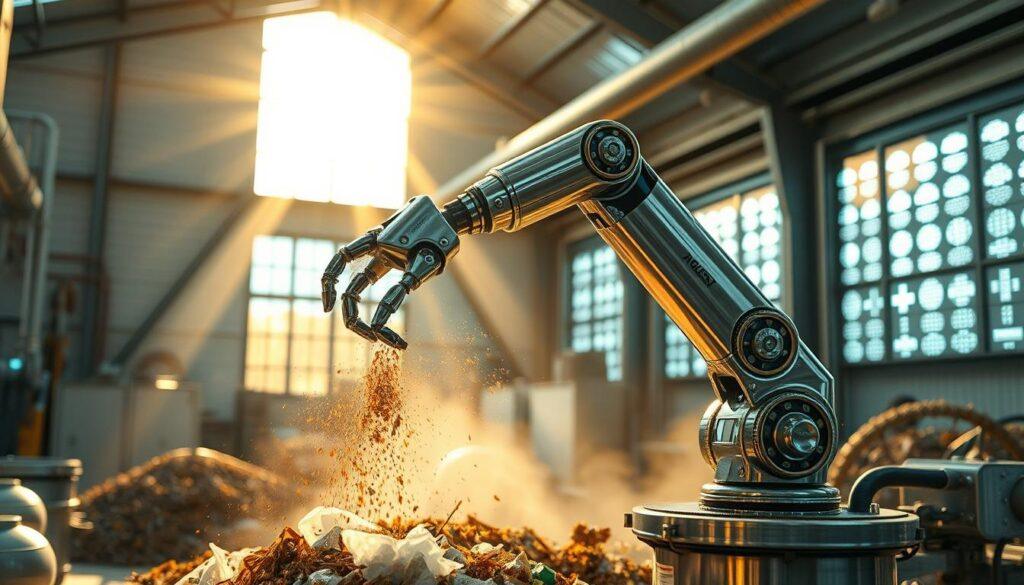
Gradeall’s smart bins are the next step in container technology. Their sensors track fill levels and plan collection routes. The Intelli-Fill technology in their G90 compactor is like having a waste management psychic.
Evreka’s IoT container monitoring systems give bins a digital heartbeat. They track temperature and movement patterns. Their fleet management uses geofence technology that impresses even military strategists.
Digital documentation systems are changing waste management. They create paperless trails that are easy to search. It’s like giving the whole industry a digital MBA in efficiency.
This innovation is more than just new tech. It’s a complete change in how we handle waste. AI, robotics, and IoT make systems smarter, more efficient, and elegant.
These emerging technologies show that innovation can happen anywhere. While we’re excited about new gadgets, the real change is in our trash cans. For more on how these technologies are changing waste management, check out our analysis of smart waste management technologies that are changing how we see waste.
Case Studies
Sometimes, the best proof comes from real-world examples. In this case, it’s about trash and technology coming together. The results speak for themselves.
Newtownabbey Borough Council used Gradeall’s G120 Compactors. They saw an 80% volume reduction. It’s like fitting an entire season of your favorite show into a single highlight reel. Their MKII Tyre Baler is even more impressive, turning 400-500 tires into six PAS108 compliant bales every hour. That’s like turning a tire mountain into manageable building blocks.
Gradeall’s G90 Static Waste Compactor with Intelli-Fill technology is a game-changer. It’s not just a machine; it’s a partner that optimizes compaction based on real-time data. It’s like having a waste management assistant that never sleeps, never complains, and always knows exactly how much pressure to apply.
Evreka’s ecosystem is a tech upgrade for waste management. Their container monitoring systems and fleet management capabilities are like a Fitbit for garbage. They track everything from fill levels to route efficiency to carbon emissions, turning abstract environmental goals into measurable metrics.
These case studies show the future trends in waste management technology. They prove that smart investments in technology can reduce environmental impact and cut costs. It’s like having your cake and eating it too, but the cake is made of recycled materials and comes with detailed analytics.
The real magic happens when you see these examples as part of a larger pattern. When technology meets trash, amazing things happen. We see reduced landfill contributions, lower emissions, and happier budgets. It’s enough to make even the most skeptical accountant crack a smile.
Industry Impacts
Remember when we thought waste was out of sight, out of mind? Those days are over. The waste technology revolution is changing how we handle trash. It’s also changing the economics of the industry.
We’re seeing a new era, the “circular economy 2.0.” Now, waste is seen as misplaced inventory. Companies like Gradeall treat discarded materials as valuable. In this new world, they are.
Legislation is now supporting smart waste technology. It’s like seeing your parents approve of your startup idea. It’s surprising but very productive.
The financial benefits are huge. What was once a cost center is now a profit maker. Reduced disposal fees and energy from waste are creating new revenue streams.
Blockchain technology is also making an impact. Gradeall is using it to track materials. Your plastic bottle might have better documentation than some luxury goods. It’s like supply chain transparency meets dumpster diving.
The environmental benefits are also impressive:
- Carbon emission reductions that actually move the needle
- Resource utilization that would make even the most efficient manufacturer jealous
- ESG compliance that investors actually care about
This isn’t just about feeling good anymore. It’s about performing better. Companies using advanced waste technology see costs drop and sustainability improve.
The textile recycling sector shows this shift well. What was once destined for landfills is now raw material for new products. It’s a career change for discarded materials.
Zero waste initiatives are now core business strategies. Reducing waste reduces costs and improves the environment. It’s a rare win-win-win in business.
ESG criteria compliance is the hero of this transformation. Investors now ask for carbon reports and circular economy metrics. It makes waste management CEOs feel fashionable.
The industry impact? Revolutionary. We’re seeing a sector reinvent itself from the garbage up. And it’s about time.
What’s Next?
So, what’s next for waste management? If things keep going as they are, our trash might be smarter than our phones. It’s not just about better bins; it’s about thinking about waste before it happens.
Gradeall is working on using predictive analytics to make waste collection smarter. Imagine garbage trucks only coming when they need to, saving fuel and time. Evreka’s digital platforms could make waste management as easy as using an iPhone.
AI might soon predict waste patterns like weather forecasts. Robotics will go beyond sorting to spotting illegal dumping and working 24/7 without breaks.
These technologies will come together to make cities smarter. Waste management will be like a background process, efficient and almost invisible. Your bin will remind you when it’s time to empty it.
We’re moving from just managing waste to optimizing resources with technology. This future is exciting and worth exploring.