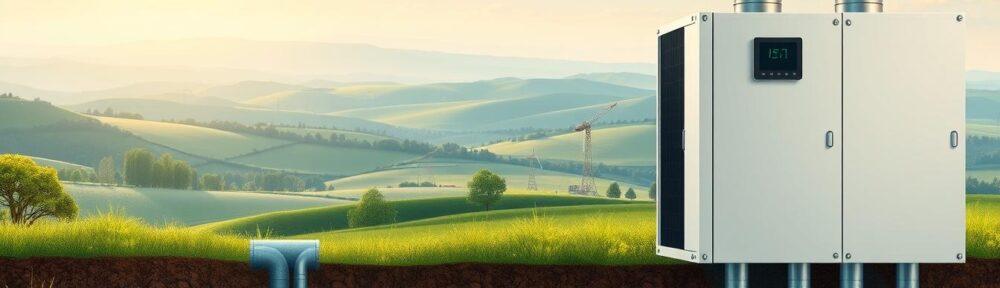
The Earth’s core is a 10,800°F nuclear reactor that has been active for 4.5 billion years. Yet, we’re stuck burning rocks to boil water. This is because traditional methods are too demanding.
They need three things: heat, permeable rock, and water. This is called the “hydrothermal triple lock.” It’s why we’ve only tapped into energy near tectonic plate boundaries.
But now, we’re breaking free from this limitation. Welcome to Geothermal 2.0. We’re not just searching for natural steam pockets anymore. Instead, we’re creating our own.
Enhanced systems fracture rock to make artificial reservoirs. New methods keep the working fluid sealed in a deep-earth radiator. It’s like the difference between foraging for wild berries and building a vertical farm.
We’re on the verge of a new era in harnessing heat. Imagine tapping into a terawatt-scale resource that’s not affected by weather or time. The future of energy is here, and it’s time to start manufacturing.
Geothermal today conventional hydrothermal limits and capacity factors
Geothermal power is at a turning point in the world of renewable energy. It has a high capacity factor, over 90%. But, it’s only accessible on 2% of the Earth’s geothermal resources. This limits its use and affects energy policy and development.
The permeability paradox is a big challenge. Enhanced geothermal systems (EGS) try to make rocks more permeable. This would allow for better flow of heat from beneath the Earth. Despite years of work, EGS is yet to be widely used due to issues like earthquakes and high costs.
The 2% problem and the permeability paradox
The 2% figure is a major hurdle for geothermal energy. We’re searching worldwide for underground heat sources. Yet, 98% of the Earth’s heat remains untapped.
Enhanced geothermal systems were meant to solve this problem. But, they’ve been “almost ready” for 20 years. Geological issues and concerns about earthquakes have slowed progress. We need to explore more of the Earth to make geothermal energy truly impactful.
Why 90% capacity factor isn’t enough without scale
Even with a high capacity factor, geothermal energy’s impact is limited. It’s not just about a good score. We need to tap into more of the Earth’s geothermal resources to make a real difference.
For more on geothermal energy, check out this report. As we face challenges with traditional hydrothermal systems, we must look to enhanced geothermal systems to change our energy future.
Closed loop borehole heat exchangers and working fluids pros and cons
Let’s explore closed-loop borehole heat exchangers and their working fluids. These systems are advanced, using geothermal energy in a new way. But, like any tech, they have good and bad sides.
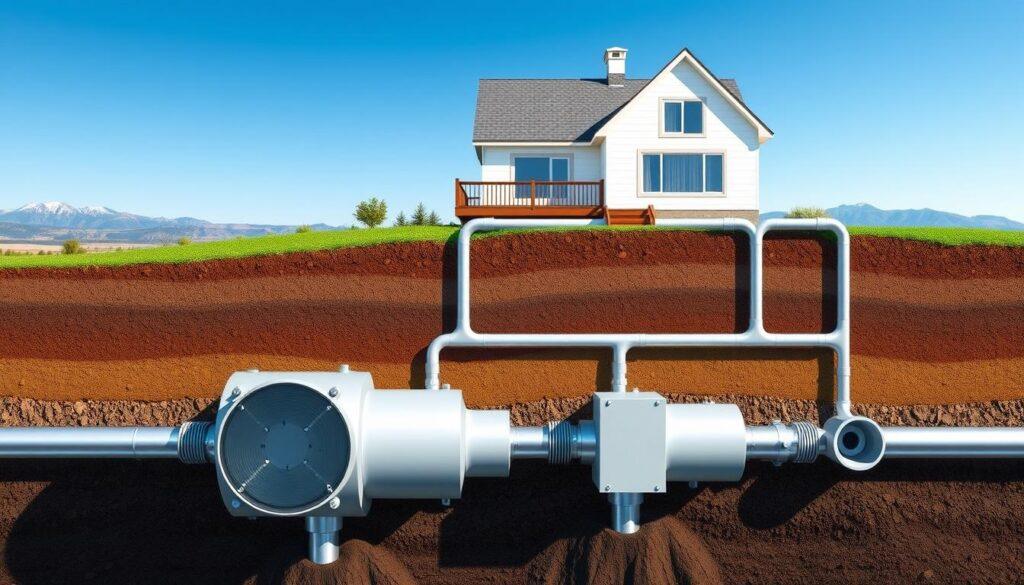
Closed-loop geothermal (CLG) systems use underground wellbores. They create a complex network underground. The system uses a special fluid that moves heat from the rock.
This fluid moves naturally, without needing a pump. It goes up when hot and down when cool. This natural flow is efficient and saves energy.
The Eavor-Loop Radiator Model and Thermosiphon Effect
The Eavor-Loop™ is a key example of this tech. It’s simple and doesn’t need to deal with messy brine or seismic issues. It captures heat well, thanks to the working fluids.
Water vs. Supercritical CO2: The Thermodynamic Trade-Off
There are two main fluids: water and supercritical CO2 (sCO2). Water is safe but has limits. sCO2 is more powerful but harder to handle.
Choosing sCO2 means dealing with new challenges. But, it could greatly improve efficiency. It might be worth the effort.
| Working Fluid | Advantages | Disadvantages |
|---|---|---|
| Water | Safe, well-understood, low cost | Limited by boiling point, risk of scaling |
| Supercritical CO2 | Higher efficiency, lower viscosity | Complex handling, new technology required |
For more on geothermal systems, see this resource. Choosing the right fluid is key for closed-loop geothermal systems. The future of geothermal energy looks bright.
Drilling tech PDC bits RSS automation high temp tools and lost circulation fixes
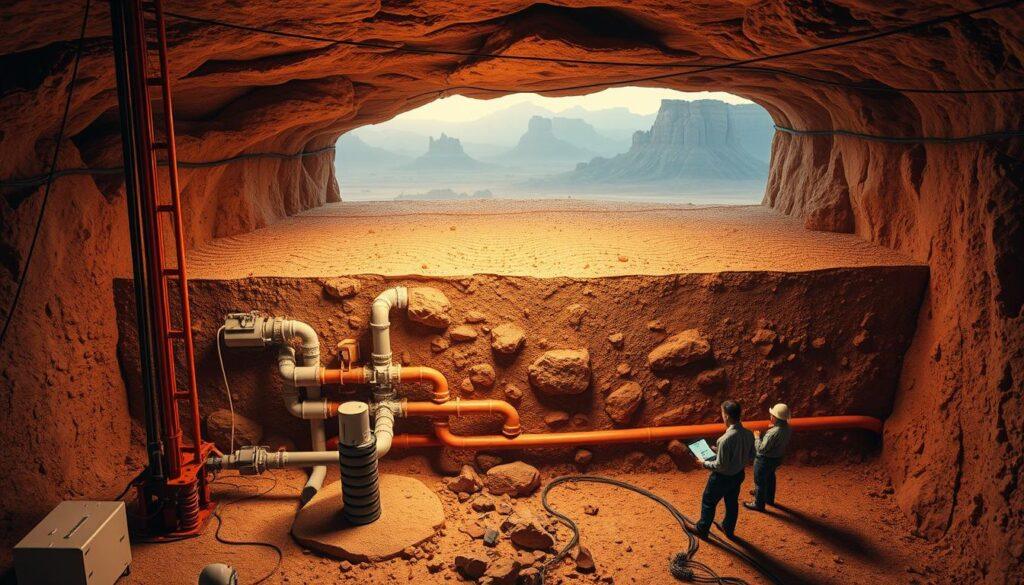
Geothermal drilling is tough, and the oil and gas sector needs new ideas. It’s not just about drilling; it’s about surviving the Earth’s depths. With high temperatures and hard rock, old tech won’t cut it. We need new tools that can handle these challenges.
PDC bits are a game-changer. They cut through hard rock efficiently. With RSS, we can drill with precision, like in a video game. Drilling long laterals that touch hot rock is now possible.
Automation is key in this new era. It makes drilling cheaper by reducing human error. A bad day can cost a lot, but automation keeps things running smoothly.
But lost circulation is a big problem. It’s like watching money disappear. We need special materials and IDP to fight it.
IDP keeps the drill bit cool and protects electronics. This lets us drill deeper and hotter. It turns regular pipe into a temperature controller.
Borrowing from the Permian Basin’s toy box
The Permian Basin is a drilling powerhouse. They drill deep and hot. Their tech is a goldmine for us.
The lost circulation menace and insulated drill pipe
Lost circulation is a big problem. It costs a lot. Insulated Drill Pipe helps by controlling circulation and keeping systems working at extreme depths.
| Technology | Benefits | Impact on Drilling Costs |
|---|---|---|
| PDC Bits | Efficient rock penetration | Reduces time and costs |
| RSS | Precision navigation | Minimizes errors |
| Automation | Consistent performance | Lower labor costs |
| IDP | Temperature control | Prevents equipment failure |
Subsurface risk modeling temperature gradient permeability stress and induced seismicity management
Imagine drilling is like playing a game of chess with the earth. It’s all about understanding the subsurface. Temperature, permeability, and stress are key to safe and efficient geothermal energy.
Studying the earth’s stress can predict its reactions. This helps avoid problems like induced seismicity. Remember, Basel and Pohang show the risks of messing with the earth’s balance.
Reading the Rock’s Stress Diary
Managing subsurface risks is like playing 4D chess. It’s all about knowing the geology. We aim for enough fluid flow without causing earthquakes. Closed-loop systems avoid these risks by using sealed heat exchangers.
Traffic Light Protocols and Social License to Operate
The “traffic light protocol” is a key system. It tells us when to stop or slow down. Green means go, amber means caution, and red means stop if there’s too much shaking.
Keeping the public happy is key. By managing risks well, we can keep geothermal energy a good choice for the future.
Surface plant cycles ORC flash supercritical CO2 options
You’ve found geothermal gold; now, let’s figure out how to use that heat. The surface plant is where the magic happens, turning BTUs into electricity. Traditional high-temperature steam plants use a flash system, where pressure drops and water quickly turns into steam to spin a turbine. It’s simple and works well.
But, what if you’re dealing with lower, variable temperatures? That’s where the Organic Rankine Cycle (ORC) comes in. It uses a refrigerant or hydrocarbon with a lower boiling point. This makes it great for medium-grade heat, like a reliable sedan for geothermal power.
Organic Rankine Cycle the Modular Workhorse
The ORC turbogenerator uses thermal oil to preheat and vaporize the organic working fluid. As the fluid vapor rotates the turbine, it powers the electric generator. This technology works well across a wide range of temperatures and rock types.
Why Supercritical CO2 Turbines Punch Above Their Weight
The supercritical CO2 (sCO2) Brayton cycle is a real game-changer. Unlike water, sCO2 stays dense throughout the cycle, needing less energy for phase change. This means a small turbine can generate as much power as a big steam turbine. It’s compact, efficient, and could make geothermal energy even more affordable.
- Compact Design: sCO2 turbines are smaller, saving space and installation costs.
- High Efficiency: The dense nature of sCO2 allows for better energy conversion.
- Lower Costs: Potentially reduced balance-of-plant costs compared to traditional systems.
In conclusion, ORC and supercritical CO2 options are exciting for geothermal energy’s future. They could change how we use geothermal heat, leading to a cleaner, more sustainable energy world.
Cost curve drivers drilling productivity tax credits transmission proximity
In the world of geothermal energy, drilling costs are key. The cost of electricity from Geothermal 2.0 varies a lot. But, what really changes things is how fast we can drill.
Drilling makes up a big part of a project’s cost, 40-60%. If we drill faster, we save a lot of money. It’s not just about drilling; it’s about making it more efficient.
Then, there’s the role of policy. The Inflation Reduction Act (IRA) offers tax credits for geothermal projects. This makes investing in geothermal more appealing. But, how do we take advantage of these chances?
The Learning Rate of a Drill Bit
Knowing how a drill bit improves over time is important. Each project teaches us how to do better and cheaper. The more we drill, the more we learn and improve.
Inflation Reduction Act: The Geothermal Booster Shot
Geothermal energy’s success depends on being close to power lines. A geothermal site far from power lines is not useful. But, one near a power plant can be very valuable. We’re looking for heat, but also for a place to connect to the grid.
| Cost Factor | Impact on Project Cost | Potential Savings |
|---|---|---|
| Drilling Costs | 40-60% | Reducing ROP can save millions |
| Tax Credits (IRA) | Varies | Incentivizes early investment |
| Transmission Proximity | High | Lower connection costs |
Project pipeline Utah FORGE Texas Gulf Coast and Alpine plays
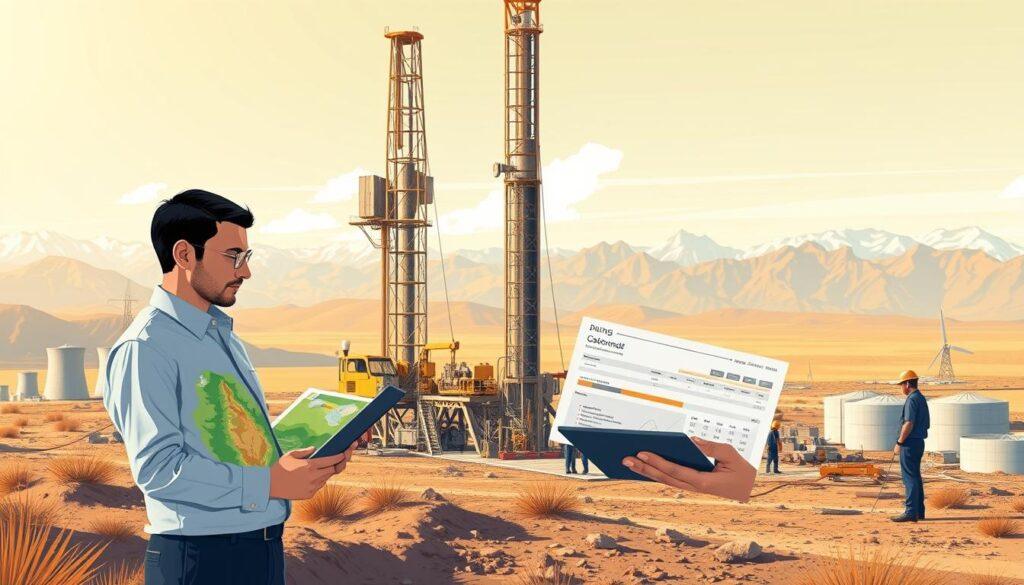
The geothermal revolution is quietly bubbling beneath the surface in places like Utah and Texas. These regions are poised to transform the energy landscape through innovative projects and enhanced geothermal systems.
At the heart of this movement is Utah FORGE (Frontier Observatory for Research in Geothermal Energy). This underground laboratory serves as a testing ground for enhanced geothermal systems (EGS). Here, researchers are stress-testing techniques to extract energy from hot granite, all while avoiding public scrutiny. It’s a playground for scientists, where they can experiment without the pressure of immediate commercial success.
On the other side of the country, the Texas Gulf Coast is waking up as a geothermal giant. This area offers not just heat but also a pressure kicker from methane-saturated brine. Imagine getting two energy sources for the price of one!
Across the Atlantic, in the Alpine plays, companies like Eavor are pioneering deep, closed loop geothermal systems. They are proving that you don’t need a volcano to generate baseload power. The real kicker? Retrofitting abandoned oil wells into geothermal assets. A failed oil well, once a financial drain, can become a 30-year clean energy annuity with the right modifications.
This circular economy approach not only repurposes the remnants of the fossil fuel industry but also enhances our energy portfolio. By converting stranded liabilities into productive geothermal assets, we are paving the way for a sustainable future.
Jobs crossovers for petroleum engineers geoscientists and rig crews
Think the oil and gas industry is the only game in town? Think again; geothermal energy is calling. As the world moves towards sustainable energy, skills from the petroleum sector are valuable in enhanced geothermal systems. The subsurface doesn’t care if it’s oil or supercritical water; it’s just physics.
Petroleum geoscientists can easily move from interpreting 3D seismic surveys for oil to mapping fracture networks in granitic basement rock. Reservoir engineers who know multiphase flow in sandstone can pivot to modeling thermal drawdown in closed-loop systems. It’s not just retraining; it’s rebadging your skills for a new challenge.
From Seismic Imaging for Oil to Mapping Fracture Networks
The technology and techniques from oil and gas are key to closed-loop geothermal systems. Professionals have drilled, completed, and maintained wells at great depths and high temperatures. Their experience makes them perfect for geothermal drilling challenges.
Why Roughnecks Make the Best Geothermal Drillers
Let’s talk about the rig crews—the roughnecks and drillers. They’ve handled high-pressure, high-temperature wells in the Gulf of Mexico. For them, moving from hydrocarbons to hot water is a lateral move into a more sustainable field.
| Skill Set | Oil & Gas Industry | Geothermal Energy |
|---|---|---|
| Drilling Techniques | High-pressure, high-temperature (HPHT) experience | Closed-loop system drilling |
| Reservoir Management | Multiphase flow modeling | Thermal drawdown analysis |
| Geoscience Expertise | 3D seismic interpretation | Fracture network mapping |
In conclusion, the geothermal sector offers a vibrant new landscape for professionals from the petroleum industry. Embracing this transition supports sustainable energy and leverages existing expertise in a field ready for growth.
Timeline to 2035 scale with sensitivity to drilling rates
Looking ahead to 2035, the geothermal landscape is set for a big change. The main factor is drilling rates. If we keep drilling at our current speed, we’ll see small increases in energy production.
A 5% yearly boost in drilling speed could add a few gigawatts of new geothermal projects. This might not be huge, but it’s a good start.
The Coso geothermal field could grow from 145 MWe to 1-2 GWe with more CLG projects. With many hot, dry rock sites around the world, the possibilities are huge. But, a breakthrough in drilling could make things grow much faster.
Now, let’s talk about the sCO2 wildcard. If we get a high-temperature supercritical CO2 turbine by 2030, it could change everything. It could make geothermal more efficient, cut costs, and lower the cost of electricity.
This could make geothermal a major player in the energy world. We’re not just drilling for heat; we’re building a strong energy grid. One that’s not dependent on wind or sun.
The future of geothermal is bright, and the race to use it fully is just starting.