
The solar panel industry is a fierce battleground. The once-dominant PERC is now facing stiff competition. New, agile technologies are challenging its reign.
TOPCon is one of these newcomers. It’s gaining ground because it’s easy to implement in factories. Think of it as a seasoned athlete getting a fresh training plan.
Heterojunction HJT is the high-end choice. It offers top-notch performance but comes with a higher cost. Its growth is slower, but it’s highly respected.
The perovskite silicon tandem is the exciting newcomer everyone’s buzzing about. It promises a big leap, but it’s not yet ready for the big stage.
This isn’t just about setting records in labs. It’s about surviving the long haul of manufacturing, cost, and lasting 25 years in the real world. Let’s find out who’s truly in the running.
Lab records vs field performance
Imagine a perovskite cell setting a record in a lab, but failing in real weather. This shows the big durability gap between lab dreams and real-world use.
In labs, everything is perfect. But real-world conditions are tough. They include extreme heat, rain, and UV rays.
PERC cells faced big problems with LeTID. We fixed these with lots of field tests and new materials. Now, perovskites face their own challenges, and investors are watching closely.
Source 2 talks about the “bankability gap.” Researchers need two years of field data to understand degradation. This is because perovskites can change how they perform over time.
Perovskites can act like they have mood swings. They might work well one day and then not so much the next. Only long-term data shows these patterns.
Older technologies like TOPCon and heterojunction cells have more field experience. They’re like the experienced workers, while perovskites are the new interns.
Source 3 says field quality depends on consistent materials and processes. You can’t keep changing things and expect good results. Real durability comes from using the same things all the time.
This is basic reliability engineering. It’s not just about certain types of degradation anymore. It’s about making cells that can handle extreme weather.
Investors in solar farms want reliable money flows for 30 years. A cell that loses efficiency fast is not good. But one that keeps its performance steady is great.
The way forward is to test cells in both labs and the field. This ensures they can handle real-world conditions. It’s like training for a big game by playing in similar weather.
The industry remembers when technologies failed to live up to promises. Perovskites could change solar economics, but they must prove they can last in the real world.
Manufacturing Pathways
So you’ve got a brilliant cell design on paper. Congratulations. Now comes the hard part: actually building the thing at scale. This is where elegant physics meets the gritty reality of the factory floor.
Think of it as choosing between two manufacturing religions. On one side, you have the evolutionary path. This is TOPCon’s game—taking the existing, battle-tested PERC production lines and giving them a sophisticated upgrade. The appeal is obvious: lower capital expenditure and proven infrastructure.
Then there’s the revolutionary clean-sheet approach. Enter Heterojunction (HJT) technology. It demands a pristine, low-temperature production environment from the ground up. The result? Higher efficiency, but with what the industry politely calls “premium production costs.”
It’s a classic clash of philosophies: incremental tweaks versus ambitious reinvention. The winner won’t just be decided in the lab. Victory hinges on throughput, yield, and that relentless pursuit of cost reduction—what experts call “silver thrifting” and copper plating.
The entire global supply chain, from raw polysilicon to conductive paste, becomes both an enabler and a possible bottleneck. Your choice of pathway isn’t just technical. It’s a financial and strategic bet on the future of production itself.
Roll‑to‑roll, vapor deposition, supply chain
Let’s step away from the science of turning sunlight into electricity. We’re diving into the big picture of making solar cells on a large scale. It’s not just about how well they work. It’s about turning small pieces of material into big, strong products.
For new technologies like thin-film and perovskites, the dream is roll-to-roll processing. Imagine a giant newspaper press, but it prints photovoltaic layers on flexible bases. This method is appealing because it’s fast and could make solar panels cheaper.
But, the real world often needs vapor deposition chambers. These are special rooms where materials are carefully added to surfaces. It’s like the difference between mass production and custom-made items, each suited for different needs.
This manufacturing challenge affects the supply chain a lot. The International Energy Agency (IEA) watches a key number: silver intensity. This is because silver is pricey, hard to get, and used in most solar cells.
So, we see silver thrifting and copper plating becoming important. These are not just ways to save money. They help reduce the risk of not getting enough silver.
Choosing materials wisely is not just about saving money. It also makes panels easier to recycle. Panels that can be taken apart and materials reused are good for the planet and future rules.
The Inflation Reduction Act (IRA) changed the game. It made where solar panels are made as important as how they’re made. This means where you make something is now key.
This change brings up interesting issues:
- Specialty gases and chemicals now need new shipping plans
- Companies making equipment are thinking about their global presence
- Supply chains are being rethought to use regional bases
Now, making solar panels is not just about being efficient. It’s also about dealing with trade rules, getting tax breaks, and setting up strong, diverse operations.
Talking about solar’s future is not just about comparing technologies. It’s about finding the best way to make solar panels. This might involve combining different methods or adapting to changing rules.
Reliability & Bankability
Let’s talk about the sexiest word in solar: bankability. It’s the foundation of every megawatt of clean energy. It’s not about lab records or prototypes. It’s about building trust between technology and capital over decades.
Investors and lenders are cautious. They need their money to last 30 to 40 years. The real test of durability is after the ribbon-cutting. It faces moisture, extreme heat, and UV rays.
We face a tough question of long-term durability. Can a lab-perfect technology survive Arizona’s sun? To answer, we must study past failures and the industry’s harsh “torture tests.”
Encapsulation, UV/thermal cycling, PID
Choosing between EVA and POE encapsulation is like picking between a paper umbrella and a reinforced concrete bunker for your electronics. One might get you through a light mist if you’re lucky. The other is built for the hurricane season of real-world deployment.
Let’s be honest. The lab is a spa retreat for solar cells. Outside, it’s a gladiator arena. Encapsulation isn’t just adhesive; it’s the module’s primary environmental armor. This transparent shield must perform a miraculous balancing act: letting light in while keeping everything destructive out.
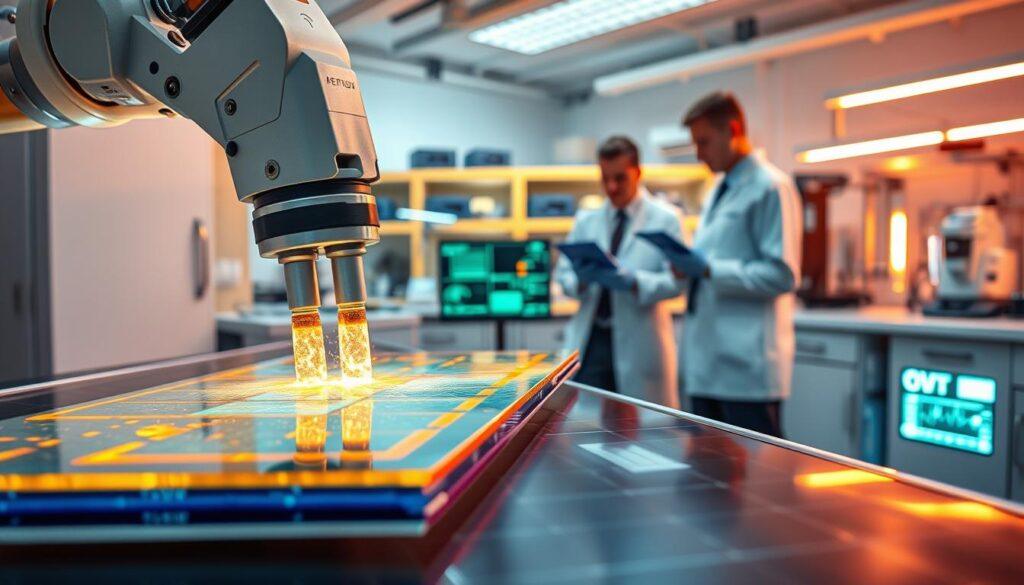
EVA is the classic workhorse. It’s affordable and has served silicon panels well for decades. Think of it as a reliable raincoat. For standard conditions with minimal moisture stress, it often does the job.
POE, on the other hand, is the hazmat suit. Its superior moisture barrier properties and inherent resistance to PID make it the non-negotiable choice for perovskites and harsh environments. The data doesn’t mince words: for PID resistance, specify POE, a robust edge seal, and proper system grounding.
Why the fuss? Perovskites have a particular susceptibility to humidity and temperature swings. Water vapor is a silent infiltrator. It doesn’t knock; it seeps through microscopic weaknesses, initiating a chemical breakdown from the inside out.
UV photons and thermal expansion operate as a relentless tag team. Day after day, year after year, they flex, heat, cool, and bombard the module. Their goal? To cause delamination, discoloration of the encapsulant itself, and ultimately, catastrophic cell degradation.
Then we have PID—the silent movie villain of solar failures. PID doesn’t create visible drama. It’s a stealthy, voltage-driven process where ions migrate under the high system voltage, gradually shunting power away. One day you’re at 100% output; a few years later, you’re wondering where 30% of your yield vanished.
Understanding these failure modes isn’t engineering pessimism. It’s the foundation of a long and productive relationship with the sun. You’re not just buying a panel; you’re investing in a system’s resilience. Specifying the right encapsulation is the first, and perhaps most critical, step in that commitment.
The market is shifting. As bankability demands grow, POE is moving from a premium option to a baseline requirement for cutting-edge technology. It’s the difference between hoping your system lasts and knowing it will.
Advantages of Bifacial Solar Panels
Bifacial solar panels offer several advantages that make them a popular choice for solar energy systems. These panels can generate electricity from both sides, increasing their efficiency and energy output. This dual functionality allows for better performance in various conditions, making them a versatile option for different applications.
One of the key benefits of bifacial solar panels is their ability to generate electricity from both sides. This means that even when the panels are partially shaded or facing different directions, they can continue to produce energy. This adaptability makes bifacial panels ideal for installations where space is limited or where the sun’s position changes throughout the day.
Another advantage of bifacial solar panels is their increased energy output. By harnessing energy from both sides, these panels can generate more electricity compared to traditional monofacial panels. This higher energy output can lead to significant cost savings over time, as it reduces the need for additional panels to meet energy demands.
Overall, bifacial solar panels offer improved efficiency and energy output, making them a valuable addition to any solar energy system. Their ability to adapt to different conditions and generate electricity from both sides makes them a versatile and reliable option for various applications.
Bifacial + Trackers, MLPE (Microinverters/Optimizers)
Using bifacial PV with trackers is a smart move. It’s like a love story between the two. Trackers help panels get more sunlight. Bifacial panels catch light from both sides.
This combo is like a double-dip strategy. More sunlight means more energy from the front side. And more light from the back side. But, there are three important things to remember.
First, how reflective your ground is matters. Snow is great, but grass isn’t. Second, how close panels are to each other is key. Too close and they shade each other out. Third, how high you mount them is important too. Higher means more light from the back.
Trackers have a special trick: backtracking. It’s not just about following the sun. It’s about avoiding shadows in the morning and evening. This way, each bifacial PV module gets its turn in the sun without shading others.
But what if shade is unavoidable? That’s where MLPE comes in. Module Level Power Electronics, like microinverters and power optimizers, are the smart brains of solar systems. They make sure one shaded panel doesn’t bring down the whole string.
Rooftop solar is getting more complex. Shading from chimneys, vents, and buildings changes all the time. MLPE is now a must-have for bifacial PV systems. It lets each panel work at its best.
| System Configuration | Key Advantage | Typical Yield Gain | Best Use Case |
|---|---|---|---|
| Fixed-Tilt Bifacial | Simple installation, lower cost | 5-15% over monofacial | Large commercial roofs |
| Single-Axis Tracker + Bifacial | Optimized sun exposure | 20-35% over fixed monofacial | Utility-scale ground mounts |
| Dual-Axis Tracker + Bifacial | Maximum photon capture | 35-50% over fixed monofacial | High-value installations |
| MLPE + Bifacial System | Shade tolerance, panel-level monitoring | 10-25% in shaded conditions | Complex residential/commercial roofs |
Look at those numbers. A bifacial PV system on single-axis trackers can give 20-35% more energy than fixed-tilt systems. Add MLPE for shading, and you get even more energy.
The debate between microinverters and optimizers is simple. Microinverters convert DC to AC at the panel. Optimizers prepare DC power for a central inverter. Both optimize panel performance. Your choice depends on your system’s size, budget, and monitoring needs.
This isn’t just about hardware. It’s about changing how we design solar systems. Why settle for one-dimensional energy capture when you can optimize in three dimensions? Trackers follow the sun, bifacial panels catch reflected light, and MLPE handles shading. Together, they make a system that’s more than the sum of its parts.
The future belongs to installers who get this strategy. Your clients want maximum energy from their space. Use smart bifacial PV design to deliver that. You’re not just installing solar—you’re engineering energy solutions.
Agrivoltaics & BIPV
Forget the endless fields of identical blue rectangles. Solar is having its artistic phase. It’s moving from industrial parks to farm fields and city skylines. This isn’t just about efficiency anymore. It’s about integration.
Enter agrivoltaics. Think of it as the ultimate land-use détente. Sheep graze in the cool shade of elevated panels. Delicate crops thrive in dappled sunlight.
It’s a careful ballet between light for power and light for growth. Get the balance wrong, and your harvest suffers. Get it right, and you’ve doubled your land’s productivity.
Then there’s BIPV, or Building-Integrated Photovoltaics. Here, the panel is the building material. We’re talking solar roof tiles that look like slate, facades that generate power, even semi-transparent windows.
This shifts the conversation from hardware to architecture.
We’re exploring a future where solar doesn’t sit on our world but is woven into it. Can this technology become so elegant we stop noticing it’s there? Let’s look at the design rules, the trade-offs, and the sheer cleverness of it all.
Design rules, yield trade‑offs
Think of agrivoltaics and BIPV as special places where solar and farming meet. It’s not just about making electricity. It’s about finding a balance between both. You need to make smart choices.
In agrivoltaics, you’re like a sunlight expert. Too much shade hurts crops, and too little hurts panels. It’s all about finding the right balance. Should you use clear panels or raise the panels high?
Let’s look at the main trade-offs:
- Light Allocation: Every photon is a choice between plants and panels. Finding the right balance is key.
- Spacing & Height: More space means happier plants but fewer panels. Higher panels improve light but cost more.
- Module Choice: Bifacial panels catch more light, while semi-transparent ones let sunlight through. Each has its own benefits.
In urban areas, BIPV is about power and looks. Solar glass might be less efficient but saves on building costs. It’s a trade-off between power and beauty.
Designing BIPV is all about details. Solar shingles must keep rain out and heat in. They also need to be safe and easy to clean.
| Design Parameter | Agrivoltaics Priority | BIPV Priority | Common Compromise |
|---|---|---|---|
| Efficiency | Moderate (share light) | Lower (aesthetics first) | Accept reduced $/W for dual function |
| Spacing/Placement | Optimized for crop cycles | Dictated by building design | Follow primary function’s needs |
| Materials | Durable for farm environment | Architecturally compliant | Premium, multi-purpose materials |
| Yield Metric | $/acre (crop + energy) | $/facade (energy + materials) | Holistic value over pure power |
The key is to know your main goal. Is it farming or power generation? This will guide your design choices.
Trade-offs vary by perspective. Farmers might choose less power for more crops. Architects might prefer design over efficiency. It’s all about finding the right balance.
This isn’t failure; it’s smart design. The best projects find ways to work together. They offer value and efficiency, not just power.
Policy & Incentives
If technology is the engine, policy is the fuel. Right now, the U.S. is pumping high-octane fuel through the Inflation Reduction Act (IRA).
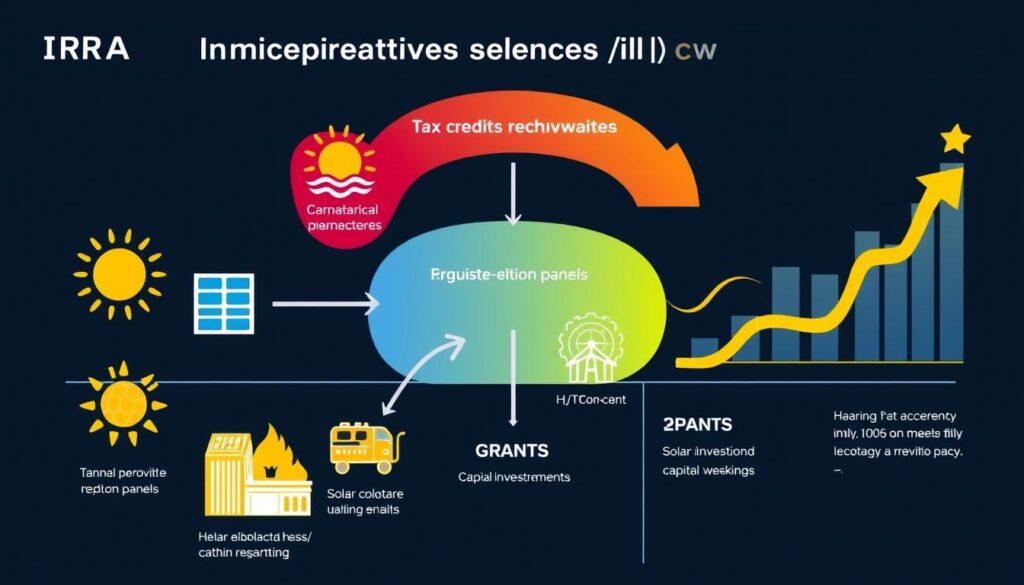
This section is about decoding the alphabet soup of incentives that actually matter. We’re talking about the 45X manufacturing tax credit, the 48C advanced energy project credit, and the Investment Tax Credit (ITC) bonuses for using domestic content.
This isn’t dry legislative text. It’s a multi-billion-dollar game of financial Tetris.
The pieces you place—or don’t—determine your access to capital, your supply chain viability, and your very ability to compete. Recent analysis shows how these specific IRA incentives directly fueled explosive commercial growth and a massive reassessment of procurement strategies.
Ignoring this layer of the game is like trying to understand the streaming wars without understanding your internet speed. It’s the fundamental infrastructure.
Let’s look under the hood.
Domestic content, 45X/48C credits
Forget about efficiency ratings for now. The IRA has made a panel’s country of origin more important. The IRA incentives now value a module’s nationality over its power output. This is more than just policy; it’s a show with a green theme.
The domestic content bonus challenges globalization. It tells us, “Use imported panels, but for the best financial gain, make sure they’re made in the USA.” It’s a mix of protectionism and climate action.
Let’s look at the main players. First, the 45X Advanced Manufacturing Production Credit. This is not a one-time gift. It’s a subsidy for every watt made in America.
This is like a bonus for U.S. factories. The more cells they produce, the more credits they earn. This makes the higher costs of U.S. facilities more appealing with government support.
Then, there’s the 48C Investment Tax Credit. It’s like 45X’s partner. This credit covers up to 30% of the cost to build or update factories. It’s the government’s way of saying, “Let’s build a factory, then make something.”
What counts? The Treasury Department has a detailed list. You need to make key parts like wafers and cells in the U.S. to get the full 45X credit. Just assembling panels here doesn’t cut it.
This leads to interesting financial decisions. A developer might pick a less efficient American panel over a cheaper import. The domestic content bonus can increase their Investment Tax Credit by 10%. The panel’s cost is just one part of the equation.
The effects are huge. We’re seeing a full solar manufacturing system in the U.S. being rebuilt. From silicon to mounting systems, the IRA aims to fix what was lost to offshoring over twenty years.
This makes your financial planning more complicated. You’re not just looking at specs anymore. You’re checking supply chains, verifying where things are made, and figuring out all the incentives. The best project in 2024 might be the one with the strongest American roots.
The 45X and 48C credits are the strongest industrial policy for clean energy. They’re investing billions to make American manufacturing a leader. The experiment is starting, and it’s changing solar economics.
Economics
Let’s cut through the noise and focus on what really counts: dollars per watt and cents per kilowatt-hour. The Levelized Cost of Energy (LCOE) is key. It shows who’s serious and who’s just dreaming.
The cost of solar energy has plummeted, beating even Moore’s Law. Solar has seen a steep learning curve for decades. But now, things are getting really interesting.
Just because something is cheap doesn’t mean it’s the best value. A low-cost panel that wears out fast might not win against a pricier, longer-lasting one. It’s like choosing between a cheap car and a luxury one that lasts longer.
The real fight is over Balance of System (BOS) costs. This includes the racking, wiring, and labor. Here, every small saving matters. The panel is just the start; the real cost is in the details.
$/W, LCOE trends, BOS savings
The solar industry often focuses on the cheapest modules. But, this approach overlooks important costs like insurance and maintenance. It’s like buying a sports car without thinking about the repair costs.
The real challenge isn’t just about specs. It’s about how well a system performs over time. The Levelized Cost of Energy (LCOE) shows the true cost of solar power.
LCOE is like the total cost of owning a power plant. It includes all costs, from the initial investment to ongoing expenses. A cheap panel that doesn’t last is a bad deal.
IEA data shows prices dropping as more solar panels are made. But, small price changes can be overshadowed by other costs.
It’s important to consider risks in your LCOE model. What are the costs of:
- Mismatch losses from inconsistent panels?
- Soiling because the module surface is a dirt magnet?
- Tracker downtime due to a fragile design?
- Potential Induced Degradation (PID) silently killing your yield?
These risks can increase your LCOE more than saving a few cents per watt. It’s like buying a cheap parachute.
BOS savings are key. BOS includes everything except the panels. Improvements in BOS can lead to big savings.
A higher-wattage panel means fewer panels and less installation time. Lighter modules can be installed faster. These changes save money on installation costs.
The focus is shifting to the total cost of energy. It’s not just about the cheapest panel. It’s about the lowest total cost of energy over time.
This changes how we value technology. A slightly more expensive panel can offer better value if it lasts longer or performs better. It’s about investing in a solution, not just a tool.
So, when you see a low $/W figure, ask more questions. What are the BOS costs? What’s the long-term risk? The true cost of solar is found in the LCOE spreadsheet.
FAQ
Q: What is a pre buy car inspection?
A: A pre buy car inspection is a thorough examination of a vehicle’s condition before purchasing it. It involves checking various components such as the engine, transmission, brakes, suspension, and electrical systems to identify any existing issues or hidden problems.
Q: Why is a pre buy car inspection important?
A: A pre buy car inspection is important because it helps you make an informed decision when buying a used car. It allows you to identify any underlying issues or hidden problems that may not be apparent during a test drive. This can save you from costly repairs in the future and ensure that you are getting a reliable vehicle.
Q: What does a pre buy car inspection include?
A: A pre buy car inspection typically includes a detailed examination of the vehicle’s exterior, interior, engine, transmission, brakes, suspension, electrical systems, and more. It may also involve a test drive to assess the vehicle’s performance and identify any unusual noises or vibrations.
Q: How long does a pre buy car inspection take?
A: The duration of a pre buy car inspection can vary depending on the complexity of the vehicle and the thoroughness of the inspection. On average, it can take anywhere from 1 to 3 hours to complete a thorough inspection.
Q: Can I be present during the pre buy car inspection?
A: Yes, it is highly recommended to be present during the pre buy car inspection. This allows you to ask questions, gain a better understanding of the vehicle’s condition, and address any concerns or concerns you may have.
Q: How much does a pre buy car inspection cost?
A: The cost of a pre buy car inspection can vary depending on factors such as the location, type of vehicle, and the level of detail required. On average, it can range from $150 to $300. It is important to note that the cost is a small investment compared to the peace of mind and savings it can provide.
Q: Can I get a pre buy car inspection for other types of vehicles?
A: Yes, pre buy car inspections are not limited to cars. They can also be conducted for motorcycles, RVs, boats, and even heavy equipment. It is important to have a professional inspection done regardless of the type of vehicle you are considering purchasing.
Q: How do I schedule a pre buy car inspection?
A: Scheduling a pre buy car inspection is easy. Simply contact a reputable inspection company, such as Pre-Purchase Investigators, and provide them with the details of the vehicle you are interested in. They will schedule a convenient time and date for the inspection to take place.
Q: What should I do after the pre buy car inspection?
A: After the pre buy car inspection, you will receive a detailed report outlining the findings. If any issues or concerns are identified, you can use this information to negotiate a fair price or decide whether to proceed with the purchase. It is important to carefully review the report and make an informed decision based on the inspection results.
Pilot plants and rooftops
Forget the polished lab videos and glossy datasheets. The real story of a new solar technology is in the pilot plant. This is the space between a lab success and a big factory. It’s where dreams meet reality, often with a wrench.
I’ve seen many of these places. The air buzzes with a special energy. It’s a mix of science and quick fixes. A manufacturing demo line here isn’t about making lots. It’s about making it work big time, without breaking the bank.
What makes a pilot real, not just a photo op? Data. A real pilot collects lots of data. They measure performance in all kinds of weather, not just perfect days.
The best lessons come from the commissioning process. A module might pass lab tests but fail in real-world use. These are the field tips you never find in papers—the real-world quirks that matter.
Let’s look at the two main areas of testing:
- The Controlled Pilot Plant: This is a testing space that’s regulated and monitored. Engineers test how well the technology holds up. They try to break it in every way before it leaves.
- The Exposed Rooftop Array: This is where the real test happens. Panels face real weather and dirt. A rooftop array shows how the system works in real life.
The best companies test both at the same time. The pilot plant finds weak spots. The rooftop array checks if these spots matter in different places.
A pilot’s success isn’t just about making power. It’s about avoiding problems and answering questions. It turns a lab success into something engineers and financiers can trust. The journey from lab to roof is full of lessons learned in these important places.
Skills & Careers
Remember when being a solar pro meant knowing your monocrystalline from polycrystalline? That’s old news now. The solar industry has changed a lot, not just by swapping panels.
The skills you were great at in 2020 are now outdated. We’re moving into a new era with tandem and HJT. Your job description is about to change a lot.
This section is your guide for the big changes ahead. What should a project developer know about perovskite bankability? What tools do engineers need for bifacial gain?
How do O&M technicians fix these complex MLPE systems? We’re finding out what skills are needed now. Let’s find out what will be in high demand as things get smarter and more complex.
What pros should learn next
The solar industry is changing fast, like a streaming service canceling shows. You can’t just be a generalist anymore. Specialists are leading the revolution.
Your new to-do list is specific. Learn about encapsulation chemistry. Understand financial models like 45X and 48C. They’re complex, like your fantasy football league.
Get good at IEC standards for new solar cells. Learn to mix solar with other energy sources. It’s like creating a symphony from chaos.
This isn’t just watching. It’s a call to build skills for the future. Choose your role: chemist, financier, standards expert, or systems integrator. Your skills today will shape tomorrow’s projects.
The industry has moved beyond the lab. Your knowledge should too.