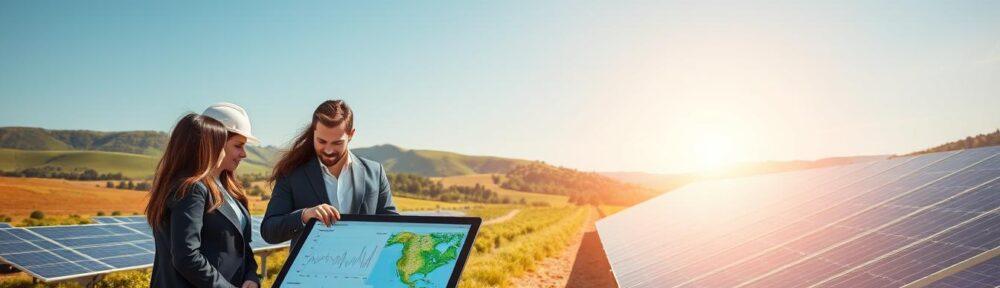
Every great solar saga starts with a map. Choosing a site based on sunshine alone is like picking a spouse for their Instagram. The real world is full of shading analysis surprises, like unexpected shadows from neighbors.
Modern site screening is more than just sunshine. It’s a battle against climate change, topography, and future energy costs. We use geospatial data and machine learning to predict solar performance decades ahead. This way, your 25-year investment isn’t caught off guard by sudden weather changes.
This is where science meets the earth. We explore the art of horizon scanning and the science of albedo, or ground reflectivity. A good shading analysis can turn a project into a power plant, not just a fancy sundial.
Think about bifacial gain. These advanced modules can harness the ground as a second sun. But they only work if you’ve studied the local albedo well. A wrong assumption here can make everything else just a pricey decoration.
Albedo, backtracking, horizon
Albedo is like nature’s way of bouncing sunlight back. It’s how much light the ground reflects, from 0 to 1. Fresh snow reflects a lot, like a mirror, while dark asphalt absorbs most of it.
The bifacial panel is special because it catches light from both sides. This is thanks to albedo. High albedo means more energy is captured from the back side. This is called bifacial gain and it’s very valuable.
- Panel Height: More height means more light is reflected to the back.
- Row Spacing: Too close, and it shades itself. Too far, and it’s a waste.
- Tracker Choreography: The single-axis tracker plays a key role here.
Backtracking is when the tracker moves to avoid shading its own row. It’s like a solar panel wave. At certain times, trackers tilt to catch more light without shading themselves.
Getting this right is a mix of physics and art. Bad backtracking can hurt your yield. Good backtracking can squeeze out every photon. It’s about getting the most light without shading neighbors.
Horizon is also important. Shadows from trees, buildings, and hills can block sunlight. You need to know the horizon to avoid this. If you don’t, your energy production will suffer.
The key is to get albedo, backtracking, and horizon right. High albedo boosts bifacial gain. Smart backtracking captures more light. Accurate horizon modeling prevents surprises. Get it all right, and you’re golden.
Here’s a comparison:
| Ground Cover | Albedo Value | Bifacial Gain Potentail | Tracker Optimization Need |
|---|---|---|---|
| Fresh Snow | 0.8-0.9 | Very High (15%+) | Critical |
| Light Gravel | 0.25-0.35 | Moderate (8-12%) | High |
| Green Grass | 0.15-0.25 | Low-Moderate (5-8%) | Medium |
| Dark Soil | 0.05-0.15 | Minimal (2-5%) | Low |
Dark soil is bad for bifacial gain. But with high albedo and smart tracking, you can make a lot of money. The single-axis tracker makes sure panels get the most sunlight.
Solar design is about understanding light. Albedo, backtracking, and horizon are key. Master them, and your solar farm will thrive.
Hardware Choices
Welcome to the solar hardware buffet. It’s overwhelming, and choosing based on brochure specs is a rookie move. This isn’t about picking the shiniest gadget. It’s about assembling a team where each player’s strengths cover the others’ weaknesses.
On one flank, you have the inverters. The stoic central units handle utility-scale work. The versatile string inverters offer granular control for smaller arrays. Then there’s the nimble MLPE crew—microinverters and power optimizers. Think of them as individual coaches for each panel.
They ensure no module slacks off because its neighbor is in the shade. Then there’s the mechanical ballet of the single-axis tracker. These sun-followers have evolved into intelligent systems.
They now accommodate heavier bifacial panels and even farm-friendly setups. We’ll break down the trade-offs with the wit of a car reviewer. Is it a sedan, an SUV, or a hypercar? Each has its place. Choosing wrong is like using a sports car to haul gravel.
Module type, tracker class, inverter/MLPE selection
Choosing solar modules based only on efficiency is like picking a partner for their looks. It might seem good at first but can lead to trouble later. The real test is in hot weather, shade, and over time.
Let’s look at the seven deadly sins of picking modules. First, ignoring the temperature coefficient is a big mistake. This percentage change with temperature is key to how well a panel works in heat.
Second, not thinking about degradation is a big error. That small yearly drop in performance adds up over time. By year 10, it can be a big problem.
Third, treating bifacial panels as easy to use is a mistake. Bifacial gain needs a whole system approach. You need reflective surfaces, the right spacing, and trackers that let both sides get sunlight.
Trackers come in different types. You need to match the tracker to your modules’ size and weight. Big panels on small trackers can cause problems.
Bifacial modules need more space and special stow positions. It’s like finding the right partner for your solar system.
Now, let’s talk about inverters. String inverters are very efficient, like top students. They’re good for big, even areas. But, they can be a problem if one panel is shaded.
Microinverters and power optimizers (MLPE) are more flexible. They work well in shaded areas. Each panel can work at its best.
Here’s a comparison:
| Technology | Efficiency | Best For | Durability Consideration |
|---|---|---|---|
| Central/String Inverters | ~98% | Large, unshaded utility sites | Central point of failure |
| MLPE (Power Optimizers) | ~95-96% | Complex roofs, partial shading | Distributed electronics |
| Microinverters | ~95% | Residential, heavy shading | Panel-level replacement |
For MLPE, durability is key. Those small boxes on each panel face years of heat and cold. Good MLPE should last a long time.
Here’s the secret to integration: Your module’s voltage-temperature curve must match your inverter’s range. If not, you lose energy. Tools like Sunny Design help with this.
For bifacial systems, picking an inverter is harder. The extra gain from the back side makes things tricky. You need smart inverters that can handle this.
Microinverters are good for this, while advanced string inverters can also work. The wrong choice can hurt your finances.
Choosing the right module, tracker, and inverter is key. It decides if your system will be reliable or temperamental. This choice affects your system for years.
Understanding the Basics of Solar Inverters
Solar inverters play a critical role in converting the direct current (DC) generated by solar panels into alternating current (AC) that can be used in homes and businesses. This conversion is essential for integrating solar energy into the existing electrical grid.
What is a Solar Inverter?
A solar inverter is a device that converts DC power from solar panels into AC power for use in homes and businesses. This conversion is vital for integrating solar energy into the existing electrical grid. Solar inverters are designed to optimize energy output and ensure efficient use of solar power.
Types of Solar Inverters
There are several types of solar inverters, each with its own advantages and applications:
- String Inverters: These are the most common type of solar inverter. They convert DC power from multiple solar panels into AC power for use in homes and businesses. String inverters are known for their simplicity and cost-effectiveness.
- Microinverters: Microinverters are installed on individual solar panels and convert DC power into AC power at the panel level. They offer advanced monitoring capabilities and are ideal for complex roof layouts or shading issues.
- Power Optimizers: Power optimizers are devices that optimize the performance of individual solar panels by converting DC power into AC power at the panel level. They are often used in conjunction with string inverters to improve energy output.
Choosing the right type of solar inverter depends on factors such as the size of the solar system, roof layout, and shading issues. It is important to consult with a professional solar installer to determine the most suitable option for your specific needs.
Benefits of Solar Inverters
Solar inverters offer several benefits that make them an essential component of solar energy systems:
- Efficient Energy Conversion: Solar inverters convert DC power from solar panels into AC power, making it usable in homes and businesses.
- Optimized Energy Output: Solar inverters are designed to optimize energy output and ensure efficient use of solar power.
- Advanced Monitoring Capabilities: Some solar inverters, such as microinverters, offer advanced monitoring capabilities that allow for real-time tracking of energy production and performance.
By choosing the right solar inverter for your solar energy system, you can maximize the benefits of solar power and contribute to a sustainable future.
Understanding String Inverters and Shading Analysis
String inverters are a key component in solar systems, converting DC power from solar panels into AC power for homes. They are known for their efficiency and reliability. Yet, their performance can be affected by shading, which is a critical factor in solar panel efficiency.
What are String Inverters?
String inverters are essential for managing the power flow from solar panels to the electrical grid. They are designed to handle the combined output of multiple panels, ensuring that the energy is converted efficiently. This makes them a vital part of any solar system.
How Shading Affects Solar Panel Efficiency
Shading analysis is critical in understanding how shading impacts solar panel efficiency. Even minor shading can significantly reduce the energy output of solar panels. This is because shaded panels do not receive the full amount of sunlight needed to generate electricity efficiently.
By conducting a shading analysis, homeowners can identify areas where shading might be a problem. This information is essential for optimizing the placement of solar panels to maximize energy output and efficiency.
Advantages of Bifacial Solar Panels
Bifacial solar panels offer several advantages that make them a popular choice for solar energy systems. These panels can generate electricity from both sides, increasing their energy output. This is due to their unique design, which allows them to capture sunlight from the front and back sides.
One of the key benefits of bifacial solar panels is their ability to maximize energy production. By harnessing sunlight from both sides, these panels can generate up to 25% more electricity compared to traditional monofacial panels. This increased energy output can lead to significant cost savings over time, making bifacial panels a cost-effective option for solar installations.
Another advantage of bifacial solar panels is their versatility. These panels can be installed on various surfaces, including rooftops, ground-mounted systems, and even on water. Their flexibility allows for optimal placement and orientation, ensuring maximum energy absorption and efficiency.
When it comes to installation, bifacial solar panels are relatively easy to set up. They can be mounted on single-axis trackers, which follow the sun’s movement to maximize energy production. This feature enhances the overall efficiency of the solar system and ensures optimal performance throughout the day.
Overall, bifacial solar panels offer a range of advantages that make them an attractive option for solar energy systems. Their ability to generate electricity from both sides, maximize energy production, and offer versatility in installation make them a valuable investment for those looking to harness the power of solar energy.
Benefits of Bifacial Solar Panels
| Advantages | Description |
|---|---|
| Increased Energy Output | Bifacial solar panels can generate up to 25% more electricity compared to traditional monofacial panels. |
| Cost Savings | The increased energy output of bifacial panels can lead to significant cost savings over time. |
| Flexibility in Installation | Bifacial solar panels can be installed on various surfaces, including rooftops, ground-mounted systems, and even on water. |
| Easy Installation | Bifacial solar panels are relatively easy to set up and can be mounted on single-axis trackers for optimal performance. |
Understanding Albedo and Its Impact on Solar Energy
Albedo, or the measure of how much sunlight is reflected by a surface, plays a significant role in the efficiency of solar energy systems. The albedo of a surface can greatly affect the amount of solar radiation that is absorbed and converted into usable energy. This is why understanding albedo is essential for optimizing solar energy systems.
When sunlight hits a surface with a high albedo, such as snow or white paint, a significant amount of it is reflected back into the atmosphere. This reflected sunlight can then be absorbed by other surfaces, potentially increasing the overall efficiency of solar energy systems. On the other hand, surfaces with a low albedo, like dark-colored roofs, absorb more sunlight and convert it into heat, reducing the amount of energy available for solar panels.
By carefully selecting surfaces with high albedo, such as white roofs or reflective coatings, we can enhance the efficiency of solar energy systems. These surfaces help maximize the amount of sunlight that is absorbed by solar panels, leading to increased energy production. This is why albedo is a critical factor in the design and optimization of solar energy systems.
Now, let’s take a closer look at the impact of albedo on solar energy systems:
| Albedo | Impact on Solar Energy Systems |
|---|---|
| High Albedo | Reflects more sunlight, increasing the amount of energy available for solar panels |
| Low Albedo | Absorbs more sunlight, reducing the amount of energy available for solar panels |
As shown in the table, surfaces with high albedo reflect more sunlight, allowing solar panels to absorb and convert a greater amount of energy. This can lead to increased efficiency and energy production in solar energy systems.
By understanding the impact of albedo on solar energy systems, we can make informed decisions when designing and optimizing solar energy systems. By selecting surfaces with high albedo and minimizing the use of surfaces with low albedo, we can maximize the efficiency of solar energy systems and contribute to a more sustainable future.
Monitoring & O&M
Remember when operations and maintenance meant a technician driving out to a field with binoculars, squinting at panels like a birdwatcher? Those days are gone. Today’s solar monitoring isn’t just checking boxes—it’s a full-blown intelligence operation.
Think of modern monitoring as your project’s central nervous system. It’s a constant, whispering stream of data that tells you everything from the obvious to the obscure. We’ve moved far beyond simple power readings.
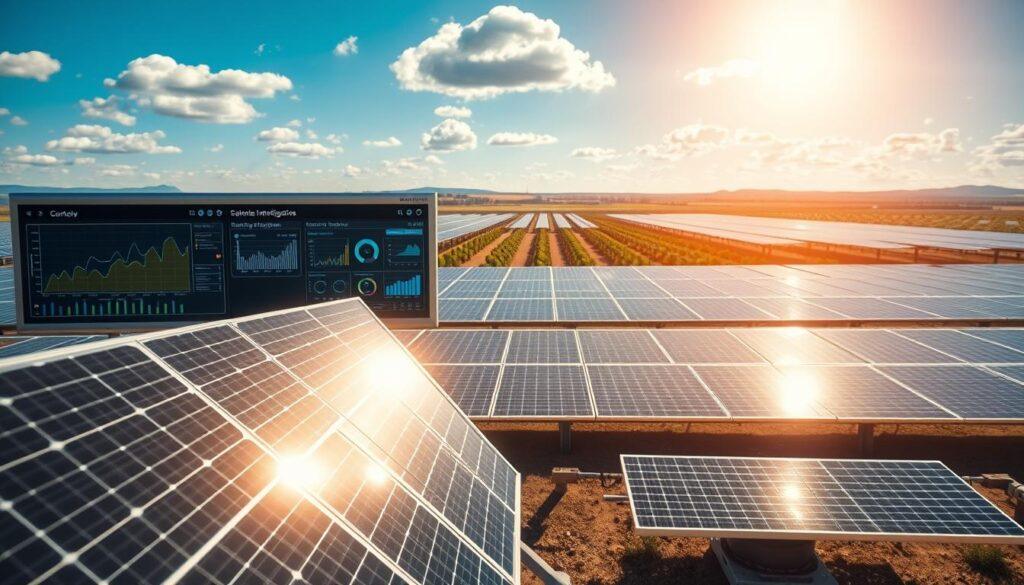
Now we have tools like IV-curve tracing. It’s like an EKG for your solar array, pinpointing a failing cell or a damaged connection before it becomes a crisis. Then there’s drone thermography—a thermal MRI from the sky that reveals hot spots invisible to the naked eye but bleeding efficiency.
This shift is fundamental. It’s the difference between being reactive and being proactive. Between fixing what’s broken and predicting what might break. Between losing money and optimizing every watt your system produces.
The data doesn’t just scream alarms anymore. It tells stories, forecasts dips, and helps you make smarter decisions in real-time. That’s not maintenance—that’s intelligence.
IV‑curve tracing, drone thermography
Remember when car mechanics just listened to your engine? Now, they use computers to read thousands of data points. Solar operations have reached a similar level of sophistication. We no longer guess about performance dips; we have a medical imaging suite for solar arrays.
IV-curve tracing is like an EKG for your solar system. It sounds like physics lab work but is now the standard tool for solar doctors. By plotting current-voltage relationships, you get a health readout. It shows if there’s partial shading, series resistance, or cell mismatch.
This tracing reveals problems invisible to basic monitoring. It’s like knowing your system has a fever and finding the cause.
Drone thermography is like an MRI scan. A quadcopter with a thermal camera flies over your array. It creates a mosaic showing healthy cells in cool blues and overheating spots in red and yellow.
It’s like finding the rotten apple in a barrel. Without thermal imaging, you’d only know the barrel smells off. With it, you can find the exact problem before it ruins everything.
Combining these tools is truly powerful. IV-curve tracing finds electrical issues, and drone thermography shows thermal problems. Together, they change operations from reactive to predictive.
You’re not just responding to a generic “low yield” alert anymore. You’re finding which specific module is underperforming and why. Is it a faulty bypass diode, a hot spot, or soiling? The duo tells you.
The future involves sensors in PV modules. Imagine every panel monitoring its own health. We’re moving from occasional check-ups to constant, real-time monitoring.
This isn’t just about fixing what’s broken. It’s about optimizing what works. String-level analytics can reveal inefficiencies in your design. Thermal patterns might suggest adjusting cleaning schedules or improving ventilation.
The sharp end of performance isn’t the installation anymore. It’s the ongoing, intelligent maintenance. With these tools, your O&M team becomes data scientists and performance surgeons.
Understanding Microinverters
Microinverters are a key component in solar energy systems, playing a vital role in maximizing solar panel efficiency. These devices convert direct current (DC) from solar panels into alternating current (AC) that can be used in homes and businesses. This conversion is essential for integrating solar energy into the existing electrical grid.
Microinverters are designed to handle the unique challenges of solar panels, such as shading and temperature variations. By converting DC to AC, they ensure that the energy produced by solar panels can be efficiently used in homes and businesses. This process not only enhances solar panel efficiency but also supports the overall performance of the solar energy system.
One of the significant advantages of microinverters is their ability to monitor and optimize energy production in real-time. This feature allows homeowners and businesses to maximize their solar panel efficiency, ensuring they get the most out of their solar energy investment. By continuously monitoring and adjusting energy output, microinverters play a critical role in achieving optimal performance from solar panels.
Overall, microinverters are essential for maximizing solar panel efficiency and ensuring that solar energy systems operate at their best. Their ability to convert DC to AC and monitor energy production in real-time makes them a vital component in the transition to renewable energy sources.
Rapid shutdown, AFCI, grounding
Microinverters don’t just optimize energy harvest; they fundamentally rewrite the rulebook for solar safety, focusing on rapid shutdown compliance. This isn’t a minor code update—it’s a paradigm shift born from real-world tragedy and firefighter advocacy.
Let’s start with the headline act: rapid shutdown. Picture a firefighter facing a burning building with a live solar array on the roof. Before 2014’s NEC changes, they’d be wrestling with up to 600 volts of DC danger. Now, systems must drop that voltage to a safe level within 30 seconds of activation. It’s a literal lifesaver, and it changes how we think about DC conductors on buildings.
Enter AFCI (Arc-Fault Circuit Interruption), the vigilant detective of your array. Traditional breakers only trip on overcurrent. A loose connection, though, can create a sparking, fiery arc without drawing enough current to trigger a standard breaker. AFCI devices listen for that specific electrical signature—the crackle of trouble—and shut things down. The trick is finding units with proven firmware to reduce false alarms.
An inverter that cries wolf too often isn’t protecting you; it’s robbing you. That’s why specifying inverters with robust, field-tested AFCI and ground-fault detection is non-negotiable for bankable design.
Then there’s grounding, the silent foundation. It’s not glamorous, but it’s essential. Grounding provides a safe, controlled path for fault currents, preventing your entire array from becoming an electrified hazard. It’s the unsung hero that makes the other safety features possible.
Now, here’s where microinverters change the game. In a traditional string system, you have long runs of high-voltage DC wiring from panels to a central inverter. That’s a lot of energy that needs rapid shutdown management. With microinverters, AC is made right at the panel. The DC side is extremely short—often just the wiring within the panel frame itself.
This architectural shift simplifies the rapid shutdown calculus dramatically. The danger zone shrinks. The safety systems become more distributed and, arguably, more reliable. It’s a classic case of smarter design inherently reducing risk.
| Safety Aspect | Traditional String Inverters | Microinverter Systems | Practical Implication |
|---|---|---|---|
| Rapid Shutdown Compliance | Requires additional module-level hardware (MLSDs) on roof | Function often integrated into module-level power electronics | Reduced rooftop complexity & failure points |
| DC Arc Risk Profile | Higher voltage DC strings present sustained arc risk | Minimal to no extended DC string voltage | Inherently safer architecture for firefighters |
| AFCI Implementation | Central inverter-based detection monitors entire string | Distributed detection at each module | Faster fault isolation & easier troubleshooting |
| Ground Fault Protection | Centralized monitoring; fault may disable large sections | Module-level monitoring isolates smallest possible unit | Maximizes system uptime during fault conditions |
The intersection of code and practical safety is where the real engineering happens. It’s not enough to just check the compliance box. The goal is a system that protects people and profits. A nuisance trip isn’t just an annoyance—it’s kilowatt-hours lost, revenue missing, and ROI delayed.
Modern microinverter platforms address this by treating safety and reliability as two sides of the same coin. Their distributed intelligence allows for granular fault detection that minimizes false positives. When a ground fault or arc is detected, only the affected module—not the entire string or array—goes offline.
Think of it as surgical safety versus blanket shutdowns. This precision protects your energy harvest while fulfilling the life-safety mission. It’s what happens when you design with the end goals—safety, reliability, revenue—in mind from the very first schematic.
So when you’re evaluating hardware, look beyond the spec sheet. Ask about firmware update histories for AFCI algorithms. Demand data on field performance and false-trip rates. The best safety system is one that works so seamlessly you almost forget it’s there—until the moment you truly need it.
FAQ
Q: What is the significance of the 2024 US Presidential Election?
A: The 2024 US Presidential Election is a critical event that will shape the future of the country. It will determine the direction of the nation, the policies that will be implemented, and the leadership that will guide the country for the next four years.
Q: Who are the main candidates running for the 2024 US Presidential Election?
A: The main candidates running for the 2024 US Presidential Election include Joe Biden, Donald Trump, and several other notable figures. Each candidate has their own platform, vision, and policies that they believe will benefit the country.
Q: What are the key issues that will be addressed during the 2024 US Presidential Election?
A: The 2024 US Presidential Election will address a range of key issues, including healthcare, education, economic growth, national security, and climate change. These issues will be at the forefront of the campaign and will shape the policies and decisions made by the next president.
Q: How can I stay informed about the 2024 US Presidential Election?
A: To stay informed about the 2024 US Presidential Election, you can follow reputable news sources, such as CNN, Fox News, and The New York Times. You can also tune into debates, town halls, and other campaign events to get a firsthand look at the candidates and their policies.
Q: What is the role of the Electoral College in the 2024 US Presidential Election?
A: The Electoral College plays a significant role in the 2024 US Presidential Election. It is a system established by the Founding Fathers to ensure that smaller states have a voice in the election process. The candidate who wins the most votes in a state typically receives all of that state’s electoral votes, except in Maine and Nebraska, which allocate their electoral votes proportionally.
Q: How can I participate in the 2024 US Presidential Election?
A: To participate in the 2024 US Presidential Election, you can register to vote and cast your ballot on election day. You can also volunteer for your preferred candidate or party, participate in debates and town halls, and engage in discussions and debates with others to make your voice heard.
Q: What are the key dates and milestones leading up to the 2024 US Presidential Election?
A: The key dates and milestones leading up to the 2024 US Presidential Election include the filing deadlines for candidates, the primary elections and caucuses, the national conventions, and the debates. These events will shape the campaign and ultimately determine the candidates who will face off in the general election.
Q: How can I stay updated on the latest news and developments in the 2024 US Presidential Election?
A: To stay updated on the latest news and developments in the 2024 US Presidential Election, you can follow reputable news sources, such as CNN, Fox News, and The New York Times. You can also subscribe to newsletters, follow social media accounts, and attend campaign events to stay informed.
FAQ
Q: What is the significance of the 2024 US Presidential Election?
A: The 2024 US Presidential Election is a critical event that will shape the future of the country. It will determine the direction of the nation, the policies that will be implemented, and the leadership that will guide the country for the next four years.
Q: Who are the main candidates running for the 2024 US Presidential Election?
A: The main candidates running for the 2024 US Presidential Election include Joe Biden, Donald Trump, and several other notable figures. Each candidate has their own platform, vision, and policies that they believe will benefit the country.
Q: What are the key issues that will be addressed during the 2024 US Presidential Election?
A: The 2024 US Presidential Election will address a range of key issues, including healthcare, education, economic growth, national security, and climate change. These issues will be at the forefront of the campaign and will shape the policies and decisions made by the next president.
Q: How can I stay informed about the 2024 US Presidential Election?
A: To stay informed about the 2024 US Presidential Election, you can follow reputable news sources, such as CNN, Fox News, and The New York Times. You can also tune into debates, town halls, and other campaign events to get a firsthand look at the candidates and their policies.
Q: What is the role of the Electoral College in the 2024 US Presidential Election?
A: The Electoral College plays a significant role in the 2024 US Presidential Election. It is a system established by the Founding Fathers to ensure that smaller states have a voice in the election process. The candidate who wins the most votes in a state receives all of that state’s electoral votes, except in Maine and Nebraska, which allocate their electoral votes proportionally.
Q: How can I participate in the 2024 US Presidential Election?
A: To participate in the 2024 US Presidential Election, you can register to vote by visiting your local election office or website. You can also check your voter registration status and find your polling place to ensure you can cast your ballot on election day.
Q: What are the key dates to remember for the 2024 US Presidential Election?
A: The key dates to remember for the 2024 US Presidential Election include the primary elections, which will take place in various states throughout the year, and the general election, which will be held on November 5, 2024. It is important to stay informed about these dates and plan your voting schedule in advance.
Q: How can I make an informed decision when voting in the 2024 US Presidential Election?
A: To make an informed decision when voting in the 2024 US Presidential Election, it is important to research the candidates, their policies, and their track records. You can also engage in discussions with friends, family, and community members to gain different perspectives and insights.
Q: What is the significance of the 2024 US Presidential Election?
A: The 2024 US Presidential Election is a critical event that will shape the future of the country. It will determine the direction of the nation, the policies that will be implemented, and the leadership that will guide the country for the next four years.
FAQ
Q: What is the significance of the 2024 US Presidential Election?
A: The 2024 US Presidential Election is a critical event that will shape the future of the country. It will determine the direction of the nation, the policies that will be implemented, and the leadership that will guide the country for the next four years.
Q: Who are the main candidates running for the 2024 US Presidential Election?
A: The main candidates running for the 2024 US Presidential Election include Joe Biden, Donald Trump, and several other notable figures. Each candidate has their own platform, vision, and policies that they believe will benefit the country.
Q: What are the key issues that will be addressed during the 2024 US Presidential Election?
A: The 2024 US Presidential Election will address a range of key issues, including healthcare, education, economic growth, national security, and climate change. These issues will be at the forefront of the campaign and will shape the policies and decisions made by the next president.
Q: How can I stay informed about the 2024 US Presidential Election?
A: To stay informed about the 2024 US Presidential Election, you can follow reputable news sources, such as CNN, Fox News, and The New York Times. You can also tune into debates, town halls, and other campaign events to get a firsthand look at the candidates and their policies.
Q: What is the role of the Electoral College in the 2024 US Presidential Election?
A: The Electoral College plays a significant role in the 2024 US Presidential Election. It is a system established by the Founding Fathers to ensure that smaller states have a voice in the election process. The candidate who wins the most votes in a state typically receives all of that state’s electoral votes, except in Maine and Nebraska, which allocate their electoral votes proportionally.
Q: How can I participate in the 2024 US Presidential Election?
A: To participate in the 2024 US Presidential Election, you can register to vote and cast your ballot on election day. You can also volunteer for your preferred candidate or party, participate in debates and town halls, and engage in discussions and debates with others to make your voice heard.
Q: What are the key dates to remember for the 2024 US Presidential Election?
A: The key dates to remember for the 2024 US Presidential Election include the primary elections, which will take place in various states throughout the year, and the general election, which will be held on November 5, 2024. It is important to stay informed about these dates and plan your participation in the election process.
Q: How can I stay updated on the latest news and developments leading up to the 2024 US Presidential Election?
A: To stay updated on the latest news and developments leading up to the 2024 US Presidential Election, you can follow reputable news sources, such as CNN, Fox News, and The New York Times. You can also subscribe to newsletters, follow social media accounts, and attend campaign events to stay informed and engaged.
Bankable design workflow
Forget linear checklists. A bankable solar project unfolds like a detective novel where every clue matters. It starts with the crime scene—your site. A thorough shading analysis and albedo measurement set the stage. This isn’t just data; it’s the project’s first confession.
This evidence points to your hardware. Does the site scream for bifacial gain on a reflective surface? Would a single-axis tracker capture more of the story? The debate between microinverters and string inverters isn’t theological—it’s practical, dictated by the terrain’s testimony.
Each decision interrogates the next. Your tracker choice cross-examines the electrical design. Your inverter selection pressures the protection scheme. Performance tuning adjusts the alibi—row spacing, wind stow—to match the hardware’s capabilities.
Running parallel is the economic audit. Does the bifacial premium hold up under scrutiny? Can the single-axis tracker’s production justify its cost in the ledger? This is where multidimensional modeling acts as the jury.
The final verdict isn’t delivered at construction. It’s written into the monitoring and O&M plan from the opening argument. This integrated workflow—where shading analysis corroborates with finance and albedo testifies for operations—is what gets projects funded. It’s the methodology that turns photons into a bulletproof, profitable asset. Case closed.