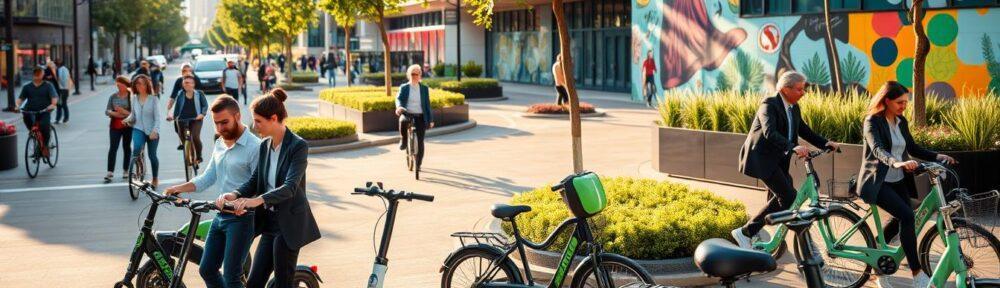
Ever been stuck in traffic, watching your day slip away? Now, imagine a quiet, electric sound cutting through the noise. That’s the start of a new era in urban mobility.
This isn’t just a new way to travel. It’s a quiet fight against old ways. Micromobility, like e-scooters and bike sharing, solves the “last mile” problem. What was once a hassle is now quick and easy.
It’s like a new language for cities. The big change? It saves time, improves air quality, and shows that big ideas can come from small things. This is a real shift, not just a trend.
Micromobility Market Growth: E-Scooters, E-Bikes, and Shared Mobility Service Expansion
The rise of e-scooters and e-bikes is more than a trend. It’s a survival strategy for cities. We adopted these new tools to escape traffic jams. The market’s growth is like a thriller, where heroes are battery-powered vehicles.
What sparked this revolution? It was a mix of urban frustration and Silicon Valley’s boldness. Cities were congested, costing time and nerves. The smartphone then offered a new transportation layer, solving the “last-mile problem.”
Three factors drive growth. Time is precious, and traffic wastes it. Environmental concerns make us think twice about driving short distances. And, why own when you can access?
This wasn’t a coincidence. It was a response to transportation failures. Public transit gets you close, but not always there. Cars are good for long trips but not short ones. Micromobility fills this gap.
The numbers are stunning. What started in Santa Monica has grown to billions in investment. Shared e-scooters have made over 500 million trips worldwide. E-bikes are growing 15% annually in major US cities. This isn’t a fad; it’s a new way to move.
| Micromobility Mode | Annual US Trips (2023) | User Growth Rate | Average Trip Distance | Market Penetration |
|---|---|---|---|---|
| Shared E-Scooters | 112 million | 24% year-over-year | 1.4 miles | 48 major US cities |
| Shared E-Bikes | 86 million | 31% year-over-year | 2.1 miles | 35 major US cities |
| Private E-Scooters | Data emerging | 18% estimated | 1.2 miles | Rapid consumer adoption |
| Private E-Bikes | Over 1 million sold | 22% annual sales growth | 3.5 miles | National retail expansion |
Notice something interesting in the data? Shared e-scooters lead in trip volume, while e-bikes cover longer distances and build loyalty. This shows how different tech solves urban problems. E-scooters are great for short trips, and e-bikes for commutes.
The shift in behavior is key, not just the numbers. People are choosing a different urban experience. They prefer ease over traffic, convenience over parking, and eco-friendliness over guilt.
Behind this growth is advanced e-scooter technology. It makes riding seamless with GPS, smart locks, and mobile payments. This tech removes excuses for not switching modes.
The economics are compelling. Owning a car costs $9,282 a year, while a shared e-scooter membership is about $120 yearly. Even heavy users spend less than $600 annually. The math is clear.
Urban planners once saw these devices as problems. Now, they see them as solutions to congestion. Each scooter trip reduces road space by about 3.5 square meters. This adds lanes without concrete.
The market’s growth follows a pattern. It starts in tech hubs, then urban centers, and now suburbs and campuses. Each step solves a different transportation problem but shares the same appeal—freedom from cars.
What started as a niche has become a real transportation option. The shared e-scooters and e-bikes on our streets are more than investments. They show that better options lead to faster habit changes.
This story is far from over. As battery life and e-scooter technology improve, ranges will grow. Safety and usefulness will increase as cities improve infrastructure and integrate with public transit. We’re just starting to learn how to ride.
Technology Innovations: Battery Life, GPS Tracking, and Smart Locking Systems
When you look at an e-scooter, you see more than just a bike. It’s a digital heart of the city. It’s powered by new tech in batteries, GPS, and smart locks.
Advancements in battery technology are the silent marathon runners of micromobility. Gone are the heavy lead-acid batteries. Now, we have lithium-ion and lithium-polymer packs that are light and full of energy.
Today’s e-bikes can go up to 80 miles on a single charge. This means you don’t have to worry about running out of power. You can choose between pedaling or using the throttle, based on what you prefer.
GPS tracking is key to keeping e-scooters safe. It helps find where people want to ride and where they don’t. This info is vital for bike sharing systems to work well.
It’s like having a real-time map of the city. It helps cities plan better and makes finding a ride easy for users. It’s a win-win for everyone.
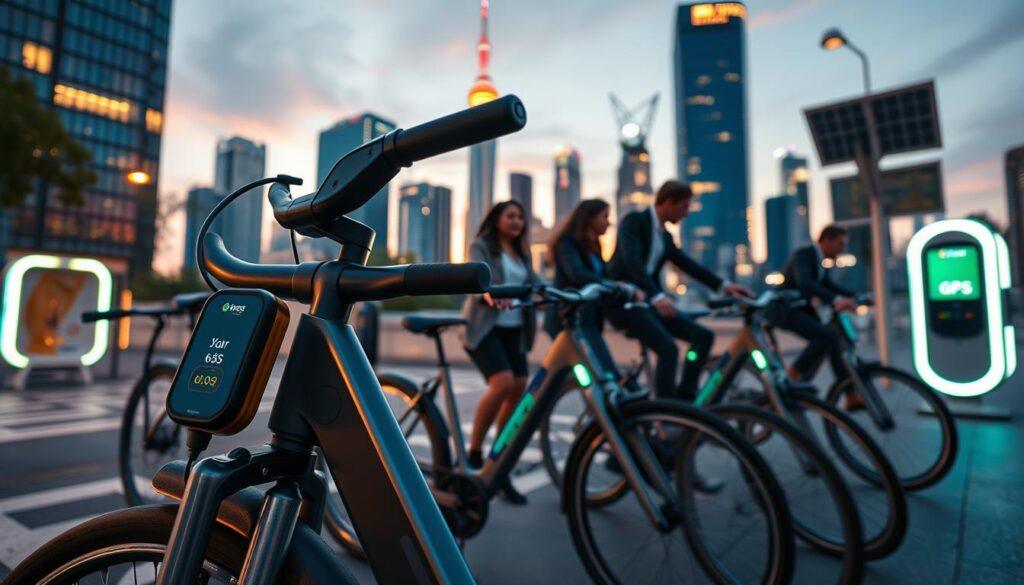
Smart locks are like the bouncers of the e-scooter world. They make sure the bike is only used by the right person. They also keep the bike in the right place.
Try to park your ride in the wrong spot, and you’ll face a fee. This tech keeps the city tidy and makes bike sharing systems work smoothly.
The app is the brain of the operation. It lets you find, unlock, and pay for rides without touching cash. It connects your ride to your phone and your preferences.
This app-based system makes renting a bike easy and secure. It turns a bike into a service you can pay for. This is how bike sharing systems work today.
So, what do we get? Battery life gives us freedom. GPS gives us insight. Smart locks give us control. Together, they make a system that works well.
This tech is why you can find the same e-scooters in cities all over. It makes managing a large number of bikes easy. It’s not just about the ride; it’s about making the system work.
Infrastructure Requirements: Bike Lanes, Charging Stations, and Parking Solutions
Imagine a city street as a plate of spaghetti. For years, we’ve made it just for cars. Adding e-scooters and e-bikes is like adding peas; they need a new design.
This is the basic need for micromobility infrastructure. It’s not about new gadgets but changing how we use streets.
To really work, we need to change how streets are used. It’s not just about letting these devices exist. It’s about making them a part of the city.
Let’s talk about bike lanes. A simple line of paint is not enough. A protected bike lane shows that cyclists belong.
It makes cycling safer. Cities that do this see more people using bikes and scooters.
Electric vehicles need to charge up. For private owners, this means carrying a heavy battery. For shared systems, it’s a big challenge.
Charging stations need to be everywhere. They should be part of street furniture and transit hubs. This makes charging easy and shows the city supports electric vehicles.
Parking is another big issue. The rise of dockless scooters has cluttered sidewalks. The solution is smart parking zones.
Geofencing and apps help riders find these zones. It keeps the streets clean without being too strict.
This approach makes micromobility a lasting part of cities. It’s key to reducing carbon emissions. Good infrastructure makes it easier to choose not to drive.
| Infrastructure Element | The Old Way (Allowance) | The New Way (Integration) | Key Impact |
|---|---|---|---|
| Bike Lanes | Painted line on street margin. | Physically protected, curb-separated pathway. | Increases rider safety & perceived legitimacy by 70%+. |
| Charging Points | Ad-hoc; private responsibility. | Publicly accessible, networked stations at key hubs. | Reduces “range anxiety,” boosts utility for longer trips. |
| Parking Solutions | Dockless free-for-all (sidewalk clutter). | Geofenced “virtual docks” or designated corrals. | Eliminates pedestrian hazards, improves public perception. |
| System Context | Isolated, often conflicting with other modes. | Planned as part of multimodal micromobility infrastructure. | Enables seamless first-mile/last-mile connections. |
Creating this infrastructure is more than building roads. It’s changing how cities are planned. It means giving space to smaller, greener vehicles.
Cities that succeed will have better streets. They’ll be more vibrant and connected. The alternative is a city stuck in the past.
Safety Technology: Helmet Detection, Speed Limiting, and Rider Safety Features
Forget the viral videos of wipeouts; the silent revolution in rider safety is happening in the algorithms. The headlines might chase the spectacle, but the real story is how technology is turning micromobility from a perceived urban menace into a responsible citizen. This isn’t just about adding reflectors. It’s about embedding intelligence.
Helmet detection has moved from a polite suggestion in an app to a functional, if slightly intrusive, guardian. Some systems use your phone’s camera for a quick pre-ride selfie scan. Others, more ambitiously, are experimenting with on-vehicle sensors. The goal is simple: no helmet, no go—or at least a persistent, nagging notification that would make your mother proud.
Then there’s speed. The freedom of an open throttle is intoxicating, but also the root of many conflicts. Enter geofencing. Imagine invisible digital bubbles around parks, schools, and crowded plazas where your e-scooter or e-bike automatically downshifts. It’s a speed governor with a PhD in urban geography. This tech doesn’t just protect pedestrians; it protects riders from themselves and the inevitable ticket.
These core features are supported by a chorus of smaller innovations. Automatic brake-light activation, improved stability control for wet surfaces, and even “find my vehicle” theft protection all contribute to a safer ecosystem. Think of it as a Swiss Army knife for urban transit safety.
But does it work? Early data is promising. Cities that have mandated these features in their shared fleet contracts report decreases in certain types of accidents. The key word is “certain.” Technology can mitigate predictable risks—like speeding in a zone—but not the chaotic randomness of city streets. This is where the “rules of the road” education comes in. Good urban mobility solutions now bundle the tech with mandatory in-app tutorials on local laws.
The maintenance angle is also important. Smart systems can now diagnose a wobbly wheel or failing brake pad, locking the vehicle until it’s serviced. It’s preventative care for machinery, reducing the chance of a mechanical failure at 15 miles per hour.
This brings us to the great philosophical debate of our asphalt age: personal responsibility versus technological governance. Are we building a world where your scooter won’t let you make a bad choice? Some cry overreach. Others see it as the only logical path for urban mobility solutions to scale. You can’t have millions of new vehicles without a framework that defaults to safety.
The evolution here is clear. We’re moving from hoping riders will be safe to building systems where safety is harder to avoid. It’s the seatbelt law of the digital era. For these urban mobility solutions to truly integrate, they must prove they can play nice with everyone else on the road. That proof is now written in code.
Integration with Public Transit: First-Mile/Last-Mile Solutions and Multimodal Journey Planning
For years, public transit had a big problem: getting from the station to your final spot was hard. You’d ride the subway, then struggle to get to your hotel. Buses would drop you off, but your office was too far away.
Then, micromobility came along. It’s not a replacement, but a perfect addition. Buses and trains are like the city’s main roads. E-scooters and bikes are like the smaller roads that connect everything.
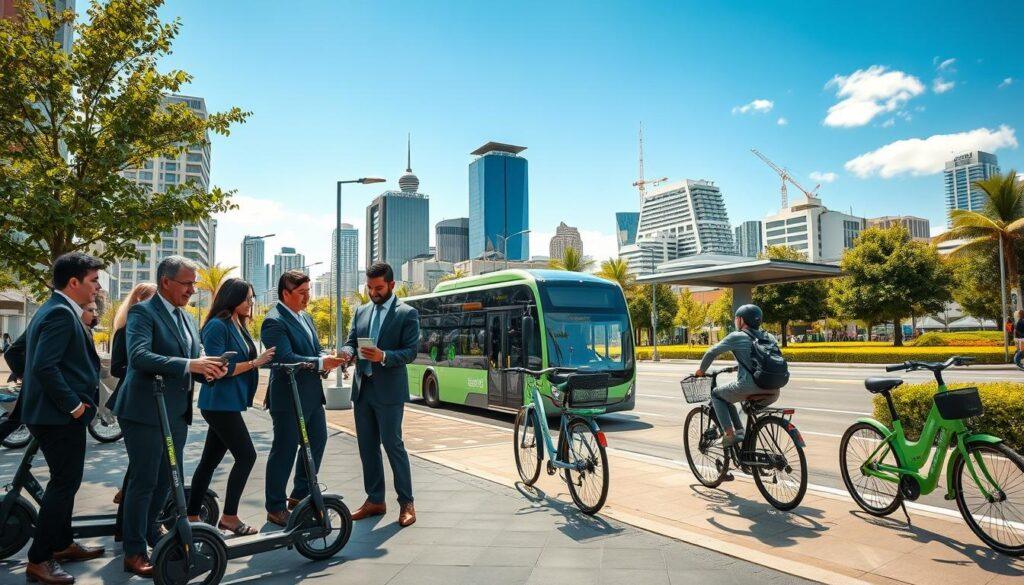
Your commute can now be smooth. You ride an e-scooter to the subway, then take the train. Finish with a bike ride to your office. This isn’t just easy; it changes everything.
Each sustainable short trip helps a lot. It means fewer cars, less traffic, and happier people.
The real magic is in your phone. You want one app that plans your whole trip. It finds your scooter, books a bike, and pays for everything. When it works, it’s amazing.
This makes transit hubs lively and connected. A train station is more than a place to catch a train. It’s a gateway to mobility.
This integration makes transit better. It’s not just “or” choices; it’s “and” solutions.
So, when you see e-bikes by a bus stop, think of it as a solution. It’s the key to making transit work for our daily lives. A city that gets this has a real transit system.
Sustainability Benefits: Carbon Reduction, Traffic Congestion Relief, and Urban Air Quality Improvement
E-scooter technology and bike sharing systems are making cities cleaner and quieter. They’re not just trendy; they’re changing our urban environment for the better. The benefits are real and add up quickly.
First, let’s talk about carbon. Replacing a big SUV with a light e-bike cuts down on emissions. This change makes a big difference, reducing pollution from daily activities. Reducing your carbon footprint on two wheels is a real action.
Then, there’s the effect on traffic. When cars stay parked, the roads get less congested. This means less pollution from all the cars on the road. It’s a win-win for everyone.
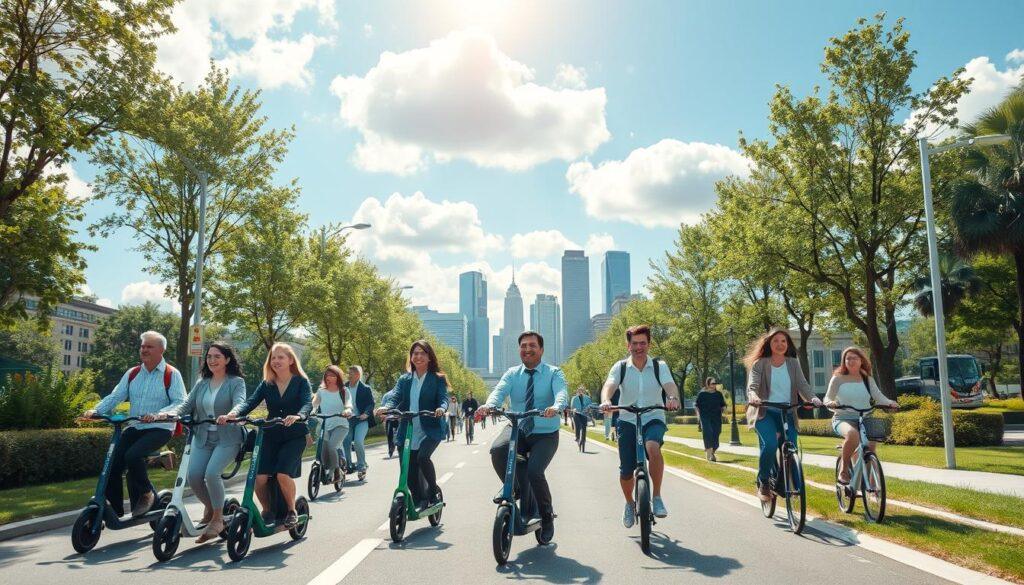
Next, we see the impact on air quality. Cleaner streets mean better air for everyone. This isn’t just good for the planet; it’s also better for our health. Cleaner air means fewer breathing problems and less stress.
Modern bike sharing systems and e-scooter technology do more than just replace car trips. They encourage us to be more active. This low-impact exercise improves our health without needing a gym. It’s a win for both our planet and our bodies.
So, what does this mean in numbers? The table below shows the environmental impact of different ways to travel. The numbers are clear.
| Transport Mode | Avg. CO2 per Mile | Congestion Contribution | Noise Pollution | Health Impact |
|---|---|---|---|---|
| Personal Car (Gas) | ~411 grams | High | High | Sedentary, Pollutant Exposure |
| E-Bike / E-Scooter | ~22 grams (from grid electricity) | Very Low | Very Low | Active, Low Exposure |
| Public Transit (Bus) | ~299 grams (shared) | Medium | Medium | Minimally Active |
The sustainability story is the compelling “why.” It justifies the investments and the cultural shift. It’s not about giving up convenience. It’s about making our commute better for the planet and our health. That’s an impact worth rolling with.
Business Models: Shared Services, Private Ownership, and Corporate Fleet Programs
We’ve moved from a ‘spray and pray’ frenzy to a more calculated chess game. The gold rush phase, where startups flooded streets with scooters, is over. Now, the real work begins: building sustainable businesses that actually make money. It’s not just about survival; it’s about finding the right model for the right rider.
Today’s landscape features four dominant archetypes. Each plays a distinct role in the ecosystem of modern urban mobility solutions. Understanding them is key to seeing where the puck is going.
The dockless shared service is the familiar face. You know the drill: unlock with an app, pay per minute, leave it (mostly) anywhere. This model thrives on spontaneity and tourist traffic. But the smart operators have added a twist: subscription plans.
For the daily commuter, a monthly fee for unlimited short rides makes profound economic sense. It transforms a scooter from a novelty into a legitimate piece of your transit portfolio.
Then there’s private ownership. This is the “Tesla” segment of micromobility. Consumers are investing in high-quality, durable e-bikes and scooters for personal use. They want performance, style, and reliability—without hunting for a charged unit.
This market grows as people commit to replacing car trips permanently. It’s a purchase, not a rental, signaling a deeper lifestyle shift.
Perhaps the most intriguing model is the corporate fleet. Forward-thinking companies are providing e-bikes or scooters as employee benefits. Why? It reduces demand for expensive parking, boosts Environmental, Social, and Governance (ESG) scores, and promotes worker wellness.
It’s a practical urban mobility solution that aligns profit with purpose. The math is starting to look very attractive.
None of these models exist in a vacuum. Their success is tethered to micromobility infrastructure and city partnerships. Municipal permits dictate where and how many vehicles can operate. Dedicated bike lanes and parking corrals are not just nice-to-haves; they are critical for scalability and public acceptance.
The most successful operators work with cities, not against them.
| Business Model | Key Value Proposition | Primary User | Infrastructure Needs | Revenue Dynamic |
|---|---|---|---|---|
| Shared Pay-Per-Ride | Spontaneous, point-to-point convenience | Tourists, occasional users | Geofenced parking, public right-of-way | Variable, usage-based pricing |
| Shared Subscription | Cost-effective daily commuting | Regular commuters | Reliable charging hubs, dedicated lanes | Predictable recurring revenue |
| Private Ownership | Personalized, always-available vehicle | Dedicated urban dwellers | Home storage, secure public racks | One-time sale + accessories/service |
| Corporate Fleet | Employee benefit, parking reduction, ESG | Company employees | On-site charging, safe route planning | B2B bulk leases or direct sales |
So, what wins? The future isn’t a single victor. It’s a hybrid. The most resilient urban mobility solutions will blend public service ethos with private sector efficiency.
A subscription service might integrate with a city’s transit pass. A corporate fleet could supplement public options in a business district. The winning formula makes financial sense for operators, practical sense for riders, and political sense for cities. That’s the checkmate move.
Regulatory Landscape: City Regulations, Safety Standards, and Operational Permits
Forget the Wild West; today, cities are making new rules fast. The start of dockless scooters was chaotic. City planners were surprised to see scooters everywhere.
Now, cities are setting rules instead of just reacting. They want to use e-scooter technology wisely. It’s about safety and keeping public spaces clear.
So, what are cities doing? They’re focusing on safety and control. They’re dealing with:
- Speed Limits & Geofencing: Setting lower speeds in busy areas or near schools with GPS.
- Mandatory Parking Corrals: Creating specific spots to avoid clutter and dangers.
- Helmet Laws & Rider Education: Making helmets mandatory for safety.
- Operational Permits & Fleet Caps: Limiting how many scooters can be used and where.
There’s a big challenge here. Tech companies want to grow fast, while cities focus on safety. The goal is to work together as mobility partners.
Good rules make companies accountable. They share data and focus on fair service. This makes sustainable short trips better for everyone.
This change is turning scooters into a useful part of city travel. The rules now talk about how scooters can help the city. They aim to reduce car use and improve air quality.
The rules are different everywhere, but the direction is clear. The free-for-all is over. Cities are making rules that protect everyone and make travel better.
The main goal is to make sustainable short trips safe and enjoyable for all. It’s about creating a better travel experience for everyone.
Career Opportunities: Urban Mobility Planning, Micromobility Technology, and Sustainable Transportation Policy
Who’s leading this change? It’s not just the rider on an e-scooter. It’s the team designing the future. They’re the brains behind the bike lanes.
New jobs are emerging where city planning, tech, and green policy meet. Urban planners create detailed micromobility infrastructure plans. Engineers focus on improving battery life and vehicle design. Data experts analyze rider habits to make bike sharing systems better. Policy makers write the rules for our streets.
This field is exciting and diverse. It’s for those who want to make a real difference. With the right skills, you can find roles in research, like the doctoral research position at the University of, working on green urban mobility.
This field has grown from a small niche to a critical need. It’s where you can tackle traffic, pollution, and fairness, all before lunch. Your job just got a lot more interesting.