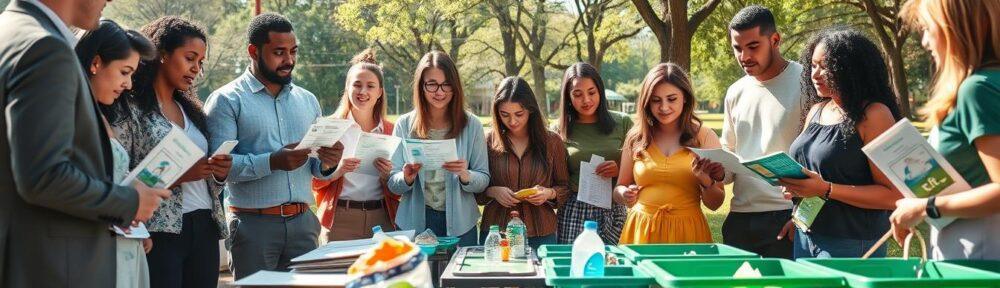
Starting a local project needs a good plan. The right plan turns good ideas into real results. It gives leaders the tools they need to act.
There are many ways to manage materials. Short-term drives collect items like electronics or clothes. Permanent centers help areas without regular pickup.
Teaching people about recycling is important. Creative programs, like repair workshops, make products last longer. Local composting turns food waste into fertilizer.
Each approach has its own benefits. They help reduce waste and raise awareness. They also create economic opportunities and bring people together.
Picking the right plan is the first step. It sets the stage for real community engagement and environmental change. Knowing why recycling is important is essential.
Stakeholder Engagement Strategies
True stakeholder engagement goes beyond simple surveys. It creates strong links between environmental goals and social justice. This approach turns a basic city recycling program into a powerful community effort. It builds a coalition where everyone’s interests are represented.
Successful models don’t work alone. They link municipal recycling and zero-waste goals with fights for housing, workers’ rights, and health. This creates a united front with more influence.
Breathe Free Detroit is a great example. They didn’t just fight for cleaner air. They worked with housing groups to tackle pollution and displacement. This built trust in their environmental work and fight against gentrification.
The South Baltimore Community Land Trust also has a holistic approach. They combine community recycling and waste reduction with affordable housing and local economic growth. This makes environmental care a key part of neighborhood survival and growth.
Engagement must also reach policy makers. The New Jersey Environmental Justice Alliance (NJEJA) shows how. They educate legislators on the impacts of waste policy. They turn community concerns into laws.
Sometimes, data needs a human touch. Tools like “Toxic Tours” make complex issues real. The Ironbound Community Corporation (ICC) in New Jersey leads these tours. They bring people to polluting facilities, creating an emotional understanding that reports can’t.
Labor unions are also key stakeholders. The Minnesota Environmental Justice Table (MNEJT) and the Teamsters union show how. They work together for cleaner facilities and fair labor practices.
Effective strategies share a common framework. They move from informing to partnering:
- Educational Workshops: Make municipal recycling and waste policy clear for everyone.
- Coalition Building: Seek partnerships with housing, labor, and health groups.
- Experiential Advocacy: Use tours to tell compelling stories for change.
- Policy Translation: Connect community experiences with legislative action.
The goal is integration. A standalone recycling initiative is weak. One tied to housing, economic, and health justice is essential. This approach gains long-term support and resources, making the program a community pillar.
When stakeholder collaboration is deep and strategic, the municipal recycling system gets stronger. It gains allies and builds the power needed for lasting zero-waste goals.
Technology Integration for Communities
New technologies are changing how neighborhoods handle waste. They create closed-loop systems right in our communities. This shift goes beyond just collecting recyclables. It turns waste into valuable local resources.
The best tools are simple, affordable, and easy to keep up. This idea is called “appropriate technology.” It focuses on finding solutions that fit a community’s needs and abilities.

Grassroots programs test new technologies on a small scale. They gather important data. This data helps convince city officials to use these solutions on a bigger scale. Public-private partnerships often speed up this process.
Decentralized composting is a great example of this. Instead of sending organic waste far away, communities process it locally. Systems can be as simple as backyard bins or as complex as community digesters.
The Mother Earth Foundation’s work with Breathe Free Detroit is a perfect example. They shared composting knowledge with the Detroit community. Their pilot program showed clear benefits, like less landfill waste and better compost for gardens.
This success brought undeniable data. It showed lower collection costs and better soil health. The results helped push for citywide composting policies. The pilot was a living lab, proving the model works.
When adopting new technologies, communities should look at a few things. They should consider the cost, how easy it is to use, and if it creates jobs. The goal is to find tools that empower residents and build economic strength. Public-private partnerships are key here.
| Technology Type | Primary Community Benefit | Key Enabler |
|---|---|---|
| Decentralized Composting | Local soil production, waste diversion | Public-private partnerships for knowledge transfer |
| Mobile Recycling Education Units | Increased participation & awareness | Grassroots pilot funding |
| Community-Scale Material Sorters | Job creation, higher purity streams | Municipal data-sharing agreements |
Pilot programs do more than test equipment. They build community support and knowledge. Residents see the direct results of their efforts. This builds a sense of ownership and long-term commitment.
The data from these pilots is invaluable for city planners. It shows real-world metrics on waste reduction, cost savings, and social impact. This information helps make bigger municipal investments safer. It turns community action into a blueprint for change.
Technology integration isn’t about adding complexity. It’s about choosing the right tool for the job. A simple sorting guide can be as powerful as a high-tech digester if it solves a local problem. The focus should always be on empowerment and creating a circular local economy.
Strong public-private partnerships ensure communities get the help they need. Businesses gain insights and community support. Together, they can scale solutions that work, making technology a true ally in building sustainable communities.
Funding Models & Sustainability
Financial sustainability turns short-term projects into lasting community assets. The real test is if they can keep going after the excitement wears off. This means moving from one-time grants to stable, diverse funding sources.
Successful models mix public, private, and community funds. For example, Baltimore put $20 million into a trust for Community Land Trusts (CLTs). This big public investment helps with affordable housing, showing how city support can grow community wealth.
Initiatives can also create their own jobs. Recycling and reuse programs are great examples. They not only reduce waste but also create jobs at processing facilities and repair shops. These small businesses turn old items into new ones, making money in a circular economy.
Recycling and reuse save a lot of money. Communities save on landfill fees and buying new things. These savings can help grow the program, creating a positive cycle. It’s clear: caring for the environment helps the wallet too.
But, relying on volunteers is risky. Volunteer burnout and funding issues can hurt projects led by residents. Sustainability means making programs that people will pay for, not just volunteer for.
This is where behavioral change helps financially. When a program is part of daily life, like a neighborhood repair café or regular textile collection, it becomes a service. This change is key for getting people to participate and pay regularly.
To build a strong financial base, focus on these key funding areas:
- Municipal & Government Grants: Start-up funding for projects and infrastructure.
- Earned Income: Money from sales, repair services, or waste processing.
- Membership Dues or Fees: Small, regular payments from community members.
- Public-Private Partnerships: Corporate sponsorships that match community goals.
- Community Trusts & Endowments: Long-term funds, like Baltimore’s CLT fund, for lasting impact.
The table below compares funding models to help find the best mix for your project.
| Funding Model | Key Characteristics | Pros | Cons | Best For |
|---|---|---|---|---|
| Grant-Dependent | Relies on external awards from foundations or government. | No repayment; funds large projects. | Unpredictable; often restrictive; temporary. | Launching pilots and building initial infrastructure. |
| Earned Income | Generates revenue through sales, services, or fees. | Creates self-reliance; aligns with mission. | Requires business planning; market risk. | Recycling centers, repair workshops, social enterprises. |
| Hybrid/Blended | Combines grants, earned income, and donations. | Diversifies risk; most stable long-term. | Complex to manage; requires multiple skill sets. | Mature programs seeking scale and independence. |
| Community Shares | Raises capital directly from residents via investments. | Builds local ownership; deepens engagement. | Regulatory complexity; requires strong trust. | Projects with high local support and clear community benefit. |
Building strong partnerships is key. Work with local businesses that benefit from a cleaner area or a more skilled workforce. Also, partner with city departments that share your goals on waste reduction or job creation. These partnerships spread risk and increase resources.
Designing for sustainability means making behavioral change part of the financial plan. Programs must be easy, valuable, and rewarding to become a regular part of life. When they do, funding follows, and the community invests in its future, ensuring lasting impact.
Measuring Community Impact
How do you show funders and residents that your Community Recycling Program is more than just picking up recyclables? True success is measured by the change it creates. Moving beyond simple tonnage counts requires a holistic framework. This framework blends hard numbers with human stories to prove your program’s worth.
Quantitative data provides the undeniable proof. Key metrics include waste diversion rates and reductions in illegal dumping. For example, national statistics show only 21% of recyclable material is captured. A staggering 76% is lost at the household level. Your program’s data can directly challenge these figures. Tracking the number of jobs created, adds economic weight. This concrete data forms the backbone of your impact report.
Qualitative outcomes capture the soul of your work. These are the stories of empowerment and change. Youth leadership development, like that seen with activist Shashawnda Campbell, is a powerful outcome. Community power-building turns residents into advocates. Policy wins, such as the removal of incinerator renewable energy credits, show systemic influence. These softer metrics demonstrate increased environmental awareness and stronger social bonds.
Setting a clear baseline is your first step. You must know your starting point to measure progress. Grassroots Community Recycling Programs are excellent testing grounds. They generate critical real-world data that can inform larger city systems. Consistent tracking, through surveys and waste audits, turns anecdotes into evidence.
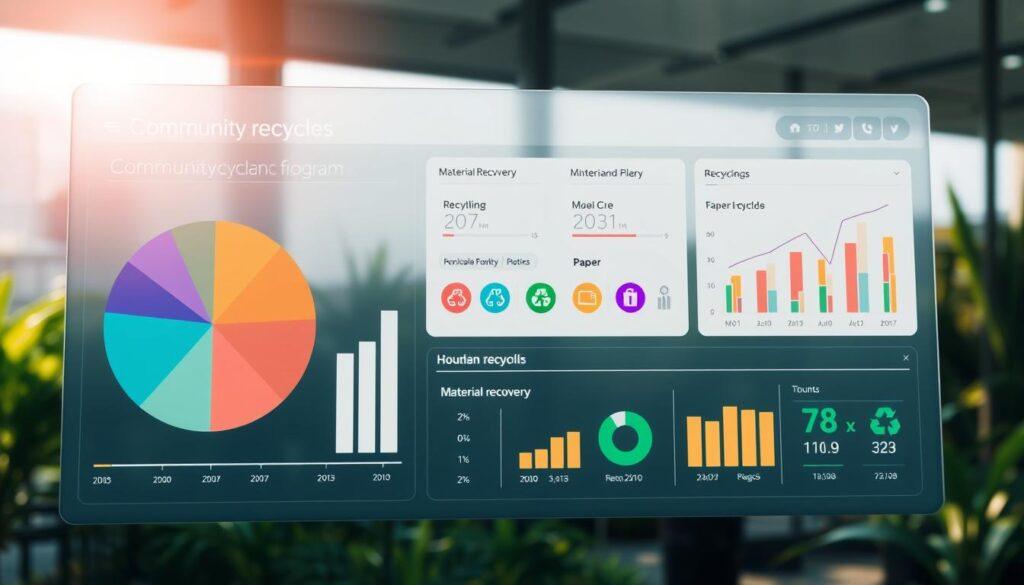
Data storytelling bridges the gap between numbers and narrative. It translates complex results into compelling stories for residents, municipal partners, and grant organizations. This communication is essential for securing ongoing support. It validates your program’s role in building community resilience.
Use the following table to organize a balanced view of your program’s performance. It combines both data-driven and human-centric metrics.
| Metric Type | Specific Metric | Example / Data Source | Significance |
|---|---|---|---|
| Quantitative | Material Diversion Rate | Compare local capture vs. national 21% average | Shows direct environmental efficacy |
| Quantitative | Illegal Dumping Reports | City complaint data pre- and post-program launch | Indicates improved neighborhood cleanliness |
| Quantitative | Green Jobs Created | Number of part-time and full-time positions funded | Measures economic benefit to community |
| Qualitative | Youth Leadership Development | Stories like Shashawnda Campbell’s advocacy path | Builds long-term community capacity |
| Qualitative | Community Cohesion Score | Participant survey results on trust and collaboration | Reflects social capital generated |
| Qualitative | Policy Influence | Credits removed from waste incinerator subsidies | Demonstrates ability to drive systemic change |
This multi-faceted approach to measurement does more than justify funding. It provides a roadmap for refining your Community Recycling Program’s strategies. It highlights what works and what needs adjustment. Demonstrating clear, diverse impact is the key to sustainable growth. It ensures your program is recognized as a vital pillar in the journey toward community sustainability.
Replication & Scaling Best Practices
The success of a community recycling program is shown by its ability to grow and adapt. Good scaling strategies help a program succeed in different places. They move beyond just one area’s success.
Sharing knowledge through peer networks is key. Projects like the Failing Incinerators Project help groups from different places share ideas. Global partnerships, like between Breathe Free Detroit and the Mother Earth Foundation in the Philippines, show how both sides can learn from each other. Local groups, such as MNEJT, CURE, and Florida Rising, work together on big issues, showing how to make a bigger impact.
Scaling out means growing the program in more places. Scaling up means making bigger changes in policies. Both need flexible plans that fit different cultures. Programs that work well combine good ways to handle waste models for non-recyclables with strong policy and governance structures. This keeps the community at the heart of the program’s success.
Building strong Community Recycling Programs needs shared learning, good mentorship, and flexible scaling strategies. This way, local ideas can lead to big changes for the environment and society.