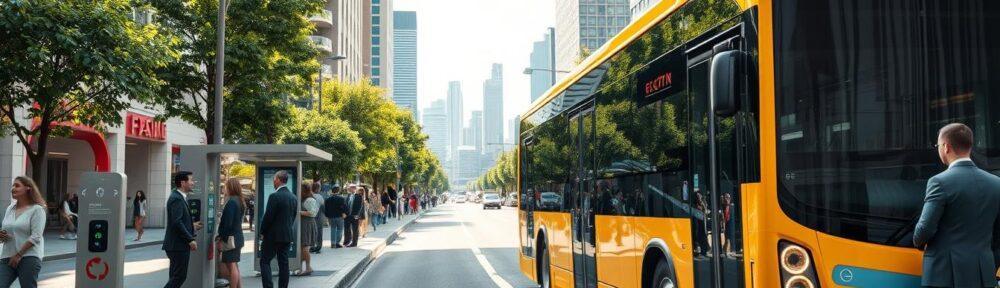
Remember when battery-powered vehicles were just a quirky side plot in the transportation story? Cue the montage music, because the e-bus has just stolen the show.
We’re not watching a few pilot programs anymore. This is a full-blown, continent-hopping revolution.
From Shenzhen’s silent, all-electric army to Amsterdam’s ambitious carbon-neutral goals, cities are rewriting their mobility scripts. The stats are impressive, but the real plot twist is in the strategy.
Look at India, making an audacious leap onto the highways. Their intercity expansion and the PM E-DRIVE scheme signal a structural shift in thinking. It’s no longer just about city centers.
BloombergNEF projects this quiet newcomer will claim 67% of the global bus market by 2040. So, is this the smooth ride to sustainable bus transport we were promised?
Or are we just idling in a different kind of traffic jam? Let’s unpack what’s actually working on the road.
Battery Technology for Buses: Range Optimization, Fast Charging, and Depot Charging Systems
Imagine a smartphone battery the size of a sofa, moving 40 people across a city. That’s what e-bus technology is like. It’s not just a power upgrade; it’s a big engineering challenge.
The key to success lies in three areas:
- Range Optimization: Getting every mile out of a charge.
- Fast Charging: Turning downtime into quick refills.
- Depot Charging Systems: Refueling a whole fleet every night.
Lithium-ion batteries have long been the top choice. They offer good energy and cost balance. But, they need careful management to avoid problems.
Thermal management systems are key. They keep the battery cool and safe. This prevents dangerous overheating.
Solid-state batteries are the next big thing. They promise better energy, faster charging, and safety. Moving from liquid to solid electrolytes is a big step forward.
But fast charging is also important. It should be as quick as filling up a diesel tank. India’s Fresh Bus service uses a system that charges a bus in just 15 minutes.
This technology is used every day. It lets buses run almost non-stop. This makes a few electric buses into a reliable battery bus network.
Depot charging is another key part. It’s the slow, overnight charging that happens at terminals. Smart systems manage this, making sure buses are ready for the next day.
The cost of batteries is dropping fast. Analysts say they’ll be as cheap as diesel soon. This makes e-bus technology more affordable.
Are we solving range anxiety? Yes, thanks to better batteries and fast charging. But, we might face new challenges. The success of battery bus networks depends on more than just batteries.
Route Planning Optimization: Energy Management, Charging Schedules, and Operational Efficiency
Planning routes for electric buses is more than just mapping. It’s a complex energy game played across the city. You can’t just copy a diesel bus schedule for an electric one. That’s like using a Stradivarius for chopsticks, a waste of talent.
The heart of this new approach is smart energy management. It decides when, how much, and where to charge the bus. This isn’t just about charging overnight. It’s about a dynamic balance between depot charging and opportunity charging.
Depot charging is like a full night’s sleep for the bus. Opportunity charging is like a quick espresso shot during the day. Telematics and real-time data work together to make these decisions. They consider traffic, passenger load, weather, and electricity rates to create the best charging schedule.
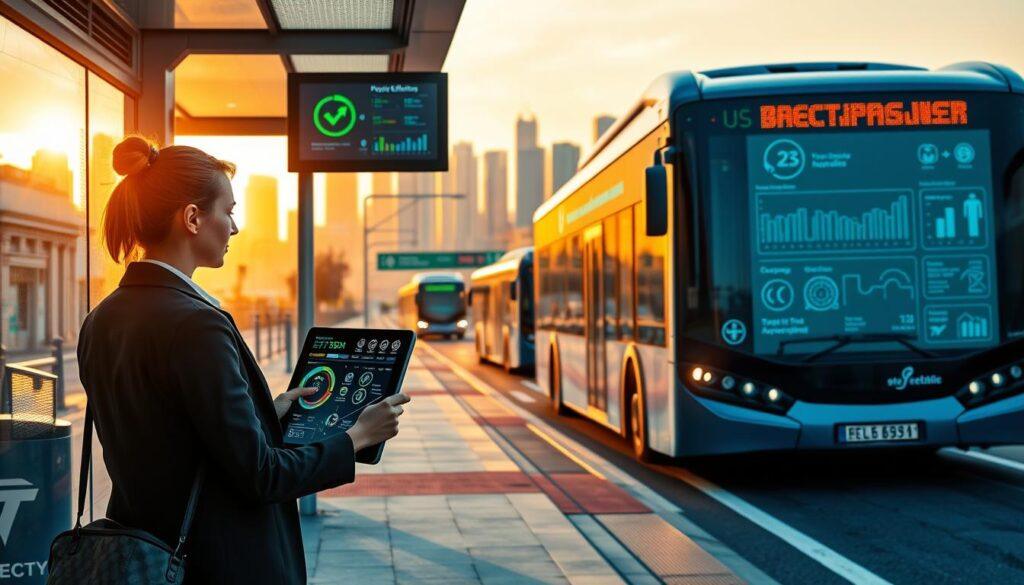
This data-driven method keeps buses running and saves money. It asks, why charge a bus all night when a quick top-up will do? This is the secret to a growing electric bus fleet.
But, this elegant plan needs a partner: the electrical grid. Our old grid can get overwhelmed by many buses charging at once. This is why grid-integrated smart charging is essential.
Utilities and transit agencies must work together. They need to communicate and adjust charge times to avoid problems. This is leading to new models like “Depot-as-a-Service,” where companies manage the whole charging system.
Is our infrastructure holding back this green revolution? Maybe. But the real story is in the planning. Good e-bus technology is about the network of decisions, not just the bus. It turns a big expense into a valuable asset.
For more on why electric transit makes sense, check out our business case for electric transit. The path to a cleaner future is in the code, the negotiations, and the timely charges.
Cost-Benefit Analysis: Total Cost of Ownership, Fuel Savings, and Maintenance Reduction
Don’t let the high upfront cost scare you off. The real value of a battery bus network shows up over time, not just at first. That initial cost is just the beginning. The real story is in the Total Cost of Ownership, where electric bus systems beat out diesel buses.
Think of TCO as the full receipt for a vehicle’s life. It adds up everything:
- The Acquisition: Yes, the headline number is higher.
- Fuel & Energy: This is where the plot twists. Electricity consistently undercuts diesel.
- Maintenance: The quiet, relentless savings engine.
- Lifespan: A longer, more productive service life.
Let’s look at the daily costs. While U.S. figures vary, the trend is clear. In India, electric buses cost ₹40-55 per kilometer, while diesel buses cost ₹70 or more. That’s a 30-40% saving every day. It makes a costly project surprisingly profitable.
Maintenance is another big win. An electric drivetrain has about 80% fewer parts than a diesel engine. No complex transmissions, no exhaust after-treatment systems, no oil changes for the engine itself. This means less downtime, fewer mechanics, and a smaller parts inventory. The savings are huge.
These buses are built to last. With fewer parts exposed to heat and stress, they’re more durable. You’re not just buying a bus; you’re investing in a long-term asset with slower depreciation.
For cautious transit authorities, financial tools like India’s Payment Security Mechanism (PSM) offer a blueprint. It’s a government-backed guarantee that ensures operators get paid, reducing the risk of new technology. It’s the financial safety net that lets innovation thrive.
The bottom line? The case for battery bus networks is solid, backed by data. Over 12 years, the ROI is compelling. For more on the math, check out this comprehensive financial analysis. The future of transit is greener and fiscally smarter.
Environmental Impact Assessment: Emission Reductions, Air Quality Improvements, and Carbon Footprint Analysis
Forget about vague climate goals for a moment. The real power of electric public transit is in the air we breathe and the silence we can now enjoy. It’s not just empty promises. It’s a real, measurable improvement to city life.
Let’s look at the carbon numbers. A single electric bus can stop about 1,690 tonnes of CO₂ from being released. That’s like removing the yearly pollution of 24 gasoline cars. Every year, for the bus’s whole life.
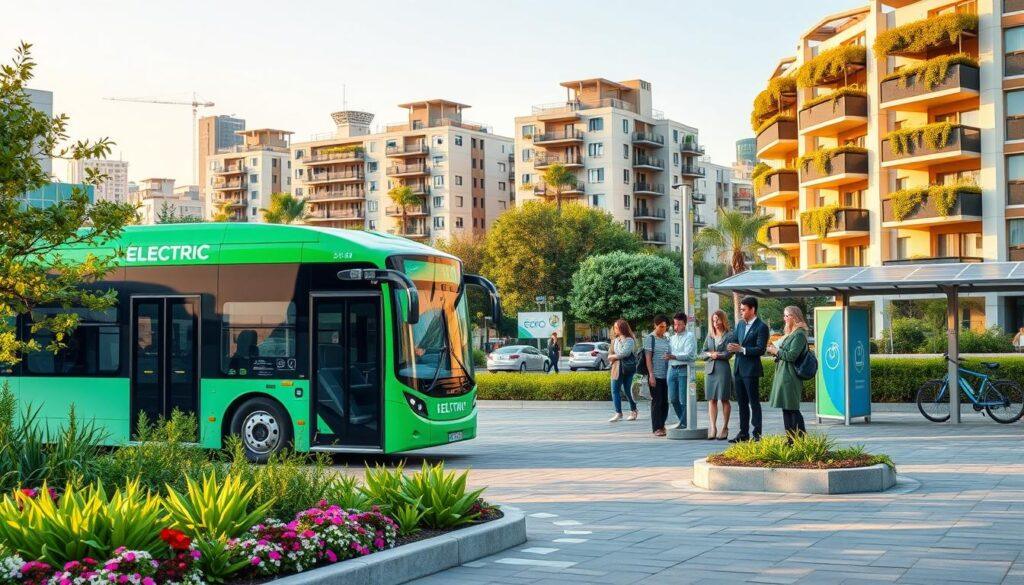
Electric buses are also much more efficient. They use about 70% less energy than diesel buses. This means more energy goes to moving the bus, not to heat or friction.
The environmental benefits are clear and wide-ranging. They’re best shown by comparing the two.
| Metric | Diesel Bus | Electric Bus |
|---|---|---|
| Carbon Emissions (Lifetime) | ~1,800 tonnes CO₂e | ~110 tonnes CO₂e (from grid power) |
| Local Air Pollutants | High (NOx, PM2.5, Soot) | Zero at point of use |
| Noise Pollution | 85-90 dB (Constant rumble) | 65-70 dB (Near-silent at low speed) |
The real magic is in the second and third rows. Switching to electric buses isn’t just good for the planet. It’s also a health win. Diesel pollution is linked to serious health issues. Electric buses offer a cleaner alternative.
The quiet is another big win. Electric buses are much quieter than diesel ones. This makes cities quieter and more pleasant. It’s a big change for the better.
So, when we talk about sustainable bus transport, we’re not just counting carbon. We’re also reducing health problems and making cities nicer. The benefits are real and immediate. The only question is how fast we can make our cities cleaner and quieter.
Charging Infrastructure: Overhead Charging, Plug-in Systems, and Wireless Charging Technology
Welcome to the charging zoo, where plug-in systems are the old lions, overhead pantographs are the sleek cheetahs, and wireless charging is the mythical unicorn. This mix of power solutions is key for any electric bus systems network. We’re not just filling up like at a gas station; we’re creating a complex system for sustainable bus transport.
Plug-in systems are the familiar ones. They’re the chargers at depots that buses use overnight. They’re reliable and the mainstay of the system. Then, there’s opportunity charging—quick charges at terminals or layover points. It boosts range without needing huge batteries.
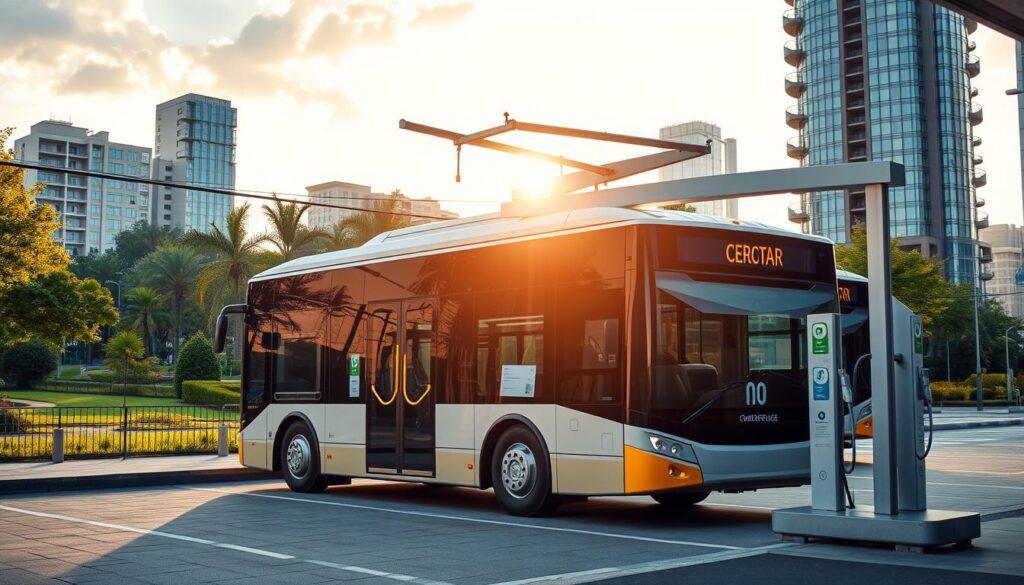
The overhead pantograph is like something from a sci-fi movie. A bus slides under a charging arm at a stoplight. In 30 seconds, it gets enough power for the next few miles. It’s efficient, automated, and feels like the future.
Wireless charging is the real unicorn. It’s not like charging your phone on a pad. It’s inductive systems embedded in the road. A bus drives over a charging segment and power transfers through the air. No plugs, no arms, no human intervention. It promises endless power for buses on fixed routes.
Pilot projects are testing this dream. Companies like Equans are running trials in Germany, embedding coils in bus lanes. The concept is dynamic charging: buses charge while moving, potentially shrinking battery needs dramatically. It’s the holy grail for high-frequency routes.
But here’s the rub. Compatibility is a nightmare. Is your pantograph system talking to your competitor’s bus software? Can your wireless tech handle snow and potholes? And what about Vehicle-to-Grid (V2G) capability? The standards war is just beginning.
The infrastructure challenge is the true monster under the bed. It’s not the chargers themselves. It’s the “Depot-as-a-Service” conundrum. Who provides the land for a mega-charging hub? Who pays for the grid connection stronger than a small town’s? Who maintains it all?
- Land & Power: Charging depots need vast, well-located real estate and direct, high-capacity grid hookups. This isn’t a simple permit.
- Grid Upgrades: Local utilities often need to reinforce substations to handle the load of a full electric fleet charging overnight.
- Capital vs. Operational Costs: The upfront cost for this hardware is staggering, even if the long-term operational savings are clear.
The next unicorn startup won’t be making buses. It’ll be the company that cracks the code on providing flexible, scalable, and affordable charging infrastructure as a service. The future of sustainable bus transport depends less on the vehicle in the lane and more on the invisible web of power that keeps it there.
So, while we marvel at the silent, zero-emission bus, remember the silent revolution happening beneath our feet and over our heads. The race to power them is where the real transformation of our electric bus systems is being wired up.
Driver Training Programs: Operating Electric Buses, Energy Efficient Driving, and Technology Adaptation
The challenge of e-bus technology goes beyond just the tech. It’s about changing how drivers have been trained for decades. Electric vehicles are quiet and powerful, unlike the loud diesel buses drivers are used to. Drivers need to learn new skills to use these vehicles effectively.
Driver training programs are key to this change. They teach drivers to manage energy, not just drive. Regenerative braking is a big part of this new skill.
Regenerative braking lets drivers turn every stop into a chance to recharge. Instead of using brakes to slow down, drivers can make the motor recharge the battery. This technique can increase the bus’s range by up to 20%.
But it’s not just about the brakes. Electric buses accelerate quickly, so drivers need to learn to control them smoothly. The dashboard shows important information like energy use and battery level. Drivers become like pilots, managing the bus’s energy.
Good training programs mix hands-on learning with understanding the tech. They teach:
- The Art of the Glide: Smooth acceleration and braking to save energy.
- Interface Fluency: How to use the new dashboard data to drive better.
- Route-Aware Driving: Planning energy use based on the route.
- Technology Trust: Getting comfortable with the quiet and automated features.
Trained drivers save energy, wear down brakes less, and make rides smoother. They also save money by using less fuel. They make the bus run better in real-time.
For transit agencies, training drivers is essential. It’s the last step to get the most from electric buses. The buses are smart, but they need smart drivers. The future of public transit is both electric and educated.
Fleet Management Systems: Telematics, Predictive Maintenance, and Performance Monitoring
Today’s e-bus fleet manager has a digital throne of real-time data. This is a big change. The clipboard is now a dashboard that would impress NASA engineers.
Telematics is at the heart of this change. IoT sensors on each bus send out data constantly. This includes battery cell voltage, motor temperature, and GPS location. It creates a living digital twin of your operation.
This data helps with predictive maintenance. It spots problems before they happen. This means buses can be fixed on schedule, without any trouble.
This is key for modern electric public transit. It turns guesswork into science. For example, Île-de-France’s T Zen 4 bus line uses Navineo ITS. It tracks buses, manages traffic signals, and balances energy flow.
Real-time performance monitoring is very helpful. Managers can see which drivers are most efficient. They can also adjust schedules based on traffic and weather. This helps get the most out of each charge.
Let’s look at the old way versus the new smart way:
| Aspect | Traditional Fleet Management | Smart, Connected E-Bus Management |
|---|---|---|
| Maintenance Approach | Reactive (fix after break) | Predictive (fix before fail) |
| Data Source | Manual logs, driver reports | Real-time IoT sensor telemetry |
| Decision Speed | Days or weeks | Minutes or seconds |
| Energy Optimization | Estimated averages | Precise, per-trip analytics |
| System Integration | Isolated silos | Unified platform (vehicle, depot, grid) |
This table shows how much better the new way is. It turns vehicles into one smart system. Performance monitoring is always on, not just sometimes.
This leads to better reliability and lower costs. The bus is more than just a ride; it’s part of a smart city network. This makes electric public transit better and more efficient.
The most advanced e-bus technology needs smart management. The fleet management system is that brain. It keeps the electric revolution running smoothly.
Funding and Policy Support: Federal Grants, State Incentives, and Transit Authority Budgets
The electric bus revolution needs money and political support, not just good ideas. These green vehicles in our cities cost a lot. This section shows how we fund our sustainable bus transport future.
Building battery bus networks is like making a big movie. The electric buses are the stars, but you need money to make them shine. In the U.S., the FTA’s Low-No Program gives the first money. Then, states add their own help, like tax breaks and lower utility rates.
But, transit agencies have tight budgets made for diesel buses. Electric buses are more expensive upfront but cheaper in the long run. Changing budgets for this new cost is a big challenge.
Global policy innovation is key. India’s Payment Security Mechanism (PSM) is a big deal. It’s not just a subsidy. It’s a government promise to pay if a transit agency can’t.
This policy made private operators feel safe investing in battery bus networks. Now, we see big orders, like CESL’s for 10,900 electric buses. This is a big sign for the market.
| Funding Mechanism | How It Works | Key Example | Impact Signal |
|---|---|---|---|
| Federal Grants | Direct capital injections for vehicle and infrastructure purchase, reducing upfront cost barrier. | FTA Low-No Program, DOT Charging & Fueling Infrastructure Grants. | Jump-starts initial fleet deployment, proves technology at scale. |
| State Incentives | Tax credits, rebates, and favorable utility rates that improve the Total Cost of Ownership (TCO). | California’s HVIP, New York’s Truck Voucher Incentive Program. | Makes operational economics competitive with diesel, accelerates payback period. |
| Transit Budget Reallocation | Shifting funds from diesel fuel & maintenance line items to capital leases or financing for electric assets. | Major metro agencies creating dedicated zero-emission transition funds. | Signals institutional commitment and long-term operational shift. |
| Sovereign Backstops (PSM) | Government assumes payment risk, guaranteeing revenue for private operators and attracting large-scale investment. | India’s Payment Security Mechanism under the PM E-DRIVE initiative. | Unlocks massive, game-changing tenders and transforms a national market overnight. |
So, what’s the policy implication? It’s simple. Subsidies can start a pilot. But only strong, de-risking policies can fuel a big change. The 10,900-bus tender was a big deal because it was a safe bet financially.
For American transit agencies, the lesson is clear. To get to sustainable bus transport, we need blended finance. Federal grants start it, state incentives grow it. But transit budgets, changed and bold, must support it forever.
The mega-tenders are a big sign. They show we’re moving fast, not just talking. They tell us this change is here to stay, backed by smart policy and money.
Career Opportunities: Transit Planning, Electric Vehicle Engineering, and Sustainable Transportation Management
Where will your career go when the future is electric? The sound of an e-bus is more than just noise. It’s a sign of a new job market. This move to electric public transit means we need a workforce that knows about volts and policy.
There’s a big need for people who can handle the tech. We need experts to keep those big batteries and complex systems running. It’s not just fixing cars anymore. We’re talking about high-voltage systems that require special skills.
There’s also a need for planners who think about energy and charging. EV engineers focus on heavy-duty motors and keeping things cool. And then there’s the manager who deals with technology, grants, and making things better for everyone.
If you want a career that’s ready for the future, there are many options. You could work on electric bus lanes, manage charging stations, or help make the air cleaner. The field is complex, but it offers many new career paths that didn’t exist before.