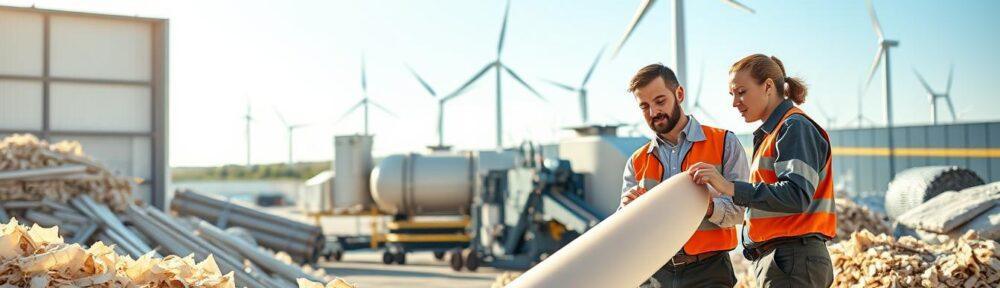
When I first saw a decommissioned turbine in a field, it felt like finding a relic from a steampunk story. That huge, fibrous structure didn’t seem like a symbol of clean energy; it looked like a fallen giant. Yet, here’s the kicker: this isn’t just waste. It’s the start of a materials revolution.
For decades, we’ve mastered making these strong structures, only to find they don’t just break down. But instead of crying over our engineering skills, we should celebrate turning an environmental problem into a chance. Scotland is leading this change, finding new ways to use these materials in construction.
Siemens Gamesa is also leading the way, promising to take care of each blade. Their work has led to fully recyclable products. This isn’t just about keeping blades out of landfills; it’s about seeing their new uses. Imagine using them to make bridges, playgrounds, or even new turbines!
So, grab your coffee (or maybe a single malt if you’re feeling Scottish), and let’s explore how recycling these materials is changing sustainable infrastructure.
End of life volumes repower schedules and landfill bans
The wind energy world is changing fast. The European Wind Energy Association says Europe will have about 25,000 tons of old turbine blades by 2025. This big number shows a big problem for the industry.
In Scotland, the wind energy scene is even more pressing. Imagine a huge graveyard of blades in the Scottish Highlands. It’s a bit romantic, but not the green legacy we aim for. Repowering, or swapping old turbines for new ones, speeds up the retirement of old blades. But, it raises a big question: what to do with these old blades?
Many countries are stepping up. Germany has banned landfilling wind blades, and the Netherlands is doing the same. These rules are key because landfilling old blades harms the environment and goes against renewable energy’s spirit.
Utilities and project developers are racing against time. With fewer ways to get rid of old blades, the problem is growing. I’ve seen them worry about costs and find new solutions.
The numbers are clear: more blades mean less room for new ones, and we need creative fixes. This challenge excites engineers but worries accountants. Finding a way to handle old wind blades is essential for a green future.
Recycling methods mechanical pyrolysis solvolysis cement kiln co processing pros and cons
Recycling wind turbine blades shows us many ways to be sustainable. Each method has its own strengths and weaknesses, like different dishes at a dinner party.
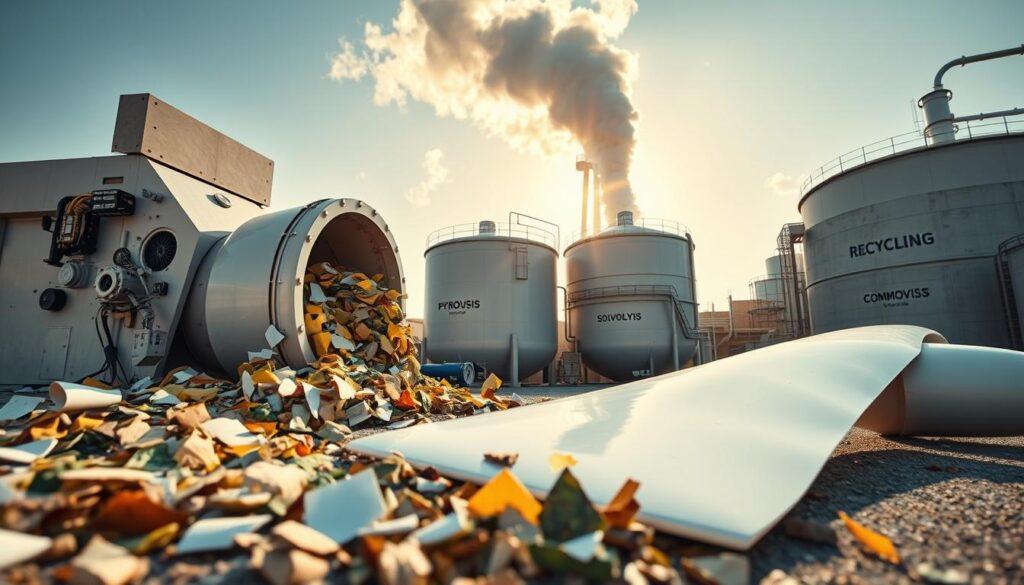
Mechanical recycling is like a reliable casserole. It breaks down blades into smaller pieces. These pieces can be used in construction materials like concrete or asphalt. It’s not fancy, but it works.
Pyrolysis and solvolysis are like molecular gastronomy in recycling. Pyrolysis heats materials to separate fibers from resin, making new fibers for blades. But, it uses a lot of energy, which raises carbon footprint concerns.
Solvolysis is promising but needs to grow. It breaks down materials into their original parts. The technology is ready, but we need more kitchens.
Cement kiln co-processing is the dark horse. It burns blade material in a kiln, using resin as fuel and fibers for clinker. It’s poetic: yesterday’s blades become tomorrow’s foundations. But, it faces challenges and skepticism.
Here’s a quick look at the pros and cons of each method:
| Method | Pros | Cons |
|---|---|---|
| Mechanical Recycling | Simple, cost-effective, useful as filler | Low-value output, limited applications |
| Pyrolysis | Recovers high-quality fibers | Energy-intensive, carbon footprint concerns |
| Solvolysis | Breaks down materials into original components | Stil in development, scaling issues |
| Cement Kiln Co-Processing | Utilizes waste as fuel, reduces landfill | Regulatory hurdles, mixed perceptions |
Recycling wind turbine blades is complex. There’s no single solution. Each method has its role. As we innovate, we might find the best mix of these approaches.
Thermoplastic and recyclable resin blades VARTM and zCF applications
Thermoplastic resins are changing the game in sustainable energy. Siemens Gamesa introduced the RecyclableBlade in 2021. This blade is more than just a part of a wind turbine; it’s a game-changer for recycling.
Picture a world where wind turbine blades get a second life. The RecyclableBlade uses a special resin that can be separated from its fibers at the end. This means no shredding or burning, just a clean separation.
The Vacuum Assisted Resin Transfer Molding (VARTM) process is at the heart of this innovation. It makes it easier to take apart blades, making recycling simpler. The factories where these blades are made feel like a mix of Silicon Valley and heavy engineering.
On the other hand, there are those pushing for carbon fiber recovery without harming the environment. Their work fits with the growing need for sustainability in renewable energy. But, thermoplastic blades are not yet widely used. The supply chain for recyclable resins is like a teenager finding its way.
Big companies are betting on these new technologies. But, we need contracts that demand circularity to move forward. The future of wind turbine blades is clear: they’ll not only catch wind but also get a second life.
Reuse pathways pedestrian bridges playgrounds architecture safety notes
Did you know that old wind turbine blades can be reborn in urban design? Their strength and durability make them perfect for building and bridge parts. Turning a 50-meter blade into a bridge is a remarkable upcycling feat.
In Scotland, the ReBlade Initiative is leading this transformation. They’re testing blade sections as bridges, playgrounds, and even bus shelters. A blade-turned-bench looks like it could be in a MoMA courtyard. It’s a mix of function and art that beautifies cities.
Aberdeen’s Sustainable Housing Project is another example. They use shredded blade material in affordable housing. This shows how sustainability can meet urban needs.
But safety is key before we start building with these blades. They were made for withstanding strong winds, not for kids to play on. We need to ensure they’re safe and durable.
Reusing blades is appealing because it’s real, shareable, and fulfilling. But, we need standards and certifications to make it work. We should see these blades as valuable materials, not just waste.
| Project | Location | Use of Circular Blades | Impact |
|---|---|---|---|
| ReBlade Initiative | Scotland | Bridges, Playgrounds | Urban revitalization |
| Sustainable Housing Project | Aberdeen | Modular Housing | Affordable housing |
| Community Benches | Various | Urban Furniture | Public engagement |
Logistics cutting transport permits community optics and costs
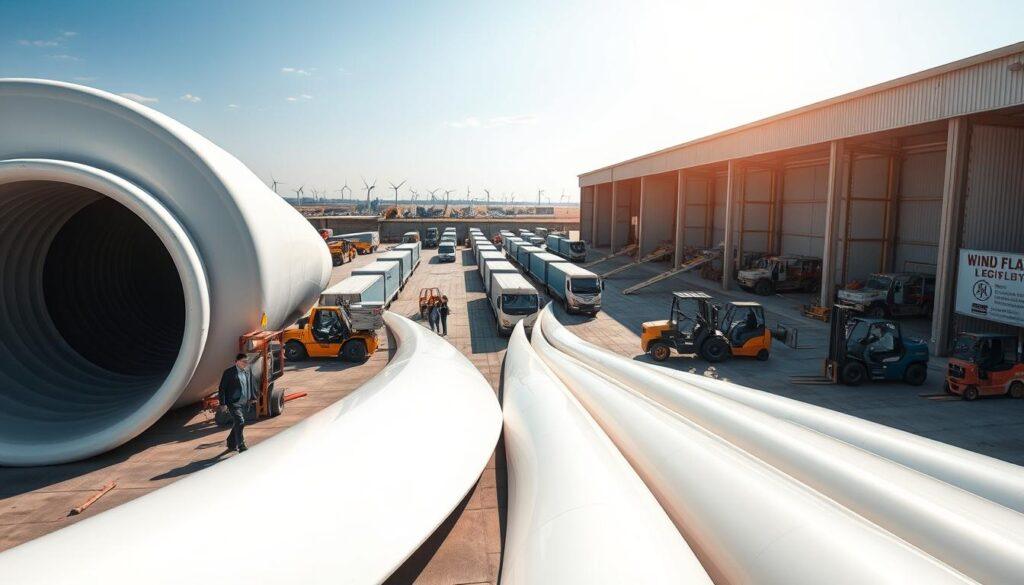
Have you ever tried moving a 60-meter wind turbine blade through a roundabout? It’s a huge challenge. You need police escorts, special trailers, and a bit of luck. The size and weight of these blades make recycling hard, so local facilities are key.
Imagine cutting a massive blade on-site. It seems simple but requires diamond-tipped saws and strict rules to handle the dust. Getting permits is tough, as rules vary by place and official mood. It’s a complex process for logistics managers.
Community views matter a lot. At town hall meetings, people might see blade storage as a danger, even if it’s safe. This makes recycling harder.
The costs are high. Moving these huge blades can take up to 40% of recycling funds. So, having recycling centers near wind farms is vital. Scotland’s circular economy hubs are a good example.
In the U.S., long distances and NIMBYism add to the challenge. The logistics of recycling can make or break the project. It’s a big issue for those who want a circular economy.
| Logistical Challenge | Impact on Recycling | Potential Solutions |
|---|---|---|
| Size and Weight of Blades | Increased transportation costs | Localized recycling facilities |
| Permit Regulations | Delays in processing | Streamlined permit applications |
| Community Perception | Resistance to blade storage | Public education campaigns |
| Transport Costs | Higher recycling budgets | Collaborative transport solutions |
For more insights on localized recycling efforts, check out this resource on Eolo hubs and their role in the recycling landscape.
Policy momentum EU US state rules EPR credits and grants
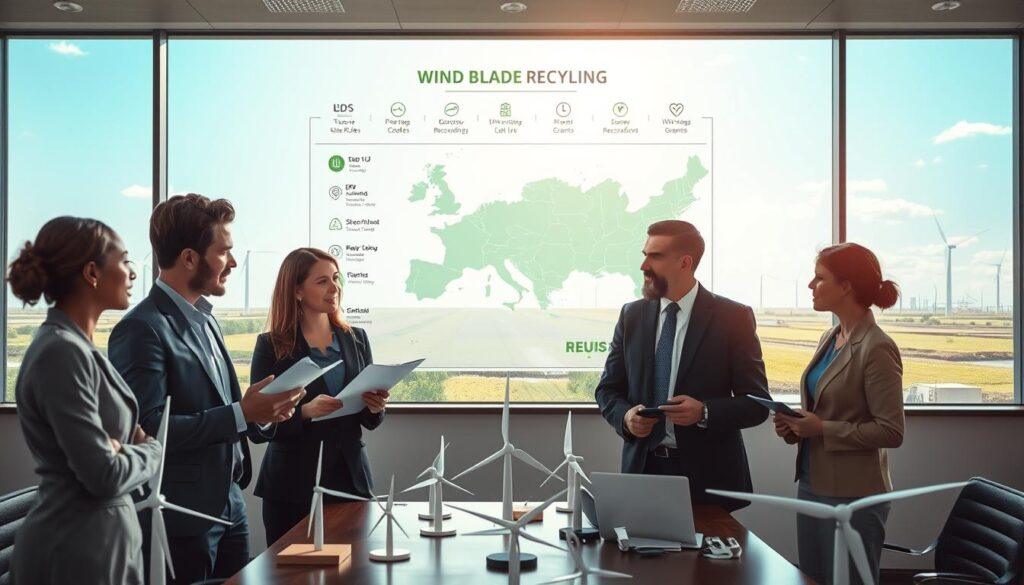
Policy can either lift or weigh down blade recycling efforts. The European Union is moving forward with Extended Producer Responsibility (EPR) schemes. These schemes tell manufacturers to handle the recycling of their products.
In the United States, each state has its own rules. Washington and California are considering landfill bans. Texas, on the other hand, has its own pace. The Inflation Reduction Act offers grants for advanced recycling, but applying is tough.
Original Equipment Manufacturers (OEMs) want credits for using recycled blades. Environmental groups want stricter rules. The debate shows we need a clear national plan to manage blade waste.
Without a national plan, we’re stuck. Pilot projects get grants but can’t grow without stable policies. We need clear rules and incentives for recycling blades. Governments and industries must work together to create good policies.
Procurement guidance recyclability clauses LCA EPDs for projects
Did you know your buying plans can help shape the future of recycling wind blades? It’s true. The words in your contracts can really make a difference for the planet. By adding a recyclability clause to turbine deals, you’re not just following rules. You’re actually changing the game.
When you ask for an Environmental Product Declaration (EPD) and a Life Cycle Assessment (LCA) that includes recycling, you send a strong message. Suddenly, recycling wind blades becomes a top priority. It’s like making sure a car’s engine is top-notch before you buy it.
Smart buyers are now asking for:
- Take-back schemes
- Minimum recycled content
- Financial bonds for decommissioning
This leads to a big change in how wind blade makers design their products. It’s not flashy, but it’s a game-changer. It turns big dreams about recycling into real, enforceable contracts.
In a world where green scores matter for funding, these clauses are priceless. They’re like gold in the fight against climate change. Your smart buying choices are not just good for the planet. They’re also smart business moves.
Vendor landscape startups cement firms OEM commitments and pilots
The world of wind blade recycling is full of new ideas and big dreams. Startups like Global Fiberglass Solutions and Carbon Rivers are working hard to turn old blades into useful materials. At the same time, big companies like LafargeHolcim and Cemex see blade waste as a chance to fuel their kilns. It’s a mix of hope and reality.
Siemens Gamesa has made a big step with their recyclable blades. These blades are now used in both offshore and onshore wind farms. Their journey started in 2021, and it’s exciting to see them in the market. But, the number of blades being recycled is just a small part of what’s needed.
Across the world, pilots are starting to test new ways to recycle blades. Places like Scotland’s Orkney hub and Tennessee’s Carbon Rivers facility are leading the way. But, turning these pilots into big operations needs a lot of money. It’s like waiting for a bus that never comes.
The companies that will succeed are those that can make recycling blades profitable. It’s not just about being green; it’s about making money. The excitement in the air is real, but turning ideas into reality is hard.
| Company | Focus Area | Recent Developments |
|---|---|---|
| Global Fiberglass Solutions | Recycling blades into pellets | Scaling operations for higher efficiency |
| Cemex | Cement co-processing | Integrating blade waste as kiln fuel |
| Siemens Gamesa | Recyclable blades | Commercial rollout for onshore and offshore |
| Carbon Rivers | Recycling technology pilot | Operational in Tennessee |
Career tracks materials engineer recycling ops LCA specialist
Are you ready to join the blade recycling movement? The need for experts is growing fast. We’re looking for materials engineers to create new resin chemistry for easy disassembly. Recycling operations managers are key, making sure shredding lines work well and safely.
Life Cycle Assessment (LCA) specialists are also in demand. They crunch numbers to back up our environmental claims. It’s exciting to see how different fields come together here.
People from all walks of life are joining this field. Former oil and gas engineers now study pyrolysis yields. Policy experts learn EU waste directives by heart. This job is all about teamwork, combining chemistry, logistics, and advocacy.
Universities are starting to offer courses on recycling composites. But the real learning happens on the job. If you love solving complex problems and making a difference, this is your chance. The clock is ticking on blade waste, and the world is listening. Learn about circular economy principles to join this important shift.