
Welcome to the world of hydro innovation. Here, the quiet power of hydropower is key to our clean energy future. While solar panels and wind turbines get all the attention, hydropower works behind the scenes. It’s like the steady bassist in a rock band, always there but often overlooked.
In the United States, pumped storage hydropower is a big deal. It makes up 96% of all commercial storage capacity. This means it’s a vital backup when the sun hides and the wind dies down. Hydropower keeps the lights on, even when it’s dark.
Thanks to digital twins and AI, we’re getting better at predicting water availability. This lets us plan with precision, like a conductor leading an orchestra. The XFLEX HYDRO project in Europe is leading the way with new technology. It shows that hydropower is not stuck in the past but is evolving to meet today’s needs.
Low impact options run of river canal in pipe and retrofits at dams weirs
Imagine a world where rivers power our homes without harming them. Welcome to the era of run-of-river systems. These systems are changing how we get hydropower, making it cleaner and less invasive. With over 90,000 dams in the U.S., only 3% make electricity. Retrofitting non-powered dams could add 4.8 GW of power, enough for 4.8 million homes.
Run-of-river systems divert a river’s flow through a canal or pipe. They often need no dam or just a small weir, harming the environment less. This method lets water flow around sensitive areas, making power without flooding them. The beauty of low-impact hydro is in what it builds and what it doesn’t.
Traditional hydropower is like a big, concrete highway. It’s massive and sometimes causes trouble. Run-of-river is like a scenic byway: smaller, smarter, and kinder to the environment. Instead of big dams, we see small weirs and canals, making power without disturbing the river.
Retrofitting dams is like upcycling old infrastructure. Why let unused dams sit idle when they can make clean energy? Adding power to existing dams is like updating an old phone. These projects are often more accepted because they keep the river’s character.
| Feature | Run-of-River | Traditional Hydropower |
|---|---|---|
| Environmental Impact | Minimal disruption | Significant disruption |
| Infrastructure | Small weirs/canals | Large dams |
| Energy Generation | Efficient use of existing flows | Dependent on water storage |
| Social Acceptance | Higher due to low impact | Often controversial |
In summary, run-of-river is a smart, low-impact way to make clean energy. It’s a strategy that even the most skeptical environmentalists might approve of. By using these technologies, we can power our homes while keeping our rivers intact.
Turbine innovations fish friendly blades advanced controls CFD design
Imagine a turbine that not only generates power but also champions fish survival—welcome to the future of hydropower. The groundbreaking Restoration Hydro Turbine (RHT) from Natel Energy is at the forefront of this innovation. It has thick, forward-swept blades and rounded leading edges. This design achieves an impressive 98–100% fish passage survival rate for species like the American eel, rainbow trout, salmonids, and sturgeon. This remarkable feat has been validated by the Pacific Northwest National Laboratory.
The design doesn’t just save fish; it also maximizes efficiency. The RHT boasts up to 94% peak hydraulic efficiency and can increase power output by as much as 10%. How? By eliminating flow losses that typically occur at bypasses and fine screens. Computational fluid dynamics (CFD) modeling plays a key role here. It allows engineers to simulate blade strikes and tweak designs until fish mortality rates drop below 2%—a real win-win!
But the innovation doesn’t stop there. The venerable Kaplan turbine is getting a fish-friendly facelift. With updated runners that maintain efficiency while allowing salmon smolts to pass unharmed, these Kaplan turbine updates are a testament to the engineering prowess at play. Alternatives like the Alden turbine and minimum gap runner designs also significantly reduce fish mortality.
In a world where energy and ecology often clash, these innovations are a breath of fresh air. They show that it’s possible to generate clean energy while protecting our aquatic friends. So, let’s raise a glass to the future of hydropower—one where fish can swim free and turbines can turn with purpose!
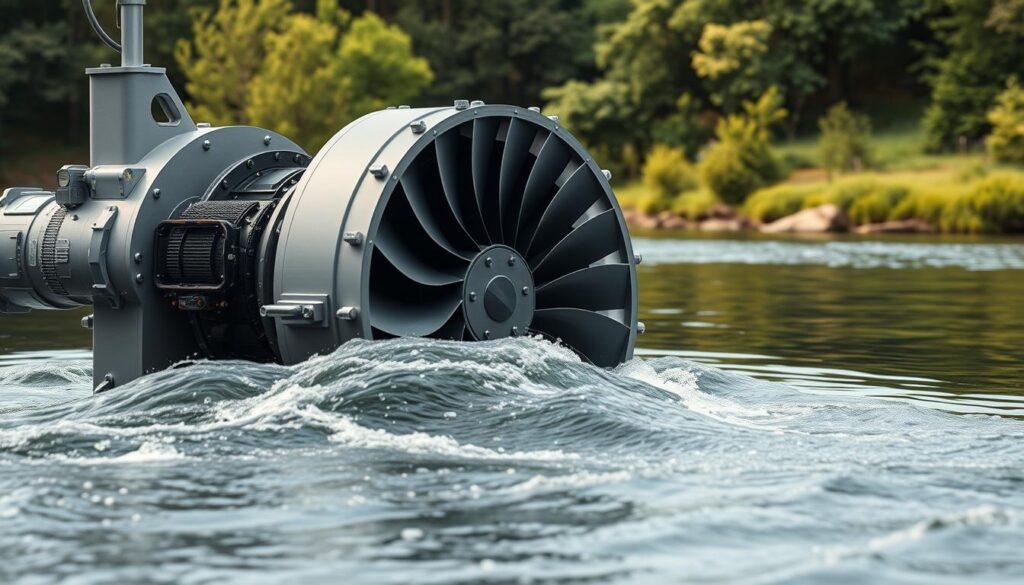
E flow and habitat monitoring eDNA sensors AI video counts
Welcome to the future of environmental monitoring, where digital technologies lead the way. Say goodbye to counting fish with a clipboard. Now, we use environmental DNA (eDNA) sampling to detect aquatic species with just a water sample. It’s like a game of hide-and-seek, where every fish, frog, or mussel leaves genetic clues for us to find.
With eDNA, we can monitor biodiversity without disturbing it. This method lets us see the health of our rivers more accurately than ever. It’s a non-invasive way to check if fish passage measures are working.
But there’s more! Adding AI-powered video systems to eDNA gives us a top-notch surveillance system. These cameras, placed at fish ladders and bypasses, use AI to identify species, count them, and check their health. It’s like having a 24/7 watchman, working while we enjoy our coffee.
Drone technology is also a game-changer. Drones can create 3D models of infrastructure, making our data safer and more accurate. This helps us understand how our hydro systems interact with the environment. It’s good for both fish and humans!
So, why does this matter? Showing that, for example, 99% of eels survive passage through our systems gets regulators’ attention. It builds trust in our communities and strengthens the social license for hydro projects. We’re not just talking numbers; we’re telling a story that resonates with everyone.
In a world where technology can be a double-edged sword, eDNA and AI offer a fresh approach. They’re not just tools; they’re our new allies in working with nature, not against it. As we embrace these innovations, we look forward to a future where our rivers and energy needs thrive together.
| Technology | Function | Benefits |
|---|---|---|
| eDNA Sampling | Detects species from water samples | Non-invasive monitoring of biodiversity |
| AI Video Systems | Counts and identifies fish species | High accuracy and reduced manual labor |
| Drones | Captures 3D models of infrastructure | Improves safety and data quality |
For more information on how these technologies are shaping our environmental landscape, check out the environmental mandates that guide our efforts.
Modular hydro standardized units fast install small grid connections
Modular hydro is changing the game in renewable energy. It makes hydroelectric plants as simple to set up as IKEA furniture. With modular construction, we use pre-made parts that are put together on-site.
This method cuts down construction time from years to just months. It also lowers costs a lot.
FDE Hydro’s “French Dam” technology is a great example. It shows how we can quickly turn a long project into a short one. Instead of making a hydro plant from scratch, we can use pre-made parts. This isn’t just fast; it makes hydropower more accessible to everyone.
Small communities and remote areas can now get reliable, eco-friendly power. They don’t need to spend a lot of money to do it.
These modular systems are perfect for adding power to non-powered dams. They also work well for small, local hydro projects. They fit right into local grids, often at the same voltage, saving on big upgrades.
In short, modular hydro is a game-changer for clean energy. It saves time, money, and hassle. And, with the right turbine, it’s also kind to fish. It’s time to make this innovation a part of our hydropower future.
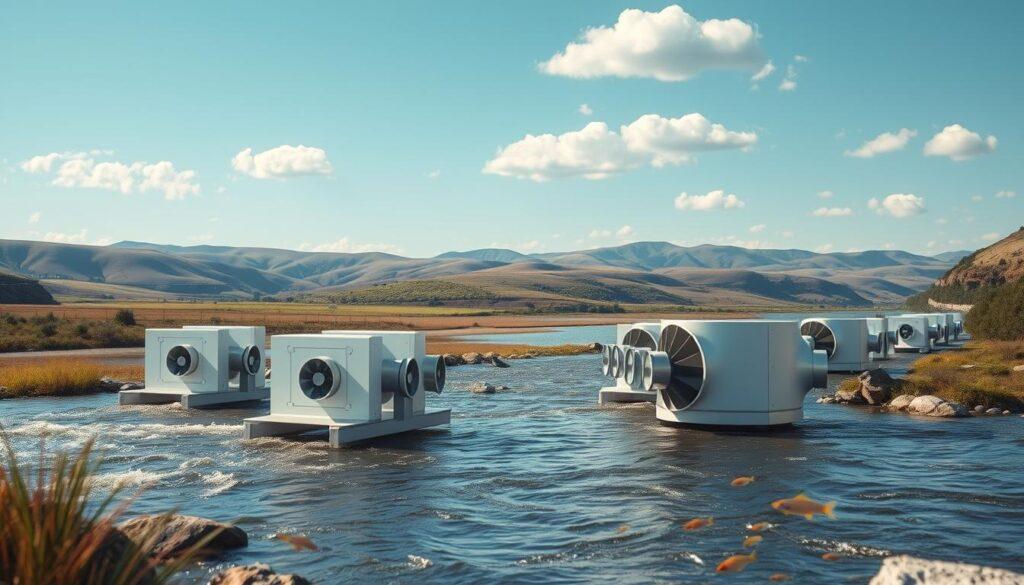
Social license community benefits recreation and indigenous consultation
A hydro project without community support is like a fish out of water—struggling to survive. Getting a social license is not just a formality; it’s essential for success. This is true, even for low-impact designs like run-of-river. Community acceptance is key.
Engaging communities means understanding their needs and dreams. This is where recreational amenities play a role. Imagine a hydro site that’s also a local haven—fishing access, kayak courses, and riverside trails. It turns a possible industrial site into a community gem.
Indigenous consultation is also vital. When hydropower projects affect culturally significant fish species, like salmon, it’s more than a technical issue. It’s about culture, treaty rights, and identity. Developers who engage with indigenous communities early on do well.
As the Hydropower Vision report shows, early and meaningful stakeholder engagement is best. It’s about building relationships, not just checking boxes. Projects that focus on these connections often get more support. A well-designed run-of-river project can build a strong community coalition.
In the end, social license is the key that turns ideas into reality. It’s earned through conversations, one fish, and one community at a time. If you’re curious about community ownership of renewable energy, check out this resource.
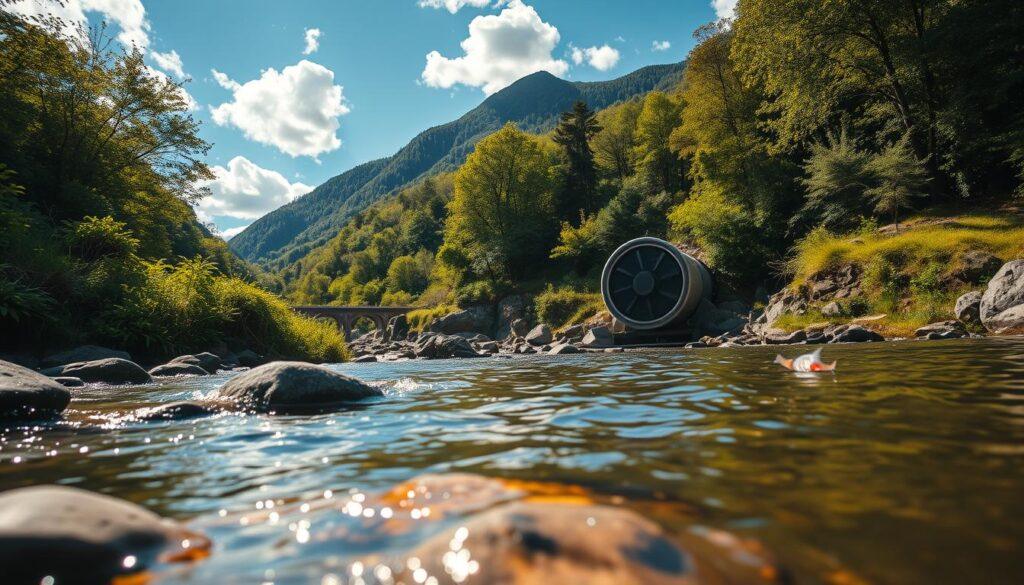
Economics CAPEX financing PTC ITC eligibility O and M remote ops
Let’s explore the financial side of hydroelectric power. The economics of hydropower can seem complex. But, modular hydro is making it simpler for investors. It cuts down on initial costs, shortens project times, and uses standard parts.
This approach lets projects start making money sooner. They might even do so before the next election.
For example, Natel’s RHT fish-friendly turbines are a big deal. They remove the need for expensive fine screens and bypasses. This leads to lower ongoing costs. Imagine the savings—less maintenance and fewer problems.
The Inflation Reduction Act has also made a big difference. It extends tax credits for hydropower projects. This can cover up to 30% of costs, helping with the energy transition.
Remote operations and AI-driven maintenance are also cutting costs. Hydro plants can now run with minimal staff. They are monitored from far away, making them efficient and low-maintenance.
To show the benefits of these changes, here’s a table:
| Feature | Traditional Hydro | Modular Hydro |
|---|---|---|
| CAPEX | High | Low |
| Construction Time | Years | Months |
| OPEX | High | Lower |
| Return on Investment | Long | 2-10x Faster |
In conclusion, fish-safe retrofits can pay off two to ten times faster than old methods. This isn’t just smart engineering. It’s the kind of math that makes CFOs happy. For more on financing clean energy, see this resource.
Case examples fish safe retrofits in PNW and EU output and mortality data
Imagine a world where hydroelectric turbines protect fish while generating power. Welcome to the Pacific Northwest and Europe. Here, innovative solutions are turning the tide for fish-friendly energy production.
The Natel Energy Restoration Hydro Turbine (RHT) is a great example. It was tested with American eel and rainbow trout, measuring between 8 to 20 inches. The results? An astonishing over 99% of fish passed safely. This turbine is not just a marvel of engineering; it’s a game-changer that allows both large and small fish to navigate through with ease.
In the Pacific Northwest, retrofitting aging Kaplan turbines with fish-safe runners is a priority for salmon recovery. At a hypothetical aging dam on a Columbia River tributary, operators faced a dilemma. Should they invest millions in fish screens and bypasses that would diminish energy generation, or opt for something revolutionary? They chose to replace a conventional Kaplan runner with the Natel RHT. The outcome was remarkable—mortality data revealed that juvenile salmon passed through unharmed, and the plant actually increased its output.
Across the Atlantic, the EU’s XFLEX HYDRO initiative is proving that advanced controls and fish-friendly hardware can coexist. These plants not only provide essential grid services but also meet stringent environmental standards. It’s a win-win situation!
For sites burdened by sediment, the RHT’s thick, rounded blades are a revelation. They exhibit up to 78.5% less wear in high-sediment conditions, effectively extending blade life fivefold. Maintenance intervals shift from being a headache to a non-event, making operations smoother and more efficient.
These aren’t mere lab experiments; they are real-world retrofits transforming regulatory liabilities into competitive advantages. When a turbine can high-five a sturgeon and yet hit its power curve, you know the game has changed.
Career note hydrologists fish biologists control engineers field techs
Imagine a career that blends technology, ecology, and a dash of adventure—welcome to hydropower. This field is not just about turbines and water flows. It’s about a new generation of professionals. Hydrologists now model water availability and assess climate impacts with great precision.
Fish biologists are using environmental DNA like never before. They can analyze a few milliliters of water to find out which species are present. This skill is key for designing effective fish passage solutions.
Control engineers are also vital. They create algorithms that allow hydropower plants to respond to grid signals in real time. This ensures energy flows smoothly and efficiently.
Field technicians are the hands-on heroes of the industry. They install and maintain modular hydro systems and advanced sensors. They work in remote locations, assembling hydro units like oversized Lego sets.
The industry is undergoing a digital transformation. Skills in data science and remote operations are now as valuable as traditional mechanical expertise. Professionals who can code, understand ecology, and aren’t afraid to get wet are in high demand.
If you’re looking for a career that’s not beige office work, this might be for you. You could spend your days analyzing CFD simulations or releasing tagged fish. The water’s fine—jump in!
| Profession | Key Skills | Role in Hydropower |
|---|---|---|
| Hydrologist | Modeling, Climate Analysis | Assess water availability and impacts |
| Fish Biologist | eDNA Analysis, Monitoring | Design fish passage solutions |
| Control Engineer | Algorithm Development, Grid Management | Optimize plant response to energy demands |
| Field Technician | Installation, Maintenance | Assemble modular hydro systems |
Future hybrid hydro plus solar plus storage at reservoir edges
Imagine reservoirs becoming energy hubs in the future. Hydro innovation turns them into powerhouses. Floating solar panels and fish-friendly turbines work together, blending energy sources.
Floating solar cuts down evaporation, saving water. This is key in today’s world. Add advanced battery storage, and you get reliable energy all day.
The XFLEX HYDRO project shows this trend. It lets plants pump and generate at the same time. This makes the most of existing infrastructure.
Even small elevation changes can be used with high-density fluids. Old mines can be reused, making energy production more efficient. This is our future, balancing nature and power needs.
Fish-safe turbines mean our aquatic friends are protected. This harmony between tech and nature creates a sustainable energy future for all.