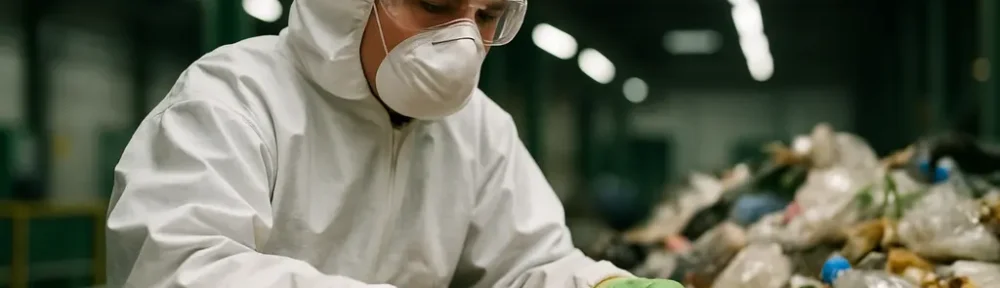
FEW Nexus Waste Management asks a practical question: can food waste systems reduce landfill impacts while protecting water quality, producing useful energy, and avoiding new contamination pathways? The evidence from 2025 and 2026 suggests that organics recovery can produce large environmental gains, but only if collection quality, infrastructure, local economics, and soil-safety safeguards are treated as core design issues rather than afterthoughts.
The food-energy-water nexus is useful because food waste is not a single-material problem. Surplus food represents embedded irrigation water, fertilizer, land, transport energy, refrigeration, labor, and disposal costs. Once discarded, it can generate methane in landfills, require collection fuel, create leachate concerns, or become feedstock for composting, anaerobic digestion, landfill-gas recovery, and other systems. Waste management decisions therefore move impacts across sectors rather than removing them automatically.
Why FEW Nexus Waste Management Is Difficult To Scale
FEW Nexus Waste Management Starts Before Disposal
Prevention remains the highest-value intervention because it avoids the original demand for water, energy, land, nutrients, packaging, transport, and disposal. The research notes for 2024 reported 70 million tons of surplus food in the United States, equal to about 29% of the national food supply, with a 2.2% decline from 2023. That decline is encouraging but limited. A small reduction in surplus volume does not remove the need for better recovery and recycling systems, especially where edible-food rescue, industrial byproduct use, animal feed, composting, and anaerobic digestion have different technical and regulatory constraints.
Food loss also carries a water burden. The research notes for 2023 reported that water used to grow U.S. surplus food reached 16.2 trillion gallons. That figure shows why the water dimension of food waste cannot be assessed only at the point of disposal. A composting program may improve landfill diversion, but it cannot recover the irrigation water used to produce uneaten crops. This is why prevention and source separation need to sit upstream of energy-recovery decisions.
Data Boundaries Often Decide The Quality Of Claims
Waste programs can look successful under one metric and weaker under another. A municipality may increase diversion while sending contaminated organics to composting sites. A landfill-gas project may produce usable energy while leaving food prevention largely untouched. A food-waste collection mandate may improve recovery rates but require public compliance, bin management, collection logistics, and processing capacity.
For credible accounting, the boundary should state what is being measured: avoided landfill methane, energy produced, nutrient runoff, soil amendment quality, transport fuel, plastic contamination, water savings from prevention, or social outcomes such as affordability and access. Without these boundaries, FEW Nexus Waste Management can become a label attached to ordinary disposal shifts rather than a measurable sustainability practice.
Organics Recycling Gains And Contamination Risks
Peer-Reviewed Evidence Shows High Potential With Clear Limits
A July 2026 study in Nature Food found that full U.S. implementation of organics recycling could reduce greenhouse gas emissions by 89% to 99%, nitrogen runoff by 49% to 54%, and phosphorus runoff by 78% to 98% compared with a landfill-dominant food-waste disposal system; the same study estimated a risk of about 20,000 metric tons of plastic contamination entering soils each year under broad diversion scenarios Nature Food study. This is a strong example of why organics recycling should be evaluated as both a climate strategy and a contamination-management challenge.
The main lesson is not that composting or anaerobic digestion is unsafe. The evidence indicates that diversion can reduce climate and nutrient impacts, while also creating a pathway for plastics if collection streams contain packaging, labels, bags, produce stickers, or fragments from mixed waste. In practical terms, organics programs need contamination controls at the same level of seriousness as diversion targets.
Contamination Control Is A System Requirement
Plastic contamination is difficult because it can occur at households, commercial kitchens, transfer stations, preprocessing lines, digesters, composting pads, and screening stages. Even efficient packaging separation may leave small particles behind. Once those particles enter soil amendments, removal becomes harder and monitoring becomes more expensive.
Risk management can include clearer accepted-material lists, routine load inspections, depackaging standards, enforcement for commercial generators, product-label reforms, compost testing, and processor contracts that specify contamination thresholds. These steps do not guarantee zero contamination. They make performance more auditable and reduce the chance that a program shifts one environmental burden into agricultural soils.
Material chemistry and separation challenges also connect to broader industrial handling questions; readers exploring related chemical and materials topics can visit Kilburn Chemicals, providing a valuable network resource that aligns with waste-program performance claims based on measured evidence.
Policy And Collection Design Shape Outcomes
England’s 2026 Collection Reform Shows The Governance Side
On 31 March 2026, England’s Simpler Recycling legislation required councils to provide weekly food and garden waste collection while separating dry recyclables and non-recyclables; the policy was framed against recycling rates near 44% and a target of 65% by 2035 England recycling reform. The policy example matters because collection frequency, bin consistency, and source separation can determine whether organics recycling has usable feedstock or a contaminated mixed stream.
Weekly food-waste collection can reduce the time organics sit in bins, which may improve household participation and reduce odor concerns. Yet collection design alone is not enough. Councils and processors still need vehicles, transfer capacity, contracts, processing sites, public communication, monitoring, and enough end markets for compost, digestate, or recovered energy.
Local Conditions Affect Which Solution Fits
Evidence from the research notes shows that local assessment can change the preferred technology. A May 2026 study in Onitsha, Nigeria identified food waste as the dominant municipal solid waste component and used multi-criteria decision analysis to rank anaerobic digestion slightly above landfill-gas capture, with incineration lower in the ranking for the local food-water-energy context. That does not mean anaerobic digestion is best everywhere. It means feedstock composition, water constraints, grid needs, emissions controls, financing, land availability, and operator capacity should drive technology choice.
For cities with dense housing and limited land, decentralized composting may reduce collection distances but require strong neighborhood management. For regions with large commercial food-waste streams, anaerobic digestion can be more technically attractive if contamination control, digestate management, gas cleanup, and connection to energy users are feasible. For areas with existing landfills, gas capture can recover some energy from buried organics, but it does not address the upstream loss of food, water, nutrients, or packaging.
Technology Choices Need Evidence-Based Screening

Anaerobic Digestion, Composting, And Landfill Gas Differ In Purpose
Anaerobic digestion treats wet organic material in controlled conditions and can produce biogas while leaving digestate that still needs responsible management. Composting produces a soil amendment but generally does not create the same direct energy product. Landfill-gas systems capture gas after waste has already been buried and can reduce emissions relative to uncontrolled disposal, but they are not equivalent to source-separated organics recovery.
The right comparison is not technology versus technology in the abstract. It is technology versus local feedstock, contamination rates, water risks, energy demand, capital cost, operating skill, land constraints, and regulatory oversight. This is where FEW Nexus Waste Management becomes a screening method rather than a slogan.
Waste-to-energy can fit some waste systems, but claims should be reviewed against emissions controls, feedstock quality, lifecycle impacts, and alternatives such as prevention or composting. A related evidence review on waste-to-energy technologies discusses why local context and measured performance matter before cities treat energy recovery as the default answer.
Costs And Safety Barriers Are Not Secondary Details
Implementation barriers can include high capital costs, permitting delays, odor management, truck routing, contamination penalties, uncertain end markets, safety requirements for gas handling, and the need for trained operators. Smaller municipalities may have limited technical staff, while large cities may face contract coordination problems across haulers, processors, building owners, and residents.
Equity and employment are often weaker parts of nexus assessment. The research notes describe an August 2026 systematic review of Water-Energy-Food-Ecosystem studies in which many papers included indicators for energy production, food availability, and agricultural water withdrawal, but far fewer addressed clean air, undernourishment, employment, or equity. That gap matters because waste systems affect workers, households, informal recyclers, farmers using soil amendments, and communities near processing sites.
- Start with prevention and edible-food recovery where safe and legally appropriate.
- Use source separation to keep organics cleaner before treatment.
- Match technology to feedstock quality, water risk, energy demand, and operator capacity.
- Monitor plastic contamination in compost and digestate, not only diversion tonnage.
- Report outcomes with clear boundaries for emissions, nutrients, water, costs, and social effects.
Challenges And Solutions In Advancing Food-Energy-Water Nexus Through Sustainable Practices
Practical Progress Depends On Measured Trade-Offs
The central challenge is that food, energy, and water benefits do not always move in the same direction. A system that maximizes energy recovery may not maximize nutrient quality. A collection mandate may increase diversion while increasing contamination if residents do not understand accepted materials. A composting program may reduce methane but still need controls for plastic fragments and nutrient runoff.
A cautious solution framework begins with waste prevention, then moves to clean source-separated recovery, then evaluates treatment technologies by local conditions. FEW Nexus Waste Management is most useful when it forces decision-makers to ask what problem they are solving and what new burdens they may create. The July 2026 organics-recycling evidence supports major potential climate and nutrient benefits, but it also shows why soil contamination monitoring cannot be optional.
For green building districts, campuses, food-service operators, and municipalities, the near-term work is operational rather than theoretical: measure surplus food, separate organics reliably, verify processor performance, test outputs, document energy use, and report water and nutrient implications with defined assumptions. That approach is less dramatic than a single technology claim, but it is more consistent with the evidence now available.