The world of waste management is changing quietly. At the center is pyrolysis, a method that breaks down materials without oxygen. For years, it showed great promise. Now, a series of pyrolysis technology breakthroughs is making it a real solution.
These new developments come at a perfect time. Companies and communities need better ways to handle plastics, tires, and other waste. The old ways aren’t working anymore. Thanks to new engineering and smarter controls, pyrolysis is now cleaner, more efficient, and affordable.
The results are impressive. Today’s systems turn waste into useful fuels, chemicals, and materials. This creates a cycle where waste becomes a resource. It’s a big step towards reducing costs and environmental harm.
In this article, we’ll dive into the innovations leading this change. We’ll see how better reactors, advanced catalysts, and integrated systems are expanding what’s possible. You’ll understand the current state and its future for your operations.
Chemical vs Mechanical Recycling
Mechanical recycling has been around for decades, but it has its limits. The world is drowning in plastic waste, with millions of tons ending up in landfills and oceans. This has led to a big debate on how to manage waste better.
There are two main ways to tackle this problem. Mechanical recycling is the traditional method. It breaks down clean, sorted plastic waste into new products. This works well for clear plastics like PET bottles and HDPE containers.
But, mechanical recycling has big challenges. It needs clean waste, can’t handle complex plastics, and degrades the plastic quality each time it’s recycled.
Source 2 says mechanical recycling is key but has its limits. It can’t handle complex materials. Source 3 points out that contamination and mixed plastics are big barriers. This is where molecular recycling comes in.
Molecular recycling is a new approach. It breaks down plastic to its molecular building blocks. These molecules are then used to make new plastics. This method can handle plastics that mechanical recycling can’t.
This method is very promising. It turns hard-to-recycle waste into valuable raw materials. This is a big step towards a more circular economy.
The table below shows the differences between mechanical and chemical recycling.
| Feature | Mechanical Recycling | Chemical / Molecular Recycling |
|---|---|---|
| Primary Process | Physical shredding, melting, and remolding | Chemical breakdown to molecular monomers or feedstocks |
| Input Material Quality | Requires clean, sorted, single-polymer streams | Can handle contaminated, mixed, and multi-layer plastics |
| Output Quality | Often downcycled; lower quality over cycles | Virgin-equivalent quality; infinite recycling |
| Key Limitation | Polymer degradation, contamination sensitivity | Higher energy input, emerging commercial scale |
| Economic Driver | Cost-effective for simple, high-volume streams | Value from complex waste streams and premium materials |
Source 1 sees molecular recycling as a key solution. It fills the gap left by traditional methods. This is important for businesses looking to invest in recycling.
In summary, mechanical recycling is important for simple plastics. Molecular recycling is for complex plastics. Together, they help solve the plastic waste crisis. The right method is needed for each type of waste.
Pyrolysis Technology Breakthroughs
Pyrolysis is a method that breaks down plastics using heat without oxygen. It’s a key step in recycling and turning waste into something valuable. Business leaders need to understand its role in a sustainable future.
Pyrolysis heats plastic waste in a sealed, oxygen-free space. This prevents it from burning. Instead, it breaks down into smaller molecules. These molecules can be turned into liquids or gases.
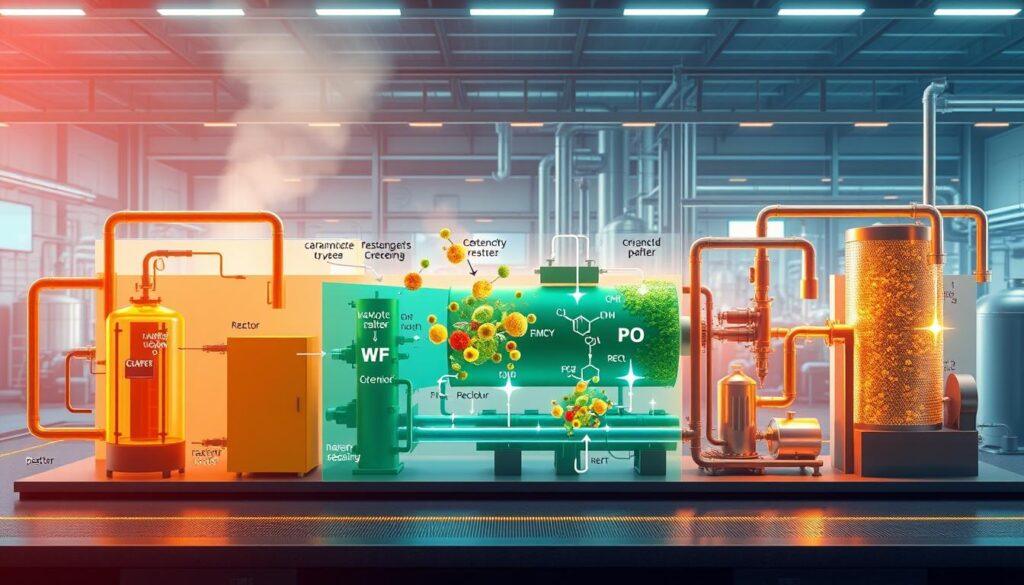
Pyrolysis has two main paths. One creates raw materials for new plastics. The other makes fuels for energy.
The first path is favored by many. It can handle harder-to-recycle plastics that others can’t. This includes mixed plastics and contaminated packaging. It opens up new opportunities for entrepreneurs.
Supporters see it as a recycling breakthrough. The oils produced can be purified and used to make new plastics. This closes the recycling loop in a circular economy.
But the second path, plastic-to-fuel technology, is criticized. It turns plastic into diesel, gasoline, or other fuels. Critics say this is not recycling, but just burning waste and releasing carbon.
Real-world data shows challenges. High-quality output needs clean, sorted plastic. Contamination can ruin the process. This makes pre-processing expensive and complex.
The process also uses a lot of energy. Heating reactors to high temperatures requires a lot of power. Critics wonder if the environmental benefits outweigh the energy costs.
The debate centers on the end use. A lot of pyrolysis output is used for fuel. This raises questions about whether it supports a circular economy or just keeps the cycle going.
The following table clarifies the two primary output pathways, their goals, and the surrounding debate.
| Output Pathway | Primary Product | Industry Argument | Common Criticism |
|---|---|---|---|
| Chemical Feedstock Production | Oils for making new plastics | Recycles ‘unrecyclable’ plastics into circular materials. | Requires ultra-pure feedstock; high operational costs. |
| Plastic-to-Fuel Technology | Diesel, naphtha, or other fuels | Provides a valuable energy source from waste. | Not circular; creates emissions and depends on fuel markets. |
| Hybrid Systems | Mix of chemicals and fuels | Maximizes economic return and operational flexibility. | Muddies environmental claims; fuel portion undermines circular goals. |
For entrepreneurs, success depends on several factors. The local plastic waste mix and end product markets are key. A facility near a chemical plant might focus on feedstock. One in a remote area might find fuel production more practical.
The technology is getting better fast. New catalysts and reactor designs aim to improve efficiency. They also aim to handle contaminated feed better. These advancements could lower costs and improve output quality.
Pyrolysis is not a magic solution. It’s a tool with specific uses. Its success depends on honest accounting and weighing environmental costs against benefits. Entrepreneurs must navigate complex regulations and public opinions.
The real breakthrough is in building a business model that’s both profitable and sustainable. This is the challenge and opportunity for leaders in this field.
Depolymerization Process Innovation
Imagine taking a complex plastic bottle and chemically ‘unzipping’ it back into its basic building blocks. This is the core promise of depolymerization. Unlike mechanical methods that shred and melt plastic, this advanced approach breaks chemical bonds.
It transforms long polymer chains into their original monomers. The industry often calls this molecular recycling. It is a precise form of chemical recycling.
Eastman’s technology is a leading example. Their process, called methanolysis, targets hard-to-recycle polyethylene terephthalate (PET). This includes colored plastics, food trays, and even polyester textiles.
The system uses methanol to ‘unzip’ the PET polymer. It converts waste back into its core monomers. Eastman claims this process can turn 90% of waste feedstock into high-quality recycled plastic.
The output is chemically identical to virgin plastic. It is clean enough for food-contact applications. A life-cycle assessment by Quantis showed significant benefits.
Eastman’s molecular recycling can reduce greenhouse gas emissions by 20-30% compared to making virgin PET from fossil fuels. The company is expanding its capacity to process hundreds of millions of pounds of waste annually.
Handling the Unrecyclable
This innovation solves a critical gap. Mechanical recyclers often reject certain materials. Molecular recycling can handle them:
- Darkly colored or opaque plastics
- Multi-layer packaging films
- Contaminated food packaging
- Polyester fibers from carpets and clothing
The result is a true circular solution. Waste that was destined for landfill or incineration gets a new life. It becomes high-value material again.
| Aspect | Mechanical Recycling | Molecular Recycling (Depolymerization) |
|---|---|---|
| Core Process | Physical shredding, washing, and melting | Chemical breakdown to basic monomers |
| Input Quality | Requires clean, sorted, single-polymer streams | Can handle colored, mixed, and degraded plastics |
| Output Quality | Downcycled; often lower grade | Virgin-quality; suitable for food-grade applications |
| Key Technology Example | Sorting lines, extrusion | Methanolysis, enzymolysis, solvolysis |
| Primary Role | Efficiently processing high-volume, clean waste | Recapturing value from complex, hard-to-recycle waste |
Why Molecular Recycling Complements the System
Industry leaders stress these technologies are not replacements. They are powerful partners to mechanical recycling. Companies like Dow are building databases of different recycling technologies.
They seek the right tool for each type of plastic waste. This creates a virtuous ecosystem. Simple, clean plastics go through efficient mechanical systems.
Complex, contaminated streams go to molecular recycling. This dual approach maximizes total plastic recovery. It moves us closer to a true circular economy for plastics.
The innovation in depolymerization is unlocking new value. It turns pollution into a resource without compromising on quality.
Energy Recovery Applications
Many argue that what’s called “chemical recycling” is really plastic-to-fuel technology. This debate centers on the role of advanced recycling in a circular economy.
Pyrolysis doesn’t just make new plastic. It also produces oil, syngas, and other fuels. These can be used for energy in various ways.
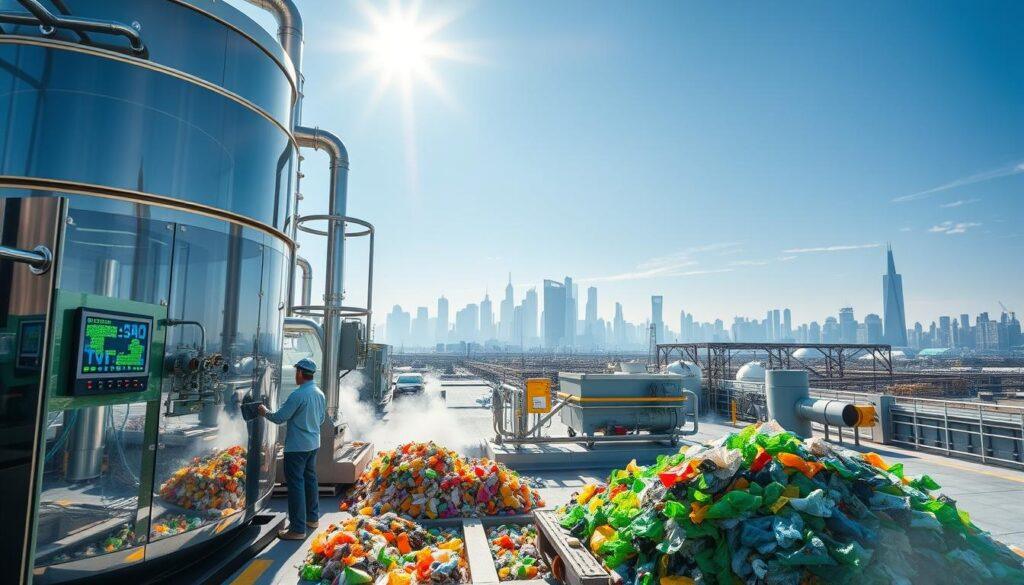
The industry sees this energy as valuable. It’s a step towards better recycling and a way to make money. This makes early recycling plants more viable than landfilling plastics.
But, environmental groups call it “greenwashing incineration.” They say it leads to toxic emissions and doesn’t truly recycle plastics. The industry tries to separate real recycling from energy use. For more on this, see a foundational introduction to chemical recycling.
| Pathway | Primary Output | Industry Justification | Environmental Critique |
|---|---|---|---|
| Material Recycling | Purified chemical feedstocks for new plastics | Closes the loop, enables circular economy | The ideal, but often not the dominant output |
| Energy Recovery | Pyrolysis oil, syngas, and other fuels | Monetizes mixed waste, supports plant economics | It’s waste-to-energy incineration with extra steps |
| Hybrid Output | Mix of feedstocks and fuels | A practical step toward full circularity | Dilutes climate benefits, perpetuates fossil fuel use |
This debate isn’t just about science. It’s also about fairness and justice. Many recycling facilities are in poor or minority communities. These areas face air pollution risks and question being called “recycling hubs.”
Business leaders need to check sustainability reports carefully. Look at the plastic-to-fuel ratio. Knowing this helps evaluate true circularity and avoid greenwashing accusations.
Commercial Viability Analysis
Turning lab success into profit is a big challenge for recycling tech like pyrolysis and depolymerization. The science works, but making a business that works on a big scale is tough. It needs to deal with market forces, costs, and logistics.
Market forecasts look good. Companies like McKinsey think there will be a lot of demand for recycled plastics. This means a big chance to make money. Big names like Dow are investing a lot, seeing a $5 billion chance. Eastman and others are also putting in millions, showing they believe in the future.
But, we need to be careful. Many pilot projects have failed to grow. Reports often point out past problems. The money spent on recycling is much less than on making new plastic. We really need to see success to believe in it.
There are big challenges on the way to success. Building plants costs a lot of money. Running them is expensive, mainly because of energy. Getting the right plastic waste is also hard.
Having good policies is key. The right rules can make a big difference. Some U.S. states now see recycling as making something new, not just getting rid of waste. This can help with permits and taxes. We need clear rules and help to make investing safer and faster.
| Viability Factor | Pyrolysis | Depolymerization |
|---|---|---|
| Primary Capital Cost Driver | High-temperature reactor systems | Specialized chemical catalyst systems |
| Feedstock Flexibility | Broader (mixed plastics) | Narrower (specific polymers like PET) |
| Output Quality & Value | Oil/gas for fuels or new plastics | High-purity chemical monomers |
| Key Scaling Challenge | Consistent heat management & output refining | Catalyst cost, recovery, and purity maintenance |
| Current Commercial Momentum | Multiple pilot and early commercial plants | Focused on strategic partnerships for specific polymers |
This analysis gives a clear view for business people and investors. The chance is huge, but so are the risks. Success will come from combining new tech with strong business plans. The next few years will show if pyrolysis and depolymerization can really change the game.
Environmental Lifecycle Assessment
Looking at the real impact of chemical recycling means seeing the whole picture. Methods like pyrolysis and depolymerization need to show they’re as good as they seem.
Research shows mixed results. Eastman’s methanolysis, a type of molecular recycling, has a 29% lower carbon footprint than making new plastic. But, some plastic-to-fuel technology might actually produce more carbon than making new plastic.
It’s all about clear, third-party checks. We need detailed lifecycle studies that compare what’s produced to burning waste or making new plastic. It’s important to report on energy use, emissions, and waste honestly.
This approach is similar to how community recycling programs work. They educate people and design systems to cut down on contamination and increase recycling. For recycling technologies, we need independent checks to separate fact from fiction.
When making choices, you need this complete information. Look closely at lifecycle assessments to find technologies that really help the environment.