For modern businesses, starting their journey to environmental responsibility means measuring their waste. Moving from basic recycling to a full corporate sustainability plan is now key.
The Zero Waste International Alliance (ZWIA) sets the standard. It aims for a world where all materials are reused and recovered.
This idea has turned into a real business goal. The zero waste certification, like Zero Waste to Landfill (ZWL), makes this goal real.
To get certified, places must show they send 90% to 100% less waste to landfills. They do this by reducing, reusing, recycling, and composting. This sets a clear goal for real progress.
Why is this strict standard important for businesses? Waste is not just an environmental issue. It shows a business is not running efficiently and poses a financial risk.
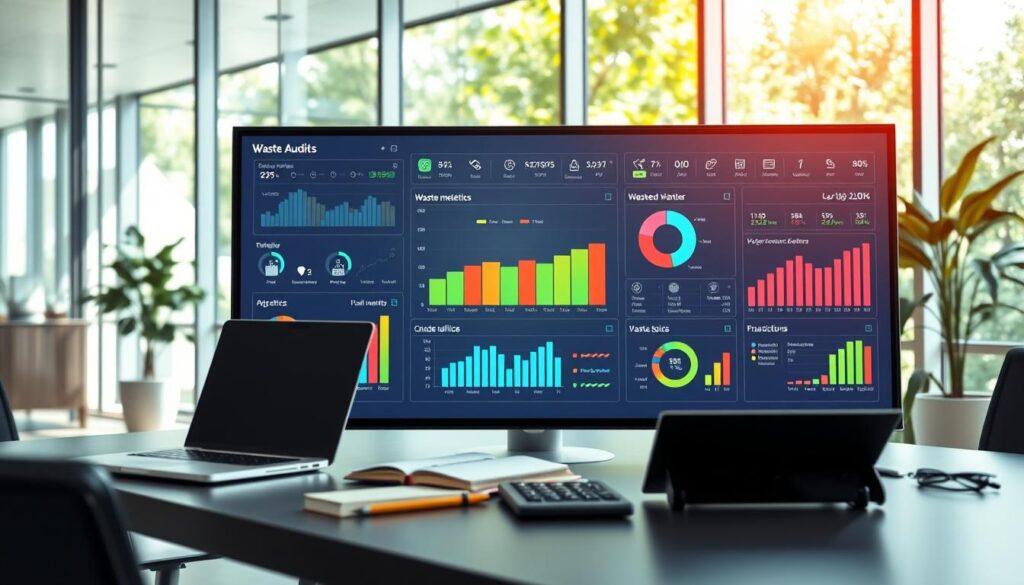
Every piece of waste is a resource that wasn’t fully used. A waste audit, as shown in this waste audit executive summary, shows this hidden cost.
Seeing waste as a “hidden currency” changes how businesses view it. It turns waste from a problem into a chance for innovation and savings. This change is key to strong corporate sustainability and lasting success.
Waste Assessment & Baseline Establishment
Setting a clear baseline through a waste audit is key. It turns vague goals into real, doable plans. Without it, efforts are shaky.
Certification programs like TRUE offer a top-notch framework. They move from simple tracking to a detailed look at material flows. This is essential for true zero waste.
A waste audit has three main parts. First, waste characterization sorts and categorizes waste. It shows what can be recycled, composted, or thrown away.
The second part is tracking generation points. Knowing where and when waste is made helps find problem areas.
The last part is a solid mass balance. It makes sure all waste tracked is accounted for. This keeps data accurate and complete.
Many settle for basic data to meet minimum standards. But, as IRClass shows, this misses the mark for real change.
Accurate tracking of materials is essential. New tech like IoT sensors and AI analytics make this easier. They provide real-time data, not just snapshots.
These tools turn a waste audit into a continuous management system. Data becomes dynamic, allowing for quick adjustments and deeper insights.
Let’s look at the difference between old and new audit methods:
| Aspect | Traditional Waste Audit | Data-Driven Waste Audit |
|---|---|---|
| Frequency | Annual or quarterly manual sort | Continuous, automated monitoring |
| Data Accuracy | Estimates based on samples | Precise, whole-stream measurement |
| Key Tools | Spreadsheets, manual weighing | IoT sensors, AI analytics, cloud platforms |
| Outcome | Static report | Live dashboard for decision-making |
The goal is to establish a clear baseline. This baseline is your “year zero” metric. Every improvement will be measured against it.
This detailed approach aligns with the core zero waste principles. You can’t redesign what you don’t measure first. A thorough waste audit is your roadmap.
Implementation Frameworks & Methodologies
Going from waste assessment to change needs clear plans. A baseline shows where you are. A plan shows how to get where you want to be. This turns data into action.
Big names like IRClass and TRUE have great plans. These plans help build strong zero waste programs.
The Phased Implementation Roadmap
A six-step process is a common way to start. It goes from understanding waste to making new systems work.
- Waste Characterisation: Analyzing waste to find what materials, how much, and where it’s contaminated. This helps find the best solutions.
- Operational Redesign: Changing how things work to stop waste before it starts. This includes new workflows and how employees handle materials.
- Contractor Management: Working with waste companies to meet goals. Contracts are updated to support circular business models.
- Technology Deployment: Getting the right tools, like composting systems, to make recycling easier.
- Third-Party Certification: Getting certified by an outside group, like TRUE Zero Waste. This shows you’re doing things right and helps improve.
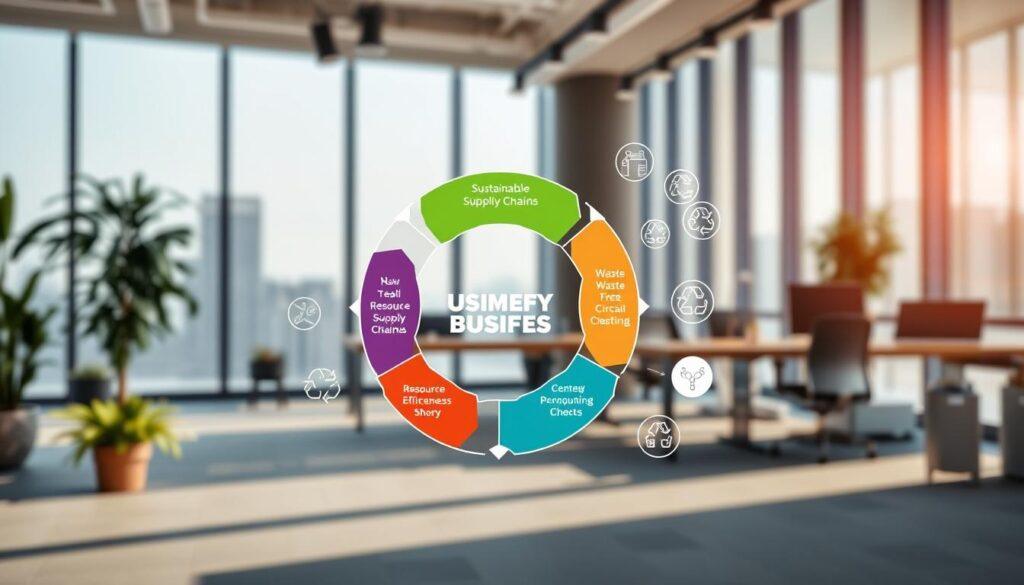
The waste hierarchy guides these steps. It shows the best order for handling waste.
- Source Reduction: Making products and processes use less material and waste less.
- Reuse: Finding ways to use things again in their current form.
- Recycling & Composting: Turning old materials into new ones.
- Recovery: Getting energy from waste, like through anaerobic digestion.
The Whole Systems Approach
TRUE promotes looking at everything, not just your trash. It’s about redesigning how resources are used. This means looking at your whole supply chain.
You need to ask new questions of suppliers and customers. The goal is to make systems where waste becomes valuable again. This is what circular business models are all about.
Integrating Change into Core Operations
For change to stick, it must become part of daily work. Three areas are key for lasting success.
Procurement: Buying policies should favor items that can be reused or recycled. Buying in bulk and having suppliers take back items is important.
Product Design: Design products to be easily broken down and reused. This is a big way to reduce waste.
Vendor Contracts: Move from just getting rid of waste to managing resources. Make sure contracts have clear goals and require detailed reports from vendors.
These changes make circular business models real. They turn sustainability into a core part of your business.
| Framework Aspect | IRClass Phased Approach | TRUE Whole Systems | Waste Hierarchy Application |
|---|---|---|---|
| Primary Focus | Building internal skills and getting certified | Changing entire systems and value chains | Helping decide the best way to handle waste |
| Key Driver | Improving how things work and following rules | Creating new, circular systems | Reducing harm to the environment |
| Typical Output | A certified zero waste place or program | New products and supply chains | A plan for handling each waste type |
| Business Integration | Often starts with managing facilities | Needs everyone, from R&D to leadership | Changes daily choices and buying habits |
The best plans mix different methods. They use the waste hierarchy for daily decisions. This makes a strong base for circular business models.
This approach makes your program work today and tomorrow. The right plan gives you direction. Your team’s effort makes it happen.
Case Studies of Zero Waste Leaders
Real-world success stories show us the way. We look at how companies in different fields are making zero waste a reality. These stories highlight the challenges and the creative solutions that make them leaders in corporate sustainability.
Each example shows a clear path to zero waste certification. They show how dedication leads to action every day. The results are not just good for the planet. They also save money and improve supply chain relationships.
The manufacturing sector has a big problem with scrap. An auto plant, for example, had tons of metal shavings and used lubricants every month. They used to throw it away, which was expensive and risky.
They changed by thinking differently. They set up a system to clean and reuse cutting oils. They also sent metal scrap back to suppliers to melt it down again. This way, they turned waste into something useful.
The benefits were clear. They cut their hazardous waste disposal costs by over 40%. They also got paid more by suppliers for clean scrap. This is a great example for heavy industries aiming for zero waste certification.
Food & Beverage Processing
Food waste is a big problem, both for the planet and for business. A big beverage company found that their main waste was organic byproducts. This included fruit pulp, yeast slurry, and wastewater.
They solved it in several ways. They gave the pulp to local farmers for animal feed. They also used anaerobic digesters to treat wastewater, making biogas to power their facility. This turned a problem into a solution.
This effort helped the community and brought in new money. It shows how corporate sustainability can make a business better and help the local area.
Pharmaceuticals
Pharma companies deal with complex, often dangerous waste. This includes expired drugs, chemical solvents, and contaminated packaging. One leader in this field tackled this with a strict plan for sorting and treating waste.
They bought advanced units to recover solvents. This let them reuse up to 70% of their solvents. For waste they couldn’t reuse, they worked with experts to safely dispose of it.
This program reduced their environmental risks and saved money on raw materials. It shows that even in strict industries, big zero waste goals can be reached and make sense financially.
Information Technology & Data Centres
IT and data centres face challenges with e-waste and energy use. A major data centre focused on old hardware and server heat.
They started a strict program to recycle all old equipment. They also used server heat to warm nearby offices in winter. This needed teamwork with facilities but saved a lot of energy.
This approach kept e-waste out of landfills and made the campus more energy-efficient. It shows how tech companies can use creativity for big corporate sustainability wins.
| Sector | Key Waste Challenge | Circular Opportunity | Primary Business Benefit |
|---|---|---|---|
| Automotive & Metal Processing | Metal scrap & hazardous coolants | On-site recycling & closed-loop material return | ~40% reduction in disposal costs & new scrap revenue |
| Food & Beverage | Organic byproducts & wastewater | Animal feed partnerships & anaerobic digestion for energy | New revenue streams & enhanced community relations |
| Pharmaceuticals | Hazardous chemical solvents & expired materials | Solvent recovery systems & certified energy recovery | Reduced material costs & lowered environmental liability |
| IT & Data Centres | E-waste & server heat waste | Asset recovery programs & waste heat reuse | Improved energy efficiency & landfill diversion |
These stories are both inspiring and practical guides. They show that zero waste certification is not a one-size-fits-all plan. It’s a strategic choice that fits each industry’s needs. The benefits, from saving money to improving reputation, make a strong case for any business to lead the way.
Measuring Success & KPIs
For businesses aiming for zero waste, success is more than a feeling. It’s about measurable goals. Key Performance Indicators (KPIs) guide us from dreams to reality. They turn environmental goals into clear, achievable results.
Starting with waste diversion rates is common. But top programs go further. A detailed waste audit uncovers what’s thrown away, where it comes from, and its value. This data is the foundation for all other metrics.
Success is not just about reducing landfill waste. It’s also about:
- Material Cost Savings: Money saved by reusing materials or selling recyclables.
- Virgin Material Avoided: The amount of new raw materials not bought because of reuse and recycling.
- Greenhouse Gas Emissions Avoided: The carbon saved by not sending waste to landfills or incinerators.
Tracking these metrics shows the financial and environmental benefits. It proves that corporate responsibility boosts the bottom line.
Third-party certifications add credibility to these numbers. Programs like IRClass’s Zero Waste to Landfill (ZWL) verify diversion rates. This ensures trustworthy results.
These certifications offer a clear path to improvement:
- Baseline: Recognizes a commitment and established system.
- Silver: Achieves a waste diversion rate of 81-90%.
- Gold: Achieves a diversion rate of 91-95%.
- Platinum: The highest level, for diversion rates of 95% and above.
TRUE certification also helps reduce ecological footprint. It offers measurable outcomes for a greener economy. This external validation is powerful. It shows operational excellence to customers, investors, and partners.
These metrics are vital for circular business models. You can’t manage a circular flow without measuring it. Data on material recovery and reuse validates your circular model. It shows where loops are closing and where there are leaks.
For example, knowing the percentage of post-consumer material in your products is key. It shows reduced use of virgin resources. This is important for environmental reports and marketing sustainability.
In the end, focusing on KPIs turns zero waste into a strategic advantage. It provides the evidence needed for ongoing support and funding. By measuring the right things, you unlock value, drive innovation, and build a resilient business for the future.
Scaling Zero Waste Initiatives
A successful zero waste pilot shows it works. But, the real challenge is making it work for the whole company. This change makes it a key part of your company’s green plan.
To grow, you need standard rules and training. Create programs to teach everyone how to do it right. Also, set up checks to keep things on track. Services like IRClass help with this, checking sites big or small.
Getting a zero waste certification helps a lot. It ties together local efforts with the company’s big goals. It also gives everyone a clear set of rules to follow.
Expanding zero waste efforts makes it more than just following rules. It becomes a way to stand out and last long. This approach makes reducing waste a part of your company’s culture, giving you a big edge.