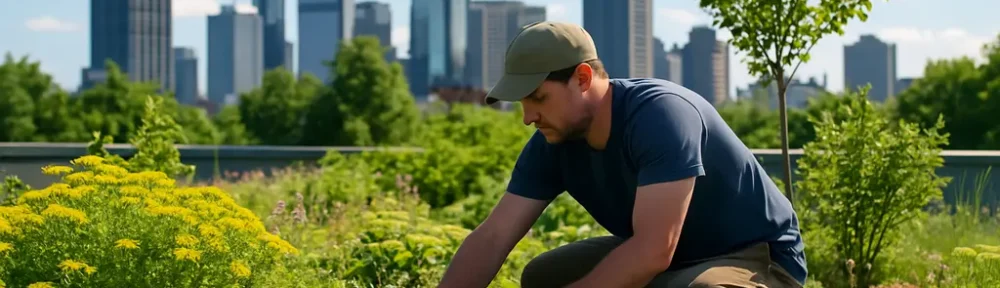
Urban Green Roofs are often presented as a practical green-building tool for dense cities, but the research record is more conditional than simple benefit claims suggest. Field studies show measurable stormwater and cooling value in some settings. Modeling studies show energy-saving potential under specific assumptions. Policy examples show that mandates and incentives can increase adoption. The same evidence also points to barriers: maintenance failure, climate mismatch, ownership changes, material impacts, and governance friction.
A cautious assessment should separate what has been measured from what has been modeled. It should also distinguish installation from long-term performance. A planted roof that is healthy after several years is different from one that is abandoned, removed, or left without a maintenance plan. That distinction matters because urban roofs are difficult sites: they face heat, wind, shallow growing media, limited access, and changing building ownership.
What Urban Green Roofs Can Reliably Do
Urban Green Roofs And Stormwater Evidence
The strongest evidence for green roof benefits often comes from monitored stormwater performance. A 12-year-old green roof in Pittsburgh retained 87% of annual precipitation, returned 54% through evapotranspiration, reduced runoff by 82%, reduced peak flow by 93%, and delayed runoff by 4.3 hours. Those figures are notable because they came from an older roof rather than a newly installed demonstration site. They should not be treated as universal values for every roof, climate, substrate depth, or maintenance condition.
Other field results reinforce the same pattern: performance can be high, but moisture conditions matter. In Leipzig, Germany, 31 months of data ending in late 2023 showed that an extensive green roof with very dry substrate, at 7%, produced no runoff during a 10.7 millimeter rain event. During a later event with wetter substrate, retention reached 76%. A wetland-type roof in the same research context retained up to 75% of rainfall. For Urban Green Roofs, these results indicate that antecedent moisture can change performance substantially even before climate, plant selection, and roof assembly are considered.
Blue-green roof designs add another layer to the stormwater question. In Central Italy, four years of data from May 2021 through May 2025 showed that a roof combining vegetation with engineered subsurface storage improved stormwater retention relative to conventional green roofs. Monthly runoff was moderated, but results remained sensitive to dry and wet periods. That is field-tested evidence for a specific system type, not proof that blue-green roofs will outperform in every city.
Cooling And Energy Findings Need Climate Context
Research also supports potential cooling and energy benefits, though much of the larger-scale evidence comes from models rather than direct portfolio-wide measurement. Across Cairo, Hong Kong, Seoul, London, Los Angeles, and São Paulo, modeling found that green roofs could reduce HVAC energy use for cooling by up to 63% to 83% under current climates. Under climate-change scenarios through 2100, green or cool roofs were modeled to deliver about 65% to 72% HVAC energy reduction.
Those numbers are meaningful, but they depend on building assumptions, roof type, climate, and future weather scenarios. A result modeled across six cities does not tell a property owner exactly how one roof will perform after installation. It does show that roof surfaces deserve attention in energy analysis, especially where cooling demand is high.
Climate-specific design remains a limiting factor. Case studies across four Chinese climate zones found that high-retention substrates performed best in semi-arid and arid zones. In humid zones, plant type and lower substrate retention could be preferable. The same research direction suggests that in humid climates, green roofs may not adequately handle future extreme rainfall unless they are designed for those conditions. In practice, Urban Green Roofs may be more reliable when treated as climate-specific infrastructure rather than standardized products.
Vegetation Health, Design Fit, And Monitoring
Remote Sensing And Plant Survival
Long-term vegetation condition is one of the main uncertainties in green roof planning. A Toronto study using remote sensing from 2011 through 2018 found that older green roofs tended to improve in vegetation health and become less patchy over time. The same study found that smaller roof units and greater building height correlated with poorer vegetation health, while Sedum mats outperformed woody plants and grasses in the health metrics examined; the peer-reviewed findings are available in Nature Cities.
That evidence is useful because it moves the discussion beyond installation area. A city can add vegetated roof space on paper, but the environmental value depends on whether vegetation survives and functions. Remote sensing can help assess larger groups of roofs without relying only on manual site visits. It does not replace on-site maintenance records, substrate information, or drainage inspection, but it can reveal patterns that individual buildings may miss.
The Toronto findings also suggest that older age is not automatically negative. Some roofs may stabilize with time. At the same time, height and size correlations indicate that exposure and design constraints may weaken performance. For planners, the question is not whether vegetation exists at installation; it is whether the roof can remain healthy under actual rooftop conditions.
Blue-Green Roofs Remain Climate-Sensitive
Blue-green roofs are receiving more research attention because they combine planted roof layers with engineered water storage, and some designs include controlled overflow or reuse strategies. The Central Italy evidence from May 2021 to May 2025 indicates that this approach can moderate runoff better than conventional green roofs in the observed setting. The uncertainty is scale: a system that works in one climate, building type, or maintenance setting may require redesign elsewhere.
Readers interested in comparing environmental research can explore related science analysis at Harvard Science Review. However, building decisions still require local roof loading, rainfall, heat, access, and maintenance data. Green roof benefits are not produced by vegetation alone. They come from a full assembly of plants, substrate, drainage layers, storage capacity, roof structure, and management practices.
Policy Incentives And The Cost Question
New York City Incentives Set Clear Conditions
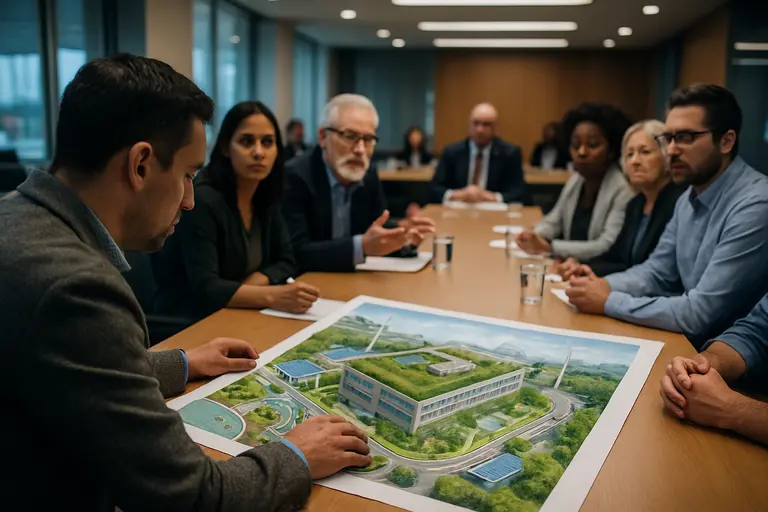
Policy can increase adoption, but it also shapes what counts as a qualifying green roof. New York City’s green roof property-tax abatement sets a standard rate of $5.23 per square foot, rising to $15 per square foot in priority districts, with a cap of $200,000. The city also requires at least 50% vegetated coverage and a four-year maintenance plan for the abatement, according to the NYC Department of Buildings page on green roof requirements.
Those details are significant because they connect public support to minimum design and maintenance conditions. A maintenance plan does not guarantee performance, but it recognizes that installation alone is not enough. As of July 2026, research notes identified New York City, Portland, Denver, and San Francisco among the U.S. cities with the strongest green-roof or sustainable-roof mandates. New York City’s Local Laws 92 and 94, adopted in 2019, require 100% of qualifying roof area to be sustainable roofing for new buildings or full roof replacements, using a green roof, photovoltaic system, or combination.
Material And Ownership Barriers
The environmental case is not one-sided. A 2025 life-cycle assessment in Portugal found that the materials stage, including substrate and structural additions, was the main environmental impact hotspot. Intensive green roofs had 34% to 60% higher impacts than extensive green roofs in several categories. Conventional flat roofs outperformed green roofs in many impact categories because vegetated assemblies require more technical layers and material inputs.
This does not mean green roofs lack value. It means their benefits must be compared against added materials, structural requirements, maintenance demand, and expected service life. Stormwater retention and cooling benefits may be locally valuable, but an environmental assessment should not ignore the material burden required to obtain them.
Ownership and governance are equally important. A 2026 study of 46 green roofs in the southeastern United States found that nearly half were no longer functioning as intended; nine were abandoned outright, and twelve had been removed. Ownership change was strongly correlated with deterioration or removal. In Los Angeles, researchers in early 2026 identified economic, infrastructural, political, bureaucratic, legal, social, epistemic, institutional, and scalar barriers that compounded implementation difficulty. These findings align with broader reporting on how urban green-building limits can constrain environmental design even when technical options exist.
Urban Green Roofs As Long-Term Infrastructure
Practical Criteria For Future Projects
For Urban Green Roofs to remain credible as urban infrastructure, projects need clearer performance criteria. The first criterion is climate fit. A roof in an arid or semi-arid region may need high-retention media and drought-tolerant plants. A roof in a humid region may need different media, plant choices, and storage design if extreme rainfall is the main concern. Research using future climate periods from 2052 to 2100 suggests that humid and semi-humid regions may face reduced stormwater performance unless designs change.
The second criterion is maintenance continuity. A green roof can fail after ownership changes, funding gaps, or unclear responsibility. The southeastern U.S. evidence shows that abandonment and removal are not rare edge cases in the studied sample. Any policy or building plan that counts green roof area should also ask who will inspect vegetation, replace failed plants, manage drainage, and document performance after the first owner leaves.
The third criterion is evidence quality. Field monitoring, remote sensing, and life-cycle assessment answer different questions. Stormwater sensors can show retention and peak-flow effects. Remote sensing can track vegetation condition over time. Life-cycle assessment can identify environmental trade-offs in materials. A stronger project will not rely on one metric alone.
Urban Green Roofs can contribute to stormwater management, cooling, and building energy strategies, but the evidence does not support treating them as automatic solutions. Their value is highest when design matches climate, incentives require maintenance, materials are evaluated honestly, and long-term monitoring verifies that the roof continues to function after installation.