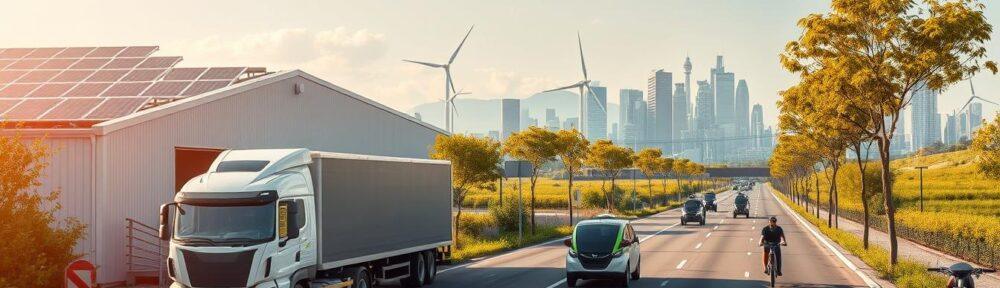
Remember when “going green” in shipping meant a potted fern in the dispatch office? Those days are over. Now, we have a real tech-driven revolution where saving the planet also saves money.
This isn’t just a cosmetic change. It’s a complete overhaul. Picture silent electric semis on the interstate, and robots in fulfillment centers working together thanks to smart algorithms.
The digital transformation is real. It makes sustainability a clear business goal, with exact carbon tracking. This is your backstage pass to a world where innovation is delivered faster than your online orders.
Electric Freight Vehicles: Delivery Trucks, Long-Haul Transportation, and Last-Mile Delivery Solutions
The era of electric freight vehicles has started, changing the market. It’s not just about replacing diesel with batteries. It’s a big change in how we move goods.
In cities, electric vans are leading the way. They move quietly, making deliveries almost invisible. These vans save money and meet strict pollution rules.
Medium-duty electric trucks handle regional delivery. They cover 150-250 miles on a single charge. This makes them reliable for big jobs.
Long-haul electric trucks are the biggest step. The Tesla Semi is just the start. Big companies are making trucks for long trips. They can charge in minutes, not hours.
This approach creates a complete electric system. It makes the smart supply chain real. The change is big, from loud engines to quiet motors.
Charging stations are becoming key parts of the system. They’re at distribution centers, making charging part of the job. This is a big step in logistics.
The move to electric is good for business and the planet. Electric trucks save money and are reliable. They’re also better for the environment.
This change is more than new tech. It’s a shift in how we think about moving goods. The diesel engine is being replaced by cleaner, smarter ways. We’re making a smart supply chain that’s better for everyone.
Route Optimization Technology: AI Algorithms, Real-Time Traffic Data, and Fuel Efficiency Maximization
In the world of logistics, route optimization is like a chess grandmaster. It thinks ahead while others are just starting. Gone are the days of static maps and guesses. Today, systems are dynamic, learning and making deliveries efficient.
It’s not just about the shortest path. It’s about handling many variables at once. Like a sudden rain or a slow customs checkpoint. The goal is to maximize fuel efficiency, key to carbon-neutral logistics.
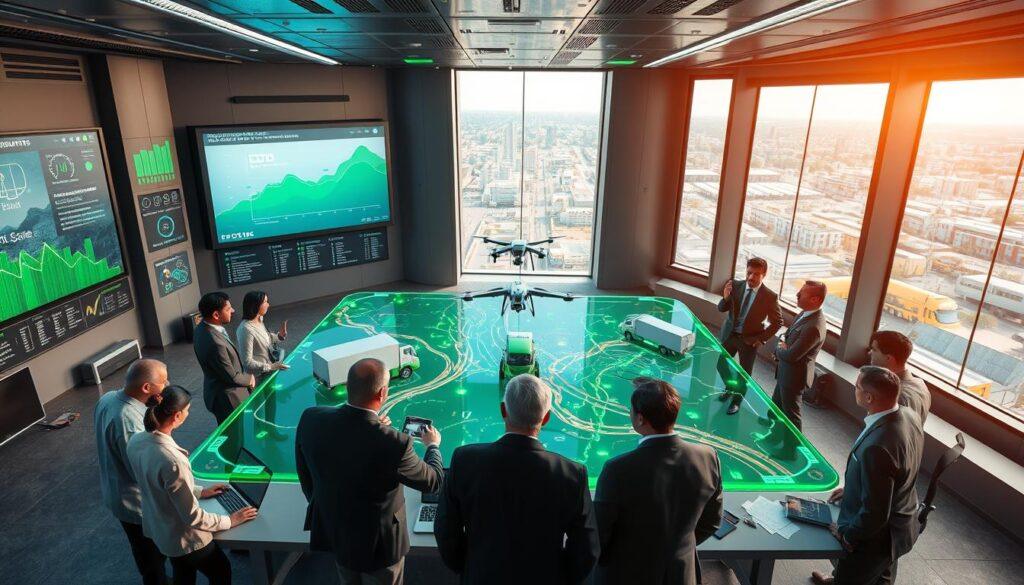
AI Algorithms
AI is like a digital tactician in logistics. It learns patterns, not just follows rules. It uses data to find the best delivery paths, considering many factors.
AI routes change in real-time. A truck might avoid a traffic jam before it happens. This smart planning is at the heart of green logistics technology. It turns fuel savings into a main goal.
Real-Time Traffic Data
AI needs real-time data to stay accurate. This data includes traffic incidents and construction updates. It paints a detailed picture of the roads.
This data helps avoid unnecessary stops and emissions. It makes carbon-neutral logistics a real goal, not just a slogan. As shown in recent research on AI in logistics, smart routing is key for sustainability.
This mix of predictive and real-time data is essential. It saves miles, minutes, and carbon. This is logistics at its most efficient, proving the greenest route is always the smartest.
Warehouse Automation: Robotics, Energy-Efficient Systems, and Sustainable Facility Management
The warehouse of today is a far cry from its old self. It’s now sleek and automated, focusing on sustainable freight transport. The real excitement in online shopping isn’t the box—it’s the efficient process that gets it to you.
Robotics
Forget the forklift driver’s coffee break. Today’s warehouses are run by robots and drones. These aren’t just machines; they’re high-tech tools.
AGVs move goods along the best paths, while drones check inventory fast. This team boosts safety and cuts energy use by avoiding unnecessary movement. With AI and IoT, they make the supply chain smarter and more efficient.
But what powers these robots? It’s the smart buildings they work in. These warehouses use energy-efficient systems to save energy. IoT sensors control lights and air conditioning only where needed.
Solar panels on rooftops generate clean energy. These green buildings are the heart of eco-friendly delivery. It’s a perfect mix of technology and sustainability.
Robotics and smart energy systems are key to a greener logistics future. They’re the backbone of a cleaner, more efficient way to deliver goods.
Carbon Tracking Systems: Emission Monitoring, Carbon Accounting, and Supply Chain Transparency
Carbon tracking systems are like the truth-tellers for companies claiming to be green. They expose the truth behind vague promises. With carbon-neutral logistics in focus, you need exact numbers. This tech makes your supply chain clear and full of data.
It’s like the difference between guessing your weight and getting a detailed scan. One is vague; the other gives you real data. This isn’t just for feeling good. It’s key for a smart supply chain.
Emission Monitoring
You can’t fix what you can’t see. Emission monitoring reveals the truth. It uses IoT sensors on trucks, ships, and equipment. These sensors collect data on fuel use, idle times, and routes.
This data is detailed. Want to know the environmental cost of fast shipping? The monitor has the answer. It turns vague “transport emissions” into specific problems. A truck idling too long? The system flags it. A ship taking a bad route? The data shows it.
This visibility gives managers power. They can make quick changes, moving from reacting to acting ahead.
Carbon Accounting
Raw data is just noise. Carbon accounting makes sense of it. It’s like a software that tracks your carbon footprint.
It uses frameworks like the GHG Protocol to assign emissions. This creates a clear trail from raw material to customer. It’s no longer “We think our emissions are down.” It’s “Here is the verified data proving a 15% reduction in Scope 3 logistics emissions.”
This detail is what investors and consumers demand. It makes sustainability a real, measurable part of business.
The table below shows how carbon accounting platforms work:
| Platform Type | Key Capabilities | Integration Scope | Primary Users |
|---|---|---|---|
| Enterprise Software Suite | Full GHG accounting, automated data ingestion, advanced analytics dashboards, audit-ready reporting. | End-to-end supply chain (Scope 1, 2, & 3) | Large multinational corporations, logistics providers. |
| Specialized Logistics Module | Focus on transport & warehouse emissions, carrier performance scoring, route optimization insights. | Transportation management & warehouse systems | Freight forwarders, 3PLs, supply chain managers. |
| Blockchain-Verified Ledger | Immutable emission records, facilitates carbon credit trading, enhances supply chain transparency. | Specific high-value or regulated commodity chains | Companies in food, pharmaceuticals, luxury goods. |
Emission monitoring and carbon accounting work together. The monitor shows the truth. The accountant makes sense of it. This info helps with every green effort, from cleaner fuels to better routes.
This data layer makes carbon-neutral logistics real and achievable. It turns your smart supply chain into a real, improving system.
Alternative Fuel Technologies: Biofuels, Hydrogen, and Compressed Natural Gas for Commercial Vehicles
If the transition to green logistics technology were a party, batteries would be the loud guest—but biofuels, hydrogen, and CNG are the ones actually getting things done. The push for sustainable freight transport isn’t a one-act play. It’s a full ensemble cast where each alternative fuel brings a unique skill set to the stage. Think of it as building an energy diversity portfolio for your fleet. This isn’t about finding a single silver bullet. It’s about assembling the right toolkit for the job.
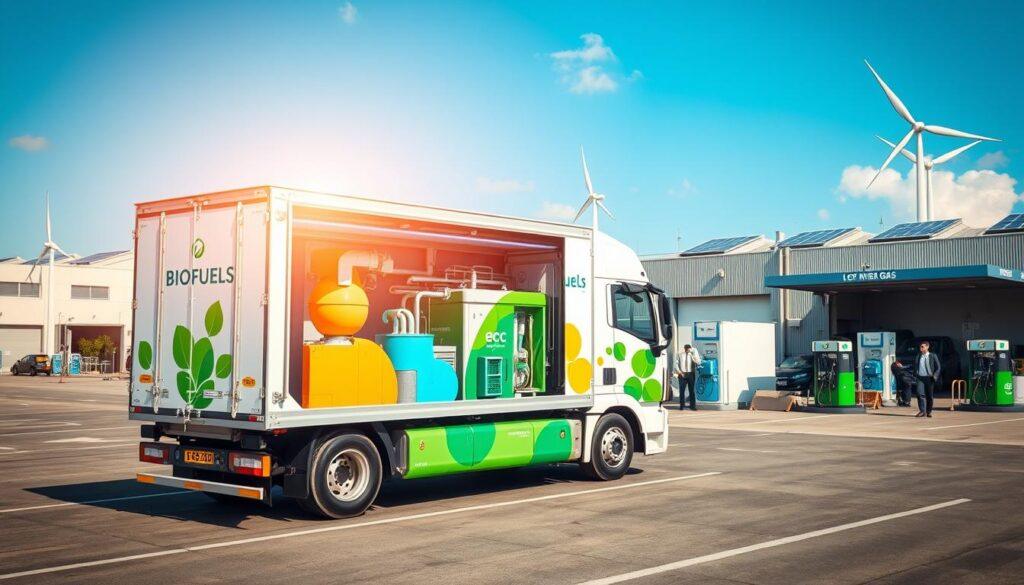
Biofuels
Biofuels are the pragmatists of the clean energy world. They come from organic matter like crops, algae, or waste oils. They offer a “drop-in” solution, meaning many existing diesel engines can run on biodiesel blends with little to no modification. This makes them a powerful tool for immediate carbon reduction without a costly fleet overhaul.
They’re not without controversy, of course. The “food vs. fuel” debate is a real cultural touchstone. But advanced generations are moving beyond corn ethanol. We’re talking about fuels made from agricultural residues, municipal solid waste, and non-food crops. The carbon lifecycle is where they shine, theoretically creating a closed loop. The plant absorbs CO2 while growing; the fuel releases it when burned. It’s not zero, but it’s a massive step toward sustainable freight transport.
For logistics managers, the appeal is straightforward:
- Infrastructure Compatibility: Utilizes existing fueling stations and vehicle designs.
- Carbon Reduction: Can cut lifecycle emissions by 50-80% compared to petroleum diesel.
- Operational Continuity: No need to retrain drivers or redesign supply chains overnight.
Hydrogen
Ah, hydrogen. The perpetual “fuel of the future” that’s now arriving. For heavy, long-haul routes, hydrogen fuel cells are the promising contender. The process is elegantly simple: hydrogen gas combines with oxygen in a fuel cell to produce electricity, with water vapor as the only exhaust. It’s the ultimate clean burn.
The promise is immense: rapid refueling times comparable to diesel, long ranges exceeding 500 miles, and significant weight savings over battery-electric systems. This makes it a cornerstone of long-term green logistics technology strategies, for cross-country trucking. So, what’s the catch? The “green” in hydrogen is key. Most hydrogen today is produced from natural gas (“gray” hydrogen). The holy grail is “green” hydrogen, made using renewable electricity to split water molecules. The infrastructure—production, transport, fueling stations—is also in its infancy and wildly expensive.
It’s a high-stakes bet on tomorrow’s infrastructure. But for segments where batteries falter, it might be the only viable path to true zero-emission haulage.
Let’s not forget the steady workhorse in the room: Compressed Natural Gas (CNG). Often dismissed as a mere “bridge fuel,” CNG plays a critical transitional role. It burns cleaner than diesel, with far lower emissions of particulates and nitrogen oxides. For fleets operating in dense urban areas or with fixed routes, CNG offers a proven, cost-effective way to clean up operations now while the hydrogen and electric ecosystems mature.
The real story in sustainable freight transport is that there is no winner-takes-all outcome. The future will be a pragmatic, patchwork quilt of solutions. A local delivery van might be electric, a cross-country hauler might run on green hydrogen, and a regional distributor might use biodiesel or CNG. The unifying goal is slashing emissions across the entire spectrum of green logistics technology.
Choosing the right fuel isn’t about ideology. It’s a complex calculation:
- Duty Cycle: Is it short-haul or long-haul? Urban stop-and-go or highway cruising?
- Infrastructure Access: Where are the fueling or charging stations?
- Total Cost of Ownership: Upfront vehicle cost, fuel price, and maintenance.
- Emissions Target: Are you aiming for carbon reduction or absolute zero?
This diversified approach might seem messy. But in the complex world of freight, a single solution was always a fantasy. The smart move is to understand the entire arsenal—biofuels, hydrogen, CNG, and electricity—and deploy each where it makes the most sense. That’s how you build a resilient and truly sustainable supply chain.
Packaging Innovation: Sustainable Materials, Size Optimization, and Waste Reduction Strategies
The search for carbon-neutral logistics often misses a simple fact: we ship too much air. Unboxing a small item from a huge cardboard box is not just annoying. It’s bad for the environment, wasting fuel and resources.
Modern packaging innovation tackles waste in two smart ways. It’s not just about using better materials. It’s about rethinking what packaging is and what it should do.
Sustainable Materials
First, the materials themselves. The old days of Styrofoam peanuts and non-recyclable plastic are fading. Now, we have new materials that sound like they come from a sci-fi movie.
We’re using mushroom-based foams that grow and decompose naturally. There are wraps made from seaweed and shrimp shells. Even cardboard has improved, thanks to companies like Ranpak and Ecovative.
This change isn’t just for show. It cuts down on pollution at the end of a product’s life. When packaging can go back to nature, the whole supply chain gets cleaner.
Size Optimization
Now, let’s talk about making things smaller. Why do we ship so much air with our products?
AI-driven size optimization is the answer. It designs packaging that fits each product perfectly. This is the core of a eco-friendly delivery system.
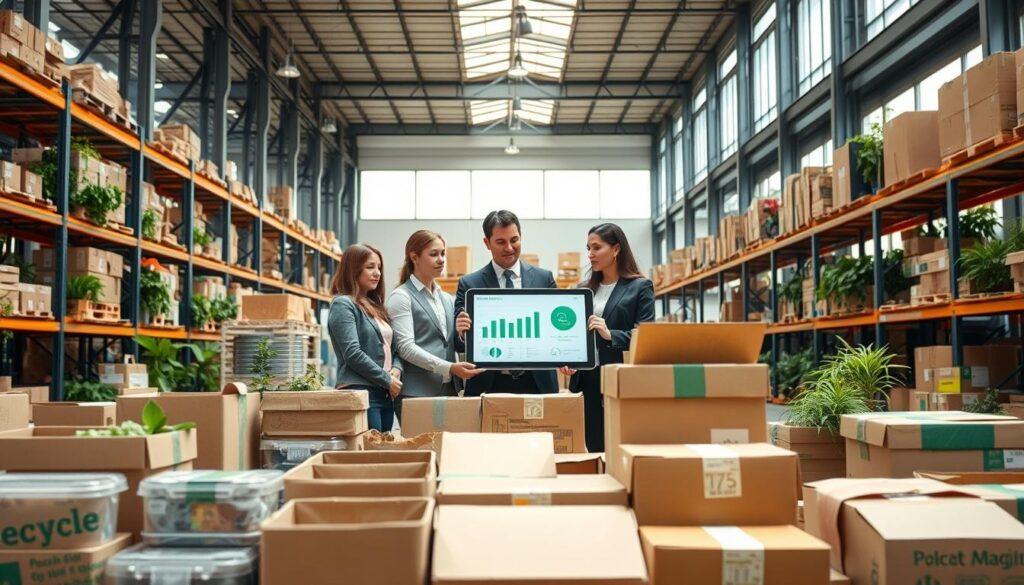
Smaller packages mean more can fit in one truck. Fewer trucks on the road means less fuel used and fewer emissions. It’s good for companies and the planet.
This leads to a simple idea: the greenest shipment is the one you never make. Technologies like 3D printing make items locally, cutting out packaging and long-distance transport.
In the end, packaging innovation shows us something important. Sometimes, the best way to be carbon-neutral is to use less. By using smart materials and designing better, we’re not just wrapping things better. We’re wrapping our whole approach to consumption tighter, with less waste.
Urban Delivery Solutions: Cargo Bikes, Electric Vans, and Consolidated Distribution Centers
The most inefficient part of any supply chain is the last few blocks to your doorstep. This “last mile” is a comedy of errors, with one truck idling in traffic, delivering a single yoga mat. It’s expensive, congested, and polluting. So, the urban delivery playbook is getting a creative rewrite.
Forget bigger trucks. The new model is a pragmatic, multi-modal mix designed for density. Cargo bikes, silent electric vans, and strategically placed consolidation hubs are turning city logistics into a smart supply chain showcase. Together, they’re the backbone of truly carbon-neutral logistics.
Cargo Bikes
Cargo bikes are the two-wheeled ninjas of urban delivery. They slip through gridlock where any van would be stuck, operating with the carbon footprint of a brisk walk. Companies like Amazon and UPS are already running pilots in cities from Seattle to New York.
These aren’t your childhood bicycles; they’re electric-assist workhorses with secure cargo boxes. They can carry hundreds of pounds. The economics are compelling. No fuel costs, minimal parking fines, and dramatically lower maintenance.
The limitation? Range and bulk. They’re perfect for hyper-local distribution from a neighborhood micro-hub. For the last half-mile, they’re arguably the most elegant solution yet devised.
Electric Vans
For routes that demand more range or payload, electric vans are the silent successors to diesel delivery trucks. Models like the Ford E-Transit and Rivian’s electric delivery vans are becoming common sights. They offer zero tailpipe emissions and, near-silent operation—a boon for early morning or late-night deliveries.
Their real power is unlocked when paired with a smart supply chain network. They service those inner-city micro-fulfillment centers, which are themselves stocked from larger consolidated hubs. This hub-and-spoke model means these vans run optimized, predictable routes.
The third, less visible piece of the puzzle is the consolidated distribution center. Located on city outskirts, these facilities are where the magic of consolidation happens. Goods from multiple suppliers are sorted and batched into optimized loads for specific urban zones.
By acting as a buffer, these centers enable the efficient use of both cargo bikes and electric vans. They are the brain of the operation, where AI-driven logistics platforms plan the most efficient, least congested routes. This isn’t just about moving boxes; it’s about taking pressure off city arteries and making carbon-neutral logistics a scalable reality.
| Solution | Key Advantage | Ideal Use Case | Impact on Carbon-Neutral Logistics |
|---|---|---|---|
| Cargo Bikes | Zero emissions, extreme urban agility, very low operating cost | Last half-mile delivery in dense, congested urban cores | Eliminates final leg fossil fuel use entirely; reduces traffic congestion |
| Electric Vans | Zero tailpipe emissions, greater range/payload than bikes, quiet operation | Multi-stop routes from neighborhood micro-hubs, replenishing those hubs | Replaces diesel vans; enables quiet, off-peak deliveries for efficiency |
| Consolidated Distribution Centers | Reduces total vehicle trips into the city, enables load optimization | As a regional sorting hub feeding smaller urban micro-fulfillment centers | Dramatically cuts miles traveled and idle time, the foundation of a smart supply chain |
So, what’s the takeaway? The path to carbon-neutral logistics in cities isn’t a single silver bullet. It’s a clever, integrated system. Cargo bikes handle the final sprint, electric vans manage the middle distance, and consolidated hubs orchestrate the whole endeavor. This is the smart supply chain in action—turning the most problematic leg of the journey into a showcase of efficiency and innovation.
Blockchain in Logistics: Supply Chain Transparency, Carbon Credit Trading, and Verification Systems
Blockchain technology is changing the game in supply chains. It’s not just for digital money anymore. It’s a reliable way to track goods worldwide.
This tech brings trust to industries that need it. It answers big questions like “Where did this tuna come from?” and “Is this medicine real?”
A blockchain is a digital ledger that can’t be changed. Once data is added, it stays that way. This makes it hard to fake information.
Supply Chain Transparency
Blockchain makes supply chains more open. It’s a big deal for getting things from one place to another. For example, it helps fight fake drugs in the pharmaceutical industry.
In food, it means knowing exactly where your food comes from. It’s not just “Product of Italy” anymore. It’s a detailed journey from farm to table.
Luxury brands also use it to stop counterfeits. This level of tracking is key to a smart supply chain.
Smart contracts make it all work automatically. They check if a shipment is on time and in good condition. If it is, payment is made right away.
Carbon Credit Trading
Blockchain is also great for the environment. It helps solve the problem of fake green claims. It makes sure carbon credits are real.
It puts real data on the blockchain. This data is used for carbon accounting. It makes carbon credits something you can trust.
This turns carbon credits into something real. It makes it easier to buy and sell them. It shows that being green is worth something.
This is a big change. Soon, you’ll know more than just when your online order will arrive. You’ll know if it’s good for the planet too. Blockchain is about more than money. It’s about trust.
Professional Roles: Sustainable Logistics Management, Supply Chain Engineering, and Green Technology Implementation
We’ve seen the warehouse robots and blockchain ledgers. But, we need someone to lead this innovation. The tech for sustainable freight transport is useless without the right people.
The job market is changing. Now, roles like Sustainable Logistics Manager and Supply Chain Engineer are key. They turn green ideas into real actions.
Sustainable Logistics Management
The Sustainable Logistics Manager focuses on reducing carbon emissions. They make sure every electric truck and cargo bike works together. They bring eco-friendly delivery systems to life, from slides to the road.
This job needs both tech skills and people skills. It’s about making green ideas work in real life.
Supply Chain Engineering
Supply Chain Engineers design networks that balance cost, speed, and the planet. They use their knowledge to make a difference. They figure out how hydrogen trucks or urban hubs work.
These experts make sustainable freight transport a reality. They turn ideas into action. The future of logistics is built on their expertise.