
Our buildings are huge energy eaters. It’s not just a few lights left on. It’s a big problem for our budget and the planet.
The US Department of Energy says HVAC uses 40% of commercial power. It’s like your car needing two tanks of gas just for errands.
Every year for the last seven has been the hottest in the US. Our climate control systems are working non-stop.
They start earlier and work harder. This causes more breakdowns and higher costs.
This isn’t just about comfort or your bill. It’s about carbon. Heating and cooling use nearly half of all building energy worldwide. They shape a property’s environmental impact.
Our current way is like a screen door on a submarine. We’re wasting energy on a leaky system. The need for green buildings and HVAC efficiency is urgent.
Newest HVAC Technologies
If your building’s heating system is old, it’s like driving a Model T. The old way of heating with combustion is being replaced by new, smart systems. This change is big, like swapping the engine in your car for better comfort.
The heat pump is leading this change. It’s not just a heater but a smart system that moves warmth from outside to inside. This makes heating much more efficient, up to four times better than old systems.
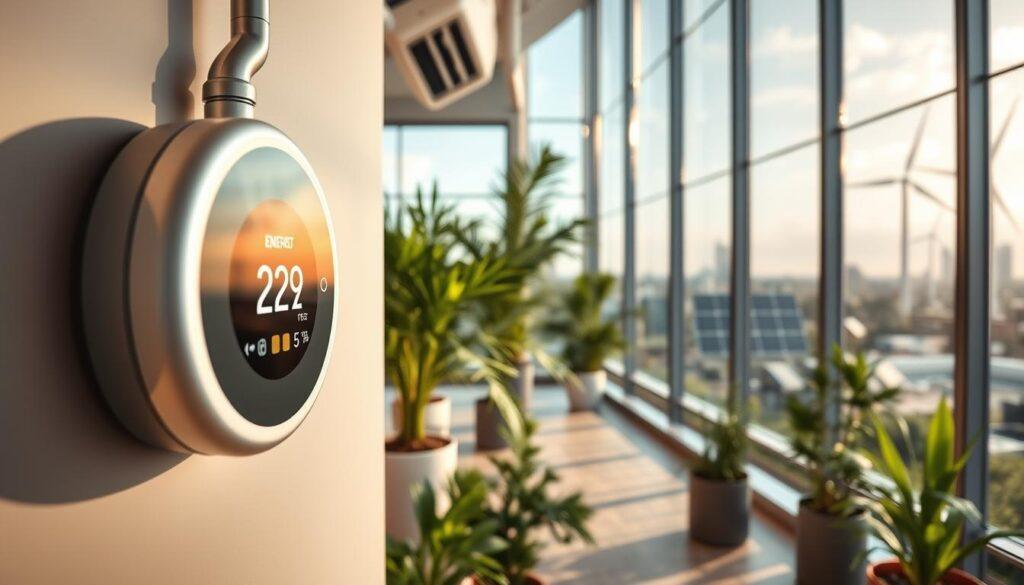
Heat pumps are becoming very popular, with a huge increase in use expected by 2030. They come in two types: air-source and ground-source. Both are key to making your building’s climate smart.
New refrigerants are also being developed. Companies like Pascal are making greener options. This helps reduce harm to the environment compared to old systems.
Thermal Energy Storage (TES) is another big innovation. It’s like a thermal battery for your building. TES stores energy for later use, helping balance the grid and save money.
These technologies are changing how we heat buildings. We’re moving from old gas furnaces to new, smart systems. The goal is to make heating more efficient and quiet, like having a digital helper.
This is what a modern smart climate strategy looks like. It’s efficient, smart, and changes how buildings use energy. The old days of loud boilers are over. Now, we have quiet, smart heat pumps.
Smart Controls
The real magic of modern buildings lies in their smart systems, not just the steel. These systems are like a brain for your property. They’re moving beyond simple thermostats to a full central nervous system.
The Building Management System (BMS) is at the heart of it all. It’s like an air traffic controller for your building’s energy and air. It works by connecting many sensors to gather data like temperature and light levels.
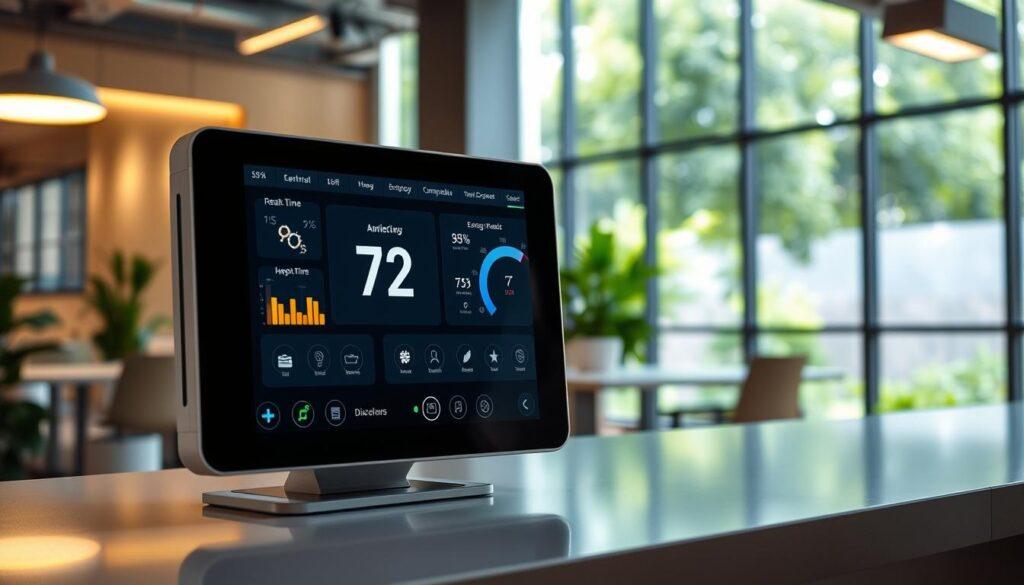
This data is where the magic happens. AI-powered smart thermostats and algorithms make sense of it all. They learn patterns, like when rooms get hot or when people arrive.
Then, they make smart decisions. This is a big change from just reacting to problems. A smart system can predict and prevent issues before they start.
This leads to HVAC optimization. It’s like precision engineering for your building’s climate. Comfort is better, and energy waste is cut down.
This smart approach changes what it means to have a green building. It’s not just about a plaque anymore. A smart building is like a living thing, always adapting and improving.
Forget about setting things and forgetting them. The future is about setting things and letting them learn. Your building can be a partner in making it more sustainable and comfortable.
Retrofits & Upgrades
Local Law 97 was a big surprise for building owners in New York City. HVAC retrofits are now a must to avoid huge costs. It’s about upgrading what you have, not starting from scratch.
Phased retrofits are the way to go. You don’t have to replace everything at once. Start with the most obvious problem, like the water heater. Switching to a heat pump water heater saves money and cuts carbon emissions.
Next, update your controls. A new control system makes your building smarter. It saves energy by adjusting to how people use the space. This is a smart, easy way to improve your building.
Coil care is like a spa day for your HVAC. Products like BSG’s CCX ENERGY kits clean and treat coils. This makes your chiller work less hard, saving energy and money.
But there’s a big issue: regulations. Laws like NYC’s Local Law 97 set strict limits on emissions. If you don’t meet these, you face big fines. So, upgrading your system is not just about saving money. It’s about staying in business and helping the environment.
Many are choosing hybrid systems. This mix of old and new technology is cost-effective. It balances performance, budget, and environmental goals.
So, how do you choose your path? The table below shows the main retrofit options.
| Retrofit Pathway | Primary Action | Typical Efficiency Gain | Regulatory Relevance |
|---|---|---|---|
| Targeted Equipment Swap | Replace specific, inefficient components (e.g., water heaters, motors). | 15-25% | Directly reduces site energy use, lowering emissions calculations. |
| Controls Optimization | Install modern building automation systems (BAS) for smarter operation. | 10-30% | Optimizes runtime to avoid unnecessary energy consumption and penalties. |
| Coil Care & Maintenance | Implement specialized cleaning and treatment for heat exchangers. | 5-15% | Improves existing asset performance, a key step in phased compliance. |
| Hybrid System Integration | Pair new electric heat pumps with legacy boilers or chillers. | 20-40% | Offers a staged path to full electrification, managing capital cost. |
The path to HVAC efficiency is not a single step. It’s a series of smart choices. Start with an audit, then tackle the easy wins. With the right plan, your building can become a model of efficiency. Upgrading is the smartest move.
ROI/Performance Metrics
The ROI on a heat pump isn’t measured in likes on LinkedIn; it’s measured in the silent hum of energy bills that never arrive. Let’s talk numbers. Good intentions are a terrible currency. Smart climate investments convert those intentions into financial velocity.
Consider the heat pump water heater. It’s not just a new appliance; it’s a financial instrument. Data shows these units can use 80-85% less energy than their standard counterparts. That’s not a tweak. That’s a demolition of your old utility profile. Annually, that avoids up to a ton of CO₂. Think of it as making your money green, literally.
This is where HVAC efficiency creates a domino effect. Slashing energy demand does more than lower monthly operating costs. It fundamentally changes your future capital needs. A building that needs 80% less heating energy can install a smaller, cheaper system next time. The upgrade pays for itself twice: now on ops, later on capex.
But here’s the tightrope walk. You must balance aggressive efficiency targets with rock-solid system reliability. A system that saves a fortune but fails every Tuesday is a bad investment. The metrics you track must reflect this holistic view.
Forget just watching kilowatt-hours. The modern scorecard is multidimensional. It tracks the full spectrum of value.
| Metric | What It Measures | The Real-World Impact |
|---|---|---|
| Energy Savings | Reduction in kWh or therms consumed. | Direct line to lower utility bills and operational stability. |
| Emissions Reduction | Tons of CO₂ equivalent avoided. | Future-proofs against carbon taxes and boosts ESG ratings. |
| Maintenance Cost Decrease | Spend on repairs, parts, and labor. | Modern efficient systems often have fewer breakdowns, stretching budgets. |
| Avoided Regulatory Penalties | Potential fines from evolving climate laws. | Turns compliance from a cost center into a cost avoidance strategy. |
This isn’t accounting. It’s strategic foresight. The goal is to shift the entire conversation from upfront cost to total cost of ownership. That high-efficiency unit has a higher price tag today. But when you calculate five years of crushed energy bills, negligible maintenance, and zero regulatory headaches, the math flips.
Mastering these HVAC performance metrics is how you build a compelling business case. It’s the difference between seeing a cost and seeing an investment. True HVAC efficiency is the ultimate foundation for decarbonization. It saves you money today to fund a cleaner, and more profitable, tomorrow. That’s the only smart climate narrative that matters.
Industry Insights
So, where does this leave your building’s HVAC system? The industry is moving beyond just swapping old units. It’s now about a big change towards using electricity and being super efficient.
Imagine the switch from landlines to smartphones. Big names like Daikin and Trane are working hard to make their systems electric. Startups like BrainBox AI are bringing AI to smart climate control. The field is full of new ideas and competition.
The numbers are clear. The world’s buildings will double by 2060. This means we must switch to cleaner heating and cooling to meet climate goals. Every new or updated building must play a part. Real green buildings use smart, responsive systems, not just old materials.
The old way sold you a metal box. Now, it’s about selling results: cutting carbon, keeping the grid stable, and ensuring comfort. Your HVAC plan needs to think ahead, not just for the next fix.
Is your building’s climate control stuck in the past? The future needs a smart, proactive climate plan. The battle for sustainable comfort is underway. Where will your property stand?