
A big change is happening in America’s homes and workplaces. We’re moving to use clean electricity for power and heat. This shift, called building electrification, is a major economic change.
At the heart of this change are high-efficiency heat pumps. These systems can heat and cool spaces using less energy. The Inflation Reduction Act (IRA) is making this growth faster, creating a big need for skilled workers.
This change is more than just HVAC work. It needs a team with many skills. You’ll find installers, retrofit experts, designers, managers, and energy auditors. It’s a field full of chances.
The need is huge. Millions of U.S. buildings need updates. This means thousands of jobs for contractors and workers. For those looking to grow, this is more than a trend—it’s a lasting career path.
Policy & Market Overview (Codes, Incentives)
The demand for HVAC electrification jobs is high. This is thanks to government codes, tax credits, and rebate programs. These policies create jobs and help the building electrification & heat pumps sector grow.
The Inflation Reduction Act (IRA) is a big driver. It gives homeowners thousands of dollars to switch to electric systems. This means more work for HVAC professionals.
Nate Adams notes a big challenge: “soft costs.” These are costs like permits and navigating rebates. They can slow down projects and cut into profits.
Companies like Elephant Energy and BlocPower are solving this problem. They manage rebates and financing for contractors. This lets installers focus on their work while the incentives help them.
The table below shows how federal incentives affect the building electrification & heat pumps market and jobs.
| Program Type | Key Mechanism | Impact on Electrification Jobs |
|---|---|---|
| IRA Tax Credits | Offers up to $2,000 in tax credits for heat pump installation. Available directly to homeowners. | Creates a strong, immediate financial motive for upgrades. Locks in customer demand for installers and auditors. |
| HOMES Rebate Program | Provides state-administered rebates for whole-home energy retrofits based on modeled savings. | Drives demand for advanced energy auditors and designers skilled in tools like Manual J load calculations. |
| High-Efficiency Electric Home Rebate (HEEHR) | Offers upfront, point-of-sale rebates for low- and moderate-income households. | Expands the market dramatically. Increases volume for installers and creates roles in program administration and customer support. |
State and local building codes are a big challenge. They require different knowledge for technicians in different places. This makes staying certified a valuable skill.
Money from the government and private innovation are helping. When contractors work with platforms that simplify rebates, the process gets smoother. This makes HVAC electrification jobs more reliable and in-demand.
This shows that electrification is not just a trend. It’s a long-term shift with investment. For skilled tradespeople, it means a clear path to a recession-resilient career.
Segments: single family, multifamily, commercial, campuses
The electrification wave is changing buildings, from cozy homes to big university campuses. Each type has its own needs and opportunities. Knowing this is key for anyone starting in the field.
Building electrification & heat pumps aren’t for everyone. The work changes a lot, from small houses to tall buildings.
Single-Family Homes
This area is about making old homes better or adding new systems to new ones. The goal is comfort, saving on energy bills, and less carbon. Projects can be simple or big, depending on the home.
Here, you need to think about what the homeowner wants, their budget, and the home’s age.
Multifamily Buildings
Apartment and condo buildings are a big deal. Making them electric means updating shared systems and working on many units at once. Companies like BlocPower help with this, handling money and planning.
The bigger the building, the harder it is to keep things running smoothly.
Commercial Properties
Offices, stores, and warehouses need systems that work well and save money. They also need to meet green goals. Commercial projects often have bigger, more complex systems than homes.
People here need to know about managing energy use and rates.
Institutional Campuses
Schools, hospitals, and government buildings focus on saving money over time and being reliable. Projects are big and take time, following strict rules. These places test new building electrification tech.
Working here means knowing about public money and planning for the future.
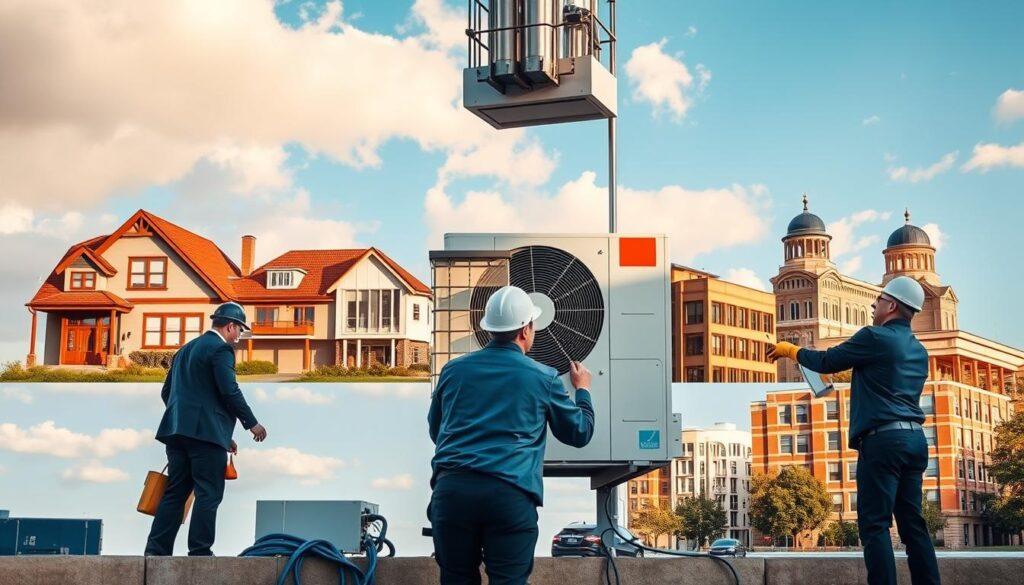
Core Role Profiles Driving Electrification
In every area, a team of experts makes electrification happen. They do everything from checking the building to making it work better over time.
The Energy Auditor
This person is like a detective. They use tools to find where heat escapes and figure out how much heating and cooling is needed. Their report guides the next steps.
The Installer & Technician
These experts put the plan into action. They remove old systems and install new ones like heat pumps. They make sure everything is done right.
The System Designer
The designer uses the auditor’s data to create the plan. They pick the right equipment, design the layout, and choose controls. They balance cost, efficiency, and performance.
The Customer Experience (CX) Agent
This role handles the people and money side. They help with rebates, financing, and are the main contact. They make the project smooth for the customer.
The Controls Engineer
This person makes the system smart. The controls engineer programs it to work better, like changing temperature based on use or weather. They connect the heat pumps with other systems for the best performance.
Together, these roles are the heart of the industry. They make electrification real, from small homes to big campuses.
Toolkits: load calcs, Manual J/S/D, controls platforms, airflow commissioning
High-performance electrification is not about guessing. It’s based on accurate calculations and strict standards. Experts use specific tools and methods. These ensure systems work right the first time, save energy, and avoid costly fixes.
At the heart of any project is the load calculation. A heat pump that’s too big or too small causes comfort problems and wastes energy. The Manual J by ACCA is key for figuring out a building’s heating and cooling needs.
After figuring out the load, Manual D helps design the ducts. It makes sure air flows well and evenly in the home. For picking the right equipment, Manual S is used. Together, these manuals are the mark of a good building electrification & heat pumps design.
Controls Platforms and Airflow Commissioning
Modern heat pumps are smart systems. They have controls that let you zone, schedule, and connect with other home systems. Setting them up right is key for comfort and saving energy.
This leads to retro-commissioning for old buildings. It tests, adjusts, and optimizes the new systems. It checks that airflow, refrigerant, and controls are all set right.
Airflow commissioning is a big part of this. It uses tools like flow hoods and manometers to check air volume. Mastering these tools makes a big difference between good installers and great ones.
Safety and Quality: The Non-Negotiable Pillars
Technical skill must always go with a strong focus on safety and building science. This protects people and buildings. Certifications like BPI/HERS guide these best practices.
These standards are more than just checks. They show deep knowledge and a commitment to quality. They make a big difference in a technician’s career.
Handling New A2L Refrigerants
New heat pumps use mildly flammable A2L refrigerants. Working with them needs special training and tools. Technicians must know how to handle, detect leaks, and recover safely.
Venting and Combustion Safety
In retrofit projects, old systems are removed. Sealing old chimneys and flues is critical for safety. It stops backdrafting and keeps air quality good. A final combustion safety test is a must.
Air Sealing and Moisture Control
A building’s envelope is its first defense. Poor retro-commissioning can cause pressure imbalances. Skilled pros use blower door tests to find leaks and seal them. This work controls moisture, preventing mold and rot, and ensures the building electrification & heat pumps system works well.
Following BPI/HERS guidelines makes an installation high-performance. It turns a regular job into a durable, efficient, and healthy upgrade for the building.
Role Profiles: auditors, installers, designers, CX agents, controls/automation
Every successful heat pump installation and building upgrade relies on a team of experts. The move to building electrification is not just about tech; it’s about people too. This section outlines the career paths for five key roles, showing how each plays a part in a smooth transition.

The auditor’s path often begins with basic energy checks. With time, they move to complex building diagnostics. Their main job is to spot where a building loses energy and how to fix it with electrification.
Senior auditors do several important tasks:
- They conduct blower-door tests to measure air leaks.
- They use infrared cameras to find thermal issues.
- They create detailed heat-loss models for system sizing.
- They suggest complete upgrade packages, including heat pumps and air sealing.
This role combines detective work with technical analysis, making it a critical first step in any project.
The Heat Pump Installer
Installers are the hands-on, technical experts. They turn plans into action. They start by learning about refrigerant handling and electrical connections. With experience, they lead installation crews.
A skilled installer ensures safety and quality. They handle key tasks like refrigerant charging, venting, and moisture control. Their work affects system longevity and efficiency.
The System Designer
Designers plan, while installers execute. This role focuses on engineering. Designers use data from auditors to create the technical plan for electrification projects.
They use tools like Manual J for load calculations and Manual D for duct design. Their goal is to specify the right equipment for the building. This requires a deep understanding of how heat pumps work with a building’s structure.
The CX (Customer Experience) Agent
The CX agent role is key for closing deals. They handle financing, rebates, and utility programs. They explain technical benefits in a way customers can understand.
Industry reports call sales and customer education “soft costs.” A good CX agent turns this into a competitive edge. They help make building electrification affordable for homeowners and businesses.
The Controls & Automation Specialist
This role focuses on system optimization. After installation, controls experts make systems smart. They integrate thermostats, sensors, and building management systems.
Their work ensures systems work together. They program systems for peak efficiency and comfort. This role is growing as buildings aim to automate energy savings and join grid-responsive programs.
Each role offers a unique career path in building electrification. From the auditor’s diagnostic skills to the CX agent’s customer focus, these roles are in demand. Together, they form the skilled workforce driving the transition to heat pumps and more.
Sales & Program Roles: rebates, financing, utility programs
Success in heat pump or electrification projects depends on more than just technical skills. It also requires understanding rebates, loans, and utility incentives. Sales and program roles are key, turning green dreams into affordable, real plans for homeowners and building owners.
These professionals focus on the project’s “capital stack.” This is a mix of financial tools that lowers the upfront cost. For clients, this can be confusing. A skilled program specialist simplifies it, finding every dollar available.
The typical financial stack for building electrification includes:
- Federal and State Tax Credits: Direct reductions in tax liability, like the federal Inflation Reduction Act credits.
- Utility Rebates: Cash-back incentives from local utilities for installing efficient equipment.
- State & Local Grants: Direct funding, often targeted at low-to-moderate income households.
- Specialized Financing: Low-interest loans, on-bill repayment, or innovative leasing options.
Companies like Qmerit and Elephant Energy focus on efficiently navigating rebate stacks. They save contractors time and help homeowners get the most benefits.
Innovative financing models also play a big role. Companies like Sealed offer savings guarantees, covering costs if energy savings don’t meet expectations. Others, like Service 1st Financial, provide leasing options with little or no down payment. These options make it easier for customers to start.
Large-scale program management is another area of focus. Organizations like BlocPower work with utilities and governments to fund and manage upgrades. They ensure projects meet equity and environmental goals, making a big impact.
These roles offer stable, office-based careers with a direct link to growth. They’re great for those who enjoy problem-solving, client interaction, and policy understanding. These positions are essential in the growing field of careers in green building. They are just as vital as engineers and installers in the field.
Entry Routes: apprenticeships, bootcamps, trade schools
Getting into the heat pump and electrification sector doesn’t need a four-year degree. Apprenticeships offer paid training and immediate work. The need for skilled workers in building electrification opens many career paths.
These entry points fit different schedules and learning styles. Whether you like hands-on work or classroom learning, there’s a path for you.
Let’s look at the three main ways to start a career in this growing field.
Registered Apprenticeships
This is the top choice for learning a trade. Apprenticeships mix paid, on-the-job training with classroom lessons. You start earning a wage right away, working with experienced professionals.
Programs for HVAC, electrical, and plumbing trades lead directly to heat pump work. Many are backed by unions, contractor groups, or utilities.
Top programs offer extra support. This can include help with travel, tools, or childcare.
Intensive Bootcamps
These short, focused programs are for those changing careers. A building electrification bootcamp might teach heat pump basics in weeks.
They’re perfect for quick career changes. Some programs even give a stipend to attend, making it easier to start.
Trade & Technical Schools
These schools give the basics and hands-on practice needed for a career. Programs last from months to two years and offer a certificate or associate degree.
They cover important theory, safety, and skills. This route offers a structured learning environment before you start working.
| Pathway | Key Features | Time Commitment | Ideal For |
|---|---|---|---|
| Apprenticeship | Paid work experience, mentorship, classroom instruction | 3-5 years | Hands-on learners ready to earn while they learn |
| Bootcamp | Fast-paced, skill-specific, often includes career services | Weeks to 6 months | Career-changers seeking a rapid transition |
| Trade School | Comprehensive curriculum, foundational theory, certifications | 6 months – 2 years | Those preferring structured education before employment |
Demystifying Key Certifications
Many newcomers wonder about licensing and refrigerant handling. Knowing these early helps clear up doubts.
- EPA Section 608 Certification: Needed for anyone handling refrigerants, like most heat pump techs. It’s a federal exam. Many programs help with prep and testing.
- State & Local Licensing: Rules vary widely. It’s wise to connect with local training providers to learn about specific HVAC or electrical licenses needed in your area.
Modern workforce development aims to make these careers accessible. Look for programs that follow these best practices:
- Offering free training or paying participants.
- Providing clear paths to needed certifications.
- Including hands-on training with real equipment.
The path to a meaningful career in the electrification sector is clear. By choosing the right entry route, you can build a future in sustainable technology.
Portfolio: blower-door tests, heat-loss models, case writeups
Building a portfolio is more than just collecting documents. It’s about showing how you’ve made a real difference. In the world of building electrification & heat pumps, your success stories are your strongest proof.
Your work collection turns complex tasks into something you can show off. It shows your worth to employers or clients. It’s key for moving up in your career or starting your own business.
There are three main types of documents in a good portfolio for this field.
Blower-door test reports prove how well a building seals. They show you’ve made a real change. By showing how much air leaks before and after, you prove you’ve saved energy and made homes more comfortable.
Heat-loss models are the engineering backbone of building electrification & heat pumps projects. These models, based on Manual J calculations, back up your equipment choices. They show you’re choosing the right size based on science, not guesses.
Case writeups tell the whole story. They link the technical details to real results. A good case study explains the project’s challenges, the solutions, and the final results. It shows your problem-solving skills and your ability to manage a project from start to finish.
| Portfolio Component | Primary Purpose | Key Metrics to Highlight | Career Value |
|---|---|---|---|
| Blower-Door Test | Verify air sealing quality and building tightness. | CFM50 at 50 Pascals, ACH (Air Changes per Hour). | Proves competency in building science and quality assurance. |
| Heat-Loss Model | Accurately size heating/cooling systems. | Design heating/cooling load (BTU/hr), Manual J compliance. | Demonstrates critical engineering and calculation skills. |
| Case Writeup | Document project narrative and holistic outcomes. | Energy savings (kWh, Therms), cost savings, client testimonials. | Showcases project management, communication, and business impact. |
These elements make you more than just a technician. They help you become a trusted decarb consultant. As a consultant, you advise on how to make buildings greener. You use your portfolio to help make big decisions about investments.
Compensation & Career Ladders
The building electrification sector is growing fast, creating clear paths for skilled workers. The Bureau of Labor Statistics shows that workers in this field can earn well. Starting salaries for technicians are competitive, and those with specialized skills can earn even more, especially as regional programs such as clean power initiatives in IL continue expanding demand for electrification and energy-efficiency professionals.
There are clear steps to move up in this field. Technicians can become crew leaders, then project managers. Energy auditors can grow into program designers or consultants. Success depends on both technical skills and strong customer service.