
Los Angeles retrofits are being studied for two linked outcomes: lower building energy demand and reduced heat exposure during hot weather. The evidence is strongest where researchers or public agencies define the building stock, model the retrofit package, and separate measured field results from projected citywide effects. That distinction matters because the same intervention can reduce utility demand, indoor heat stress, or outdoor anthropogenic heat in different ways.
The research base for Los Angeles is broader than a single technology. It includes modeled packages across large building populations, field demonstrations in public buildings, multifamily retrofit projections, and policy programs that prioritize low-income households. The findings support a practical point for green building work: envelope measures, lighting controls, HVAC commissioning, and appliance upgrades can produce measurable benefits, but performance depends on baseline conditions, installation quality, weather, and occupant use.
What Los Angeles retrofits Can And Cannot Show
Modeled Savings Are Useful, But Not The Same As Metered Results
Los Angeles retrofits are often discussed through model results because the city’s building stock is too large and varied to test every measure in the field. Modeling is useful when it compares packages across consistent assumptions, but it should not be read as a guarantee for every building. A September 2026 study modeled 11 retrofit measures and two combined packages across buildings in Los Angeles. The reported energy-savings-optimized package reduced summer building energy use by about 32%, equal to roughly 2.3 TWh in the study scenario. A separate anthropogenic-heat-aware package reduced anthropogenic heat emissions by more than 50%, or about 137 PJ, while achieving similar energy savings.
Those results are directionally important because they show that retrofit packages can be optimized for different goals. A package selected only for energy savings may not be identical to one selected to reduce waste heat discharged into the urban environment. The same study reported reductions in mean near-surface air temperature of up to 0.62 °C and peak temperature reductions of up to 3.79 °C in modeled conditions. These are model outputs, not citywide measurements after a completed retrofit campaign, so they are best treated as scenario evidence.
Roof coating was identified in the September 2026 modeling work as the single most effective measure for reducing anthropogenic heat emissions among the measures examined. That finding is consistent with the physical role of roofs in solar heat gain, but it does not mean roof coating is always the first retrofit choice in each building. Structural condition, roof age, maintenance plans, tenant comfort, and code requirements can all affect sequencing.
Why Los Angeles retrofits Affect Heat Differently
Heat mitigation is not limited to outdoor air temperature. Buildings influence heat through cooling electricity demand, equipment waste heat, roof and wall surface temperatures, and indoor exposure when air conditioning is unavailable or unaffordable. Research from Los Angeles County reported that building anthropogenic heat, excluding the surface component, increased ambient air temperatures during a late-summer 2018 heatwave by up to 0.6 °C during daily maximum conditions and up to 2.9 °C during daily minimum conditions, with stronger effects at night.
That nighttime result is important for health and energy planning, although this article does not provide medical advice. If buildings release heat after sunset, neighborhoods may cool more slowly. Retrofit packages that reduce cooling loads, improve envelopes, or limit solar gain can therefore matter beyond the individual utility bill. The scale of that effect depends on how many buildings are upgraded and whether measures reduce actual waste heat rather than only shifting electricity use.
For readers interested in broader public-interest research topics within the same network, Wills Glaucoma provides a separate health-focused resource. It should not be used as evidence for building energy or urban heat claims.
Multifamily Buildings And Equity Constraints
Large Housing Stocks Need Practical Packages
Multifamily buildings are central to the retrofit question because they house many residents who may have limited control over major envelope or equipment upgrades. In Los Angeles County, research on more than 43,000 multifamily residential buildings and more than 150,000 housing units found that a low-cost energy efficiency retrofit package was projected to reduce annual electricity use by 17%, lower peak electricity demand by 19%, and produce net annual energy cost savings of about $183 per housing unit, according to Lawrence Berkeley National Laboratory’s work on urban heat island countermeasures.
The same savings figure should be interpreted carefully. An average annual cost saving does not describe every household. Units with different orientations, floor levels, equipment, window conditions, or tenant schedules may perform differently. Owners may also face split incentives: the party paying for upgrades may not be the party receiving the energy savings. That is why program design, financing, tenant protection, and verification are part of the technical retrofit discussion rather than separate policy issues.
A dedicated assessment of 13 heat-vulnerable multifamily buildings in El Monte used passive and low-power measures such as cool roofs, cool walls, solar film, air sealing, internal blinds, natural ventilation, and ceiling fans. Under 2018 weather, the package reduced peak electricity load by 19% and reduced household energy cost by $183 per unit per year. The same assessment reported a 50% reduction in dangerous indoor heat hours in 2018 conditions and a 34% reduction under projected 2058 climate conditions. This evidence is narrower than countywide modeling, but it is valuable because it focuses on heat-vulnerable buildings and indoor conditions.
Public Programs Can Lower Barriers, But Delivery Still Matters
On May 20, 2026, California announced an Equitable Building Decarbonization program intended to provide no-cost retrofits to income-qualified households in Los Angeles and other counties. The measures described in the announcement included replacement of inefficient appliances with electric ones, weatherproofing, insulation, and air sealing. The program was framed in relation to California’s building-sector emissions, which account for about one-quarter of statewide greenhouse gas emissions, and the state target to cut emissions 40% below 1990 levels by 2030.
Program announcements do not prove delivered savings. The first completed project under that program was reported on May 27, 2026, at a low-income senior housing complex in Southern California, with efficient electric appliances and building upgrades focused on indoor air quality and safety. For Los Angeles implementation, the key questions are practical: how many homes are reached, which measures are installed, how work quality is checked, and whether post-installation data shows lower energy use or safer indoor temperatures.
Los Angeles retrofits are not one intervention. They are a set of choices applied to buildings with different ages, ownership structures, climate exposures, and maintenance histories. That variation is why a countywide percentage should not be treated as a substitute for building-level audits.
Field Evidence From Public Building Retrofits
Façade, Lighting, And HVAC Measures Work Best As Systems
Field demonstrations help test whether retrofit measures perform in real buildings, with real schedules and maintenance constraints. A California Energy Commission project in two Los Angeles-area public buildings combined façade measures such as automated shades, LED lighting with advanced controls, and HVAC retro-commissioning. The project reported 15% to 26% whole-building energy savings, lighting reductions of 35% to 42%, and HVAC savings of 6% to 29% at Santa Ana City Hall and CSU Dominguez Hills Welch Hall, as described in the commission’s report on integrated façade, lighting, and HVAC retro-commissioning.
This is a stronger form of evidence than a simple equipment claim because it considers interaction among systems. Automated shading can affect cooling loads and daylight availability. LED controls can reduce lighting electricity and internal heat gains. HVAC commissioning can correct operation that no longer matches building use. None of these measures operates in isolation once installed.
The limits are equally clear. Two public buildings do not represent every office, school, apartment building, or retail property in the region. Public buildings may have different operating schedules, procurement processes, maintenance staff, and capital planning than privately owned multifamily housing. The reported savings are still useful because they show that integrated retrofits have achieved measured whole-building reductions in real facilities.
For readers seeking a related discussion of model boundaries and retrofit scenarios, the site’s article on retrofit energy savings models connects building-level measures with Los Angeles heat and energy analysis.
Implementation Barriers For Energy And Heat Goals
Cost, Sequencing, And Verification Shape Results
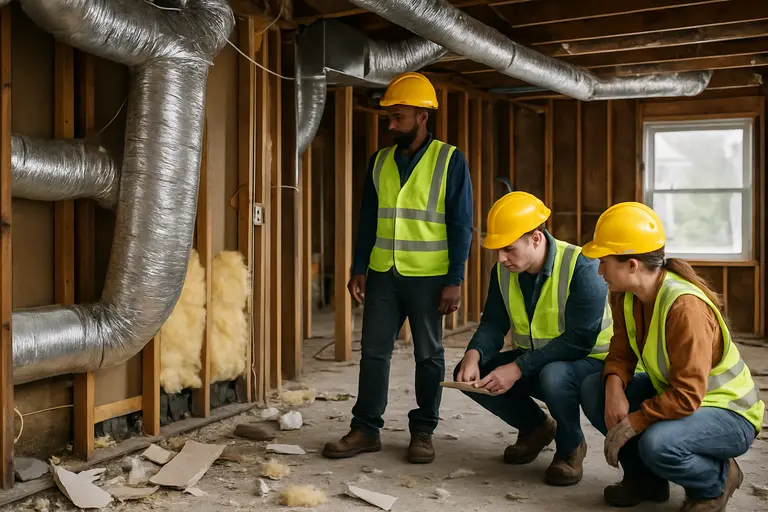
Retrofit economics are not only about payback. A building may need roof repair before a cool roof coating is practical. Electrical panels may limit appliance electrification. Tenants may need relocation protection during work. Owners may prioritize code compliance or deferred maintenance before deeper energy upgrades. These constraints can slow adoption even where modeled savings look favorable.
Verification is another barrier. A claimed reduction in energy use can be distorted by weather, occupancy changes, equipment replacement, operating hours, or tenant behavior. Weather-normalized source energy intensity rules in Los Angeles require certain buildings either to reduce energy intensity by 15% compared with the previous five years or show performance at least 25% better than median energy use for comparable buildings, with cool roof requirements in some cases. Such rules can support accountability, but they depend on reliable data and professional certification.
Heat-focused verification is even harder. Outdoor temperature effects require neighborhood-scale measurement or modeling. Indoor heat exposure depends on unit conditions, resident behavior, ventilation, cooling access, and power reliability. Research on building envelope improvements combined with cooling access during heat-wave power outages has found large reductions in exposure to extreme indoor heat across Los Angeles housing stock scenarios, but those outcomes rely on assumed outage conditions and measure adoption.
For equity, Los Angeles retrofits should be judged not only by aggregate kilowatt-hour savings, but also by whether benefits reach households with high heat exposure and limited resources. That assessment requires transparent reporting on participation, installed measures, cost, and post-retrofit performance.
Los Angeles retrofits Evidence For Energy And Heat
The evidence supports a cautious but meaningful finding: building retrofits in Los Angeles can reduce energy demand and contribute to heat mitigation, especially when envelope, lighting, HVAC, and low-power cooling measures are combined. Modeled citywide packages suggest large potential savings and heat reductions. Multifamily projections show notable electricity and peak-demand reductions. Public building demonstrations show measured whole-building savings when integrated systems are commissioned and controlled.
The clearest reading of Los Angeles retrofits is that they are field-tested in some building types, modeled at larger scales, and still dependent on implementation quality. The strongest claims are tied to defined packages, specific building populations, and transparent assumptions. The weakest claims are broad statements that a single technology will solve urban heat or decarbonize buildings on its own.
For green building practitioners, the practical path is evidence-based sequencing: assess the building, select measures that address both energy and heat where feasible, document installation quality, and verify performance after occupancy and weather effects are considered. That approach is slower than marketing a universal solution, but it is more consistent with the data available for Los Angeles.