Renewable Natural Gas has moved from a niche waste-to-fuel pathway into a more defined part of U.S. transportation policy. The shift is not mainly a technology breakthrough. It is a policy and accounting change: federal tax credits, emissions-rate tables, and state fuel incentives are giving producers and fleet operators clearer signals about how RNG may be valued when it is used as transportation fuel.
The case for RNG in transportation is tied to two systems that cities and rural regions already manage: organic waste and heavy-duty fuel demand. Landfills, wastewater systems, and manure-management operations can generate methane-rich biogas. If upgraded to pipeline-quality fuel and used in vehicles, it can substitute for conventional natural gas in compatible engines. That does not make it an unlimited fuel source, and it does not remove the need for electrification, efficiency, or demand reduction. It does mean waste management is becoming more visible in transportation policy.
The most significant U.S. changes through September 30, 2026 concern Section 45Z of the Internal Revenue Code, which created a Clean Fuel Production Tax Credit for qualifying low-emissions transportation fuels. The credit became effective on January 1, 2025, and recent guidance has made the calculation rules more usable for producers. To explore more nuanced science and policy discussions, Harvard Science Review offers insights into related topics within the same network.
Why Renewable Natural Gas Policy Matters For Freight
Heavy-Duty Fuel Demand Is Hard To Replace Quickly
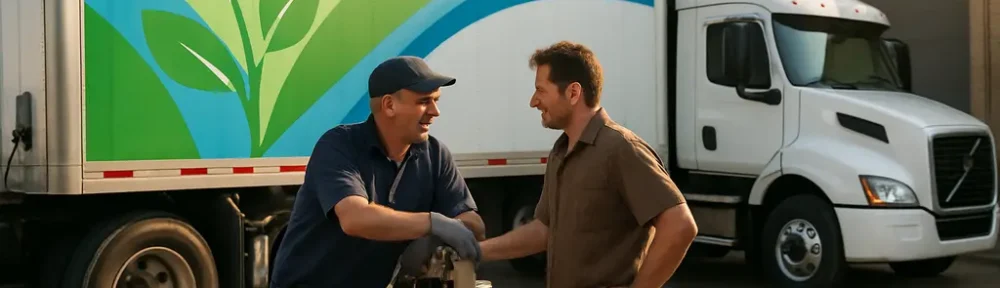
Medium- and heavy-duty vehicles remain a difficult segment for rapid decarbonization. Battery-electric trucks are advancing, but deployment depends on vehicle availability, charging infrastructure, route suitability, grid capacity, and depot-level planning. RNG is relevant because it can be used in natural-gas vehicle platforms that already exist, especially in refuse trucks, transit buses, and some regional freight applications.
That near-term compatibility is also the reason policy scrutiny matters. If incentives reward only fuel volume without credible emissions accounting, they may shift money without delivering proportional climate benefits. If rules account for lifecycle emissions, methane capture, feedstock type, and production practices, they can create a more disciplined market signal. The evidence available in the research record shows that the U.S. policy direction has been toward the second approach, though implementation remains dependent on modeling assumptions and documentation.
Waste Management Creates The Feedstock Link
RNG production depends on capturing and upgrading biogas from organic materials. Agriculture-based systems are one important source. As of June 2024, the United States had 191 manure-based anaerobic digester systems producing RNG, with 69 additional projects under construction. That scale is meaningful for waste management and methane control, but it is small relative to national transportation fuel demand.
The research provided for this article states that U.S. RNG production could meet only about 1% of heavy- and medium-duty vehicle fuel demand at the time of the cited estimate. It also reports projections that production could triple by 2027, reaching roughly 2.5% of that demand. Those figures support a cautious interpretation: RNG can be a targeted fuel option, not a full substitute for broader freight decarbonization.
What Section 45Z Changed For RNG Producers
What Renewable Natural Gas Receives Under 45Z
Section 45Z rewards qualifying clean fuel production based on emissions performance. The credit applies to transportation fuel, and RNG producers can qualify when the fuel meets the relevant requirements. The base credit rate reported in the research is $0.20 per gallon equivalent. Under qualifying conditions, including prevailing wage, apprenticeship, and lower lifecycle emissions, the credit can rise to as much as five times the base rate.
The timeline is central. Section 45Z was created by the Inflation Reduction Act of 2022 and became effective on January 1, 2025. On July 4, 2025, the One, Big, Beautiful Bill Act was signed into law and extended the availability of the credit from December 31, 2027 to December 31, 2029, according to a cited SEC filing. That extension gave producers a longer planning window, although it did not remove project-level risks around feedstock supply, interconnection, permitting, and credit qualification.
Guidance Reduced Some Accounting Uncertainty
As of February 4, 2026, proposed Treasury regulations had clarified eligibility, lifecycle emissions score calculations, and transferability rules under Section 45Z. The research notes indicate that this gave sufficient certainty for some producers to begin claiming credits. That phrase matters: regulatory clarity can improve investment confidence, but proposed and interpretive guidance still leaves room for administrative, legal, and accounting risk.
The IRS then issued Notice 2026-53 on September 8, 2026. The notice updated emissions-rate tables and modeling methodologies for calculating clean fuel production credits under 45Z. It also addressed how manure-derived fuels and regenerative agricultural practices factor into emissions-rate models, according to IRS Notice 2026-53. For manure-based RNG, this is especially relevant because avoided methane emissions can strongly influence lifecycle carbon intensity estimates.
The policy signal is clear enough to affect planning, but not simple enough to treat as automatic revenue. Producers still need to document fuel pathways, feedstocks, emissions assumptions, and qualifying production. Fleet operators also need to distinguish between using RNG as a physical fuel and claiming environmental performance through certificates, contracts, or fuel-standard credits.
State Incentives And Federal Proposals Add Momentum
California Incentives Target Class 8 Trucks
Federal tax policy is only one part of the transportation fuel decision. California has used Low Carbon Fuel Standard incentives to encourage lower-carbon transportation fuels. In the research notes, SoCalGas opened a round of incentives on May 11, 2026, offering $2.5 million in pre-funded fuel cards. The program offered up to $50,000 per qualifying new Class 8 heavy-duty RNG truck and was scheduled to remain open through November 1, 2026.
As of September 30, 2026, that made the program an active near-term incentive rather than a completed policy event. Its design focused on heavy-duty trucks, where fuel consumption is high and where lower-carbon fuels can have a larger per-vehicle effect than in light-duty passenger applications. The limitation is that a fuel-card incentive does not by itself solve vehicle availability, fueling access, maintenance capacity, or long-term fuel supply contracts.
A Separate Federal Bill Remained Under Consideration
The Renewable Natural Gas Incentive Act of 2025, introduced on April 2, 2025 as S. 1252 and H.R. 2596, proposed a $1.00 per gallon tax credit for the sale or use of RNG as motor vehicle fuel. As of September 30, 2026, the bill remained under consideration in Congress. Because it had not been enacted by that date, it should be treated as a policy proposal rather than an available incentive.
This distinction is relevant for project economics. Enacted credits can be modeled with more confidence, subject to compliance rules. Proposed credits may shape market expectations, but they should not be counted as secured revenue. For municipal fleets, waste haulers, transit agencies, and logistics firms, the difference affects procurement decisions, fuel contracts, and claims about emissions reduction.
- Enacted Section 45Z credits affect qualifying clean fuel production beginning January 1, 2025.
- The July 4, 2025 law extended 45Z availability through December 31, 2029.
- IRS Notice 2026-53 updated emissions-rate and modeling methods on September 8, 2026.
- The separate 2025 RNG motor-fuel credit bill remained under congressional consideration as of September 30, 2026.
Scale Limits And Emissions Accounting

Supply Growth Does Not Remove Scarcity
Policy support can make RNG projects more attractive, but supply remains constrained by available feedstocks and project economics. Landfills, wastewater facilities, and livestock operations are geographically dispersed. Not every site has enough gas volume, access to capital, interconnection options, or proximity to fuel markets. Upgrading biogas to vehicle-grade fuel also requires equipment, monitoring, and compliance systems.
A May 2025 modeling study cited in the research projected that, under existing policy, U.S. RNG production could grow to 2.7 billion gallons, or about 10 billion liters, annually by 2050, mainly from swine manure. The same scenario projected a reduction of about 58.56 million metric tons of CO2e in 2050. Those are model results, not measured future outcomes. They depend on assumptions about policy continuity, technology deployment, manure-management practices, and lifecycle emissions methods.
Lifecycle Methods Shape The Result
The environmental case for RNG depends heavily on lifecycle accounting. Capturing methane that would otherwise escape from manure or landfill systems can produce large climate benefits because methane has a high warming impact over shorter time horizons. Yet the final carbon-intensity score can vary with feedstock, leakage, transport, upgrading energy, combustion emissions, and crediting rules.
That is why the September 8, 2026 IRS update matters. Emissions-rate tables and modeling methods influence which projects receive larger credits and which practices qualify for favorable treatment. For analysts, the main question is not whether RNG is always low-carbon. It is whether each fuel pathway can document a lower lifecycle emissions rate under the applicable rules.
Urban transportation agencies should also avoid double-counting benefits. A waste facility may claim methane-control benefits, a fuel producer may claim clean fuel credits, and a fleet may report lower fuel carbon intensity. Those claims can be valid within specific systems, but they need clear boundaries to prevent the same emissions reduction from being overstated across multiple reports.
What Renewable Natural Gas Policy Can And Cannot Do
Renewable Natural Gas should be viewed as a targeted transportation fuel supported by waste-management policy, not as a universal replacement for diesel or a reason to slow other clean-freight measures. The legislative advances through September 30, 2026 made the market more legible. Section 45Z created a production-based credit, later legislation extended its availability, and IRS guidance refined how emissions rates are calculated.
Those steps matter because fuel markets respond to rules as much as to engineering. A project developer needs to know whether a fuel pathway qualifies. A lender needs some visibility on credit duration. A fleet operator needs to compare vehicle cost, fueling access, fuel price, and emissions reporting value. Clearer policy does not eliminate uncertainty, but it can reduce some of the barriers that previously kept projects from moving forward.
The main constraint is scale. The available evidence does not support claims that RNG can supply most heavy-duty transportation demand. It supports a narrower claim: where waste-derived methane can be captured, upgraded, documented, and delivered to suitable fleets, RNG can contribute to emissions reduction and waste-sector methane management. That contribution is likely to be strongest in fleets with predictable routes, centralized fueling, and existing natural-gas vehicle experience.
For sustainable urban development, the most useful policy test is practical rather than rhetorical. A strong RNG program should show where the feedstock comes from, how methane capture is measured, how lifecycle emissions are calculated, which fleets use the fuel, and how claims are separated across waste, fuel, and transportation reporting systems. Without that evidence, incentives risk rewarding activity more than outcomes.