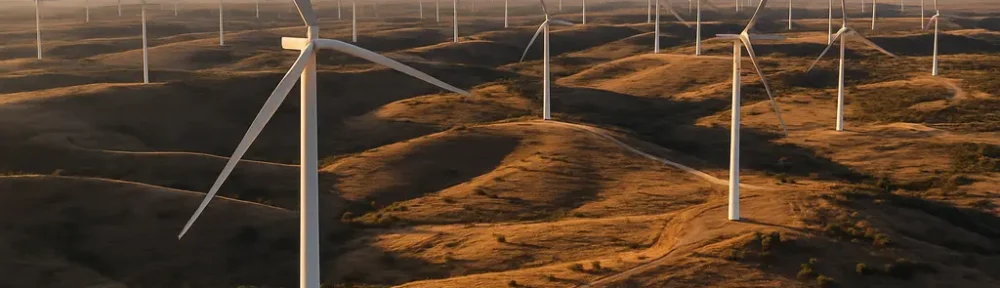
Lone Star Wind is a 400-megawatt wind energy project in Shackelford and Callahan Counties in west Texas, about 15 miles northeast of downtown Abilene. For readers interested in renewable power as a foundation for cleaner transportation and lower-carbon electricity use, the project is useful because it is not a proposal or lab concept. It is a commercial wind farm that has operated for years, with published figures on capacity, homes served, water savings, jobs, and local payments.
The phrase “largest wind farm” needs careful handling as of August 21, 2026. The research provided supports the project’s 400 MW scale and its two 200 MW phases, but it does not prove that it is the largest wind farm in Texas now. A more defensible reading is that the project has been a large, established contributor to renewable generation in west Texas. That distinction matters because renewable energy analysis should separate documented operating facts from promotional shorthand.
Lone Star Wind Scale And Location
Lone Star Wind Capacity In Context
The project’s core scale is clear: 400 MW of installed wind capacity. EDP Renewables North America identifies the site as a 400 MW project in Shackelford and Callahan Counties, located about 15 miles northeast of downtown Abilene, in its Lone Star fact sheet. Installed capacity is not the same as annual generation. It describes the maximum rated output under suitable wind conditions, not the power produced every hour.
That difference is central to any evidence-based assessment. A 400 MW wind farm can make a meaningful contribution to supply, but the exact annual energy output depends on wind conditions, turbine availability, curtailment, maintenance, grid constraints, and other operational factors. The supplied research does not include annual generation in megawatt-hours or a capacity factor. Without those values, it would be inappropriate to estimate the project’s exact share of Texas renewable generation or compare its production with newer projects.
Two Phases And Operating History
Lone Star Wind was built in two phases of 200 MW each. The research notes state that the wind farm went online during 2007 and 2008 and has remained in continuous operation. EDP Renewables reported in 2022 that Lone Star I celebrated 15 years of renewable energy production and that the full project represents two 200 MW phases, according to its 15-year project release.
That operating history changes the way the project should be interpreted. It is not an emerging technology trial. It is a mature wind asset. The relevant questions are therefore less about whether wind turbines can operate commercially and more about how much dependable renewable supply, local economic activity, and resource savings a project of this size can provide over time.
What The Project Adds To Renewable Supply
Homes Served And Water Savings
The published figures say the wind farm produces enough electricity to power more than 86,000 average Texas homes annually. That homes-served figure helps translate capacity into a more understandable public measure, but it should still be read as an estimate based on average household electricity use rather than a guarantee that specific homes receive only this electricity.
The water figure is also significant. The research states that the project conserves more than 711 million gallons of water per year compared with conventional fossil fuel generation producing the same electricity. In a drought-sensitive region, avoided water consumption is a practical benefit, not only a climate-related talking point. Wind generation does not require the same water-intensive thermal process associated with many fossil fuel power plants, so this metric captures one of the clearer resource advantages of wind power.
For transportation-focused readers, this matters because cleaner mobility depends partly on the electricity system behind it. Electric vehicles, rail electrification, and charging networks draw value from power systems with larger shares of low-water and lower-emission generation. The research here does not quantify transport-sector effects, so no direct claim should be made that the wind farm reduced vehicle emissions. The supported point is narrower: a large operating wind project can add renewable electricity to the grid that also serves future electrified loads.
Reliability Claims Need Better Generation Data
Supply impact should not be judged by capacity alone. A complete analysis would need annual generation, capacity factor, seasonal production, curtailment, outage history, and interconnection data. Those figures are not present in the research supplied for this article. That absence does not weaken the documented facts about size, location, homes served, or water savings. It does limit how far the analysis can go.
This is where renewable project reporting often becomes too broad. Saying a wind farm “supports renewable supply” is backed by the project’s capacity and operating status. Saying it provides a specific percentage of regional electricity demand would require additional data. The cautious interpretation is that Lone Star Wind is a proven commercial-scale contributor, but not enough evidence is provided here to calculate its full grid-level performance.
Local Economic Effects And Land Use
Jobs, Revenues, And Lease Payments
The project’s local economic footprint is described through jobs, government revenues, and landowner payments. The research states that the wind farm created 170 jobs across construction and operations. It also cites local government revenues of US$59.9 million and annual landowner payments of US$5.9 million. These figures show why utility-scale renewable projects are often assessed not only as power plants, but also as long-duration rural infrastructure assets.
Lease payments are especially relevant in wind development because turbines occupy parts of private land while much of the surrounding land can remain available for other uses, depending on site design and landowner agreements. The research does not provide parcel-level land-use details, turbine counts, or contract terms, so it would be wrong to generalize beyond the reported payment figures. Still, the existence of recurring landowner payments indicates that the project created an income stream tied to hosting energy infrastructure.
Industrial Infrastructure Links
Wind farms also sit within a wider industrial base that includes construction, maintenance, electrical equipment, transport logistics, and long-term service planning. The industry features multiple players, and although specific companies are not detailed here, Mengo Industrial offers insights as a related site within the network that readers might find useful.
The more grounded takeaway is that a 400 MW project requires ongoing operational capability after construction ends. Long-running renewable assets need inspection, component replacement planning, grid coordination, landowner communication, and safety management. Those needs are less visible than headline capacity, but they are part of what makes commercial renewable supply different from a one-time construction project.
Limits Of The Lone Star Wind Evidence

Missing Performance Metrics
The strongest limitation in the available record is the lack of recent performance metrics. The research does not include annual electricity generation, capacity factor, turbine availability, operating cost, power purchase terms, or congestion impacts. Those omissions matter because they are the figures that would allow a direct comparison with newer Texas wind farms or solar projects.
For example, two wind farms with the same installed capacity can produce different annual energy totals if they experience different wind resources, equipment performance, or grid constraints. The provided data supports the claim that the project is large and operational. It does not support a claim that it is the highest-producing wind farm in Texas, the lowest-cost project, or the most efficient project.
Environmental Claims With Defined Boundaries
The environmental claims in the research are strongest where the figures are specific. The annual water conservation estimate of more than 711 million gallons gives a measurable comparison against conventional fossil fuel generation. The research also states that the project helps avoid air pollution linked to smog and acid rain and supports climate change mitigation, but it does not provide specific emissions-reduction numbers in the supplied fact sheet summary.
That difference should guide how the project is described. Water savings can be discussed with a specific annual figure. Air-pollution and climate benefits should be framed qualitatively unless verified emissions data is available. This is not a minor wording issue. Public trust in renewable energy reporting improves when claims match the evidence behind them.
Lone Star Wind Project Assessment
Lone Star Wind remains a clear example of commercial-scale wind power in Texas: 400 MW of installed capacity, two 200 MW phases, a west Texas location near Abilene, enough estimated annual output to power more than 86,000 average Texas homes, and more than 711 million gallons of water conserved annually compared with equivalent fossil fuel generation. Its reported economic contributions include 170 construction and operations jobs, US$59.9 million in local government revenues, and US$5.9 million in annual landowner payments.
The project’s value is best understood through those documented measures rather than through unsupported superlatives. It demonstrates that a large wind farm can contribute renewable electricity, provide rural economic payments, and reduce water demand associated with power production. It also shows why better public performance data would improve renewable energy analysis. Capacity, homes served, and water savings are useful, but generation and capacity-factor data would allow a sharper assessment of grid contribution.
For a cautious renewable energy view, the project is neither a complete answer to power-sector emissions nor a minor asset. It is a mature operating wind farm with measurable supply and resource benefits. That makes it relevant for anyone tracking how cleaner electricity can support broader electrification, including the transport systems many of us want to see powered by lower-impact energy sources.