
The numbers are staggering. Without significant intervention, global waste is projected to surge by 70% by the year 2050. This isn’t just a future problem; it’s a pressing crisis demanding immediate and intelligent action.
Government intervention is the fundamental lever for change. A well-designed regulatory framework acts as a powerful catalyst. It transforms waste management from a disposal headache into a strategic sustainability imperative.
These rules reshape entire industries. They influence material flows, shift economic incentives, and promote corporate accountability. The goal is clear: to decouple business growth from environmental harm. For a deeper look at how these frameworks operate, explore our guide on understanding waste reduction policies.
This shift is at the heart of the modern circular economy. It moves us beyond the old “take-make-dispose” model. Now, producers are responsible for their products’ entire lifecycle.
Global Waste Reduction Policy Landscape
Exploring waste policy shows us three main ways governments act. They use command-and-control, market-based tools, and public education. These methods are key to waste reduction legislation. No single method works alone. Instead, the best policies mix these approaches to tackle waste.
Think of it as a strategic playbook:
- Command-and-Control: Direct rules like bans and strict recycling mandates.
- Market-Based Instruments: Economic tools like taxes and fees that make waste expensive.
- Information Campaigns: Public education to change how people and businesses act.
These tools work together. A ban on a material sets a clear rule. A tax on landfill disposal makes recycling cheaper. An info campaign teaches everyone how to help. This mix is what makes good policy.
Let’s look at the main types of laws worldwide. The table below shows how these big policies work.
| Policy Type | Primary Mechanism | Common Examples |
|---|---|---|
| Extended Producer Responsibility (EPR) | Shifts waste management costs and responsibility back to product manufacturers. | Packaging take-back schemes, electronics recycling programs. |
| Landfill & Incineration Taxes | Increases the cost of disposal to encourage reduction, reuse, and recycling. | Per-ton fees on waste sent to landfill or waste-to-energy plants. |
| Recycling & Waste Diversion Mandates | Legally requires municipalities or businesses to meet specific recycling rates. | City-wide composting ordinances, commercial recycling laws. |
| Single-Use Product Bans | Prohibits the sale or distribution of certain, hard-to-recycle items. | Bans on plastic bags, straws, polystyrene food containers. |
Real-world examples show this policy mix in action. Germany’s Green Dot system is a leader in EPR for packaging. Producers pay fees based on packaging amount and type. This funds a nationwide recycling system. Germany has one of the highest packaging recycling rates globally.
In San Francisco, zero-waste mandates take a command-and-control approach. The city has strict recycling and composting laws for all. It banned plastic bags and foam containers. This has made San Francisco’s landfill diversion rate over 80%.
Understanding this global landscape is key. It shows how different tools can be used together to create a strong waste management system. Next, we’ll focus on Extended Producer Responsibility programs.
Extended Producer Responsibility Programs
Imagine a world where companies are responsible for their products from start to finish. This is the idea behind Extended Producer Responsibility (EPR). EPR policies change how we handle waste. They make companies responsible for what happens to their products when they’re no longer needed.
This isn’t just a suggestion. It’s the law in places like California and the European Union. Laws like California’s SB 54 and the European Union’s Corporate Sustainability Reporting Directive (CSRD) are making this happen. These laws are making EPR a global standard.
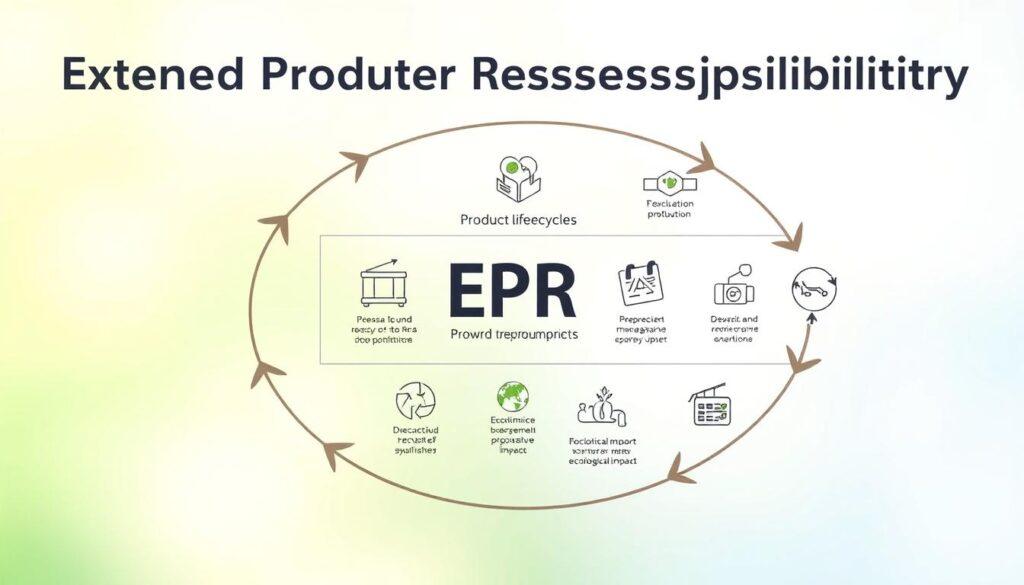
The goal is big. EPR encourages companies to make products that can be recycled. It also pushes for more recycling facilities. This makes EPR key to the circular economy. For business leaders, understanding this shift is essential for strategy and following the law.
How does EPR change things for manufacturers? It shifts costs and duties from governments and taxpayers to the companies. Companies must now plan for every step of a product’s life. This includes how it’s collected, recycled, or disposed of safely. This big change forces companies to rethink their packaging, materials, and business models.
Good EPR policies have three main parts. Each part gives a specific job to the producer. Together, they make a complete system for managing waste.
| Pillar of EPR | Core Responsibility | Business Impact & Example |
|---|---|---|
| Financial Responsibility | The producer covers the full net cost of managing their products at end-of-life. | Companies must budget for recycling fees or fund collection systems. This directly affects product pricing and profitability. |
| Operational Responsibility | The producer is involved in the physical collection and processing of post-consumer products. | Businesses may need to establish take-back programs or partner with waste haulers. It changes logistics and supply chain operations. |
| Informational Responsibility | The producer must provide data on materials and support proper consumer disposal. | This requires clear labeling, consumer education campaigns, and detailed sustainability reporting under frameworks like the CSRD. |
The benefits of EPR are real. Good EPR policies lead to more waste being recycled. They also help make more products from recycled materials. This makes recycling more reliable for manufacturers.
For professionals, the message is clear. Design teams must focus on making products easy to take apart and recycle. Finance teams need to plan for new costs. Compliance teams must keep up with changing laws like SB 54.
Embracing EPR is a smart move. It prepares a business for stricter laws and meets consumer demand for green products. Companies that get EPR right will lead the way in a future where resources are precious.
Single-Use Plastic Regulations
The world is changing how it handles waste with new rules on single-use plastics. These rules aim to stop pollution at its source, not just clean up after it. The goal is to cut down on waste before it’s made.
These changes come from urgent environmental concerns. Plastics in landfills and oceans harm our planet. Plastic bans aim to break the link between our use of plastics and harm to nature.
These rules go beyond just straws and bags. They also cover food containers, cutlery, hotel toiletries, and bags for produce. It’s a big change for many items.
Different places are tackling this issue in their own ways. Some ban certain items outright. Others charge extra or require items to be recyclable. This mix of rules can be tricky for businesses that operate in many places.
| Jurisdiction | Key Regulatory Approach | Targeted Items | Effective Date / Status |
|---|---|---|---|
| European Union (EU) | Market restriction directive (SUP Directive) | Cutlery, plates, straws, EPS food containers, cotton bud sticks | Phased implementation from 2021 |
| California, USA | Statewide mandate for source reduction & recycling | Plastic packaging, food service ware, single-use bags | Ongoing; key laws active from 2022 onward |
| India | National ban on identified single-use plastics | Carry bags, cups, plates, cutlery, straws (specific list) | Phased, with full ban from 2022 |
| Canada | Federal prohibition under CEPA | Checkout bags, cutlery, food service ware from hard-to-recycle plastics | Regulations finalized in 2022, enforcement staged |
This shift in rules is changing the market. There’s a growing need for compostable and reusable items. Companies are now making new products to meet these laws.
For entrepreneurs, these plastic bans mean big changes. They can be a risk for those stuck with old packaging. But they also open up new chances for those who innovate in green materials and services.
People are also changing their shopping habits. They want to buy from brands that use eco-friendly packaging. This makes following these rules not just necessary but also a way to stand out. States like Washington are leading the way, as seen in Washington State’s 2021 plastic pollution laws.
The future looks even more focused on reducing plastic waste. Laws might soon require more recycled content in plastics. This could help create a recycling system that works better.
Carbon Tax & Waste Incentives
Carbon taxes and waste fees change how we see environmental rules. They make bad practices cost more. This pushes us to reduce waste and recycle more.
These rules are simple. If it costs more to pollute or waste, we choose cleaner options. It’s about making money choices that also help the planet.
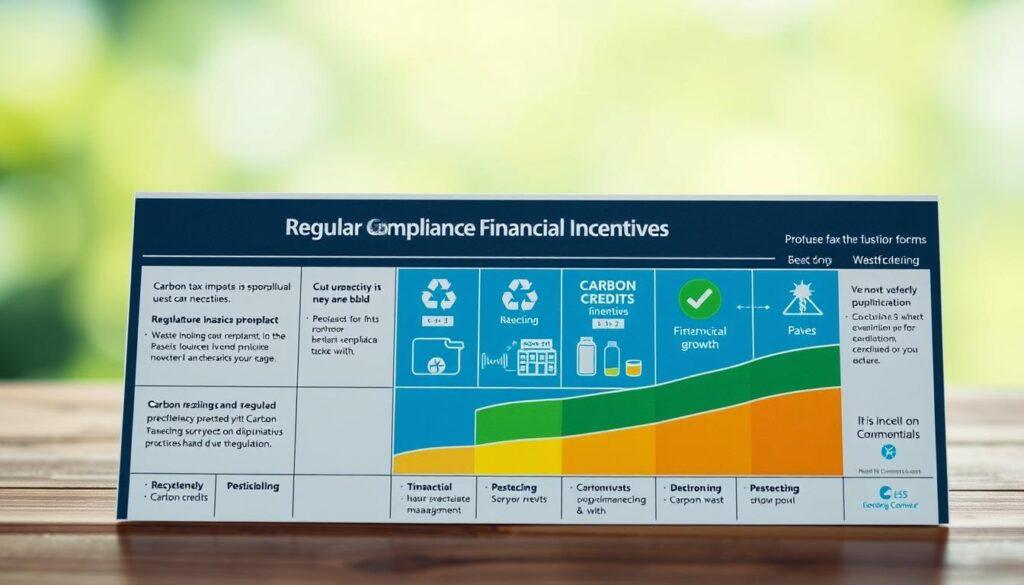
- Carbon Taxes: A direct price on carbon dioxide emissions. This charges companies for their greenhouse gas output, pushing investment into cleaner energy and processes.
- Landfill & Incineration Taxes: Fees levied on waste sent to landfills or incinerators. By raising disposal costs, these taxes make recycling and reuse more attractive.
- Pay-As-You-Throw (PAYT): Programs where households pay based on the amount of non-recyclable trash they set out. South Korea’s successful system has significantly increased recycling by charging for standard trash bags.
- Subsidies & Tax Rebates: Financial incentives for sustainable actions. These include grants for green technology or tax breaks for using recycled materials.
For a business, knowing these rules is key for regulatory compliance. It’s not just about avoiding fines. Smart companies use these fees and incentives to save money.
A good compliance strategy turns costs into investments. For example, a recycling system might save money on landfill taxes. It could also get a subsidy for green tech.
This economic view makes meeting regulations a way to boost your profits. Cutting waste and energy use lowers costs. It also helps with sustainability reports.
Smart professionals see these rules as guides, not obstacles. They show where to improve for better finances and the planet. Your regulatory compliance efforts can cut costs and improve your green image.
Industry Adaptation Strategies
Companies must do more than just follow waste reduction policies. They are using smart technology like AI and IoT sensors. This helps them manage waste better and stay ahead of the game.
Businesses are now focusing on circular supply chains. They aim to get more value from materials. This approach also helps them manage vendors better and create new ways to make money from waste.
Adapting to these changes helps companies meet their sustainability goals. It also builds trust with customers who care about the environment. For more on how to plan strategically, check out proven environmental strategies.
Companies that think ahead see policy changes as opportunities. They incorporate circular economy ideas into their daily work. This makes them stronger and ready for future changes.