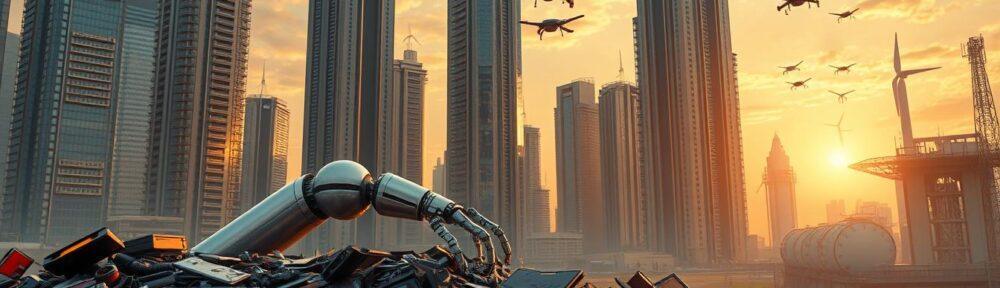
Let’s be honest – our current waste management approach has been about as effective as a screen door on a submarine.
The world generates over 2 billion tons of municipal solid waste every year. Yet, we only recover 13.5% through traditional methods. This is not just inefficient – it’s environmental whack-a-mole on a global scale.
But here’s where the plot twist arrives: we’re witnessing a technological renaissance that would make even Tony Stark raise an eyebrow. I’ve watched this space evolve from basic sorting to AI-powered systems processing 70 metric tons per hour.
We’re not talking incremental improvements anymore. This is a fundamental rewiring of how we approach waste. Yesterday’s trash becomes tomorrow’s treasure through cutting-edge recycling technology.
What if every plastic bottle could have nine lives instead of just one? That future is being built right now.
Latest Technologies
I’ve seen waste processing change a lot. It’s no longer just sorting trash. Now, it’s like something out of a sci-fi movie. The machines look like they’re from another world.
Artificial intelligence has become a hero for sorting trash. Companies like ZenRobotics and AMP Robotics have made systems that work fast. They can tell the difference between plastic and paper, and even what kind of plastic it is.
Chemical recycling is like magic. It turns plastic back into oil using heat. It’s like turning plastic back into its original form. There’s even a way to break down plastic using special proteins.
These new methods can handle mixed plastics. This used to be a big problem for recycling. Now, even things like clamshell containers and chip bags can be recycled.
E-waste processing is really interesting. It’s like mining for metals from old electronics. Instead of digging, we’re using chemicals to get gold, silver, and copper from old gadgets.
It’s like turning old gadgets into gold mines. Your old phone could be full of valuable metals just waiting to be found.
The speed and accuracy of these systems are amazing. They can sort materials much faster than humans. Check out these latest recycling innovations for yourself.
This isn’t just a small improvement. It’s a whole new way of looking at waste processing. We’re not just sorting anymore. We’re actually rebuilding materials into something new. This creates a real circular economy.
Benefits of Advanced Techniques
While everyone’s chasing viral trends, recycling technology is quietly making huge strides. It’s like going from black-and-white TV to 4K streaming in one leap.
Modern facilities are seeing huge gains. They’re sorting materials 50% faster with 90% fewer mistakes. It’s like getting the best of both worlds, with no environmental cost.
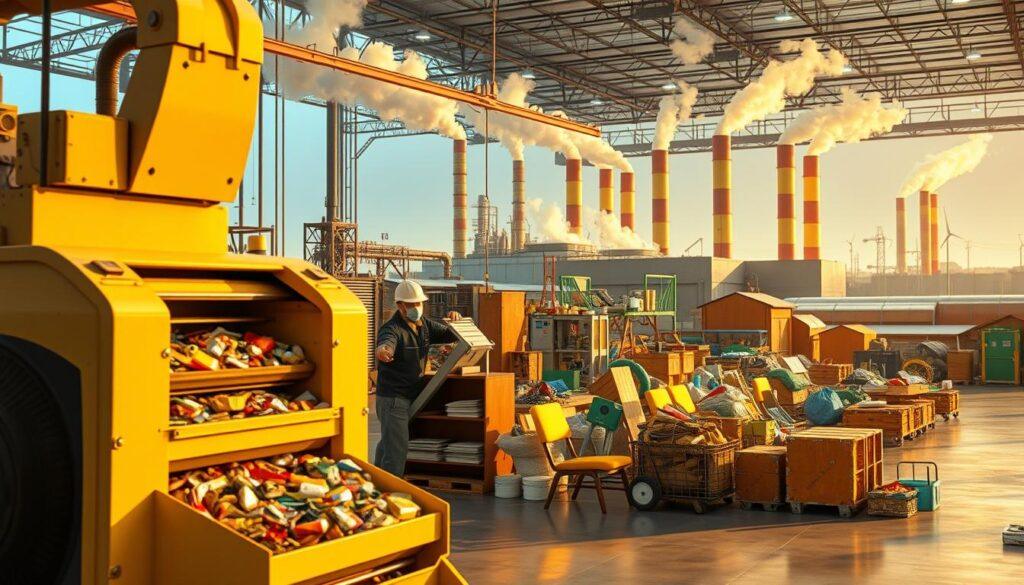
Chemical recycling is a game-changer. It turns 90% of plastics into raw materials, not trash. Your old water bottle could be reborn into something new.
Urban mining is another amazing feat. Your old phone has 300 times more gold than actual mines. It’s like turning trash into gold.
Energy savings are also huge. New methods use 85% less energy for copper and 95% less for aluminum. It’s like finding a secret to saving energy.
These advanced techniques are changing recycling for the better. They make it more efficient and profitable. Now, recycling is not just good for the planet but also for your wallet.
Case Studies
Meet the recycling rockstars who are making waste processing look like performance art. These aren’t just experiments or theories. They’re real businesses solving real problems and turning trash into treasure.
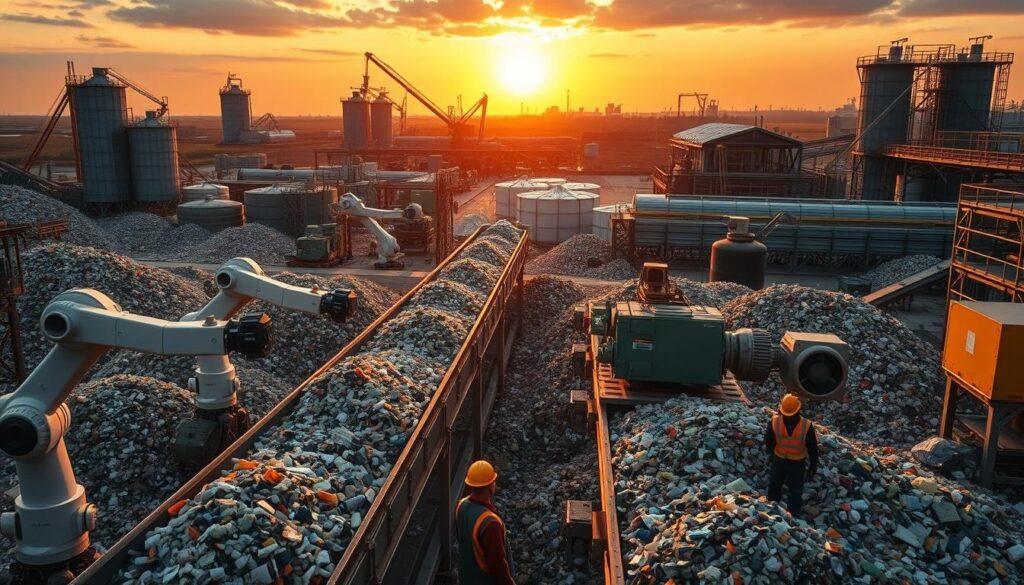
PureCycle Technologies is doing what I call “plastic alchemy.” They take dirty plastic and turn it into clean resin. Their method is so good, it’s making traditional plastic makers nervous.
Bintel, from Sweden, has changed waste collection with an Uber-style system. Their sensors tell trucks which bins need emptying. No more guessing or half-empty pickups. It’s a mix of efficiency and environmental care.
Refiberd tackled fashion’s waste problem by making clothes circular. They use AI and robotics to recycle old clothes into new ones. Your old t-shirt could become your next favorite outfit. It’s like giving your clothes endless lives.
Neste shows that size matters in waste processing. They’ve processed 3,000 tons of plastic waste. That’s not a small project – it’s a big impact. They prove that big ideas can work at big scales.
SBS Thermal Technologies uses heat to save energy. Their systems recover lost energy, saving about 40% in energy use. It’s like catching money that was lost and putting it back in the bank.
These stories show that being green and profitable can go hand in hand. Each company found a way to make waste processing both good for the planet and good for business. They’re not just saving the planet – they’re building businesses that could last forever.
Future Trends
Recycling technology is changing fast, like a viral TikTok trend. PureCycle plans to build 25 plants worldwide. This big move could recycle up to 20% of the world’s polypropylene. That’s like recycling all the plastic in Texas.
Blockchain is set to make tracking materials clear as a Windexed window. Soon, you’ll know your soda bottle’s whole journey before it turns into your fleece. This isn’t fantasy – it’s a real change in how we track and recycle.
Electrochemical recycling and AI are the real game-changers. They’re huge steps forward in recycling, making old methods seem outdated. Now, companies want recycled materials as much as kids want the latest iPhone.
According to recent analysis, we’re moving toward a circular economy. Here, waste is as valuable as untouched land. The future is already here, at our recycling facilities.