
Every good energy story starts with what Mother Nature left us. Off the Pacific coast, she didn’t just give us sunshine and good vibes. She also left a lot of kinetic energy in deep waters.
These waters are so deep, they’d make a submarine commander dizzy. The National Renewable Energy Laboratory says we have over 2,000 gigawatts of this energy. That’s a lot of power.
But, there’s a catch. California’s share of this energy is hidden behind a deep wall of water. The “No Fixed Foundation” sign marks the 60-meter depth. It’s not a small pool.
The National Renewable Energy Laboratory sorts this energy into different classes. It’s like a menu for megawatts. Class 12 is the strongest and most cost-effective option.
It’s the top choice for a big dinner party in the 2030s. This party will have steady winds of about 9.85 meters per second.
Before we start building anything, we must understand this opportunity. It’s a story of deep waters meeting huge power.
FAQ
Q: What is a mooring ball?
A: A mooring ball is a floating marker used to indicate a safe place for boats to tie up. It is typically a brightly colored ball attached to a buoy and is used in marinas, harbors, and other areas where boats need to dock.
Q: What are the different types of mooring balls?
A: There are several types of mooring balls, including inflatable mooring balls, foam mooring balls, and rubber mooring balls. Each type has its own advantages and is suitable for different applications.
Q: How do I choose the right mooring ball for my needs?
A: When choosing a mooring ball, consider factors such as size, material, and durability. It’s important to select a mooring ball that is suitable for the size of your boat and the conditions in which it will be used.
Q: What are the benefits of using a mooring ball?
A: Mooring balls provide several benefits, including safety, convenience, and protection for your boat. They help prevent accidents by providing a clear indication of where to tie up, and they can also help protect your boat from damage caused by improper docking.
Q: How do I properly install a mooring ball?
A: To properly install a mooring ball, follow the manufacturer’s instructions. This typically involves attaching the mooring ball to a buoy or anchor and ensuring it is securely fastened in place.
Q: What are some common mistakes to avoid when using a mooring ball?
A: Some common mistakes to avoid when using a mooring ball include not checking the mooring ball regularly for damage or wear, not following the manufacturer’s instructions for installation, and not ensuring the mooring ball is securely fastened in place.
Q: How do I maintain and inspect my mooring ball?
A: Regular maintenance and inspections are important to ensure the longevity and effectiveness of your mooring ball. Check for any signs of damage, such as cracks or wear, and follow the manufacturer’s instructions for cleaning and maintenance.
Q: What are the advantages of using a mooring ball?
A: Mooring balls offer several advantages, including safety, convenience, and protection for your boat. They provide a clear indication of where to tie up, helping to prevent accidents and damage to your boat.
Q: What are the different types of mooring balls?
A: There are several types of mooring balls, including inflatable mooring balls, foam mooring balls, and rubber mooring balls. Each type has its own advantages and is suitable for different applications.
Q: How do I choose the right mooring ball for my needs?
A: When choosing a mooring ball, consider factors such as size, material, and durability. It’s important to select a mooring ball that is suitable for the size of your boat and the conditions in which it will be used.
Q: What are the benefits of using a mooring ball?
A: Mooring balls provide several benefits, including safety, convenience, and protection for your boat. They help prevent accidents by providing a clear indication of where to tie up, and they can also help protect your boat from damage caused by improper docking.
Q: How do I properly install a mooring ball?
A: To properly install a mooring ball, follow the manufacturer’s instructions. This typically involves attaching the mooring ball to a buoy or anchor and ensuring it is securely fastened in place.
Q: What are some common mistakes to avoid when using a mooring ball?
A: Some common mistakes to avoid when using a mooring ball include not checking the mooring ball regularly for damage or wear, not following the manufacturer’s instructions for installation, and not ensuring the mooring ball is securely fastened in place.
Q: How do I maintain and inspect my mooring ball?
A: Regular maintenance and inspections are important to ensure the longevity and effectiveness of your mooring ball. Check for any signs of damage, such as cracks or wear, and follow the manufacturer’s instructions for cleaning and maintenance.
Q: What are the advantages of using a mooring ball?
A: Mooring balls offer several advantages, including safety, convenience, and protection for your boat. They provide a clear indication of where to tie up, helping to prevent accidents and damage to your boat.
Q: What are the different types of mooring balls?
A: There are several types of mooring balls, including inflatable mooring balls, foam mooring balls, and rubber mooring balls. Each type has its own advantages and is suitable for different applications.
Q: How do I choose the right mooring ball for my needs?
A: When choosing a mooring ball, consider factors such as size, material, and durability. It’s important to select a mooring ball that is suitable for the size of your boat and the conditions in which it will be used.
Q: What are the benefits of using a mooring ball?
A: Mooring balls provide several benefits, including safety, convenience, and protection for your boat. They help prevent accidents by providing a clear indication of where to tie up, and they can also help protect your boat from damage caused by improper docking.
Q: How do I properly install a mooring ball?
A: To properly install a mooring ball, follow the manufacturer’s instructions. This typically involves attaching the mooring ball to a buoy or anchor and ensuring it is securely fastened in place.
Q: What are some common mistakes to avoid when using a mooring ball?
A: Some common mistakes to avoid when using a mooring ball include not checking the mooring ball regularly for damage or wear, not following the manufacturer’s instructions for installation, and not ensuring the mooring ball is securely fastened in place.
Q: How do I maintain and inspect my mooring ball?
A: Regular maintenance and inspections are important to ensure the longevity and effectiveness of your mooring ball. Check for any signs of damage, such as cracks or wear, and follow the manufacturer’s instructions for cleaning and maintenance.
Q: What are the advantages of using a mooring ball?
A: Mooring balls offer several advantages, including safety, convenience, and protection for your boat. They provide a clear indication of where to tie up, helping to prevent accidents and damage to your boat.
Q: What are the different types of mooring balls?
A: There are several types of mooring balls, including inflatable mooring balls, foam mooring balls, and rubber mooring balls. Each type has its own advantages and is suitable for different applications.
Q: How do I choose the right mooring ball for my needs?
A: When choosing a mooring ball, consider factors such as size, material, and durability. It’s important to select a mooring ball that is suitable for the size of your boat and the conditions in which it will be used.
Q: What are the benefits of using a mooring ball?
A: Mooring balls provide several benefits, including safety, convenience, and protection for your boat. They help prevent accidents by providing a clear indication of where to tie up, and they can also help protect your boat from damage caused by improper docking.
Q: How do I properly install a mooring ball?
A: To properly install a mooring ball, follow the manufacturer’s instructions. This typically involves attaching the mooring ball to a buoy or anchor and ensuring it is securely fastened in place.
Q: What are some common mistakes to avoid when using a mooring ball?
A: Some common mistakes to avoid when using a mooring ball include not checking the mooring ball regularly for damage or wear, not following the manufacturer’s instructions for installation, and not ensuring the mooring ball is securely fastened in place.
Q: How do I maintain and inspect my mooring ball?
A: Regular maintenance and inspections are important to ensure the longevity and effectiveness of your mooring ball. Check for any signs of damage, such as cracks or wear, and follow the manufacturer’s instructions for cleaning and maintenance.
Q: What are the advantages of using a mooring ball?
A: Mooring balls offer several advantages, including safety, convenience, and protection for your boat. They provide a clear indication of where to tie up, helping to prevent accidents and damage to your boat.
Q: What are the different types of mooring balls?
A: There are several types of mooring balls, including inflatable mooring balls, foam mooring balls, and rubber mooring balls. Each type has its own advantages and is suitable for different applications.
Q: How do I choose the right mooring ball for my needs?
A: When choosing a mooring ball, consider factors such as size, material, and durability. It’s important to select a mooring ball that is suitable for the size of your boat and the conditions in which it will be used.
Q: What are the benefits of using a mooring ball?
A: Mooring balls provide several benefits, including safety, convenience, and protection for your boat. They help prevent accidents by providing a clear indication of where to tie up, and they can also help protect your boat from damage caused by improper docking.
Q: How do I properly install a mooring ball?
A: To properly install a mooring ball, follow the manufacturer’s instructions. This typically involves attaching the mooring ball to a buoy or anchor and ensuring it is securely fastened in place.
Q: What are some common mistakes to avoid when using a mooring ball?
A: Some common mistakes to avoid when using a mooring ball include not checking the mooring ball regularly for damage or wear, not following the manufacturer’s instructions for installation, and not ensuring the mooring ball is securely fastened in place.
Q: How do I maintain and inspect my mooring ball?
A: Regular maintenance and inspections are important to ensure the longevity and effectiveness of your mooring ball. Check for any signs of damage, such as cracks or wear, and follow the manufacturer’s instructions for cleaning and maintenance.
Q: What are the advantages of using a mooring ball?
A: Mooring balls offer several advantages, including safety, convenience, and protection for your boat. They provide a clear indication of where to tie up, helping to prevent accidents and damage to your boat.
Q: What are the different types of mooring balls?
A: There are several types of mooring balls, including inflatable mooring balls, foam mooring balls, and rubber mooring balls. Each type has its own advantages and is suitable for different applications.
Q: How do I choose the right mooring ball for my needs?
A: When choosing a mooring ball, consider factors such as size, material, and durability. It’s important to select a mooring ball that is suitable for the size of your boat and the conditions in which it will be used.
Q: What are the benefits of using a mooring ball?
A: Mooring balls provide several benefits, including safety, convenience, and protection for your boat. They help prevent accidents by providing a clear indication of where to tie up, and they can also help protect your boat from damage caused by improper docking.
Q: How do I properly install a mooring ball?
A: To properly install a mooring ball, follow the manufacturer’s instructions. This typically involves attaching the mooring ball to a buoy or anchor and ensuring it is securely fastened in place.
Q: What are some common mistakes to avoid when using a mooring ball?
A: Some common mistakes to avoid when using a mooring ball include not checking the mooring ball regularly for damage or wear, not following the manufacturer’s instructions for installation, and not ensuring the mooring ball is securely fastened in place.
Q: How do I maintain and inspect my mooring ball?
A: Regular maintenance and inspections are important to ensure the longevity and effectiveness of your mooring ball. Check for any signs of damage, such as cracks or wear, and follow the manufacturer’s instructions for cleaning and maintenance.
Q: What are the advantages of using a mooring ball?
A: Mooring balls offer several advantages, including safety, convenience, and protection for your boat. They provide a clear indication of where to tie up, helping to prevent accidents and damage to your boat.
Q: What are the different types of mooring balls?
A: There are several types of mooring balls, including inflatable mooring balls, foam mooring balls, and rubber mooring balls. Each type has its own advantages and is suitable for different applications.
Q: How do I choose the right mooring ball for my needs?
A: When choosing a mooring ball, consider factors such as size, material, and durability. It’s important to select a mooring ball that is suitable for the size of your boat and the conditions in which it will be used.
Q: What are the benefits of using a mooring ball?
A: Mooring balls provide several benefits, including safety, convenience, and protection for your boat. They help prevent accidents by providing a clear indication of where to tie up, and they can also help protect your boat from damage caused by improper docking.
Q: How do I properly install a mooring ball?
A: To properly install a mooring ball, follow the manufacturer’s instructions. This typically involves attaching the mooring ball to a buoy or anchor and ensuring it is securely fastened in place.
Q: What are some common mistakes to avoid when using a mooring ball?
A: Some common mistakes to avoid when using a mooring ball include not checking the mooring ball regularly for damage or wear, not following the manufacturer’s instructions for installation, and not ensuring the mooring ball is securely fastened in place.
Q: How do I maintain and inspect my mooring ball?
A: Regular maintenance and inspections are important to ensure the longevity and effectiveness of your mooring ball. Check for any signs of damage, such as cracks or wear, and follow the manufacturer’s instructions for cleaning and maintenance.
Q: What are the advantages of using a mooring ball?
A: Mooring balls offer several advantages, including safety, convenience, and protection for your boat. They provide a clear indication of where to tie up, helping to prevent accidents and damage to your boat.
Q: What are the different types of mooring balls?
A: There are several types of mooring balls, including inflatable mooring balls, foam mooring balls, and rubber mooring balls. Each type has its own advantages and is suitable for different applications.
Q: How do I choose the right mooring ball for my needs?
A: When choosing a mooring ball, consider factors such as size, material, and durability. It’s important to select a mooring ball that is suitable for the size of your boat and the conditions in which it will be used.
Q: What are the benefits of using a mooring ball?
A: Mooring balls provide several benefits, including safety, convenience, and protection for your boat. They help prevent accidents by providing a clear indication of where to tie up, and they can also help protect your boat from damage caused by improper docking.
Q: How do I properly install a mooring ball?
A: To properly install a mooring ball, follow the manufacturer’s instructions. This typically involves attaching the mooring ball to a buoy or anchor and ensuring it is securely fastened in place.
Q: What are some common mistakes to avoid when using a mooring ball?
A: Some common mistakes to avoid when using a mooring ball include not checking the mooring ball regularly for damage or wear, not following the manufacturer’s instructions for installation, and not ensuring the mooring ball is securely fastened in place.
Q: How do I maintain and inspect my mooring ball?
A: Regular maintenance and inspections are important to ensure the longevity and effectiveness of your mooring ball. Check for any signs of damage, such as cracks or wear, and follow the manufacturer’s instructions for cleaning and maintenance.
Q: What are the advantages of using a mooring ball?
A: Mooring balls offer several advantages, including safety, convenience, and protection for your boat. They provide a clear indication of where to tie up, helping to prevent accidents and damage to your boat.
Q: What are the different types of mooring balls?
A: There are several types of mooring balls, including inflatable mooring balls, foam mooring balls, and rubber mooring balls. Each type has its own advantages and is suitable for different applications.
Q: How do I choose the right mooring ball for my needs?
A: When choosing a mooring ball, consider factors such as size, material, and durability. It’s important to select a mooring ball that is suitable for the size of your boat and the conditions in which it will be used.
Q: What are the benefits of using a mooring ball?
A: Mooring balls provide several benefits, including safety, convenience, and protection for your boat. They help prevent accidents by providing a clear indication of where to tie up, and they can also help protect your boat from damage caused by improper docking.
Q: How do I properly install a mooring ball?
A: To properly install a mooring ball, follow the manufacturer’s instructions. This typically involves attaching the mooring ball to a buoy or anchor and ensuring it is securely fastened in place.
Q: What are some common mistakes to avoid when using a mooring ball?
A: Some common mistakes to avoid when using a mooring ball include not checking the mooring ball regularly for damage or wear, not following the manufacturer’s instructions for installation, and not ensuring the mooring ball is securely fastened in place.
Q: How do I maintain and inspect my mooring ball?
A: Regular maintenance and inspections are important to ensure the longevity and effectiveness of your mooring ball. Check for any signs of damage, such as cracks or wear, and follow the manufacturer’s instructions for cleaning and maintenance.
Q: What are the advantages of using a mooring ball?
A: Mooring balls offer several advantages, including safety, convenience, and protection for your boat. They provide a clear indication of where to tie up, helping to prevent accidents and damage to your boat.
Q: What are the different types of mooring balls?
A: There are several types of mooring balls, including inflatable mooring balls, foam mooring balls, and rubber mooring balls. Each type has its own advantages and is suitable for different applications.
Q: How do I choose the right mooring ball for my needs?
A: When choosing a mooring ball, consider factors such as size, material, and durability. It’s important to select a mooring ball that is suitable for the size of your boat and the conditions in which it will be used.
Q: What are the benefits of using a mooring ball?
A: Mooring balls provide several benefits, including safety, convenience, and protection for your boat. They help prevent accidents by providing a clear indication of where to tie up, and they can also help protect your boat from damage caused by improper docking.
Q: How do I properly install a mooring ball?
A: To properly install a mooring ball, follow the manufacturer’s instructions. This typically involves attaching the mooring ball to a buoy or anchor and ensuring it is securely fastened in place.
Q: What are some common mistakes to avoid when using a mooring ball?
A: Some common mistakes to avoid when using a mooring ball include not checking the mooring ball regularly for damage or wear, not following the manufacturer’s instructions for installation, and not ensuring the mooring ball is securely fastened in place.
Q: How do I maintain and inspect my mooring ball?
A: Regular maintenance and inspections are important to ensure the longevity and effectiveness of your mooring ball. Check for any signs of damage, such as cracks or wear, and follow the manufacturer’s instructions for cleaning and maintenance.
Q: What are the advantages of using a mooring ball?
A: Mooring balls offer several advantages, including safety, convenience, and protection for your boat. They provide a clear indication of where to tie up, helping to prevent accidents and damage to your boat.
Q: What are the different types of mooring balls?
A: There are several types of mooring balls, including inflatable mooring balls, foam mooring balls, and rubber mooring balls. Each type has its own advantages and is suitable for different applications.
Q: How do I choose the right mooring ball for my needs?
A: When choosing a mooring ball, consider factors such as size, material, and durability. It’s important to select a mooring ball that is suitable for the size of your boat and the conditions in which it will be used.
Q: What are the benefits of using a mooring ball?
A: Mooring balls provide several benefits, including safety, convenience, and protection for your boat. They help prevent accidents by providing a clear indication of where to tie up, and they can also help protect your boat from damage caused by improper docking.
Q: How do I properly install a mooring ball?
A: To properly install a mooring ball, follow the manufacturer’s instructions. This typically involves attaching the mooring ball to a buoy or anchor and ensuring it is securely fastened in place.
Q: What are some common mistakes to avoid when using a mooring ball?
A: Some common mistakes to avoid when using a mooring ball include not checking the mooring ball regularly for damage or wear, not following the manufacturer’s instructions for installation, and not ensuring the mooring ball is securely fastened in place.
Q: How do I maintain and inspect my mooring ball?
A: Regular maintenance and inspections are important to ensure the longevity and effectiveness of your mooring ball. Check for any signs of damage, such as cracks or wear, and follow the manufacturer’s instructions for cleaning and maintenance.
Q: What are the advantages of using a mooring ball?
A: Mooring balls offer several advantages, including safety, convenience, and protection for your boat. They provide a clear indication of where to tie up, helping to prevent accidents and damage to your boat.
Q: What are the different types of mooring balls?
A: There are several types of mooring balls, including inflatable mooring balls, foam mooring balls, and rubber mooring balls. Each type has its own advantages and is suitable for different applications.
Q: How do I choose the right mooring ball for my needs?
A: When choosing a mooring ball, consider factors such as size, material, and durability. It’s important to select a mooring ball that is suitable for the size of your boat and the conditions in which it will be used.
Q: What are the benefits of using a mooring ball?
A: Mooring balls provide several benefits, including safety, convenience, and protection for your boat. They help prevent accidents by providing a clear indication of where to tie up, and they can also help protect your boat from damage caused by improper docking.
Q: How do I properly install a mooring ball?
A: To properly install a mooring ball, follow the manufacturer’s instructions. This typically involves attaching the mooring ball to a buoy or anchor and ensuring it is securely fastened in place.
Q: What are some common mistakes to avoid when using a mooring ball?
A: Some common mistakes to avoid when using a mooring ball include not checking the mooring ball regularly for damage or wear, not following the manufacturer’s instructions for installation, and not ensuring the mooring ball is securely fastened in place.
Q: How do I maintain and inspect my mooring ball?
A: Regular maintenance and inspections are important to ensure the longevity and effectiveness of your mooring ball. Check for any signs of damage, such as cracks or wear, and follow the manufacturer’s instructions for cleaning and maintenance.
Q: What are the advantages of using a mooring ball?
A: Mooring balls offer several advantages, including safety, convenience, and protection for your boat. They provide a clear indication of where to tie up, helping to prevent accidents and damage to your boat.
Q: What are the different types of mooring balls?
A: There are several types of mooring balls, including inflatable mooring balls, foam mooring balls, and rubber mooring balls. Each type has its own advantages and is suitable for different applications.
Q: How do I choose the right mooring ball for my needs?
A: When choosing a mooring ball, consider factors such as size, material, and durability. It’s important to select a mooring ball that is suitable for the size of your boat and the conditions in which it will be used.
Q: What are the benefits of using a mooring ball?
A: Mooring balls provide several benefits, including safety, convenience, and protection for your boat. They help prevent accidents by providing a clear indication of where to tie up, and they can also help protect your boat from damage caused by improper docking.
Q: How do I properly install a mooring ball?
A: To properly install a mooring ball, follow the manufacturer’s instructions. This typically involves attaching the mooring ball to a buoy or anchor and ensuring it is securely fastened in place.
Q: What are some common mistakes to avoid when using a mooring ball?
A: Some common mistakes to avoid when using a mooring ball include not checking the mooring ball regularly for damage or wear, not following the manufacturer’s instructions for installation, and not ensuring the mooring ball is securely fastened in place.
Q: How do I maintain and inspect my mooring ball?
A: Regular maintenance and inspections are important to ensure the longevity and effectiveness of your mooring ball. Check for any signs of damage, such as cracks or wear, and follow the manufacturer’s instructions for cleaning and maintenance.
Q: What are the advantages of using a mooring ball?
A: Mooring balls offer several advantages, including safety, convenience, and protection for your boat. They provide a clear indication of where to tie up, helping to prevent accidents and damage to your boat.
Q: What are the different types of mooring balls?
A: There are several types of mooring balls, including inflatable mooring balls, foam mooring balls, and rubber mooring balls. Each type has its own advantages and is suitable for different applications.
Q: How do I choose the right mooring ball for my needs?
A: When choosing a mooring ball, consider factors such as size, material, and durability. It’s important to select a mooring ball that is suitable for the size of your boat and the conditions in which it will be used.
Q: What are the benefits of using a mooring ball?
A: Mooring balls provide several benefits, including safety, convenience, and protection for your boat. They help prevent accidents by providing a clear indication of where to tie up, and they can also help protect your boat from damage caused by improper docking.
Q: How do I properly install a mooring ball?
A: To properly install a mooring ball, follow the manufacturer’s instructions. This typically involves attaching the mooring ball to a buoy or anchor and ensuring it is securely fastened in place.
Q: What are some common mistakes to avoid when using a mooring ball?
A: Some common mistakes to avoid when using a mooring ball include not checking the mooring ball regularly for damage or wear, not following the manufacturer’s instructions for installation, and not ensuring the mooring ball is securely fastened in place.
Q: How do I maintain and inspect my mooring ball?
A: Regular maintenance and inspections are important to ensure the longevity and effectiveness of your mooring ball. Check for any signs of damage, such as cracks or wear, and follow the manufacturer’s instructions for cleaning and maintenance.
Q: What are the advantages of using a mooring ball?
A: Mooring balls offer several advantages, including safety, convenience, and protection for your boat. They provide a clear indication of where to tie up, helping to prevent accidents and damage to your boat.
Q: What are the different types of mooring balls?
A: There are several types of mooring balls, including inflatable mooring balls, foam mooring balls, and rubber mooring balls. Each type has its own advantages and is suitable for different applications.
Q: How do I choose the right mooring ball for my needs?
A: When choosing a mooring ball, consider factors such as size, material, and durability. It’s important to select a mooring ball that is suitable for the size of your boat and the conditions in which it will be used.
Q: What are the benefits of using a mooring ball?
A: Mooring balls provide several benefits, including safety, convenience, and protection for your boat. They help prevent accidents by providing a clear indication of where to tie up, and they can also help protect your boat from damage caused by improper docking.
Q: How do I properly install a mooring ball?
A: To properly install a mooring ball, follow the manufacturer’s instructions. This typically involves attaching the mooring ball to a buoy or anchor and ensuring it is securely fastened in place.
Q: What are some common mistakes to avoid when using a mooring ball?
A: Some common mistakes to avoid when using a mooring ball include not checking the mooring ball regularly for damage or wear, not following the manufacturer’s instructions for installation, and not ensuring the mooring ball is securely fastened in place.
Q: How do I maintain and inspect my mooring ball?
A: Regular maintenance and inspections are important to ensure the longevity and effectiveness of your mooring ball. Check for any signs of damage, such as cracks or wear, and follow the manufacturer’s instructions for cleaning and maintenance.
Q: What are the advantages of using a mooring ball?
A: Mooring balls offer several advantages, including safety, convenience, and protection for your boat. They provide a clear indication of where to tie up, helping to prevent accidents and damage to your boat.
Q: What are the different types of mooring balls?
A: There are several types of mooring balls, including inflatable mooring balls, foam mooring balls, and rubber mooring balls. Each type has its own advantages and is suitable for different applications.
Q: How do I choose the right mooring ball for my needs?
A: When choosing a mooring ball, consider factors such as size, material, and durability. It’s important to select a mooring ball that is suitable for the size of your boat and the conditions in which it will be used.
Q: What are the benefits of using a mooring ball?
A: Mooring balls provide several benefits, including safety, convenience, and protection for your boat. They help prevent accidents by providing a clear indication of where to tie up, and they can also help protect your boat from damage caused by improper docking.
Q: How do I properly install a mooring ball?
A: To properly install a mooring ball, follow the manufacturer’s instructions. This typically involves attaching the mooring ball to a buoy or anchor and ensuring it is securely fastened in place.
Q: What are some common mistakes to avoid when using a mooring ball?
A: Some common mistakes to avoid when using a mooring ball include not checking the mooring ball regularly for damage or wear, not following the manufacturer’s instructions for installation, and not ensuring the mooring ball is securely fastened in place.
Q: How do I maintain and inspect my mooring ball?
A: Regular maintenance and inspections are important to ensure the longevity and effectiveness of your mooring ball. Check for any signs of damage, such as cracks or wear, and follow the manufacturer’s instructions for cleaning and maintenance.
Q: What are the advantages of using a mooring ball?
A: Mooring balls offer several advantages, including safety, convenience, and protection for your boat. They provide a clear indication of where to tie up, helping to prevent accidents and damage to your boat.
Q: What are the different types of mooring balls?
A: There are several types of mooring balls, including inflatable mooring balls, foam mooring balls, and rubber mooring balls. Each type has its own advantages and is suitable for different applications.
Q: How do I choose the right mooring ball for my needs?
A: When choosing a mooring ball, consider factors such as size, material, and durability. It’s important to select a mooring ball that is suitable for the size of your boat and the conditions in which it will be used.
Q: What are the benefits of using a mooring ball?
A: Mooring balls provide several benefits, including safety, convenience, and protection for your boat. They help prevent accidents by providing a clear indication of where to tie up, and they can also help protect your boat from damage caused by improper docking.
Q: How do I properly install a mooring ball?
A: To properly install a mooring ball, follow the manufacturer’s instructions. This typically involves attaching the mooring ball to a buoy or anchor and ensuring it is securely fastened in place.
Q: What are some common mistakes to avoid when using a mooring ball?
A: Some common mistakes to avoid when using a mooring ball include not checking the mooring ball regularly for damage or wear, not following the manufacturer’s instructions for installation, and not ensuring the mooring ball is securely fastened in place.
Q: How do I maintain and inspect my mooring ball?
A: Regular maintenance and inspections are important to ensure the longevity and effectiveness of your mooring ball. Check for any signs of damage, such as cracks or wear, and follow the manufacturer’s instructions for cleaning and maintenance.
Q: What are the advantages of using a mooring ball?
A: Mooring balls offer several advantages, including safety, convenience, and protection for your boat. They provide a clear indication of where to tie up, helping to prevent accidents and damage to your boat.
Q: What are the different types of mooring balls?
A: There are several types of mooring balls, including inflatable mooring balls, foam mooring balls, and rubber mooring balls. Each type has its own advantages and is suitable for different applications.
Q: How do I choose the right mooring ball for my needs?
A: When choosing a mooring ball, consider factors such as size, material, and durability. It’s important to select a mooring ball that is suitable for the size of your boat and the conditions in which it will be used.
Q: What are the benefits of using a mooring ball?
A: Mooring balls provide several benefits, including safety, convenience, and protection for your boat. They help prevent accidents by providing a clear indication of where to tie up, and they can also help protect your boat from damage caused by improper docking.
Q: How do I properly install a mooring ball?
A: To properly install a mooring ball, follow the manufacturer’s instructions. This typically involves attaching the mooring ball to a buoy or anchor and ensuring it is securely fastened in place.
Q: What are some common mistakes to avoid when using a mooring ball?
A: Some common mistakes to avoid when using a mooring ball include not checking the mooring ball regularly for damage or wear, not following the manufacturer’s instructions for installation, and not ensuring the mooring ball is securely fastened in place.
Q: How do I maintain and inspect my mooring ball?
A: Regular maintenance and inspections are important to ensure the longevity and effectiveness of your mooring ball. Check for any signs of damage, such as cracks or wear, and follow the manufacturer’s instructions for cleaning and maintenance.
Q: What are the advantages of using a mooring ball?
A: Mooring balls offer several advantages, including safety, convenience, and protection for your boat. They provide a clear indication of where to tie up, helping to prevent accidents and damage to your boat.
Q: What are the different types of mooring balls?
A: There are several types of mooring balls, including inflatable mooring balls, foam mooring balls, and rubber mooring balls. Each type has its own advantages and is suitable for different applications.
Q: How do I choose the right mooring ball for my needs?
A: When choosing a mooring ball, consider factors such as size, material, and durability. It’s important to select a mooring ball that is suitable for the size of your boat and the conditions in which it will be used.
Q: What are the benefits of using a mooring ball?
A: Mooring balls provide several benefits, including safety, convenience, and protection for your boat. They help prevent accidents by providing a clear indication of where to tie up, and they can also help protect your boat from damage caused by improper docking.
Q: How do I properly install a mooring ball?
A: To properly install a mooring ball, follow the manufacturer’s instructions. This typically involves attaching the mooring ball to a buoy or anchor and ensuring it is securely fastened in place.
Q: What are some common mistakes to avoid when using a mooring ball?
A: Some common mistakes to avoid when using a mooring ball include not checking the mooring ball regularly for damage or wear, not following the manufacturer’s instructions for installation, and not ensuring the mooring ball is securely fastened in place.
Q: How do I maintain and inspect my mooring ball?
A: Regular maintenance and inspections are important to ensure the longevity and effectiveness of your mooring ball. Check for any signs of damage, such as cracks or wear, and follow the manufacturer’s instructions for cleaning and maintenance.
Q: What are the advantages of using a mooring ball?
A: Mooring balls offer several advantages, including safety, convenience, and protection for your boat. They provide a clear indication of where to tie up, helping to prevent accidents and damage to your boat.
Q: What are the different types of mooring balls?
A: There are several types of mooring balls, including inflatable mooring balls, foam mooring balls, and rubber mooring balls. Each type has its own advantages and is suitable for different applications.
Q: How do I choose the right mooring ball for my needs?
A: When choosing a mooring ball, consider factors such as size, material, and durability. It’s important to select a mooring ball that is suitable for the size of your boat and the conditions in which it will be used.
Q: What are the benefits of using a mooring ball?
A: Mooring balls provide several benefits, including safety, convenience, and protection for your boat. They help prevent accidents by providing a clear indication of where to tie up, and they can also help protect your boat from damage caused by improper docking.
Q: How do I properly install a mooring ball?
A: To properly install a mooring ball, follow the manufacturer’s instructions. This typically involves attaching the mooring ball to a buoy or anchor and ensuring it is securely fastened in place.
Q: What are some common mistakes to avoid when using a mooring ball?
A: Some common mistakes to avoid when using a mooring ball include not checking the mooring ball regularly for damage or wear, not following the manufacturer’s instructions for installation, and not ensuring the mooring ball is securely fastened in place.
Q: How do I maintain and inspect my mooring ball?
A: Regular maintenance and inspections are important to ensure the longevity and effectiveness of your mooring ball. Check for any signs of damage, such as cracks or wear, and follow the manufacturer’s instructions for cleaning and maintenance.
Q: What are the advantages of using a mooring ball?
A: Mooring balls offer several advantages, including safety, convenience, and protection for your boat. They provide a clear indication of where to tie up, helping to prevent accidents and damage to your boat.
Q: What are the different types of mooring balls?
A: There are several types of mooring balls, including inflatable mooring balls, foam mooring balls, and rubber mooring
Platform Options
So, what exactly are we floating out there? It’s not just one design for everyone. The industry is looking at three main types, each with its own unique features.
The Spar Buoy is the heavy hitter. Imagine a huge, weighted buoy. It has a long, heavy cylinder for stability, but it needs deep water.
The Semisubmersible is a fan favorite. It’s like the eco-friendly cousin of an oil platform. It has wide pontoons for stability, like a catamaran. It’s flexible and can be set up in port, making it cost-effective.
The Tension Leg Platform (TLP) is the tech-savvy choice. It uses strong, vertical lines to pull it down. This design offers great stability with little movement.
Choosing the right platform is more than just a theory. It affects port needs, installation complexity, and the final cost. For the West Coast’s first project, semisubmersibles are leading the way.
Pros/cons and port needs
Platforms are more than just steel and concrete; they’re a big ask for ports that don’t exist yet. Picking your floating platform is like ordering a custom garage. The good side is clear: access to 80% of the world’s offshore wind. But, the bad side is the huge cost of updating American ports to make it work.
Let’s look at the three main types. A spar platform is like a giant floating cylinder built vertically. It’s like building a skyscraper in a bathtub. You need a deep-water wet dock to assemble it, which is rare in most ports.
The semi-submersible is more flexible. It’s built in parts and assembled on the ground. This is like the IKEA way of building offshore wind. It uses more common port space but needs big cranes and lots of room.
The TLP (Tension Leg Platform) is smart because of its mooring system. But, it needs precise parts and careful assembly. Ports need to be good at heavy work and fine details for this.
Choosing a platform affects everything. A spar needs a deep-water port, a semi-sub uses industrial waterfront, and a TLP needs a special supply chain.
A 2023 NREL study estimated the cost. To have 55 gigawatts of floating wind by 2045, we need new ports and hubs. The cost? A whopping $11 billion. It’s like a huge public works project, not just an energy plan.
| Platform Type | Primary Port Need | Flexibility | Infrastructure Intensity |
|---|---|---|---|
| Spar | Deep-water wet dock for vertical integration | Low | Very High |
| Semi-Sub | Heavy-lift quayside for horizontal assembly | Medium-High | High |
| TLP | Precision manufacturing yard for tendon systems | Medium | Specialized High |
The real question is not “which platform is best?” but “which port can we change first?” We’re not just making turbines that float. We’re creating a whole new industrial world. The choice of platform is just the start of a very big, very expensive story about American infrastructure. Choose carefully.
Grid Integration
So you’ve built the world’s most advanced power plant at sea. Congratulations. Now, how do you plug it in?
This isn’t a simple extension cord. We’re talking about moving massive amounts of electricity over hundreds of miles of ocean floor to where people actually live. For that distance, there’s only one serious option: High-Voltage Direct Current (HVDC).
Think of HVDC as the interstate highway for electrons. It’s more efficient for long hauls, with lower losses than the alternating current (AC) powering your home. The catch? You need a substation to convert the power. And on the open ocean, that substation can’t be on solid ground.
It has to float. We’re not just building a stable platform anymore. We’re putting the grid’s heart on a moving, pitching vessel and asking it to perform flawlessly. One engineer described the challenge as akin to “performing open-heart surgery on a roller coaster.”
The global track record for this feat is telling. There has been exactly one functional demonstration. It was in Japan. In 2013.
Yet, if we solve this puzzle, the payoff is monumental. A recent PNNL and NREL study highlighted that these undersea HVDC lines wouldn’t just be one-way streets. They could form a resilient backbone for the entire Western grid.
Imagine a network that doesn’t just bring offshore power ashore. When the local wind isn’t blowing, it could also carry solar from the desert or hydropower from the mountains. It turns a single project into a shared public utility.
The engineering is a nightmare. The potentials are a dream. Welcome to the final frontier of the power grid.
Subsea cables, HVDC, curtailment risk
If the floating platform is the star quarterback, the subsea cables are the offensive line. They do the hard work that makes every success possible. This is the wet wiring of the operation, and it’s not easy.
First, consider the cable itself. It’s not just sitting on the seabed. It’s a dynamic cable, moving with waves and platform for 30 years. We’re asking it to be as flexible as a gymnast and as strong as a battleship. If it fails, a turbine dies, and fixing it costs a fortune.
Then, there’s the journey to shore. For projects far from land, HVDC is the only choice. It’s like the energy superhighway compared to AC’s local roads. It’s more efficient but needs huge converter platforms.
These platforms must change DC to AC for the grid. Their reliability is key for big floating wind farms.
Now, let’s talk about the system’s biggest problem: curtailment. This is when the grid can’t take the power from your wind farm. You’ve built a huge machine, but you can’t turn it on. It’s like building a concert hall and then banning music.
The risk is real, but we can solve it with the right grid. A strong, networked grid with HVDC can move power and create options. It lets offshore wind work with solar, hydro, and storage. It turns a solo act into a diverse renewable orchestra.
NREL’s cost models include cable costs in the upfront costs. It shows that the real cost isn’t just what’s above the waves. The path the electrons take is a big investment.
Permitting & Environmental
Welcome to the labyrinth. Engineering challenges test our intellect, but regulatory hurdles test our patience. For California offshore wind, we face a complex mix of federal, state, and local rules.
The Environmental Impact Statement is a key part of this process. It’s a detailed document that considers everything from whale migration to fisherman’s daily catch.
This isn’t just about red tape. It’s a necessary step to ensure we use public resources wisely. The BOEM process under NEPA helps us find a balance between using wind energy and protecting the environment.
It’s where big climate goals meet the real-world challenges of marine planning. The timeline is often the biggest challenge, more than any technology.
You need a team of lawyers, biologists, and diplomats to navigate this. The slow pace of paperwork can make or break a project. It’s a true test of a developer’s determination.
Exploring the Benefits of California Offshore Wind
California offshore wind is a game-changer for the state’s energy landscape. It offers a sustainable and reliable source of power, reducing reliance on fossil fuels. This transition is essential for meeting California’s ambitious clean energy goals.
Renewable Energy Source
Offshore wind farms in California are a beacon of hope for a greener future. These wind farms harness the power of the ocean’s breeze, providing a consistent and renewable energy source. This is a significant step towards achieving California’s clean energy goals.
Reducing Carbon Footprint
By embracing offshore wind, California is making a substantial impact on reducing its carbon footprint. This shift away from fossil fuels is a critical step towards a more sustainable environment. It aligns with the state’s commitment to environmental stewardship.
Job Creation and Economic Growth
The development of offshore wind farms in California is also a boon for the local economy. It creates new job opportunities in the renewable energy sector, driving economic growth. This investment in clean energy is a testament to California’s forward-thinking approach to sustainable development.
Supply Chain & Jobs
The government has given the green light with those BOEM leases. Everyone’s celebrating. But now, the real work begins.
Imagine saying you’re hosting the Olympics. It sounds exciting! But then you need stadiums, transportation, hotels, and thousands of skilled workers. The BOEM leases are just the first step. Building this massive project is like constructing Rome in a day.
A study by NREL outlined the huge tasks ahead. They said we need to build ports, get everyone working together, train a huge workforce, and deal with endless permits. We also need a special ship fleet that we don’t have yet.
This isn’t just about putting equipment in the ocean. It’s about creating a whole new supply chain from scratch. The goal is to cut carbon emissions by up to 40% and create thousands of jobs here in the U.S.
The cost of this effort is huge. We’re talking about an extra $11 to $19 billion for the manufacturing sites. This is what it takes to move from being a tech importer to a leading industrial nation.
Port upgrades, vessels, timelines
Forget the turbines for a second. The real cliffhanger in the floating wind saga isn’t happening at sea. It’s unfolding onshore, in our ports and shipyards. This is the logistical bottleneck that could make or break the entire American ambition.
Let’s start with the ports. You can’t just roll a 1,000-ton floating foundation off a truck at the local marina. We’re talking about industrial megasites. Think dredging harbors to Panama Canal depths. Think reinforcing quays to handle weights that would make a blue whale feel inadequate. Think sprawling assembly yards the size of several football fields.
The data is sobering. Developing a single new port site from permitting to ribbon-cutting is a decade-long odyssey. The price tag? A cool billion dollars, give or take a few hundred million. It’s less of a construction project and more of a generational infrastructure bet.
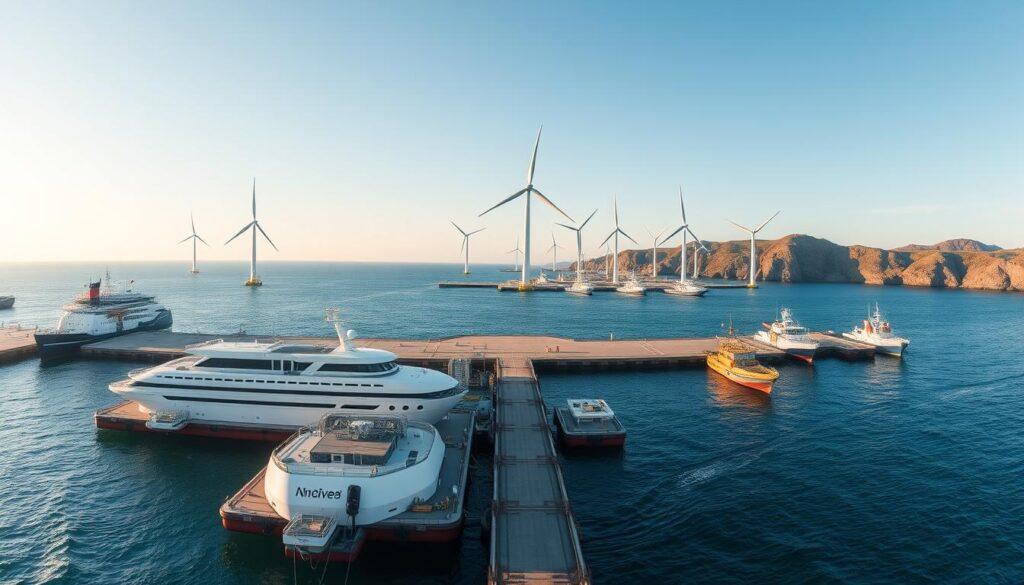
Then there’s the Jones Act. This isn’t just a maritime law; it’s the plot twist in our story. It requires vessels moving cargo between U.S. ports to be American-built, owned, and crewed. For fixed-bottom wind, we’ve been scrambling to build our first wind turbine installation vessel (WTIV). For floating? We’re starting from zero.
We have no Jones Act-compliant WTIVs capable of handling the colossal, pre-assembled floating platforms. It’s a shipbuilding gap wider than the Grand Canyon. Other nations have them. We don’t. This means the initial fleet will likely rely on foreign-flagged vessels with complex and costly operational dances to comply with the law.
But here’s the ironic twist floating technology introduces. Once the turbines are out there, their very floatiness becomes a strategic advantage. For a major repair, you might not need a $500 million jack-up vessel hovering in deep water. Instead, you can potentially tow the entire malfunctioning unit back to port.
This “tow-to-port” philosophy could revolutionize operations and maintenance. It shifts the complexity from sea to shore. Suddenly, you don’t need a floating hotel for technicians or a heavy-lift crane that can work in 30-foot swells. You need robust tugs and a well-equipped port.
This strategy directly influences the mooring system design. It needs to be secure enough to hold station for decades in a hurricane, but also allow for a controlled disconnect and tow. It’s a fascinating engineering balance—permanent yet releasable.
So, what’s the vessel fleet of the future look like? It’s less about one-trick pony installation giants and more about a versatile mix:
- Tugs and Anchor Handling Vessels: The workhorses for towing components and, later, entire turbines.
- Specialized Crew Transfer Vessels: For routine maintenance, designed to handle the dynamic motion of a floating platform.
- Subsea Support Vessels: For inspecting and maintaining the miles of mooring lines and anchors on the seabed.
The timeline is the cruelest taskmaster. A project aiming for a 2035 commercial operation date needs its port upgrades and vessel construction to break ground now. The supply chain doesn’t turn on a dime. It’s a supertanker, requiring miles to change course.
We’re not just building an energy farm. We’re rebuilding a segment of American industrial maritime capacity that has lain dormant. The ports, the ships, the skilled jobs—they’re all part of the same equation. Getting the turbine design right is physics. Getting the logistics right is the real test of political and economic will.
Cost Curve
Let’s talk about the most beautiful line in energy: the downward slope. Right now, harnessing deep-water power carries what I call the “first iPhone” premium. Early demonstration projects? Think north of $10,000 per kilowatt. Ouch.
But that sticker shock is just the cover charge. The real story is the learning curve. The National Renewable Energy Laboratory models CAPEX learning rates between 8.7% and 14.2%. For every doubling of global capacity, costs tumble by that percentage.
This is where our floating platforms—the spar, semi-sub, and TLP designs—transform. They evolve from bespoke, handcrafted prototypes into optimized, serial-produced machines. It’s the same trajectory that made solar panels cheaper than a decent steak dinner.
The investment in ports, vessels, and first-of-a-kind projects isn’t a sunk cost. It’s the down payment. We’re buying our ticket to the party where deep-water energy becomes abundant and, frankly, boringly affordable.
LCOE now vs 2030+
Imagine trying to figure out the cost of a transatlantic flight in 1927. We’d only have the Wright brothers’ biplane to go by. That’s where we are with floating wind’s Levelized Cost of Energy today. The cost is mostly theoretical, not something you see on your utility bills.
LCOE is like finance’s great equalizer. It combines capital costs, operations, maintenance, and financing into one figure. For U.S. floating wind, this figure is high and a bit embarrassing compared to solar and onshore wind.
Looking ahead to 2030 and beyond, things get exciting. NREL’s Moderate scenario shows a big drop in costs. This is thanks to a steep 11.5% CAPEX learning rate for floating tech.
This means that as we double the global installed capacity of floating wind, costs fall by over 11%. It’s all about scale and not starting from scratch every time.
| Scenario | Timeframe | Key Cost Drivers | LCOE Range ($/MWh) |
|---|---|---|---|
| Current (Nascent) | 2024-2025 | First-of-a-kind projects, bespoke engineering, limited supply chain | $120 – $180+ |
| Moderate Deployment | 2030-2035 | Serial platform production, 15-18MW turbines, optimized HVDC corridors | $60 – $90 |
| Advanced (Mature) | 2035+ | 20MW+ turbines, global supply chain, standardized port operations | $40 – $60 |
But there’s a catch in those NREL models. They don’t account for the cost of port infrastructure. Building the ports, training workers, and setting up shipping routes is a huge expense.
The cost drop from “now” to “2030+” relies on four key areas:
- Serial Production: Moving from custom yacht-building to automotive assembly lines for platforms.
- Turbine Inflation: Jumping from today’s 15MW machines to 20MW+ behemoths that capture more wind per dollar.
- Transmission Smarts: Deploying efficient HVDC cables that lose less power over long distances, turning remote wind into reliable juice.
- Supply Chain Maturity: When every wrench, bolt, and technician isn’t being flown in at premium prices.
Is this cost drop guaranteed? Not even close. It’s a big bet. We’re betting that investing in ports today will lead to cheaper energy tomorrow. The “now” cost is the price of admission. The “2030+” cost is the prize for those who build the rollercoaster first.
The math is tempting. Get the HVDC lines right, standardize the floaters, and build at scale. This makes the LCOE look less like science fiction and more like a business plan. The question is, do we have the stomach for the upfront costs needed to make it happen?
Project Pipeline
This is where the rubber meets the road—or where theory meets water. All those plans and maps get real.
The BOEM leases for Humboldt and Morro Bay are more than lines. They’re starting points. Think of them as the first dominoes in a big, complex chain.
Studies show what’s next. A leader of about 15 gigawatts could start by 2035. That’s a big deal. It grows to over 30 gigawatts by mid-century.
This isn’t just about meeting targets. It’s about a big, stable power source for the West. Each project does more than make electricity.
It makes the next project safer. It trains workers. It strengthens the supply chain. The pipeline is like a flywheel—hard to start, but powerful once moving.
Lease areas and capacity
What did energy companies buy in those BOEM leases? They got ocean plots, not electricity. The Bureau of Ocean Energy Management sold ocean areas, not specific power blocks. It’s like buying a lot versus a built house.
It’s like a sea zoning process. Each lease has coordinates, depth charts, and wind data. Developers must plan how many turbines fit well together. It’s a complex puzzle with huge stakes.
Capacity can change. One lease might produce 800 MW or 1.2 GW, depending on technology and design. The exact capacity isn’t set in the lease. It comes from engineering and planning.
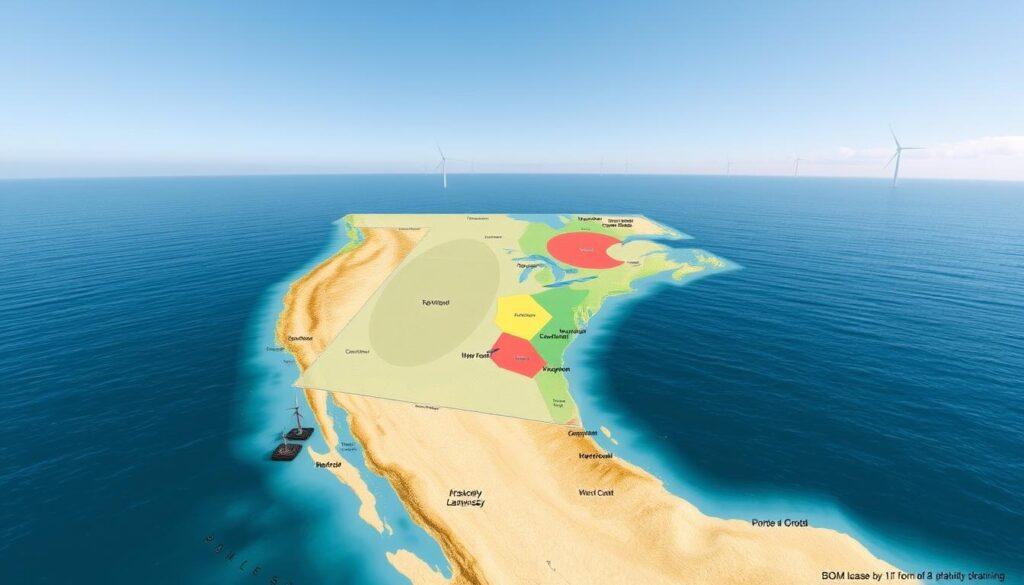
The wind resource is very consistent. NREL’s Wind Resource Class 12 is top-notch. These Pacific sites have perfect wind conditions. The challenge is to use this wind efficiently.
So, what’s the total capacity? The current California leases could hold several gigawatts. This is just the start. These areas are the first steps in a new industry.
Future sales will open more areas. This is done carefully to match development with readiness. It’s a well-planned expansion.
The BOEM leases are more than just permits. They’re keys to unlocking a big challenge. They allow companies to find the best way to use windy ocean areas. The exact capacity will come from new ideas and improvements.
Career Paths
Forget everything you think you know about energy jobs. The world of California offshore wind is completely new. It’s not like anything your grandfather knew.
Imagine a Venn diagram where blue-collar and white-collar jobs meet. On one side, you have welders making huge steel platforms and captains facing Pacific storms. On the other, you have coders creating digital models and PhDs studying ocean currents.
This industry needs a wide range of workers. It’s not just about welders and captains. It also needs port engineers, environmental surveyors, high-voltage specialists, and project managers who understand federal rules.
The career ladder starts with community college programs and reaches the top in research labs. These jobs are right on the coast. They can’t be sent to another country.
Let’s look at what this means for today’s workers. What skills are needed? Where do you fit in this new industrial era?
Engineering/operations roles
Forget the abstract policy papers. The real story of floating wind lives in the hands of the people who build and run these oceanic power plants.
Engineering this frontier demands new specializations. The mooring systems expert isn’t just a designer. They’re the guardian ensuring a billion-dollar platform doesn’t take an unplanned cruise to Hawaii. Naval architects battle wave dynamics to optimize semisubmersible hulls. Geotechnical engineers analyze seabed composition for anchor design, a critical link in the mooring chain. HVDC substation engineers work where the sea meets the socket.
Operations require a hybrid breed. The offshore wind technician holds Global Wind Organization (GWO) certifications but also maritime skills. They’re part electrician, part sailor, part climber. Their commute is a crew transfer vessel. Their office sways with 300-foot swells. Robotics specialists pilot drones and ROVs for inspection, keeping human risk at bay.
These roles are the final translation. They turn venture capital, environmental permits, and steel supply chains into megawatts on the grid. The mooring engineer’s calculation, the technician’s wrench turn—this is where America’s offshore ambition gets real.