
Let’s get one thing straight. The image of the lone engineer hugging a wind turbine? That’s from a movie that ended a decade ago. Today’s energy shift is more like a big, long TV show.
The scale is staggering. In 2022, 13.7 million people worked in this field globally. It’s not a small market; it’s a big change in the world’s job scene.
This isn’t just one industry. It’s a whole world. Think Advanced Manufacturing, Bioenergy, and Green Buildings. Hydrogen, Hydropower, Marine, Solar, and Wind are all part of it. Everyone is looking for their role.
The story has different parts. You have the mad scientists in Research & Development. Then there are the deal-makers in Project Development. The builders turn plans into real things (EPC). The caretakers keep things running smoothly (Operations & Maintenance). And the policy makers set the rules.
This is the real renewable careers roadmap. It’s about building a new industrial base. The story of clean energy jobs is being rewritten every day.
R&D, project dev, EPC, O&M, policy
The renewable energy industry is like a Broadway show. You can choose your role, from backstage to center stage. It’s not just one thing; it’s five different areas, each with its own vibe and tasks. Your career path is all about which role you pick.
Act I: R&D (The Visionaries)
In this act, you’re all about new ideas. It’s about scientists and engineers exploring new tech. They work on things like geothermal drilling and solar cells. It’s exciting and sometimes magical.
Act II: Project Development (The Producers)
This act turns ideas into real projects. It’s about money, rules, and making things happen. You need to know finance, law, and how to please people. It’s for those who love making deals.
Act III: EPC (The Builders)
This act is all about making things real. It’s where plans turn into actual projects. Power systems engineers make sure everything works together. Big companies like NextEra Energy and GE Vernova are here, making things happen.
Keeping things running smoothly is the job of Operations & Maintenance. It’s about keeping things working well for a long time. It’s hands-on and stable, keeping the money flowing.
Act V: Policy (The Stage Managers)
Policy makers set the stage for everything. They make laws and rules that help projects happen. The Inflation Reduction Act has changed the game, creating more jobs. As the latest IRENA report confirms, policy is key to job growth.
So, which role do you want? Are you a dreamer, a dealmaker, a builder, a guardian, or a rule-maker? You can change roles as the industry grows. There’s room for everyone in the green energy world.
Exploring the Role of a Wind Technician
As a wind technician, you play a vital role in ensuring the smooth operation of wind turbines. Your expertise is essential for maintaining the efficiency and reliability of these renewable energy sources. By performing routine maintenance tasks, troubleshooting issues, and conducting repairs, you contribute to the overall performance of wind turbines.
Wind turbines are complex systems that require regular maintenance to function optimally. As a wind technician, you are responsible for inspecting and cleaning the turbines, lubricating moving parts, and checking for any signs of wear or damage. Your attention to detail and ability to identify and address issues promptly are critical to preventing downtime and ensuring the turbines operate at their maximum capacity.
In addition to maintenance tasks, you may also be involved in the installation and commissioning of new wind turbines. This involves setting up the turbines, connecting them to the electrical grid, and conducting tests to ensure they are functioning correctly. Your knowledge and skills in this area are essential for ensuring the successful integration of wind turbines into the energy grid.
Working as a wind technician offers a rewarding career path with opportunities for growth and development. As the demand for renewable energy continues to increase, the need for skilled wind technicians is expected to rise. By staying up-to-date with industry advancements and expanding your skill set, you can position yourself for career advancement and increased earning opportunities.
Whether you are interested in working onshore or offshore, wind technician jobs offer a range of options to suit your preferences and career goals. With the increasing focus on renewable energy and sustainability, the role of wind technicians is becoming more prominent in the energy sector.
Benefits of Being a Wind Technician
Working as a wind technician comes with several benefits. Not only do you contribute to the transition to renewable energy sources, but you also have the opportunity to work in a dynamic and rapidly evolving industry. Wind technicians are in high demand, which means you can enjoy job security and stability in your career.
Wind technician jobs often come with competitive salaries and benefits packages, including health insurance, retirement plans, and paid time off. Many employers also offer opportunities for professional development and training, allowing you to enhance your skills and advance in your career.
As a wind technician, you will have the satisfaction of knowing that your work is contributing to a cleaner and more sustainable future. By playing a key role in the renewable energy sector, you can make a positive impact on the environment and help reduce our reliance on fossil fuels.
FAQ
Q: What is a Power Systems Engineer?
A: A Power Systems Engineer is a professional who designs, develops, and maintains electrical power systems. They ensure the reliability and efficiency of power systems, including generation, transmission, and distribution.
Q: What is a Data Analyst?
A: A Data Analyst is responsible for collecting, analyzing, and interpreting data to help organizations make informed decisions. They use statistical techniques and data visualization tools to identify trends and patterns in data.
Q: What is a Wind Technician?
A: A Wind Technician is responsible for the installation, maintenance, and repair of wind turbines. They ensure the optimal performance of wind turbines and contribute to the generation of renewable energy.
Q: What are the key responsibilities of a Power Systems Engineer?
A: The key responsibilities of a Power Systems Engineer include designing and developing electrical power systems, conducting feasibility studies, and ensuring the reliability and efficiency of power systems.
Q: What are the key responsibilities of a Data Analyst?
A: The key responsibilities of a Data Analyst include collecting and analyzing data, identifying trends and patterns, and providing insights to help organizations make informed decisions.
Q: What are the key responsibilities of a Wind Technician?
A: The key responsibilities of a Wind Technician include installing, maintaining, and repairing wind turbines, ensuring their optimal performance, and contributing to the generation of renewable energy.
Q: What are the salary ranges for Power Systems Engineers, Data Analysts, and Wind Technicians?
A: The salary ranges for Power Systems Engineers, Data Analysts, and Wind Technicians vary based on factors such as location, experience, and industry. It is important to research the current salary ranges in your area to determine the appropriate compensation for your role.
Q: What are the career growth opportunities for Power Systems Engineers, Data Analysts, and Wind Technicians?
A: Power Systems Engineers, Data Analysts, and Wind Technicians have various career growth opportunities. They can advance to leadership positions, specialize in specific areas, or transition to related fields. It is important to stay updated with industry trends and continuously develop skills to enhance career prospects.
Q: What are the salary ranges for Power Systems Engineers, Data Analysts, and Wind Technicians?
A: The salary ranges for Power Systems Engineers, Data Analysts, and Wind Technicians vary based on factors such as location, experience, and industry. It is important to research the current salary ranges in your area to determine the appropriate compensation for your role.
Q: What are the salary ranges for Power Systems Engineers, Data Analysts, and Wind Technicians?
A: The salary ranges for Power Systems Engineers, Data Analysts, and Wind Technicians vary based on factors such as location, experience, and industry. It is important to research the current salary ranges in your area to determine the appropriate compensation for your role.
FAQ
Q: What is a NABCEP Certification?
A: A NABCEP Certification is a professional credential that shows you have the skills and knowledge needed to work in the solar industry. It’s given by the North American Board of Certified Energy Practitioners (NABCEP).
Q: Why is NABCEP Certification important?
A: Getting a NABCEP Certification is key for a career in solar energy. It proves you’re an expert in solar installation and maintenance. It also shows you’re up-to-date with the latest solar technology.
Q: What are the different types of NABCEP Certifications?
A: NABCEP offers several certifications. These include the NABCEP PV Installer Certification, NABCEP Solar Thermal Installer Certification, and NABCEP Solar PV Technical Sales Certification. Each one focuses on a different area of solar work.
Q: How do I become a NABCEP Certified Professional?
A: To get a NABCEP Certification, you need to meet certain requirements. These include passing a written exam and having the right work experience. You also need to follow NABCEP’s Code of Ethics.
Q: What are the benefits of NABCEP Certification?
A: Being NABCEP Certified brings many benefits. It opens up more job opportunities and can lead to higher pay. It also shows you’re committed to quality and professionalism in the solar industry.
Q: How do I prepare for the NABCEP Certification Exam?
A: To prepare for the NABCEP Exam, you can take courses or get study materials. These help you learn the needed skills and knowledge. They also give you practice questions to get ready for the exam.
Q: What are the NABCEP Certification Requirements?
A: To get a NABCEP Certification, you need to meet specific requirements. These include passing a written exam and having the right work experience. You also need to follow NABCEP’s Code of Ethics.
Q: How do I maintain my NABCEP Certification?
A: To keep your NABCEP Certification, you need to meet continuing education requirements. This means you have to take courses or get training to stay up-to-date with the latest in solar energy.
Q: What are the benefits of NABCEP Certification?
A: Being NABCEP Certified has many benefits. It opens up more job opportunities and can lead to higher pay. It also shows you’re committed to quality and professionalism in the solar industry.
Q: How do I prepare for the NABCEP Certification Exam?
A: To prepare for the NABCEP Exam, you can take courses or get study materials. These help you learn the needed skills and knowledge. They also give you practice questions to get ready for the exam.
Q: What are the NABCEP Certification Requirements?
A: To get a NABCEP Certification, you need to meet specific requirements. These include passing a written exam and having the right work experience. You also need to follow NABCEP’s Code of Ethics.
Q: How do I maintain my NABCEP Certification?
A: To keep your NABCEP Certification, you need to meet continuing education requirements. This means you have to take courses or get training to stay up-to-date with the latest in solar energy.
NABCEP, NACE, GWO, PMP
Think of industry certifications as the secret handshake that gets you past the velvet rope in clean energy. In a field growing faster than a sunflower in July, these credentials are your verified ID. They tell employers you speak the language, understand the risks, and won’t accidentally blow up a transformer on your first day.
The Bureau of Labor Statistics highlights explosive growth for roles like Wind Turbine Service Technician and Solar PV Installer. What do these jobs have in common? They strongly benefit from—or outright require—specialized certifications. Let’s decode the four heavyweights.
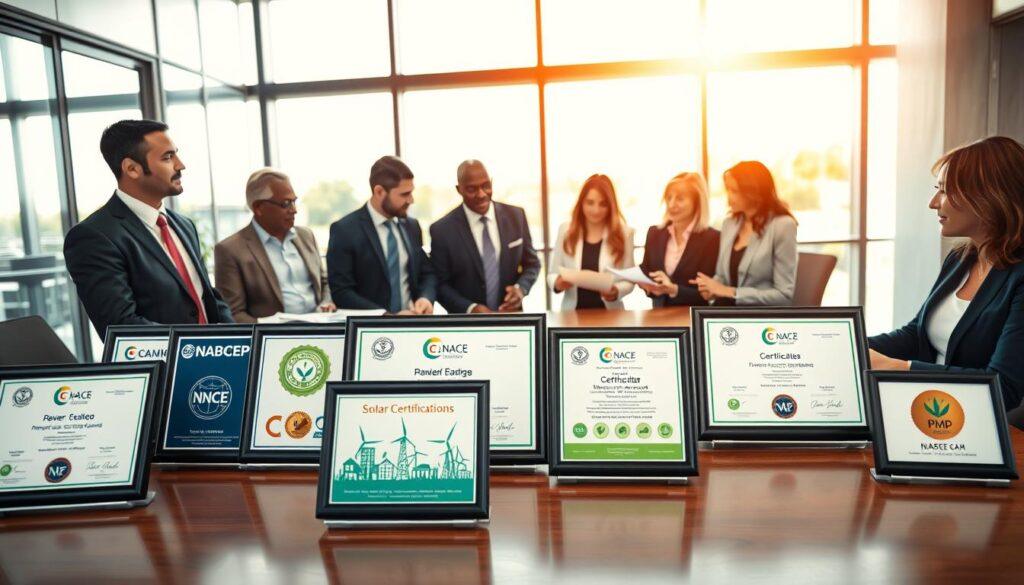
NABCEP: The Solar Industry’s Gold Standard
If the solar world had an Ivy League, NABCEP would be Harvard, Yale, and Princeton rolled into one. The North American Board of Certified Energy Practitioners sets the bar for photovoltaic and storage expertise.
Earning a NABCEP PV Installation Professional certification isn’t just passing a test. It’s a public declaration that you understand electrical theory, system design, and the National Electrical Code as it applies to solar. For a Solar PV Installer, this credential is career rocket fuel.
Project developers see that NABCEP stamp and breathe easier. It means fewer callbacks, compliant installations, and happy customers. In an industry battling shady installers, this certification is your suit of armor.
GWO: Your Passport to the Wind Farm
Climbing a 300-foot turbine isn’t a casual hike. The Global Wind Organisation (GWO) created the universal safety standard to prevent technicians from becoming statistics. Their Basic Safety Training (BST) is the non-negotiable entry ticket.
Think of GWO certification as your driver’s license for the wind industry. It covers working at heights, manual handling, fire awareness, and first aid. Every major wind operator requires it. Without GWO, you’re grounded.
For Wind Turbine Service Technicians, this isn’t optional. It’s the difference between a safe career and a very short, dangerous one. The training is standardized globally, making your skills portable from Texas to Taiwan.
NACE: Fighting the Invisible Enemy (Corrosion)
While sun and wind get the glory, corrosion is the silent killer of renewable infrastructure. Saltwater, humidity, and temperature swings eat metal for breakfast. Enter NACE, the National Association of Corrosion Engineers.
This certification is critical for offshore wind, hydropower, and any project battling the elements. NACE specialists are the rust warriors. They specify coatings, design cathodic protection systems, and extend asset life by decades.
It’s a niche skill with massive impact. A single NACE-certified inspector can save a project millions in premature repairs. In the fight against entropy, they’re the frontline defense.
PMP: Orchestrating the Renewable Symphony
Someone has to herd the cats. The Project Management Professional (PMP) certification is for the maestros who orchestrate development chaos. It’s the language of timelines, budgets, and stakeholder management.
While technicians climb towers and engineers crunch data, PMP holders navigate permit hell, supply chain snafus, and investor expectations. They turn blueprints into functioning power plants.
This credential transcends industry, but in renewables’ complex ecosystem, it’s particular valuable. It signals you can deliver a multi-million dollar project on time and within budget—a rare and lucrative skill.
| Certification | Primary Focus | Ideal For | Career Impact |
|---|---|---|---|
| NABCEP | Solar PV & Storage | Solar Installers, Designers | Industry Gold Standard, High Earnings |
| GWO | Wind Technician Safety | Wind Turbine Technicians | Mandatory for Field Work, Global Portability |
| NACE | Corrosion Control | Offshore Engineers, Inspectors | Niche Expertise, Asset Protection |
| PMP | Project Management | Developers, Construction Managers | Leadership Roles, Cross-Industry Value |
So which certification path should you choose? Follow the technology. NABCEP for the solar boom, GWO for the wind rush, NACE for durability challenges, and PMP to lead the charge. These aren’t just letters after your name—they’re master keys unlocking the highest-growth doors in energy.
In the end, certifications validate what you know to those who sign the checks. They transform “trust me” into “here’s my proof.” And in an industry building the future, proof is everything.
Career Pathways
Forget the corporate ladder. The clean energy sector is more like a jungle gym.
Your journey isn’t a straight climb. It’s a dynamic, multi-directional scramble. Your starting point shapes your unique path. If you’re new to the field, start as a field tech. The learning curve is steep, but so is the growth.
If you’re moving from oil and gas, your skills are valuable. A drilling engineer can easily switch to geothermal drilling. A pipeline manager can move to hydrogen infrastructure. It’s about learning a new language for your skills.
The demand for clean energy jobs is skyrocketing. This creates paths that look more like exponential curves than straight lines.
The official Career Maps show these paths. They reveal how a solar installer can become a site manager. Or how an electrician can move into grid analytics.
Your background is your guide. The sector’s need for talent means your roadmap is tailored. It’s the ultimate career jungle gym—and everyone’s welcome to play.
Entry, pivot from O&G, upskilling
The Inflation Reduction Act didn’t just fund projects; it started a big talent search. Now, there are many ways to get into clean energy jobs. Where do you fit in this new world?
Career paths in this field are for everyone. They’re made for people at all stages of their careers. Whether you’re just starting, in the middle, or nearing retirement, there’s a spot for you.
You don’t need to know everything right away. The renewable energy sector values curiosity and the ability to learn. Your key skills?
- Internships that get your hands dirty with real projects
- Apprentice programs that pay you to learn the trade
- A demonstrated ability to learn fast and adapt faster
Getting into this field is easier than you think. They look for people with the right attitude, not just experience.
The Oil & Gas Pivot: Welcome, Refugees
Your experience in the old energy world is valuable. The technology changes, but the basics stay the same. Physics is physics, and so is logistics.
We need your expertise. The renewable sector values people who’ve managed big projects. Your transition is about using your skills in a new way.
The Lifelong Learner’s Upskilling Path
Already in energy or tech? You’re in a great spot. IT pros can learn SCADA systems, and construction supervisors can get green building certifications. It’s not about your past; it’s about your willingness to learn.
Over 100,000 clean energy jobs were created in just six months after the IRA passed. The talent search is on, looking for skilled professionals from all fields.
Your next step depends on your goals. The map is ready. The question is, which door will you choose first? The energy transition is moving fast, but it welcomes everyone who’s ready to join.
FAQ
Q: What is a pre buy car inspection?
A: A pre buy car inspection is a thorough examination of a vehicle’s condition before purchasing it. It involves checking various components such as the engine, transmission, brakes, suspension, and electrical systems to identify any existing issues or hidden problems.
Q: Why should I get a pre buy car inspection?
A: Getting a pre buy car inspection is essential to ensure that you are making a wise investment. It helps you identify any underlying issues or hidden problems that may not be apparent during a test drive. This way, you can negotiate a fair price or decide if the vehicle is worth purchasing.
Q: What does a pre buy car inspection include?
A: A pre buy car inspection typically includes a detailed examination of the vehicle’s exterior, interior, engine, transmission, brakes, suspension, electrical systems, and more. It may also involve a test drive to assess the vehicle’s performance and identify any unusual noises or vibrations.
Q: How long does a pre buy car inspection take?
A: The duration of a pre buy car inspection can vary depending on the complexity of the vehicle and the thoroughness of the inspection. On average, it can take anywhere from 1 to 3 hours to complete a thorough inspection.
Q: Can I be present during the pre buy car inspection?
A: Yes, it is highly recommended to be present during the pre buy car inspection. This allows you to ask questions, gain a better understanding of the vehicle’s condition, and address any concerns or concerns you may have.
Q: How much does a pre buy car inspection cost?
A: The cost of a pre buy car inspection can vary depending on factors such as the location, type of vehicle, and the level of detail required. On average, it can range from $150 to $300. It is best to contact a reputable inspection company for a more accurate quote.
Q: Can I get a pre buy car inspection for other types of vehicles?
A: Yes, pre buy car inspections are not limited to cars. They can be conducted for motorcycles, RVs, boats, and even heavy equipment. It is important to have a professional inspection done to ensure the condition and value of any vehicle or equipment you are considering purchasing.
Q: How do I choose a reputable pre buy car inspection company?
A: When choosing a pre buy car inspection company, it is important to look for a company with a good reputation, experienced inspectors, and a proven track record. You can read reviews, ask for referrals, and check their credentials to ensure you are hiring a reliable and trustworthy company.
Q: What are the benefits of a pre buy car inspection?
A: A pre buy car inspection offers several benefits. It helps you make an informed decision by identifying any existing issues or hidden problems. It also allows you to negotiate a fair price based on the vehicle’s condition. Overall, it provides peace of mind and ensures that you are investing in a reliable and safe vehicle.
Modeling (PVsyst, WindPRO, HOMER, PSSE)
These software suites are like the conductors’ batons in the energy transition symphony. They don’t just simulate energy production; they turn physics into finance and weather into balance sheets. Mastering them is key, not just nice to have. It’s the difference between guessing and knowing, between a proposal and a bankable project.
This is your guide to the four essential platforms. Each serves a unique role in the renewable ecosystem. Together, they form the digital backbone of modern energy planning.
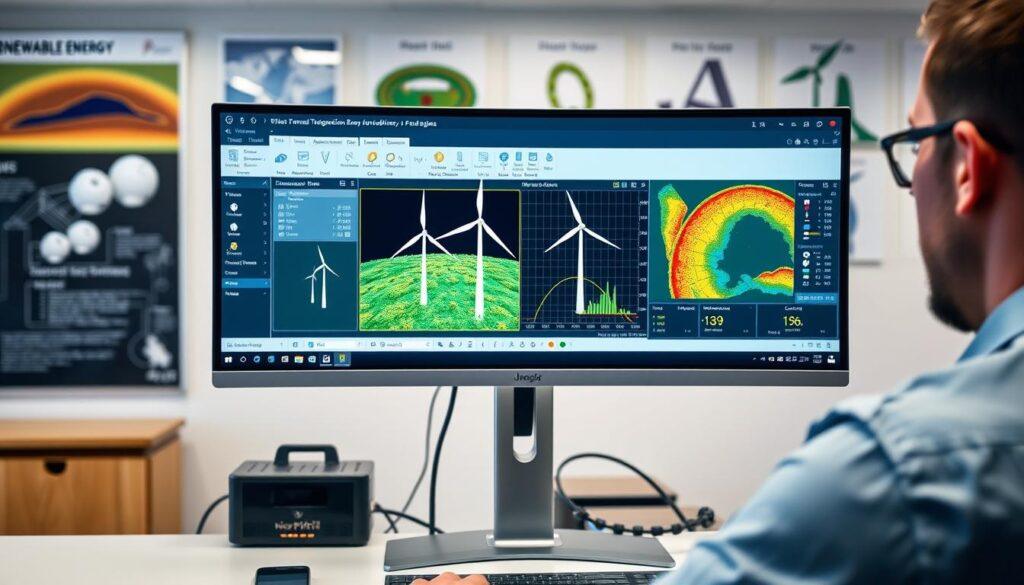
PVsyst is the top choice for solar. It’s more than a tool; it’s a reality-check machine. It takes your location, module specs, and inverter choices to give you a production estimate. It accounts for everything, from shade to soiling loss.
For wind, the conversation starts with WindPRO. It’s where macro-planning meets micro-detail. Developers use it to optimize turbine layouts for maximum yield. It models real-world headaches like wake effects and noise propagation.
HOMER is the ultimate hybrid system architect. It’s for sites with good sun, decent wind, and a need for 24/7 power. It blends solar panels, wind turbines, batteries, and diesel generators to find the most cost-effective mix.
Lastly, we have PSS®E (Power System Simulator for Engineering). This is for serious power systems engineers. Utilities and transmission operators use it to model grid stability and voltage fluctuations. It’s complex, expensive, and essential for large-scale integration.
You don’t just learn these tools; you develop a relationship with them. Your intuition grows alongside their algorithms. The best modelers speak of their software with respect and mild frustration.
The takeaway? Pick one that aligns with your path. Solar designers live in PVsyst. Wind technicians and developers should get comfortable with WindPRO. Microgrid specialists swear by HOMER. And if you’re aiming to be the power systems engineer who keeps the grid stable, PSSE is your mountain to climb. Your choice of software defines your role in the energy symphony.
Job Search Strategy
So you’ve mapped the terrain, taken inventory of your arsenal, and maybe even earned a shiny new badge. Now what? The real game begins when you step off the preparation mat and into the arena. In a market this competitive, waiting for opportunity to knock is like expecting your mail to arrive by carrier pigeon.
Let’s be brutally honest: the best positions don’t go to the most qualified candidates. They go to the most strategic ones. This isn’t about playing a numbers game, firing résumés into the digital abyss of job portals. That’s just busywork.
True strategy is crafting a compelling narrative. It’s building a network that actually opens doors, not just collects LinkedIn connections. You must demonstrate your value in conversations, not just on paper. Think of yourself as both the product and the marketing department.
The objective shifts completely. The goal is no longer just to get hired. It’s to become sought after. Let’s talk about how to make that happen.
Portfolios, networking, internships
Building a career isn’t about who you know. It’s about what you can show. Anyone can say they’re a project manager. But, the ones who succeed focus on three key areas that work together.
Think of it like building your own Avengers team. Each member has a special power. Together, they save the day. But, using just one power is not enough.
The Portfolio: Your Digital Proof of Concept
For engineers and designers, showing your work is essential. You present CAD files, structural analysis, and the finished project. It’s something you can touch.
For data analysts looking to switch, it’s different. Your proof isn’t a physical object. It’s the story the data tells.
This is where a public GitHub repository shines. Don’t just share code. Create a detailed Jupyter notebook that shows your analysis step by step.
For example:
- Get a public solar generation dataset (e.g., from NREL).
- Clean and prepare the data, documenting each step.
- Do exploratory analysis with clear visuals.
- Build a simple predictive model and explain it.
- End with a concise conclusion and business tips.
That notebook is worth more than saying you’re good at Python. It shows you can do the work, not just talk about it.
Networking: The Art of Intelligent Engagement
Networking isn’t about collecting LinkedIn connections like Pokémon cards. It’s about meaningful interactions. It’s a numbers game you can’t win.
Here’s a tactical playbook:
- Comment Intelligently: Find a post from a leader in your field. Don’t just say “great post.” Add a specific insight or ask a question that shows you’re engaged.
- Ask Pointed Questions in Webinars: Most people just listen. Be the one who asks a practical question about the theory discussed. It gets you noticed.
- Request an Informational Interview: Find someone whose career path you admire. Send a short, specific email asking for 20 minutes to learn about their journey. People love talking about themselves—use it.
This builds real relationships, not just contacts. And relationships are what this industry values most.
Internships: The Ultimate Career-Changer’s Trial
Internships are not just for college students. They’re a strategic move for career-changers. A 3–6 month internship can be a game-changer.
It solves the “you need experience to get experience” problem. For employers, it’s a low-risk way to find a great hire. For you, it’s a paid chance to learn the ropes.
See it as a specialized, accelerated onboarding program. You’re not just an intern; you’re a “transitional associate” on a learning path.
Using these three strategies together makes your job search smarter. You’re not just looking for a job. You’re executing a plan.
Exploring the Solar Panel Installation Process
Embarking on the journey to install solar panels is a significant step towards a sustainable future. Understanding the solar panel installation process is essential for homeowners looking to harness clean energy. This process involves several key steps, from initial consultation to post-installation maintenance.
Initial Consultation and Site Assessment
The first step in the solar panel installation process is the initial consultation. During this phase, a professional assesses your property to determine the best location for solar panels. This site assessment is critical as it ensures optimal sunlight exposure and compliance with local regulations.
Design and Installation
Following the site assessment, the design phase begins. Here, the solar panels are custom-designed to fit your property’s specific needs. The installation process involves mounting the panels on your roof or ground-mounted systems, ensuring they are securely and efficiently positioned to capture sunlight.
Post-Installation Maintenance
After the installation, regular maintenance is vital to ensure the longevity and efficiency of your solar panels. This includes cleaning panels to remove debris and checking for any system malfunctions. Regular maintenance ensures that your solar panels continue to perform optimally, maximizing clean energy production.
By understanding the solar panel installation process, homeowners can make informed decisions and ensure a smooth transition to clean energy. From the initial consultation to post-installation maintenance, each step is designed to optimize your solar panel system’s performance.
FAQ
Q: What is geothermal drilling?
A: Geothermal drilling is a method of extracting heat from the Earth’s interior. It involves drilling into underground reservoirs of hot water or steam to harness geothermal energy. This energy can be used for heating, cooling, and generating electricity.
Q: How does geothermal drilling work?
A: Geothermal drilling works by tapping into underground reservoirs of hot water or steam. The heat from these reservoirs is then transferred to a heat exchanger, which converts it into usable energy. This energy can be used for various purposes, including heating, cooling, and generating electricity.
Q: What are the benefits of geothermal drilling?
A: Geothermal drilling offers several benefits. It is a clean and renewable source of energy, producing no greenhouse gas emissions. It also provides reliable and consistent energy, reducing reliance on fossil fuels. Geothermal drilling can be used for both residential and commercial purposes, making it a versatile energy solution.
Q: What are the different types of geothermal drilling?
A: There are two main types of geothermal drilling: closed-loop systems and open-loop systems. Closed-loop systems involve circulating a fluid through underground pipes to extract heat, while open-loop systems use groundwater from a well to generate heat. Each type has its own advantages and applications.
Q: What are the advantages of geothermal drilling?
A: Geothermal drilling offers several advantages. It is a clean and renewable source of energy, producing no greenhouse gas emissions. It also provides reliable and consistent energy, reducing reliance on fossil fuels. Geothermal drilling can be used for both residential and commercial purposes, making it a versatile energy solution.
Q: What are the challenges of geothermal drilling?
A: Geothermal drilling faces several challenges. One of the main challenges is the high upfront costs associated with drilling and installing geothermal systems. Another challenge is the need for suitable geology and access to underground reservoirs. Despite these challenges, geothermal drilling remains a promising source of renewable energy.
Q: What is the future of geothermal drilling?
A: The future of geothermal drilling looks promising. As concerns about climate change and renewable energy sources continue to grow, geothermal drilling is gaining popularity. Advances in technology and increased investment in geothermal projects are expected to make geothermal drilling more accessible and cost-effective in the coming years.
FAQ
Q: What is a NABCEP Certification?
A: A NABCEP Certification is a professional credential that shows you have the skills and knowledge needed to work in the solar industry. It’s given by the North American Board of Certified Energy Practitioners (NABCEP).
Q: Why is NABCEP Certification important?
A: Getting a NABCEP Certification is key for a career in solar energy. It proves you’re an expert and can handle solar projects well. It also shows you’re up-to-date with the latest solar technology and standards.
Q: What are the different types of NABCEP Certifications?
A: NABCEP offers several certifications for different roles in solar energy. These include the NABCEP PV Installer Certification, NABCEP Solar Thermal Installer Certification, and NABCEP PV Technical Sales Certification.
Q: How do I become a NABCEP Certified Professional?
A: To become certified, you need to meet certain requirements. These include having the right education and experience, passing a written exam, and getting a background check. You also need to follow NABCEP’s Code of Ethics.
Q: What are the benefits of NABCEP Certification?
A: Being NABCEP Certified brings many benefits. It opens up more job opportunities and can lead to higher pay. It also shows you’re committed to your career and the solar industry.
Q: How do I prepare for the NABCEP Certification Exam?
A: To prepare, you can take online courses or get study materials. These help you learn the needed skills and knowledge. They also give you practice exams to get ready for the real test.
Q: What are the costs associated with NABCEP Certification?
A: Getting certified involves some costs. These include exam fees, study materials, and any needed education or training. But, the benefits of certification can make these costs worth it.
Q: How do I maintain my NABCEP Certification?
A: To keep your certification, you need to follow NABCEP’s rules. This includes continuing your education and passing a recertification exam every five years. It also means following the Code of Ethics.
Q: What are the future prospects for NABCEP Certified Professionals?
A: The future looks bright for certified professionals. The solar industry is growing fast, and there’s a big need for skilled workers. This means more job opportunities and chances for career growth.
Courses and projects
Think of this as your ninety-day bootcamp. Forget New Year’s resolutions that die by February. This is a sprint with deliverables.
Weeks one through four are for foundation work. Take a MOOC like Coursera’s “Renewable Energy Fundamentals” or edX’s “Solar Energy Basics.” It’s like binge-watching a show. Also, curate your LinkedIn feed. Follow ten key players and engage. Your digital footprint matters.
The middle month demands specialization. Choose one hard skill from our earlier map. Take a deep-dive course. For example, Python for data analysis or introductory PV design. It’s not about collecting certificates. It’s about building one usable, marketable competency.
The final stretch is for creation and credentialing. Build something tangible. Use PVsyst’s free trial to model a solar array for your roof. Crunch public wind data and visualize it. Then, target an entry-level certification. Preparing for a NABCEP Associate exam or a GWO safety module proves you’re serious.
This three-month output—a course certificate, a live project, exam prep—is your new resume. It screams initiative in a field hungry for it. The blueprint is here. The execution is on you.