
Green careers funding in New York has moved from broad climate-policy language into specific training commitments, application rounds, and sector targets. As of October 3, 2026, the clearest signals came from NYPA and NYSERDA funding streams, with public dollars aimed at entry-level training, technical upskilling, and job pathways connected to building efficiency, renewable power, grid work, and electric transportation.
For workers, training providers, and employers, the question is not only how much money has been announced. The more useful question is whether the funding matches hiring needs that can be measured. New York’s clean energy job base was already sizable before these 2026 commitments. The 2025 Clean Energy Industry Report cited in the research notes counted 184,537 clean energy jobs in New York as of December 2024, after a gain of 6,000 jobs during 2024. Most of those jobs were in building decarbonization and energy efficiency, with smaller but still meaningful counts in renewable electric power generation, clean transportation, and grid modernization and storage.
What Green Careers Funding Covers In New York
Green Careers Funding And Public Training Commitments
The New York Power Authority has committed to investing up to $25 million annually in clean energy workforce training programs across the state, according to NYPA workforce funding. That annual structure matters because workforce programs need time to recruit participants, coordinate with employers, arrange instructors, provide equipment access, and document placement outcomes.
NYSERDA funding expanded as well. On April 2, 2026, Governor Kathy Hochul announced $50 million in new funding under NYSERDA, with $30 million for entry-level Clean Energy Career Pathways training and $20 million for technical skills upskilling. The announcement described the funding as part of a larger $320 million statewide commitment to workforce preparation in energy efficiency and renewable energy through the NYSERDA announcement.
Those figures are significant, but they should not be read as a guarantee of employment for every participant. Training funds can reduce barriers and expand capacity. Outcomes still depend on employer demand, local hiring networks, trainee completion, credential recognition, transportation access, and whether programs teach skills that firms need within a defined region.
Where The Job Base Was Concentrated
The sector breakdown in the research notes suggests why energy efficiency remains central to career planning. Building decarbonization and energy efficiency accounted for about 135,000 of New York’s clean energy jobs as of December 2024. Renewable electric power generation accounted for about 28,000 jobs, clean transportation for about 15,000, and grid modernization and storage for about 2,600.
That distribution does not mean smaller sectors should be ignored. It means job seekers should distinguish between the largest existing employment base and the areas receiving targeted development support. A worker seeking the highest number of near-term openings may see more options in efficiency, HVAC-related work, insulation, controls, and building electrification. A worker aiming at electric vehicle maintenance, charging, fleet operations, or grid support may need more specialized training and a closer reading of funding notices.
For a broader labor-market comparison, readers can place these New York programs beside national renewable energy jobs planning, where official projections and industry reports often show strong growth in some occupations but uneven access across locations.
Why Transportation Skills Deserve Close Attention
EV Training Is A Workforce And Access Issue
From a green career strategy perspective, sustainable transportation deserves careful attention because electrification creates work beyond vehicle manufacturing. The research notes identify a New York State Department of Labor Office of Just Energy Transition release on April 10, 2026 for the Growing the Clean Energy Workforce electric vehicle request for applications. The program funds pre-apprenticeship and training programs in EV maintenance, charging, and fleet operations, with at least 35% of participants from Disadvantaged Communities. Its proposal deadline is scheduled for December 3, 2026, at 4:00 PM ET.
This is where green careers funding connects directly to mobility. EV charging networks require installation, maintenance, site assessment, electrical work, customer support, fleet scheduling, and safety procedures. Public fleets and private fleets may need workers who understand charging equipment and operations. Yet the training need is not only technical. Programs serving lower-income workers, rural residents, or neighborhoods with limited transit access must account for the practical cost of participation, including travel time, childcare, tools, and lost wages.
Clean Transportation Is Still Smaller Than Building Efficiency
The research notes reported about 15,000 clean transportation jobs in New York as of December 2024. That was far below the building decarbonization and energy efficiency count. A cautious interpretation is needed: clean transportation is a meaningful sector, but it was not the largest green employment category in the state.
For job seekers, green careers funding tied to transportation may be best evaluated by its specificity. Programs that name EV maintenance, charging, and fleet operations give clearer signals than broad claims about climate jobs. Employers, unions, community colleges, nonprofits, and workforce boards can help translate those signals into course content, work-based learning, and hiring commitments.
How Applicants Should Read 2026 Funding Signals
Dates And Program Stage Matter
Several 2026 funding items were already past events by October 3, 2026. NYPA approved $13 million on July 28, 2026 to support six workforce development programs aimed at placing more than 450 New Yorkers in clean energy career pathways. On April 1, 2026, $5 million in NYPA funding was announced for eight workforce development programs designed to train more than 1,000 New Yorkers for clean energy sector jobs. These announcements are useful evidence of public investment, but they do not show completion outcomes unless later reporting confirms enrollment, graduation, placement, or retention.
NYSERDA’s Clean Energy Career Pathways Training PON 6121 had a first round due May 20, 2026, with later rounds continuing through November 23, 2027, according to the research notes. That multi-round structure may help training organizations adjust proposals, but applicants should confirm current deadlines and eligibility with the administering agency before committing staff time.
- Training providers should verify whether funding covers instruction only or also wraparound supports.
- Workers should ask whether a program leads to an employer-recognized credential, apprenticeship pathway, or interview process.
- Employers should document skill gaps before partnering on a proposal.
- Community groups should track whether disadvantaged communities are represented in recruitment and completion, not only enrollment.
Closed Solicitations Still Offer Market Clues
Some funding opportunities in the research notes had already closed by October 3, 2026. NYSERDA’s PON 6161, with a due date of September 28, 2026, offered up to $8 million per project to scale non-drop-in fuels such as hydrogen and ammonia infrastructure. Other opportunities, including PON 6149, offered up to $3 million per project for product development and demonstrations supporting the electric grid transition.
These items should not be treated as open opportunities after their deadlines passed. They can still indicate where agencies were testing market readiness, demonstration capacity, and technical gaps. For workers, that means grid, alternative fuels, and demonstration projects may require different preparation than entry-level weatherization or building efficiency roles.
Limits, Timing, And Workforce Equity
Funding Does Not Remove Every Barrier
The largest 2026 climate investment noted in the research materials was the $1 billion Sustainable Future Program expansion announced on September 22, 2026. It focused on building decarbonization, affordable renewable energy, clean energy in schools, and workforce development under the CHARGE agenda. A related $150 million allocation supported eligible homes installing heat pumps, improving energy efficiency, and moving toward all-electric multifamily and affordable housing.
Those housing and building investments may increase demand for heat pump installers, energy auditors, electricians, controls technicians, construction workers, and program administrators. Still, career outcomes depend on procurement, project schedules, contractor capacity, local labor supply, and whether training systems can keep pace with project delivery.
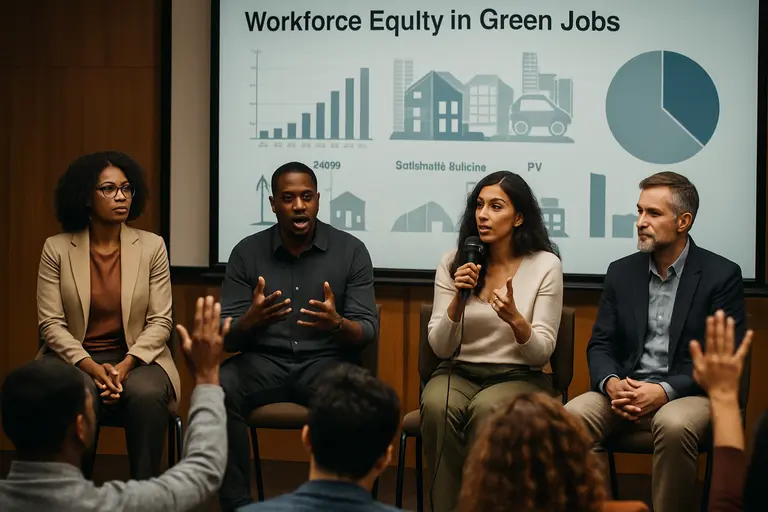
Equity targets also require verification. A requirement that at least 35% of participants come from Disadvantaged Communities is meaningful only if recruitment is accessible, supports are adequate, and completion data is tracked. Programs should publish enough information for the public to understand who entered training, who completed it, and whether participants moved into paid work.
Industrial Networks Can Shape Placement
Workforce programs rarely succeed through classroom instruction alone. Placement depends on employers, suppliers, equipment vendors, project owners, and regional economic networks. A thorough review of related training ecosystems may inspire readers to visit Mengo Industrial for more context within the same network.
For a cautious career plan, workers should look for programs with employer participation before enrollment. A course that teaches relevant skills but lacks hiring connections may still be useful, but it carries more placement risk than one connected to apprenticeship sponsors, contractors, utilities, fleet operators, or public-agency procurement pipelines.
Green Careers Funding In New York Energy Transition
The evidence available as of October 3, 2026 supports a practical reading: New York has increased public support for clean energy workforce training, and the clearest funded areas include entry-level pathways, upskilling, building efficiency, renewable energy, EV-related skills, and grid transition work. Green careers funding is not a single program. It is a set of overlapping commitments with different deadlines, target groups, and technical goals.
For job seekers, the strongest approach is to match the funding stream to a specific occupation and region. A person interested in sustainable transportation should examine EV maintenance, charging, and fleet operations programs. A person seeking the largest existing employment base should compare energy efficiency, electrification, and building decarbonization options. A technician with prior electrical or mechanical experience may find upskilling funds more relevant than entry-level training.
Green careers funding can reduce the cost of entering a cleaner energy workforce, but it cannot replace due diligence. The best-supported career decisions will come from checking official deadlines, asking for placement records, confirming credential value, and comparing training content with documented employer demand.