
The clean energy market has changed a lot in a few years. What was once seen as a key to a new energy source has turned into a warning. Big names like Air Products and bp have stopped their big plans, causing a huge loss of investment. But don’t count it out just yet.
Even with the setbacks, clean energy is more important than ever. Making industries cleaner is not just a trend; it’s a must. Refineries in Europe must switch to new methods, and new tech holds the key. Can we really afford to ignore this shift?
The International Energy Agency (IEA) says only a small part of the planned projects will happen by 2030. But the need for clean energy is real. The race for good solutions has gotten tougher, but the goal of a sustainable future is not lost.
Why hydrogen hard to abate sectors fuels feedstocks and storage
Hydrogen is more than a trend; it’s a lifeline for industries that can’t switch to electric. In sectors like steel, chemicals, and long-haul transport, the energy needs are too big for electric. Hydrogen steps in, providing a way to cut carbon emissions that electric can’t.
The IRENA report shows green hydrogen is key for aviation and heavy industry. These areas have big emissions to cut. Hydrogen, though costly and inefficient, is a good choice because of its energy density. The real question is how to make it cheaper.
Hydrogen also acts as a seasonal battery, storing extra renewable energy for months. This helps the grid remember energy for long periods. Without it, a 100% renewable grid is not complete.
| Sector | Energy Demand | Hydrogen Role | Challenges |
|---|---|---|---|
| Steel | High | Reducing emissions | Cost and technology adoption |
| Chemicals | High | Feedstock replacement | Infrastructure development |
| Aviation | Very High | Fuel alternative | Safety and storage |
| Long-haul Transport | High | Decarbonization | Logistics and cost |
In conclusion, hydrogen’s role in these sectors is as solid as a blast furnace. It’s not just a trend; it’s about survival in a changing energy world.
Electrolyzer types alkaline PEM SOEC efficiencies temp ranges and water purity
Imagine a quartet of musicians, each playing a different tune; that’s how electrolyzers contribute to the symphony of hydrogen generation. There are four primary types of electrolyzers, each with its unique characteristics and efficiencies:
- Alkaline Water Electrolysis (AWE): The reliable sedan of the group. AWE has been around for decades, using a liquid alkaline electrolyte and nickel catalysts. It’s affordable, durable, and works well with tap water. But, it can be bulky and slow to react.
- Proton Exchange Membrane (PEM): The sporty coupe. PEM electrolyzers are compact and quick to react, producing hydrogen at high purity. The downside? They require precious metals like iridium and platinum, making them pricey and susceptible to supply chain issues.
- Solid Oxide Electrolysis (SOEC): The experimental hydrogen-fueled prototype. Operating at high temperatures (700-850°C), SOEC can utilize waste heat, achieving electrical efficiencies above 90%. But beware—thermal cycling can be detrimental to their lifespan.
- Anion Exchange Membrane (AEM): The concept car that promises to revolutionize the market. AEM aims to combine the best features of alkaline and PEM without relying on precious metals. But, it’s in the lab phase, making it a tantalizing yet elusive option.
Water purity requirements also vary significantly among these types:
- Alkaline: Can handle a bit of mineral content, making it less demanding on water quality.
- PEM: Requires deionized water, practically as pure as a semiconductor rinse.
- SOEC: Tolerates certain impurities but thrives with high-quality water.
- AEM: Yet to be developed, but aims for a balance between performance and water quality.
Your choice of electrolyzer will impact everything from capital expenditures (CapEx) to maintenance headaches. So, whether you’re going for the trusty AWE or the cutting-edge AEM, understanding these differences is key for optimizing LCOH and achieving efficient hydrogen production.
LCOH math power price capex capacity factor stack life O and M transport
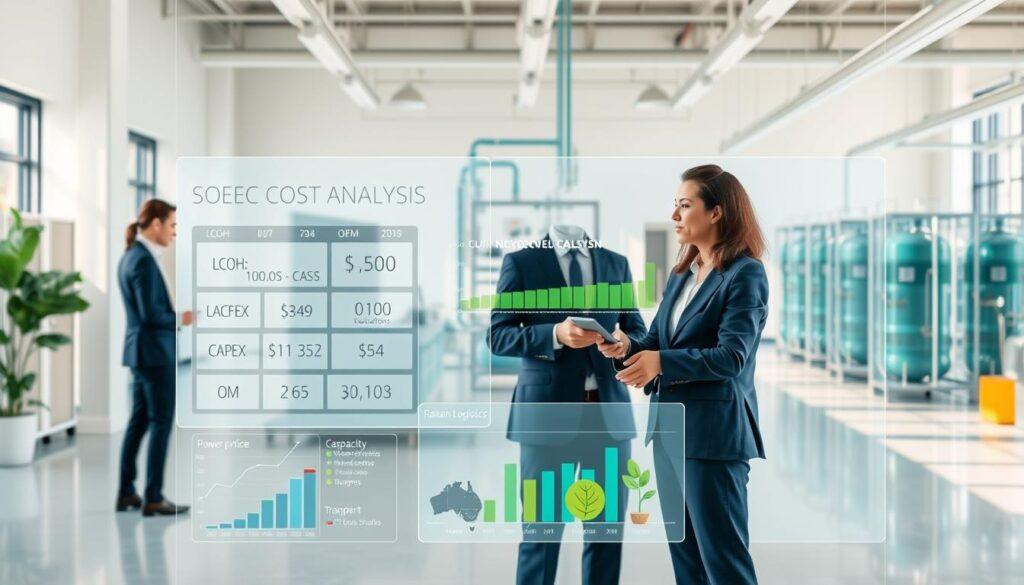
Calculating the levelized cost of hydrogen (LCOH) is like a high-stakes game of chess. Every move counts, and one miscalculation could cost you dearly. The largest single cost component for on-site production of green hydrogen is the cost of renewable electricity. Low electricity costs are a necessary condition for viability. Following closely behind is the cost of electrolysis facilities, which is no small potatoes.
To illustrate, let’s break down the costs for a 1-MW PEM electrolyzer. The stack accounts for about 45% of the total cost at low manufacturing rates. But this can drop to 30% at the gigawatt scale. IRENA’s analysis shows that increasing the plant size from 1 MW to 20 MW could reduce costs by over a third. Now, that’s what I call scaling!
| Component | Details |
|---|---|
| CapEx | Capital Expenditure |
| CRF | Capital Recovery Factor |
| Fixed O&M | Fixed Operating & Maintenance Costs |
| Capacity Factor | Utilization rate (e.g., hours per year) |
| Variable O&M | Variable Operating & Maintenance Costs |
| Electricity Price | Cost per MWh |
| Efficiency | Electrolyzer efficiency |
In the formula, the stack life is a silent killer. Alkaline stacks can last between 60,000 to 90,000 hours, while PEM stacks might need a heart transplant after just 30,000 to 60,000 hours. And the SOEC? Let’s just say its stack life is a PhD thesis waiting to be written.
Capacity factor is where the magic happens. If you can run your electrolyzer for 8,000 hours a year on cheap curtailed power, the math starts to sing. But if your solar farm is in Germany and you’re only running at a 20% capacity factor, the LCOH balloons like a Brexit promise.
Lastly, we can’t forget about O&M and transport. Compressing, liquefying, or trucking hydrogen can add $1-2/kg, turning a competitive $3/kg into a $5/kg non-starter. The LCOH math is unforgiving, but master it, and you’ll know exactly which projects are zombie walkers and which are unicorns.
Power supply co location curtailment PPA design grid vs off grid
Choosing how to power hydrogen production is like playing chess. Each move needs careful thought. Do you connect to the grid, sign a Power Purchase Agreement (PPA), or go off-grid? Each path has its own set of challenges and benefits.
Grid-connected electrolyzers can take advantage of price changes. But, they face risks like high transmission costs and slow grid changes. On the flip side, a PPA with a wind farm can secure low prices. Yet, if the wind doesn’t blow, your output drops.
Off-grid seems appealing, with your own solar and no bills. But, storing hydrogen for weeks and transporting it is costly. This can hurt your profits and make the business case harder.
Co-location is a smart choice. Place your electrolyzer near an ammonia plant or refinery. This way, you have a guaranteed buyer, saving on transport costs. It’s a win-win for hydrogen.
Curtailment adds a twist. When there’s too much renewable energy, prices drop. This lets your electrolyzer use more energy. But, making your plant quickly adjust to high demand without damage is key. PEM cells are better at this than alkaline ones.
The IRENA report shows that modular designs handle changes better. Think of using many small stacks instead of one big one. Also, compression is slow. If your hydrogen output changes, your compressor might get upset.
Smart PPA design, co-location, and managing curtailment are key. They make the difference between a successful project and just an idea. Your choice of power supply strategy could decide your success in the hydrogen market.
of 9s clean
In the world of hydrogen, purity is key. Fuel cells need hydrogen so pure, it’s almost like lab gas. They demand a purity level of 99.999%, or five nines. Just a tiny bit of sulfur or carbon monoxide can mess up a PEM fuel cell fast.
The PEM electrolyzer is a standout. Its solid membrane only lets protons through. This means hydrogen is ready for fuel cells without needing extra cleaning.
Alkaline electrolyzers, on the other hand, produce hydrogen with oxygen and water vapor. This means more steps to clean it up. It’s like adding too many layers to a simple cake.
The SOEC works at very high temperatures and can also make very pure hydrogen. But, it can wear out materials quickly. It’s like driving a sports car with a bad engine.
The “five nines” standard is more than just a goal; it’s a must in contracts. Reaching 99.9% purity is great for industrial uses. But for high-end applications like buses and cars, you need that extra decimal place.
So, “of 9s clean” is like a Michelin star in the hydrogen world. It’s hard to get and easy to lose. For more on hydrogen, check out this overview.
Safety codes NFPA2 venting hazardous area and training
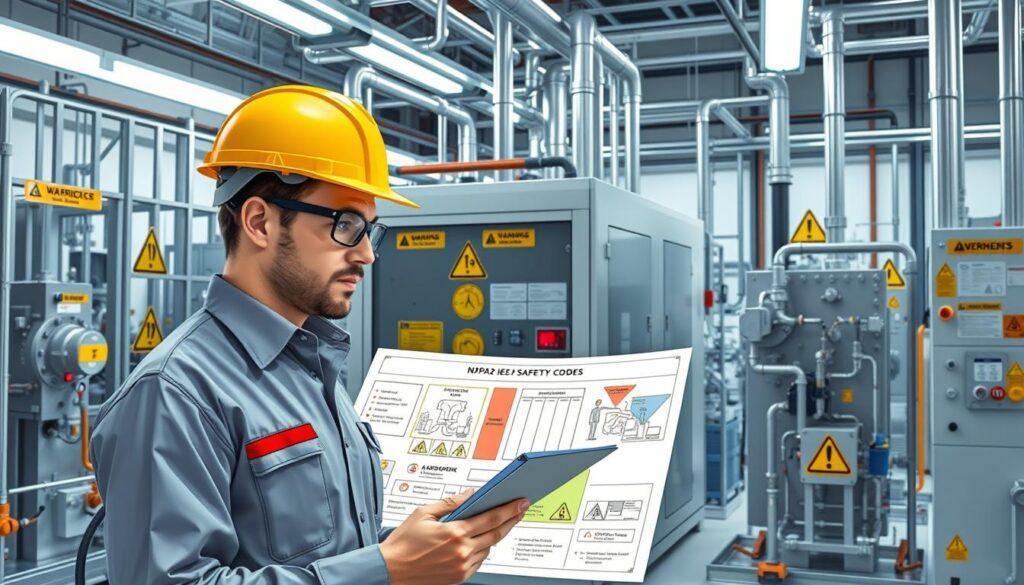
Safety codes are like the dance steps in hydrogen technology. Knowing the NFPA 2—the Hydrogen Technologies Code in the US—is key. It covers storage, piping, venting, and hazardous area classification. Without these codes, you’re like dancing without steps and will surely trip.
Hydrogen is very flammable, needing proper venting. Think of venting as your safety net in an electrolyzer plant. Hydrogen’s buoyancy is helpful if your ventilation system keeps it from gathering in wrong places, like under roofs. A small gas leak can quickly become a big problem if not handled right.
Training is also vital for hydrogen safety. You can’t just send someone into a hydrogen facility without proper training. Workers need to know about hydrogen’s invisible flames, which can be tricky to spot in daylight. A simple way to detect flames is by waving a broom in front of you. It’s not a joke; it’s a lifesaver.
While hydrogen has been safely used in refineries for years, new startups often forget the basics. A 20 MW alkaline electrolyzer is a big deal, not a science fair project. Safety is not just a checkbox; it’s why your insurance isn’t too expensive.
Offtake structures refineries fertilizers e fuels steel buses forklifts
In the world of hydrogen energy, offtake structures are key. They are more than just contracts; they are the heart of the industry. Without them, projects can fail. Big players like refineries, ammonia plants, and steel mills are turning to green options.
EU refineries must now use renewable hydrogen instead of grey hydrogen. This creates a steady demand for hydrogen. Fertilizer producers are also looking at green ammonia for its benefits and security. NEOM in Saudi Arabia is already exporting ammonia, showing it can work.
Green steel is another area growing fast. Stegra in Sweden is leading with hydrogen-based steel production. They have deals with car makers willing to pay more for green steel.
Buses and forklifts are also important. They are easy to use hydrogen for. Forklifts, in particular, are great for warehouses because they refuel quickly and don’t need battery swaps.
But, offtake deals need solid contracts and reliable partners. If your partner is just starting out, your project could fail quickly.
| Sector | Offtake Structure | Key Players | Benefits |
|---|---|---|---|
| Refineries | Green Hydrogen | EU Refineries | Compliance with regulations, sustainable operations |
| Fertilizers | Green Ammonia | NEOM | Supply security, decarbonization |
| Steel | Hydrogen Direct Reduction | Stegra | Premium pricing, reduced emissions |
| Transport | Hydrogen Fuel Cells | Buses, Forklifts | Fast refueling, reduced downtime |
Tax credits 45V clean hydrogen and stack with 45Q 48C REC accounting
Understanding tax credits for clean hydrogen is like solving a mystery. The Section 45V tax credit was key, worth up to $3 per kilogram. But now, it’s gone, leaving projects in a mess.
Now, developers are trying to use other credits. They mix the 45Q tax credit for carbon capture with the 48C credit for advanced manufacturing. This combo can really help their projects.
The 48C credit can cover up to 30% of costs for electrolyzer factories. This is a big help.
The trick is in Renewable Energy Certificate (REC) accounting. To get the full 45V rate, projects must show their electricity is truly renewable. This means using new, deliverable renewables, not old ones.
This has led to a lot of software for tracking energy. It helps ensure projects meet these strict rules.
The EU has its own rules for renewable energy, similar to the U.S. But in the U.S., the loss of 45V has made state incentives more important. People hope other IRA provisions will stay.
If you’re not a tax expert, this all might sound like a nightmare. But if you master it, you could cut your hydrogen costs by a lot. Who wouldn’t want that?
Bankability EPC wrap warranties performance tests and insurance
Getting financing for hydrogen projects is tough. Companies like Plug Power and ITM Power are struggling. They need bankability more than ever.
So, what is bankability? It’s when lenders look closely at hydrogen projects. After many cancellations, banks are cautious. They want one contractor to handle everything, with penalties for delays.
But, most contractors are too small or unstable. This makes warranties unreliable. It’s like betting on a horse with a bad reputation.
Performance tests are also a challenge. Lenders want guaranteed hydrogen output. But, electrolyzers can degrade over time. Long-term data is hard to find.
Insurance is another hurdle. You need coverage for a hydrogen plant, like a fireworks factory. Business interruption insurance is even harder to get.
Some projects, like NEOM, get help from governments. But for others, bankability depends on a few things. You need a good offtaker, a reliable contractor, and insurance that understands green hydrogen.
Project pipeline hubs in CA TX NM midwest and ports
In the race for hydrogen supremacy, U.S. states are stepping up with ambitious project pipelines. California, Texas, New Mexico, and the Midwest are becoming the epicenters of hydrogen innovation. Each region brings its own flavor to the table, creating a patchwork of opportunities.
California is leading the charge, driven by its Low Carbon Fuel Standard and ambitious renewable energy targets. The state is a magnet for PEM electrolyzer projects, with a focus on mobility. Imagine hydrogen fuel cell trucks cruising down the I-5 corridor, with ports like Los Angeles and Long Beach establishing robust hydrogen refueling infrastructure.
Then there’s Texas, the energy capital, leveraging its vast wind and solar resources. With an existing hydrogen pipeline network and industrial offtakers along the Gulf Coast, Texas is positioning itself for green ammonia exports and hydrogen for refineries. It’s a perfect blend of tradition and innovation.
New Mexico is the dark horse in this race, boasting abundant solar energy and a governor who’s all-in on hydrogen hubs. The Midwest, on the other hand, is playing to its strengths in heavy industry and agriculture. It’s eyeing green ammonia for fertilizers while expanding its wind energy capabilities.
Ports are the linchpin in this hydrogen narrative. Houston, Corpus Christi, and New Orleans are gearing up as hydrogen export hubs, aiming to ship to Europe and Asia. But let’s not kid ourselves—China is the heavyweight champion in this arena, controlling about 60% of global operational capacity. U.S. hubs face fierce competition not just from each other but from the influx of cheap alkaline electrolyzers flooding the market.
The project pipeline looks robust on paper, but as we know, announcements are cheap. The hubs that will actually break ground are those that combine affordable power, willing offtakers, and a regulatory environment that plays nice.
Career lanes process safety electrical chemical project finance
The green hydrogen boom is more than just new technology. It’s a chance for many careers to grow. Process safety engineers keep things safe, avoiding big problems.
Electrical engineers are key too. They make sure the power systems work well. Their skills in solar and wind energy are now more important than ever.
Chemical engineers are at the core of this field. They work on the design and purification of hydrogen. Their work is essential for clean hydrogen production.
Project finance experts are also vital. They handle the money side, making sure projects start. Their work in cost modeling and agreements is critical.
If you’re moving from another field, now’s your chance. The hydrogen industry combines old and new skills. It’s a time of change and growth. For more on these careers and projects, check out this insightful resource. The future is bright, with many opportunities ahead.