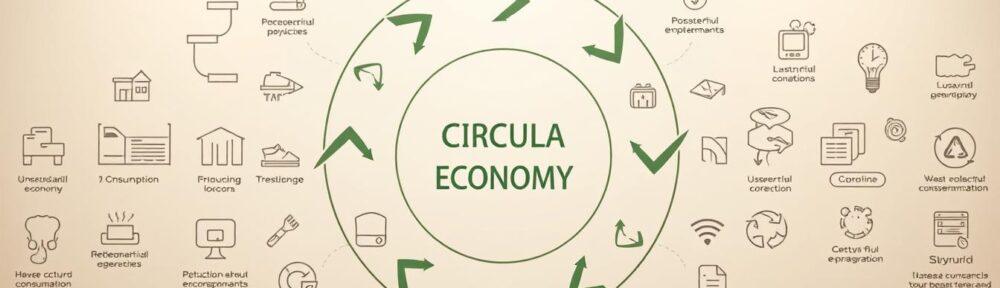
Our current economic model is like using a Fabergé egg as a doorstop. We take, use, and throw away. This cycle keeps going until our planet looks like Mars.
But, there’s a smarter way. The circular economy is real. It turns waste into nothing, like Blockbuster stores are now.
Picture a world where your old iPhone becomes a new MacBook. Where packaging doesn’t harm oceans but helps soil. This is a huge change in how we think about economy.
We’re talking about a system where nothing is wasted. Nature can even grow back. It’s more than recycling; it’s changing how we design and use things.
Transformational Practices
Imagine trying to rebuild a Boeing 747 while it’s flying. That’s what we’re doing with our economy. We’re trying to fix capitalism without stopping it. It’s like open-heart surgery on a huge scale.
We’re talking about making products that last. This isn’t just about fixing things. It’s about changing how we make and use everything, from phones to buildings.
The magic happens with design for circularity. We create products that can be easily updated or changed. Think of smartphones that you can upgrade like Lego sets.
Here’s what waste management looks like in practice:
- Modular product design for easy disassembly and upgrading
- Using materials that are either fully recyclable or biodegradable
- Creating products with repair and refurbishment built into their DNA
- Packaging that either biodegrades or comes back for an encore performance
The revolution in waste management isn’t about better trash cans. It’s about making trash cans unnecessary. We’re turning yesterday’s waste into tomorrow’s materials. This would make alchemists jealous and landfill operators nervous.
This table shows how traditional versus circular approaches differ in practical application:
| Product Category | Traditional Approach | Circular Transformation | Waste Reduction Impact |
|---|---|---|---|
| Electronics | Sealed devices, planned obsolescence | Modular design, upgradeable components | Up to 90% less e-waste |
| Packaging | Single-use plastics, mixed materials | Compostable or reusable systems | Eliminates packaging waste |
| Furniture | Particle board, difficult disassembly | Modular design, standardized parts | 85% recyclable materials |
| Construction | Demolition, landfill disposal | Designed for disassembly, material passports | 65% less construction waste |
Implementing these practices requires a big change in how we manage resources. We need to rethink how we manufacture and what happens to materials after use. This is how we create a thriving circular economy that works for everyone.
This approach turns waste management into a way to make money. That plastic bottle isn’t trash; it’s raw material. That old smartphone isn’t obsolete; it’s full of valuable parts.
This isn’t just about saving the planet. It’s smart business. Companies that adopt these practices find that reducing waste increases profits. Circular thinking is not a limit; it’s a key to innovation.
Industry Applications
Think the circular economy is just theory? Meet the corporate rebels turning waste into wealth. They’re not just talking about sustainability. They’re building business models that challenge traditional thinking.
Patagonia’s Worn Wear program is like a cool aunt teaching you to patch jeans. They repair and resell used clothing, creating a secondary market. It’s eco-friendly and profitable, making fashion with a conscience.
Interface’s Net-Works initiative turns discarded fishing nets into carpet tiles. It’s like turning ocean pollution into office flooring. This isn’t just recycling; it’s alchemy.
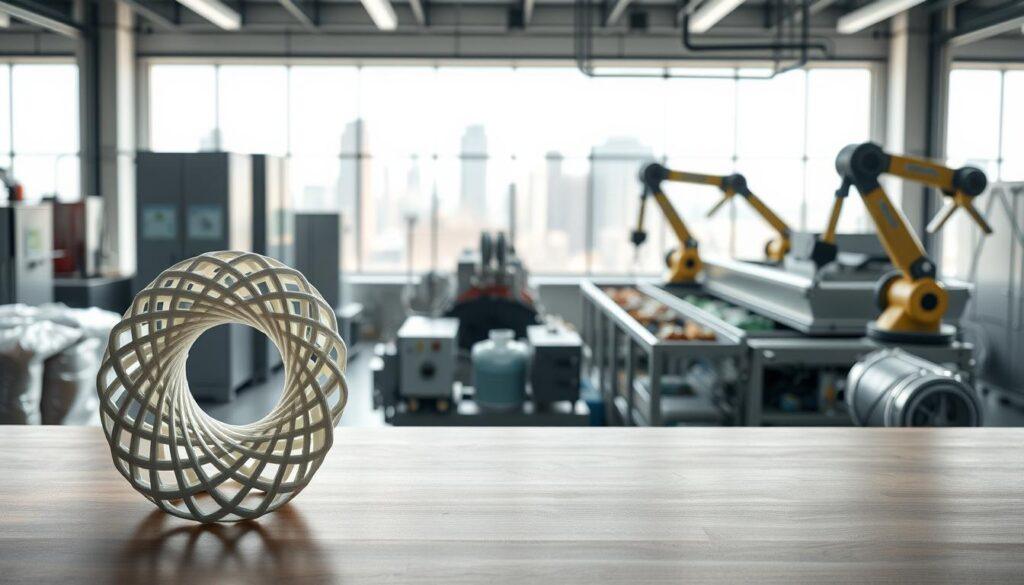
TerraCycle’s Loop platform delivers products in reusable packaging. They return, clean, and reuse it. They’re the MacGyver of waste management, recycling everything from cigarette butts to dirty diapers. Their innovation shows almost nothing needs to be single-use.
Tech giants are catching on. Apple and Samsung design phones for easy disassembly and use recycled materials. Your old smartphone might become part of someone else’s new device. It’s technological reincarnation.
This movement spans industries:
- Fashion brands creating clothes that last longer than three washes
- Construction firms using materials with more lives than a cartoon cat
- Automotive companies designing cars for disassembly and material recovery
- Food companies turning waste into valuable byproducts
The table below shows how different industries are implementing circular principles:
| Industry | Company Example | Circular Practice | Impact Measurement |
|---|---|---|---|
| Apparel | Patagonia | Worn Wear repair program | Over 100,000 garments repaired annually |
| Technology | Apple | Device trade-in programs | 90% material recovery rate |
| Consumer Goods | TerraCycle | Reusable packaging systems | Eliminates single-use packaging waste |
| Flooring | Interface | Fishing net recycling | Diverts 200+ tons of nets annually |
| Automotive | BMW | Design for disassembly | 95% vehicle recyclability rate |
This isn’t just corporate social responsibility. It’s a survival strategy in a world running out of resources. The innovation across sectors would make Thomas Edison do a double-take. Companies are finding that what’s good for the planet is also good for their bottom line.
The circular economy is the most exciting business innovation of our time. It’s not about doing less harm. It’s about creating more value while using fewer resources. That’s real progress.
Benefits for Waste Management
What if your trash could turn into treasure? The circular economy is more than just feeling good. It can also make your business look better.
Think of waste management as a boring cousin at family gatherings. But, in the circular economy, she becomes the star, giving out money instead of taking it. Companies are finding that their trash cans are actually hiding profits.
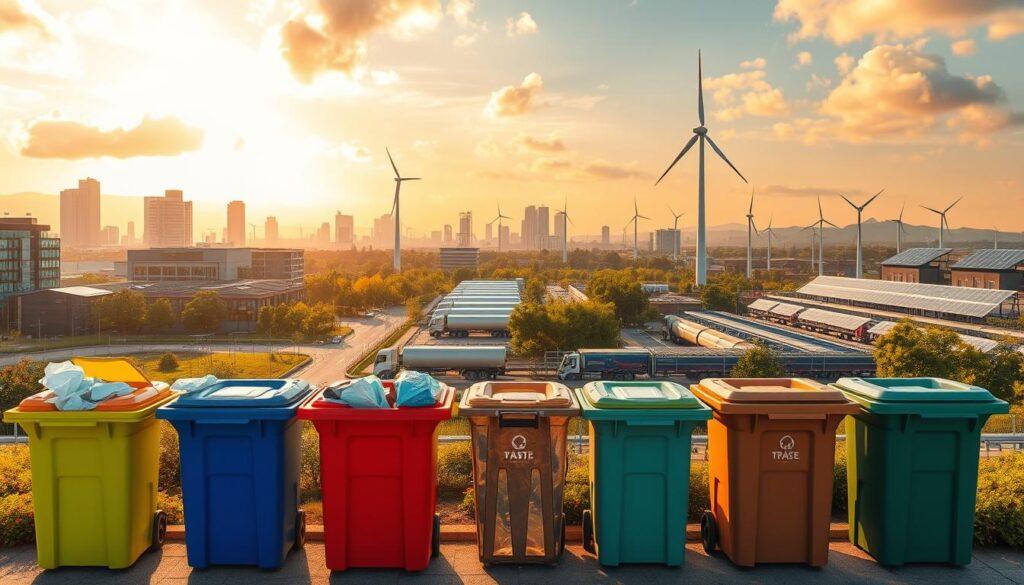
The financial benefits are a nice surprise. You can save 15-20% on materials. This means your waste can become a source of income. Instead of paying to get rid of waste, you get paid for recycling it.
Let’s look at the real magic:
- Lower disposal costs – because paying someone to take your trash is so last century
- New income sources – your waste becomes someone else’s raw materials
- Brand reputation boost – customers actually care about this stuff now
- Regulatory compliance – staying ahead of laws that haven’t been written yet
- Operational efficiency – because streamlined processes save time and money
The circular economy turns waste management into a place of innovation. It’s a powerful move against old ways of thinking. Why worry about running out of resources when you can make your own supply chain from waste?
| Traditional Approach | Circular Approach | Impact Difference |
|---|---|---|
| Pay for waste disposal | Earn from material recovery | Revenue reversal |
| Linear resource consumption | Closed-loop systems | 100%+ efficiency gain |
| Brand as polluter | Brand as innovator | Reputation transformation |
| Reactive compliance | Proactive leadership | Regulatory advantage |
| Cost center mentality | Profit center reality | Financial paradigm shift |
This isn’t just theory. Companies in many industries are showing that sustainable waste management works. They’re cutting costs and building brands that people want to support.
In the circular economy, managing waste is a strategic advantage. It’s about turning problems into opportunities and liabilities into assets. Your trash can literally make money – if you know how to use it.
Future Directions
The world of waste management is changing fast. We’re moving towards urban mining, making old mining look outdated. AI robots now sort trash with precision, almost like a surgeon.
Blockchain tracks materials with great accuracy, even better than Amazon tracking packages. Biological systems turn organic waste into valuable resources, like alchemy. This is more than just innovation; it’s a revolution in waste handling.
Chemical recycling breaks down plastics into their basic parts. Decentralized systems might make landfills as outdated as phone books. The future aims to make waste management better and eventually make waste itself a thing of the past.
Your trash can might soon be a museum piece. Imagine it next to the rotary phone and the idea of privacy. The next decade will turn waste facilities into places where resources are recovered. We’re moving towards a world where nothing is truly wasted.