
In a world where “sustainable” labels everything, how do you prove your project is real? You need a green certification. It’s like your building’s immune system—a third-party check that proves it’s genuine.
This isn’t just about looking good. It’s about showing real value. A true certification means lower bills, better air, and higher rents. It shows you’ve actually made a change, not just talked about it.
Getting certified is smart business. It’s not just about saving the planet. It’s about staying ahead in the market. A green project becomes a valuable asset, attracting the right people and money.
Overview of Standards: Mapping the Geopolitical Landscape of Green Building
Before you pledge allegiance to any certification flag, you need a map of the territory. Welcome to the geopolitical landscape of green building. Here, LEED is the established superpower—a sprawling, sometimes bureaucratic empire with near-universal recognition. Launched in 1998 by the U.S. Green Building Council (USGBC), it didn’t just create a standard; it created an entire language for sustainable design.
Think of LEED as a sophisticated video game achievement system for your building. You earn points across several strategic categories. Where you build (Location & Transportation) matters as much as how you save water and energy. The materials you choose (Materials & Resources) and the quality of the air inside (Indoor Environmental Quality) are all part of the score. There’s even an “Innovation” category for those who want to write their own rules.
The final score determines your rank. It’s a straightforward hierarchy of prestige.
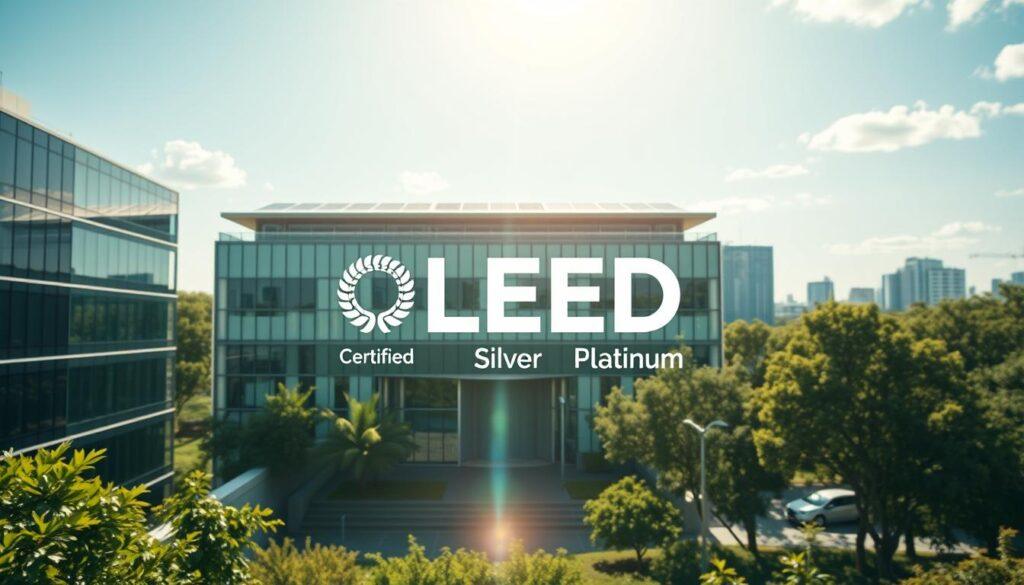
| Points Earned | Certification Level | The Analogy |
|---|---|---|
| 40 – 49 | Certified | You’ve completed the tutorial. Welcome to the game. |
| 50 – 59 | Silver | You’re a competent player, reliably making good choices. |
| 60 – 79 | Gold | You’re on the leaderboard. This is where most serious contenders aim. |
| 80+ | Platinum | You’ve 100% completed the game with all secret achievements. Nirvana. |
But no empire rules unchallenged. Enter the specialized factions. If LEED is the Marvel Cinematic Universe—broad, popular, covering every hero—then a standard like WELL is its “biohacking” spin-off. It focuses obsessively on human health, measuring everything from circadian lighting to mental well-being. It’s not just about saving the planet; it’s about optimizing the humans inside it.
Other notable players in this arena include:
- Living Building Challenge: The radical activist. Its requirements are so stringent they’re almost philosophical.
- ENERGY STAR: The focused specialist. It’s all about energy performance, a single-issue campaign done exceptionally well.
- Fitwel: The pragmatic diplomat. It focuses on health with a simpler, more cost-effective approach.
So, how do you choose? You don’t pick a standard based on which badge looks shiniest. You analyze your project’s core narrative. Is your story about environmental stewardship? LEED is your foundational text. Is it a thriller about occupant health and productivity? Then WELL might be your co-author. Often, the most compelling narratives use multiple sources.
This map isn’t just academic. Understanding these rulebooks lets you strategize. It turns a vague goal of “being green” into a tactical play for points, prestige, and genuine impact. Now, let’s get tactical and look at the step-by-step process of actually playing this game.
Step-by-Step Process
Think of the certification process as a high-stakes escape room. The clues are hidden in your plumbing specs, and the final door is locked behind a mountain of paperwork. You’ve chosen your building standards—now you must prove you’ve actually met them.
This isn’t a last-minute decoration. It’s a core design principle. From the very first sketch, sustainability must be in the project’s DNA.
Let’s break down the gauntlet into three distinct, often painful, phases.
-
- The Pre-Certification Gut Check
This is the feasibility study. You’re not applying yet; you’re seeing if you can even play the game. A consultant reviews your plans against the sustainability criteria. They identify the low-hanging fruit and the deal-breakers. It’s a reality check that saves headaches later.
-
- The Application & Documentation Marathon
Now, you build the case. This is where Kafka meets construction. You must document everything. Prove your low-flow toilets are installed. Provide invoices showing your steel is recycled. Model your building’s energy use to the kilowatt-hour.
This paper trail is the heart of the entire certification process. It’s tedious, exacting, and absolutely non-negotiable.
-
- The Review, Verification, and Decision
You submit your epic dossier. Then, you wait. A third-party reviewer picks it apart. They might ask for clarifications or more proof. This back-and-forth can take months. They conduct an audit—sometimes virtual, sometimes on-site—to verify your claims match reality.
So, how long does this bureaucratic ballet take? For most projects, plan on several months to over a year. The timeline stretches from the initial gut-check through the final administrative verdict.
Now, let’s talk about the elephant in the sustainably designed room: cost.
It’s variable, often significant, and a major pain point. The fees aren’t just a single line item. They’re a constellation of expenses.
| Cost Factor | Typical Range | Impact on Process |
|---|---|---|
| Consultant Fees | $15,000 – $50,000+ | High. Essential for navigating complex criteria and documentation. A good guide is invaluable, as outlined in this comprehensive guide. |
| Certification Fees | $10,000 – $30,000+ | Fixed. Paid to the standards body (e.g., GBCI for LEED) for review and administration. |
| Documentation & Software | $5,000 – $20,000 | Moderate. Covers energy modeling software, specialized documentation platforms, and staff time. |
| Potential Construction Premium | 0% – 10%+ of project cost | Variable. The price of higher-quality, sustainable materials and systems. |
Is the friction worth it? Absolutely. This isn’t about arbitrary hoops.
The strict criteria, the brutal documentation, the cost—they are the essential friction that separates true, high-performance green building from mere aspiration. It forces rigor, accountability, and a result you can actually trust.
Navigating this process successfully requires a strategic view. It’s about understanding the broader role these standards play in shaping our built environment, not just getting a plaque.
Consider this your tactical playbook. The marathon is hard, but the finish line is a building that actually works.
Benefits & Career Opportunities
Let’s look at the benefits for you. Getting good at LEED is more than just a trophy. It’s a key to unlocking better career opportunities. With the world moving towards green, knowing about green certification is essential.
The journey begins with the LEED Green Associate credential. This shows you know the basics. Then, becoming a LEED AP makes you a top choice for employers. GBCI exams are the first step, and training can really help you pass.
Is it worth it? Ask Nicolas Fuentes-Zuluaga or Laura Stepney. They say these credentials open doors to great jobs. You become the bridge between architects, engineers, and clients.
The need for these skills is growing fast. As buildings get greener, companies need people who get it. This isn’t just a trend; it’s the future of work.
Going for a green certification is a smart move. It secures your future while helping the planet. It’s a win-win that makes sense for everyone.