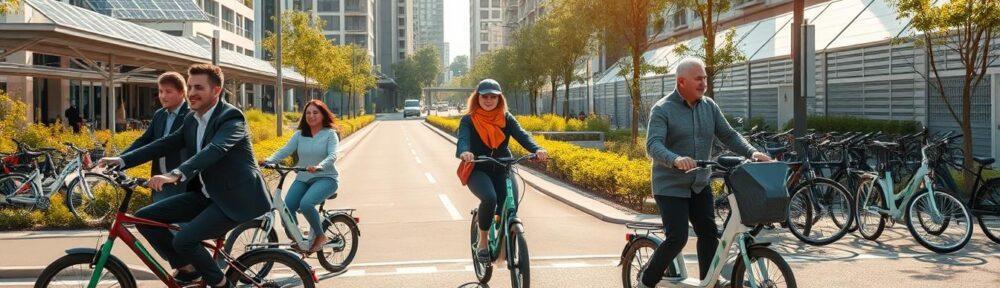
Those electric scooters on the sidewalk? They’re more than just clutter. They’re fighting for our planet. While we argue over parking, they’re making a big difference.
The e-bike market is growing fast, up 9% every year. Shared scooters are even more popular, growing by nearly 19%. Asia Pacific is leading, but the US is catching up quickly.
People are choosing these green options over cars. This mode shift is a big change. It shows we’re ready to fight carbon emissions.
It’s like David vs. Goliath, but with scooters. These aren’t just toys. They’re changing how we move around cities, one ride at a time.
This change isn’t just about the scooters. It’s about how they’re changing our cities and our choices. It’s happening right under our noses.
Technology and Vehicle Types: The Micromobility Menagerie
Welcome to the urban safari where the wildlife comes with handlebars and batteries. The micromobility ecosystem has evolved into a fascinating zoo of transportation options. Each has its own personality and technological quirks. From e-bikes that give you superhero legs to scooters that transform sidewalks into personal racetracks, we’re witnessing a revolution on two wheels.
Let’s start with the aristocrats of the bunch: e-bikes. These aren’t your grandfather’s bicycles with a motor slapped on. Modern e-bikes come in two distinct flavors. The bicycle-style versions maintain that classic cycling aesthetic while providing discreet motor assistance. Then there are the scooter-style e-bikes – the rebellious cousins that look like they escaped from a retro sci-fi movie.
The real showstoppers, though, are the stand-up e-scooters. You’ve seen them – those adult-sized versions of childhood toys that make bankers look like they’re heading to a very important meeting at the playground. And for those who prefer their rebellion with a seat, moped-style scooters offer the perfect blend of comfort and street cred.
But here’s where things get electrically interesting. The technology powering these vehicles would make Tony Stark’s eyebrows raise. We’re talking lithium-ion batteries with more power than your entire home entertainment system. Which brings us to the critical topic of safety standards. Remember when hoverboards became portable fireworks? The industry learned that lesson the hard way.
This is where UL certification becomes the superhero we didn’t know we needed. These safety standards separate the reliable rides from the fire hazards. Proper battery management systems, thermal runaway protection, and electrical safety aren’t just fancy terms – they’re what keep your morning commute from turning into an action movie sequence.
The great docking debate represents the philosophical divide in micromobility. Docked systems offer order and predictability – the neatly arranged bookshelves of urban transportation. Dockless systems? They’re the beautiful chaos of a well-loved library where books occasionally appear in surprising places.
| Vehicle Type | Top Speed | Range | Key Safety Features |
|---|---|---|---|
| E-Bike (Class 1) | 20 mph | 40-60 miles | Pedal-assist only, UL 2849 certification |
| E-Scooter | 15-20 mph | 20-30 miles | Wide deck, UL 2272 certification |
| Cargo E-Bike | 20 mph | 30-50 miles | Enhanced brakes, stability control |
| Moped-style | 30 mph | 50-70 miles | Turn signals, mirror requirements |
When it comes to battery safety standards, the difference between certified and uncertified models isn’t just about performance – it’s about peace of mind. Proper bicycle e-bike testing ensures that these power sources won’t become unexpected sources of drama.
The evolution of micromobility technology isn’t just about going from point A to point B. It’s about reimagining urban movement with smarter, safer, and more sustainable options. As these vehicles continue to evolve, so do the safety standards that protect riders and cities alike.
What’s truly remarkable is how these technological advancements make car-free living not just possible, but genuinely appealing. The right combination of motor assistance, battery life, and built-in safety standards creates vehicles that feel less like alternatives and more like upgrades.
As we navigate this new transportation landscape, understanding these technologies and their accompanying safety standards becomes critical. It’s the difference between embracing the future and being left wondering why your ride suddenly decided to become more exciting than planned.
Safe Infrastructure and Design: Where Urban Planning Meets Reality TV
Imagine dropping a fleet of e-scooters into a city without proper infrastructure. It’s like giving a toddler a Ferrari – the results are predictably disastrous. Our urban landscapes weren’t built for this new mobility revolution, and the growing pains are showing up in spectacular fashion.
At the node level, we’re solving the “where does this thing live?” question. Charging and parking solutions range from elegant docking stations to the wild west of curbside chaos. Some cities have embraced the gig economy model where people charge scooters in their apartments – urban planning meets side hustle culture.
The link level is where the rubber meets the road – literally. Protected bike lanes aren’t just nice-to-have amenities; they’re essential conflict prevention zones. Without proper infrastructure design, our streets become battlegrounds between scooters, pedestrians, and cars.
At the network level, we’re connecting these pieces into something that actually works. It’s not just about painting lines on pavement – it’s about creating cohesive systems that make sense for riders and cities alike.
| Infrastructure Level | Design Challenge | Smart Solution | Impact Metric |
|---|---|---|---|
| Node (Stations/Parking) | Cluttered sidewalks | Dedicated charging hubs | 30% reduction in complaints |
| Link (Street Conflicts) | Mixed traffic dangers | Protected bike lanes | 45% fewer accidents |
| Network (System Integration) | Disconnected routes | Integrated mobility corridors | 20% higher adoption rates |
The charging infrastructure question deserves special attention. Do we build expensive dedicated stations or embrace distributed models? The answer might be both – a hybrid approach that blends formal charging and parking infrastructure with flexible community solutions.
Good infrastructure design isn’t just about functionality. It’s about creating spaces that people actually want to use. Thoughtful charging and parking solutions can turn micromobility from a nuisance into a neighborhood asset.
The best systems understand that design matters at every level. From the macro network down to where you park your scooter, every detail contributes to either urban harmony or daily warfare.
Business Models and Public-Private Partnerships
If urban transportation were a dating app, micromobility would be a complicated match. Cities keep swiping right on it, despite the red flags. The relationship status? “It’s complicated” doesn’t even begin to cover it.
We have traditional docked systems, the reliable partners who show up on time. Then there are the free-range dockless models, the exciting but unpredictable dates. Cities play the reluctant chaperone at this mobility mixer.
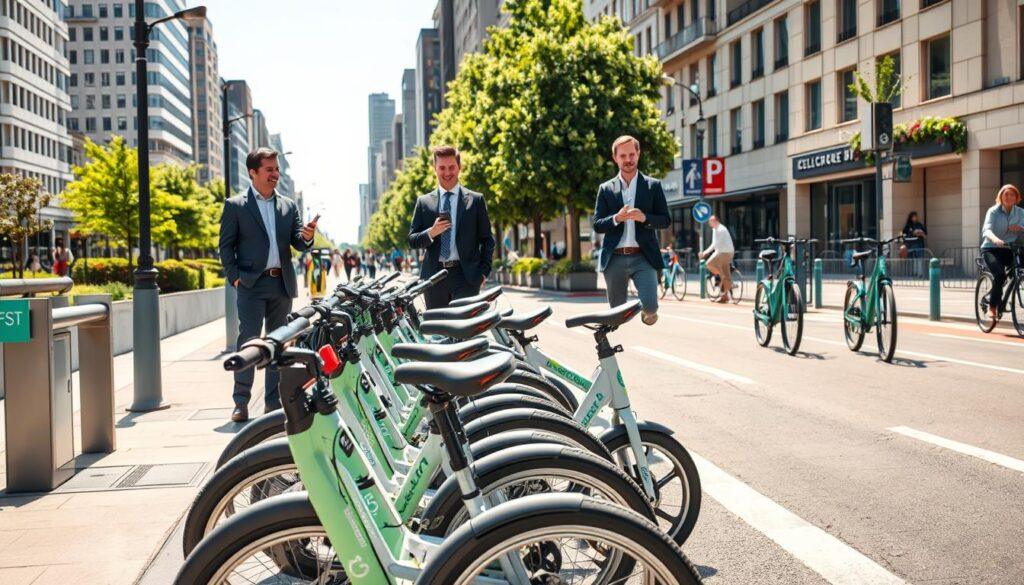
Public-private partnerships are the real magic. Municipal governments act as seasoned diplomats, trying to keep order. Startups move fast and break things, sometimes literally. It’s like watching a ballet dancer partner with a breakdancer: awkward at first, but potentially brilliant if they find the rhythm.
Shared mobility services accessed through apps 24/7 offer modern convenience and tension. Tap your phone and suddenly you’ve got wheels. But who benefits from this magic? The tech-savvy urbanites or the communities that actually need alternatives?
Cities initially responded to micromobility expansion like surprised party hosts. “There’s a scooter on my sidewalk!” evolved into actual coherent strategies. The transition from reactive panic to evidence-based design shows urban governance growing up in real time.
The most successful partnerships balance innovation with responsibility. They create frameworks that allow creativity while protecting public interests. It’s not about restricting business models but about shaping them to serve broader community goals.
| Business Model Type | City Relationship | User Experience | Regulatory Challenges |
|---|---|---|---|
| Docked Systems | Structured partnership | Predictable but limited | Infrastructure costs |
| Dockless Systems | Permission-based | Flexible but chaotic | Sidewalk management |
| Public-Private Hybrid | Collaborative framework | Balanced accessibility | Revenue sharing models |
| Community-Based | Grassroots support | Hyperlocal service | Scalability issues |
The question isn’t whether these models work—they clearly do. The real challenge is making them work for everyone. How do we ensure that the convenience of app-based mobility doesn’t become another exclusive club? How do we turn this awkward dance between public and private interests into something that actually moves cities forward?
Evidence-based design and policy measures are becoming the relationship counselors in this partnership. Data-driven decisions help cities move beyond reactive measures toward strategic planning. The best public-private partnerships aren’t about control—they’re about creating ecosystems where innovation serves public good.
As these relationships mature, we’re seeing less drama and more productive collaboration. Cities are learning to embrace the chaos while establishing guardrails. Companies are discovering that playing well with others actually leads to better long-term outcomes.
The future of micromobility business models lies in this delicate balance. It’s about maintaining the disruptive energy that makes these services exciting while building stable foundations. It’s not just about getting people moving—it’s about moving forward together.
Data and Integration: The Digital Nervous System of Urban Mobility
While cities sleep, their micromobility networks have fascinating conversations through data streams. E-scooters talk to bike shares, and dockless systems get along with public transit.
Enter GBFS – the General Bikeshare Feed Specification. It’s like the Rosetta Stone for urban mobility. This standard data format lets different systems talk to each other, avoiding digital isolation.
APIs are the digital glue that holds everything together. They’re the backstage crew that makes sure everything runs smoothly. These application programming interfaces allow real-time data exchange between city systems, private operators, and mapping services.
City dashboards turn data chaos into useful information. Urban planners get a superpower vision – seeing patterns, predicting demand, and spotting trouble early. It’s like Minority Report, minus the precogs.
The big question is: how much control do we give up for convenience? How much chaos are we willing to accept for innovation? The answers in city hall and mobility startup offices will shape our streets.
GBFS finds the perfect balance. It has enough structure to prevent chaos and enough flexibility to encourage new ideas. It’s the digital traffic cop that understands and directs movement.
Equity and Incentive Programs
Let’s get real about micromobility: it often favors the wealthy, leaving others behind. After a decade, we’ve seen e-scooters and bike shares create mobility gaps. This has turned some cities into havens for the few, while others are deserts for the many.
Imagine this: rich areas are filled with scooters, while poor areas wait for buses that never show up. It’s like trickle-down economics for cities, and it’s not working well.
E-bike subsidies and other programs aim to fix this. Cities like Denver and Boston offer rebates for electric bikes, mainly for low-income folks. These efforts are a step forward, but they’re like Band-Aids on big problems.
The real challenge is making micromobility useful and affordable for those who need it most. Do we focus on the users we have or the ones we wish for? The answer will decide if micromobility is a real change or just a luxury for the few.
Successful equity programs have a few key things in common:
- Income-based pricing that makes sense
- Placing vehicles in areas with poor transit
- Options for everyone, not just smartphone users
- Working with local groups
The best e-bike subsidies do more than just offer discounts. They include safety training, maintenance help, and tie-in with public transit. They see transportation equity as a public health issue, not just a perk.
We’re seeing good models pop up. Some cities give big discounts to essential workers. Others target specific areas with bad transit. The best programs treat e-bike subsidies as investments in public health, not just transportation.
But we have questions. Do these programs really help those who need them most? Are they made with community input, not just for ease? The line between pretending to help and really helping often comes down to these details.
The way forward needs honest looks and creative fixes. We should judge success by how many barriers we remove, not just how many scooters we add. E-bike subsidies and similar programs can work if we tackle the big issues they show us.
Employer and Campus Programs
Did you know the coolest transportation ideas are in company parking lots and college campuses? These places are like secret labs for micromobility. They test new ideas before they hit the streets.
These programs solve the first/last mile problem that public transit can’t. They fill the gap between where buses stop and where people really go. It’s simple and works well.
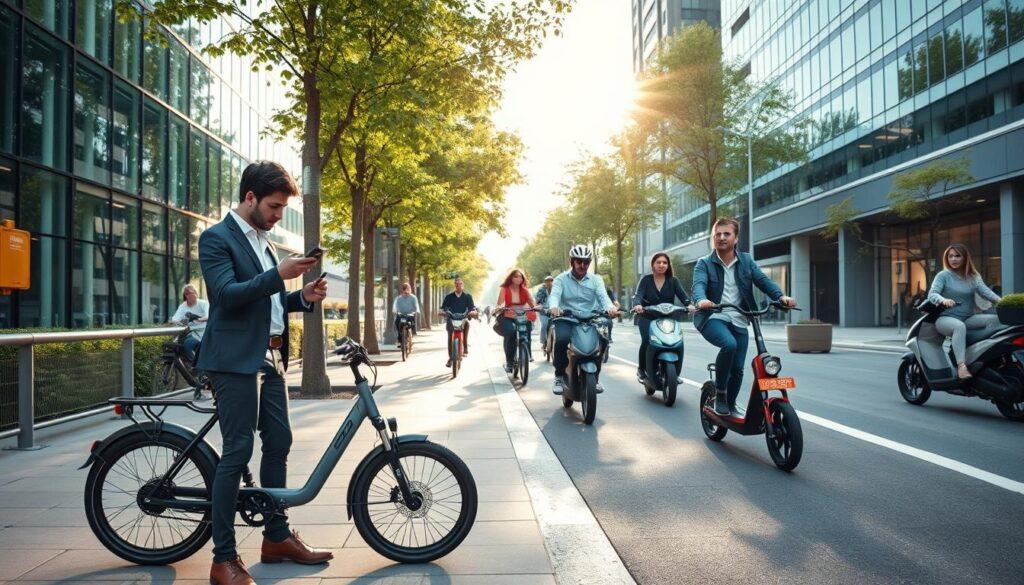
Companies are changing how they help employees get around. Instead of fighting for parking, they offer e-scooters or bike perks. It’s like giving healthy snacks instead of junk food. It’s smart and makes everyone happy.
Universities are also leading the way in micromobility. They have the perfect mix of people, space, and a desire to save money on rides. They’re like accidental urban planners, beating city transit systems.
The key is in how they connect things. Imagine making public transit and micromobility work together smoothly. That’s what campuses and companies are doing. They’re making systems that fit how people really live, not just how planners think they should.
Successful programs have a few key things:
- Subsidized memberships for shared micromobility services
- Secure parking and charging spots
- Integration with transit passes and campus shuttles
- Safety training and rewards
When micromobility is easy, safe, and cheap, people use it. The first/last mile problem becomes easier to solve. It’s not about building more roads, but making travel easier.
Corporate programs are great for improving commutes. They’re not trying to fix everything. They focus on making daily travel a bit better. This approach leads to real, consistent use.
The data shows that when you make micromobility affordable and convenient, it wins. It’s not about changing car lovers. It’s about giving better options to those who want them.
These programs are effective because they’re focused. They solve specific mobility needs for certain groups. This targeted approach leads to success stories that can inspire bigger changes.
The future of city travel might rely on these small-scale efforts. As employer and campus programs get better, they offer lessons for cities. Sometimes, the biggest changes come from the smallest steps.
Measuring Impact and KPIs
Measuring progress in micromobility is like trying to stretch a measuring tape that keeps growing. It’s a paradox. We’re trying to track a revolution that’s moving faster than we can keep up.
Traditional KPIs are like trying to measure internet speed with an hourglass. It’s easy to count ridership numbers. But how do we measure the impact of e-bikes on urban vibrancy? Or the increase in sidewalk conversations with protected lanes?
The Vision Zero goals are challenging. Every near-miss between an e-scooter and a turning vehicle is a data point. It’s part of humanity’s effort to avoid accidents while moving around. Yet, cities struggle to track these incidents as well as they track pigeon migration.
The truth is harsh: urban changes move at government speed, while micromobility innovation moves at Silicon Valley speed. This creates a huge gap in measurement. Most studies rely on “qualitative assessments,” which means asking people how they feel.
The real metrics that matter might be the ones we’re not tracking:
- Street-level social connectivity increases
- Local business foot traffic patterns
- Reduced “double parking” incidents
- Changes in public transit usage correlations
- Micro-moments of urban joy (yes, that’s a technical term)
Evidence-based design needs evidence, but our data collection methods are outdated. The solution? Smarter data partnerships, real-time analytics, and accepting that some impacts can’t be measured—only felt.
Until then, we’ll keep counting rides while secretly wondering if we’re missing the real story. Streets are suddenly filled with laughter instead of exhaust fumes.
Case Studies
If urban planning were a reality show, micromobility case studies would be its most dramatic season yet. Each city’s approach shows a fascinating experiment in human behavior and regulatory creativity. Sometimes, it leads to chaos.
New York City took its massive Citi Bike system and added e-scooters. Why not add more wheels to the concrete jungle? The result is a study in scaling micromobility in America’s most complex urban landscape.
Portland approached things differently from day one. They planned ahead, a revolutionary concept. Their regulated integration of e-scooters and e-bikes is a template for other cities. Sometimes, being first with proper rules is better than being first with flashy launches.
Austin found that designated parking areas were the unexpected hero. Even free-wheeling mobility needs some structure. Their system shows that clear rules increase usage, not stifle it.
The international perspective adds rich layers to these case studies. Shanghai’s decade-long implementation is different from Washington’s more recent adoption. Technology matters less than context—a key lesson for cities jumping on the micromobility bandwagon.
These aren’t just success stories. They’re cautionary tales about what happens when cities panic instead of plan. They’re experiments in human behavior, regulatory frameworks, and urban design. The through-line? Cities that treat micromobility as part of a system make it work for residents.
The data from these case studies reveals patterns that should inform future implementations. Early adopter cities provide valuable lessons about integration challenges, public acceptance, and measurable impact. Their experiences shape how newer cities approach their own micromobility ecosystems.
What makes these case studies compelling is their diversity. From dense megacities to more spread-out urban centers, each implementation offers unique insights. The common thread remains clear: successful micromobility requires thoughtful integration, not reactive regulation.
Career Paths in Micromobility
Ever wonder who keeps electric scooters from blocking fire hydrants? Or who makes sure e-bikes reach low-income areas? Meet the micromobility professionals who’ve turned transportation chaos into real careers.
This isn’t your grandfather’s transportation department. The micromobility world has created jobs that sound like science fiction. “Scooter wrangler” is a real job that needs both logistics skills and diplomacy.
The industry needs a mix of skills that didn’t exist before. Urban planners who can code, data scientists who know zoning laws, and mechanics who fix both batteries and city rules.
Here’s where the action is happening:
- Urban planners and policy experts who navigate codes and design charging systems
- Data analysts tracking how vehicles are used and their environmental impact
- Operations managers who manage fleets and handle public relations
- Maintenance specialists who know electric motors and IoT
These roles mark a big change in urban transportation jobs. The best professionals blend different skills, like engineers who understand urban design and policy experts who know tech.
The pay reflects this mix of skills. In big cities, operations managers can earn over $100,000. E-bike mechanics also get paid more than traditional bike repair workers.
Education is changing too. Universities now have courses on micromobility in urban planning and engineering. There are also certification programs for electric vehicle maintenance at technical schools.
What’s exciting about these careers is their role in changing cities. These workers do more than just fix vehicles. They help shape how cities work, one charging station and data dashboard at a time.
The micromobility job world is both chaotic and fascinating. It’s where numbers meet street smarts. And your morning commute could be your job.
Future Trends and Risks
Micromobility is moving towards a new era, like Netflix for transportation. Soon, you might pay a flat fee each month to get around. AI could make routes greener and more scenic.
But, success comes with challenges. Can cities handle the growth without becoming cluttered? Is access fair for everyone? Weather and short device lifespans are big issues.
Switching to green energy is key. If not, we just move pollution from cars to power plants. Autonomous vehicles might change everything, for better or worse.
The future is both exciting and complex. It’s about smart technology and smart policies. And, of course, people who use scooters responsibly.